Cost & Pricing
Private Label vs DIY Production: A True Cost Comparison
Every emerging fragrance brand faces a foundational decision: manufacture in-house (DIY) or partner with a private label factory. The DIY route appeals to founders who want full control and believe they can save money. Private label appeals to those who want speed, scale, and professional quality. The truth is that the cost comparison is more nuanced than either camp admits.
This guide lays out the true costs of both approaches using typical market ranges, helping B2B buyers and brand founders make an informed decision.
The Superficial Comparison
On the surface, DIY looks cheaper. A founder making candles at home sees:
- Wax: $2 to $4 per kg
- Fragrance: $15 to $30 per kg
- Jars: $0.50 to $1.50 each
- Wicks and labels: $0.10 to $0.30 each
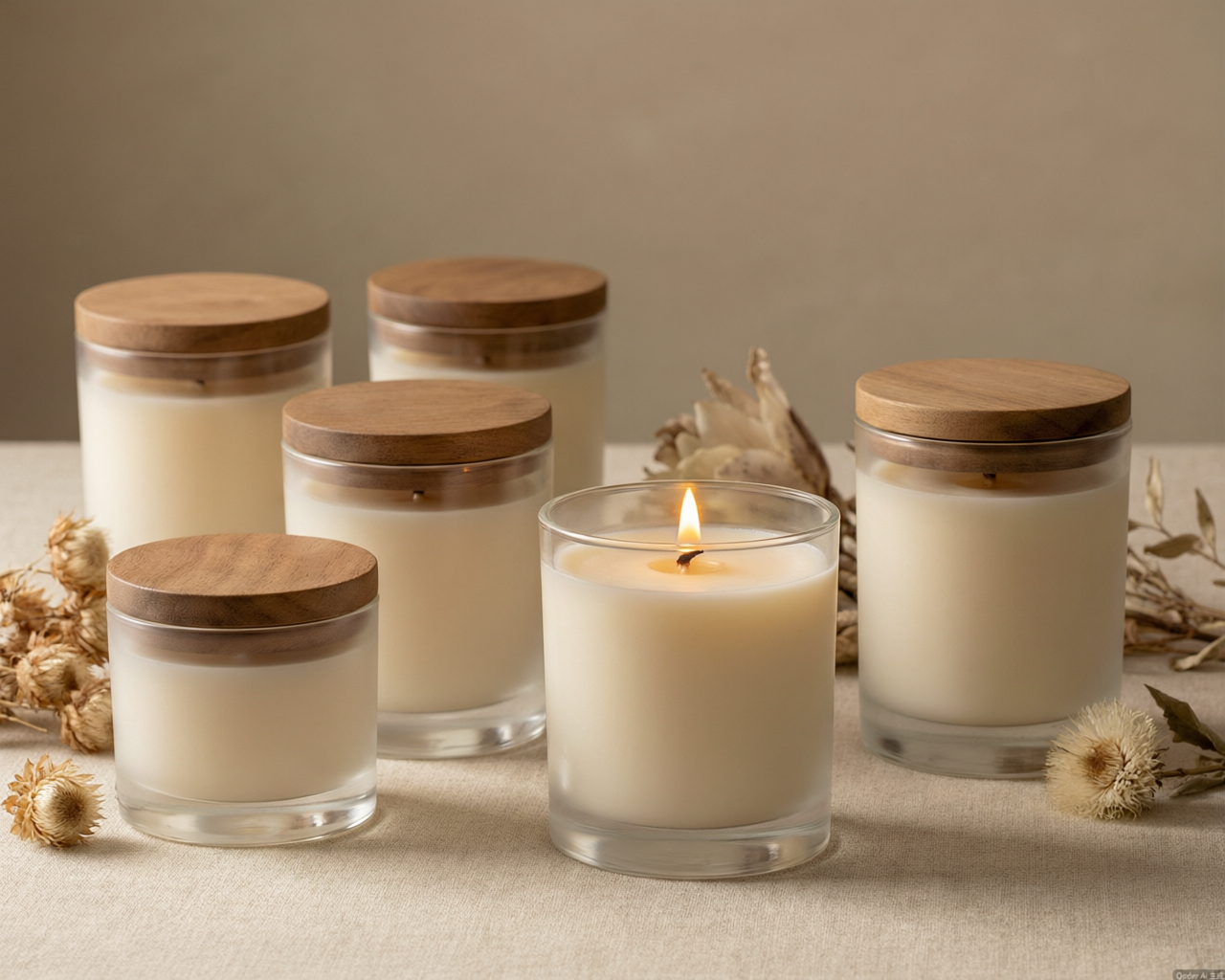
Total materials per candle: roughly $2 to $4. A private label factory might quote $3 to $6 per finished candle. The DIY founder concludes they are saving $1 to $2 per unit.
This calculation is incomplete. It ignores labor, overhead, compliance, waste, and opportunity cost. The full picture looks very different.
True DIY Production Costs
When all costs are accounted for, DIY production includes:
Materials. $2 to $4 per candle as noted above. But small-batch purchasing means paying retail or near-retail prices. A private label factory buying 1,000 kg of wax pays 30% to 50% less per kg than a founder buying 20 kg.
Equipment. Initial setup for a small candle operation:
- Melting tank and burner: $300 to $1,500
- Pouring equipment: $100 to $500
- Thermometers, scales, tools: $100 to $300
- Curing racks and storage: $200 to $800
- Workspace modifications (ventilation, fire safety): $500 to $3,000
Total initial equipment: $1,200 to $6,100.
Labor. A solo founder making 50 candles per day spends 6 to 10 hours on production, packaging, and cleanup. At even a modest $20/hour imputed labor cost, that is $120 to $200 per day, or $2.40 to $4.00 per candle in labor alone.
Waste and defects. Small-batch production has higher waste rates. Typical DIY waste: 8% to 15% of materials due to temperature errors, fragrance binding issues, cracking, frosting, or wick problems. Factory waste rates run 2% to 5% due to process control.
Compliance and testing. Even small sellers need liability insurance ($500 to $2,000 annually), basic safety testing ($500 to $2,000 per SKU), and proper labeling. These costs amortize poorly across small volumes.
Packaging and labeling. Small-quantity custom boxes cost $1.50 to $4.00 each versus $0.30 to $0.80 at factory volumes. Labels at 100-piece runs cost $0.30 to $0.80 each versus $0.03 to $0.10 at scale.
Shipping and storage. Renting climate-controlled storage adds $200 to $800 monthly. Shipping supplies and logistics management add hidden hours.
When all costs are included, true DIY cost per candle often lands at $6 to $12, comparable to or higher than private label pricing.
True Private Label Costs
A private label factory quote typically includes:
- Materials at bulk pricing
- Production labor
- Quality control
- Standard packaging
- Factory overhead and margin
Typical private label pricing for a 250g scented candle in a glass jar: $3 to $6 per unit at 1,000 to 3,000 unit MOQ, dropping to $2.50 to $5 at 5,000+ units.
Additional private label costs:
- Setup or sampling fees: $200 to $1,000 per SKU (often waived at volume)
- Custom mold fees: $1,500 to $5,000 if custom glass is required
- Shipping from factory: $0.30 to $1.50 per unit by sea, more by air
- Import duties and customs: 3% to 12% of goods value depending on market
- Compliance documentation: Often included or low-cost from established factories
Total landed cost per candle: $4 to $8 for most B2B buyers.
Break-Even Analysis
The break-even between DIY and private label depends primarily on volume and labor cost.
| Monthly Volume | DIY True Cost/Unit | Private Label Landed Cost/Unit |
|---|---|---|
| 100 units | $10 to $18 | $6 to $10 |
| 500 units | $7 to $12 | $5 to $8 |
| 1,000 units | $6 to $10 | $4 to $7 |
| 5,000 units | $5 to $8 (with hired labor) | $3 to $6 |
Below 200 units per month, DIY may make sense for hobbyists or market-stall sellers. Above 500 units per month, private label almost always wins on true unit economics, and the gap widens with volume.
The Opportunity Cost Argument
Perhaps the most overlooked cost in DIY production is founder time. Every hour spent melting wax, pouring candles, cleaning equipment, and packing boxes is an hour not spent on marketing, sales, product development, or customer relationships.
For a brand serious about growth, founder time is the most expensive resource. A founder who could close wholesale accounts worth $10,000 per month but instead spends 30 hours pouring candles is effectively paying $333 per hour for production labor that a factory provides for a fraction of that.
When DIY Makes Sense
DIY production is appropriate when:
- You are validating a concept with under 100 units per month
- Your product is genuinely artisanal and commands a premium for handmade origin
- You have specific formulation IP that cannot be shared with a factory
- Production is part of your brand story and customer experience
When Private Label Makes Sense
Private label is appropriate when:
- You sell or plan to sell more than 300 to 500 units per month
- You need consistent quality across batches
- You want to scale without capital investment in equipment and space
- You need compliance documentation for retail or export markets
- Your time is better spent on brand building than production
Hybrid Approaches
Some brands start DIY for the first 3 to 6 months to validate demand, then transition to private label once a SKU proves itself. Others keep a small DIY operation for limited-edition or seasonal items while running core SKUs through a factory. Both approaches are valid and common.
Making the Decision
Calculate your true DIY cost including all labor, waste, equipment amortization, compliance, and packaging at small-batch prices. Compare it to a private label quote at your realistic 12-month volume. Include the value of your own time at market rate. The math usually points clearly in one direction.
At Aromiso, we work with many brands that started DIY and transitioned to private label as they scaled. We offer low MOQs (500 to 1,000 units per SKU) specifically to support this transition, providing factory-quality production at volumes that match emerging brand needs. Our team can also help you compare your current DIY costs against our private label pricing to make the case clearly.