OEM & ODM
The Complete OEM & ODM Guide to Private-Label Aroma Products
You’ve spotted a gap in the market — a candle scent nobody does well, a roll-on oil your customers keep asking for. Now you need a manufacturer who can turn that idea into finished, compliant goods at a price that works. That is exactly what OEM and ODM programs are for, and this guide shows you how they work in practice: from your first brief to the container on the water.
What OEM & ODM actually mean (and the difference)
OEM (Original Equipment Manufacturing) means you bring the design — the scent brief, the vessel specification, the artwork — and the factory manufactures to your spec. ODM (Original Design Manufacturing) means the factory brings an existing design or formulation, which you customize and brand as your own.
In the aroma industry, most “private label” projects are really ODM: you pick a proven candle base or diffuser formula from the manufacturer’s library, choose a fragrance, and apply your branding. Full OEM makes sense when your product is genuinely unique — a proprietary blend, a custom mold, a patented wick system.
| OEM | ODM / private label | |
|---|---|---|
| Who owns the product design | You | The factory (you customize it) |
| Scent development | Built from your brief | Chosen and tweaked from an existing library |
| Tooling / setup cost | Higher (custom molds, new R&D) | Low or none |
| Time to market | 4–6 months or more | Typically 8–14 weeks |
| Best for | Established brands, unique IP | Launches, Amazon sellers, fast market tests |
Neither is “better” — the right choice depends on your budget, timeline, and how differentiated the product needs to be. Many buyers start with ODM to validate a market, then graduate to OEM once a SKU has proven itself.
The private-label process step by step
Here is the sequence a typical essential oil, candle, or reed diffuser project follows:
- Brief & feasibility (3–5 days). You share your target product, price point, market, and quantities. A good manufacturer pushes back early: some scent ideas won’t perform in soy wax, and some vessels can’t handle a 10% fragrance load.
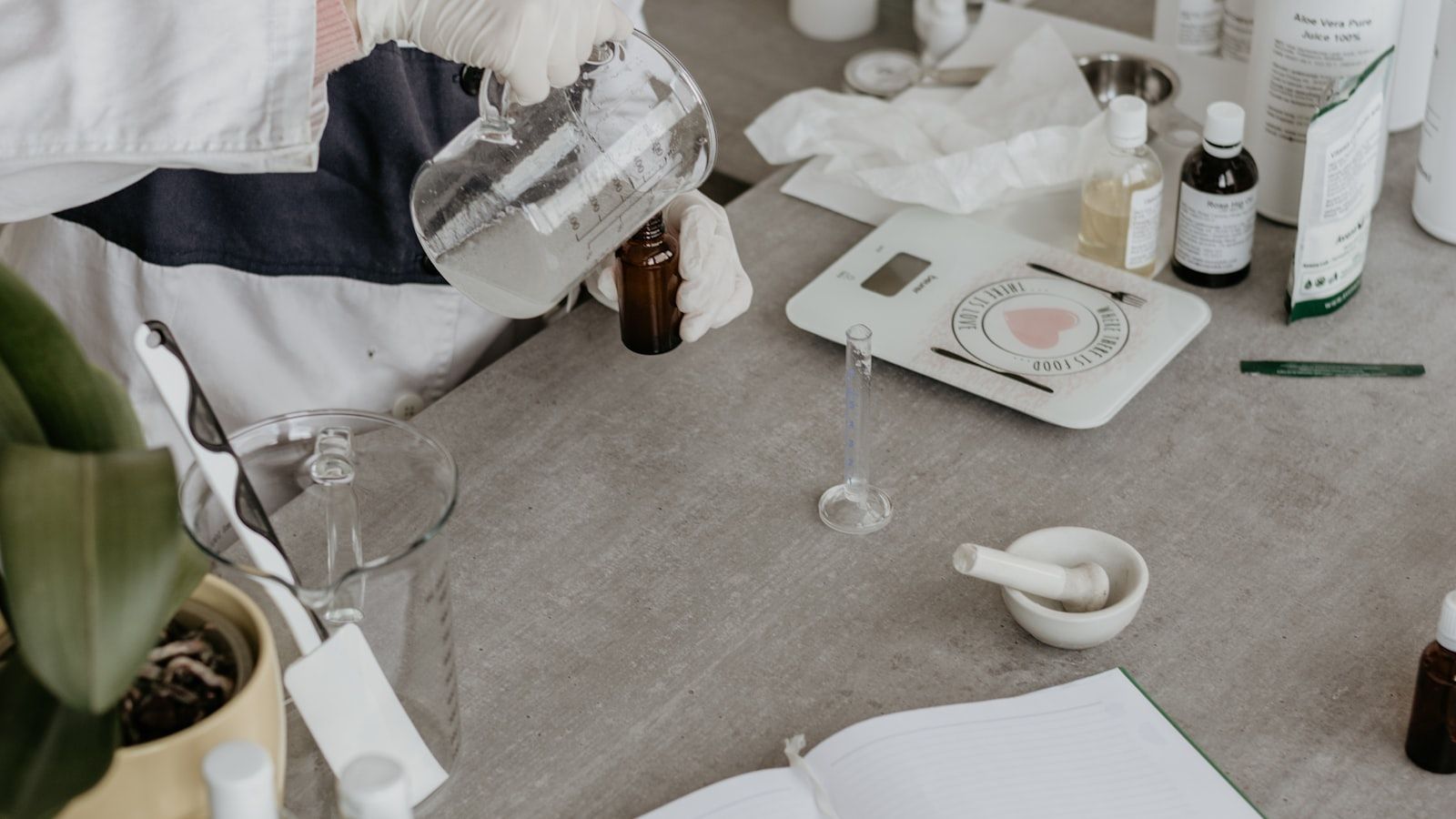
- Formulation & scent development (1–3 weeks). Perfumers build or adapt your scent. Every fragrance must be IFRA-compliant for its end use — a body oil has tighter allergen limits than a candle, for example.
- Sampling (7–10 days). Physical samples ship to you. Expect to evaluate cold throw, hot throw or diffusion, appearance, and packaging feel. Budget for one or two revision rounds.
- Packaging design & sourcing (2–3 weeks, runs in parallel). Labels, boxes, inserts — your artwork or the factory’s design team; finishes like matte lamination, foil stamping, and embossing.
- Compliance & documentation (1–2 weeks). Safety data sheets (SDS), IFRA certificates, CLP-compliant labels for the EU, FDA cosmetic requirements for the US, plus any retailer-specific specs.
- Pilot run (optional but recommended). A small production batch — often at the same 500-unit MOQ — that validates the full process before you commit to volume.
- Mass production (2–4 weeks). Filling, assembly, labeling, packing.
- QC & batch testing (3–5 days). Every production batch is checked — fill weight, wick centering, scent strength — and fragrance lots are verified by GC-MS against the approved standard.
- Shipping. Air 5–8 days, rail to Europe around 18–22 days, sea 25–40 days depending on port and season.
From approved brief to goods in your warehouse, plan for roughly 8–14 weeks on an ODM program, longer for full OEM.
What you can customize
- Scent — custom blends built from your brief or a reference product; natural, synthetic, or hybrid; always formulated within IFRA limits.
- Wax / oil base — soy, paraffin, coconut-soy, or beeswax blends for candles; fractionated coconut, jojoba, or sweet almond carrier oils for oils; MMB or DPG-free bases for reed diffusers.
- Vessel — glass (amber, clear, frosted), tins, ceramics, PET for diffusers; standard sizes or custom molds at higher volumes.
- Wick — cotton or wood, sized to your vessel diameter and fragrance load. The wick makes or breaks a candle’s burn, so trust the manufacturer’s burn-test data.
- Label & box — your artwork or the factory’s design service; finishes from matte soft-touch to foil and embossing.
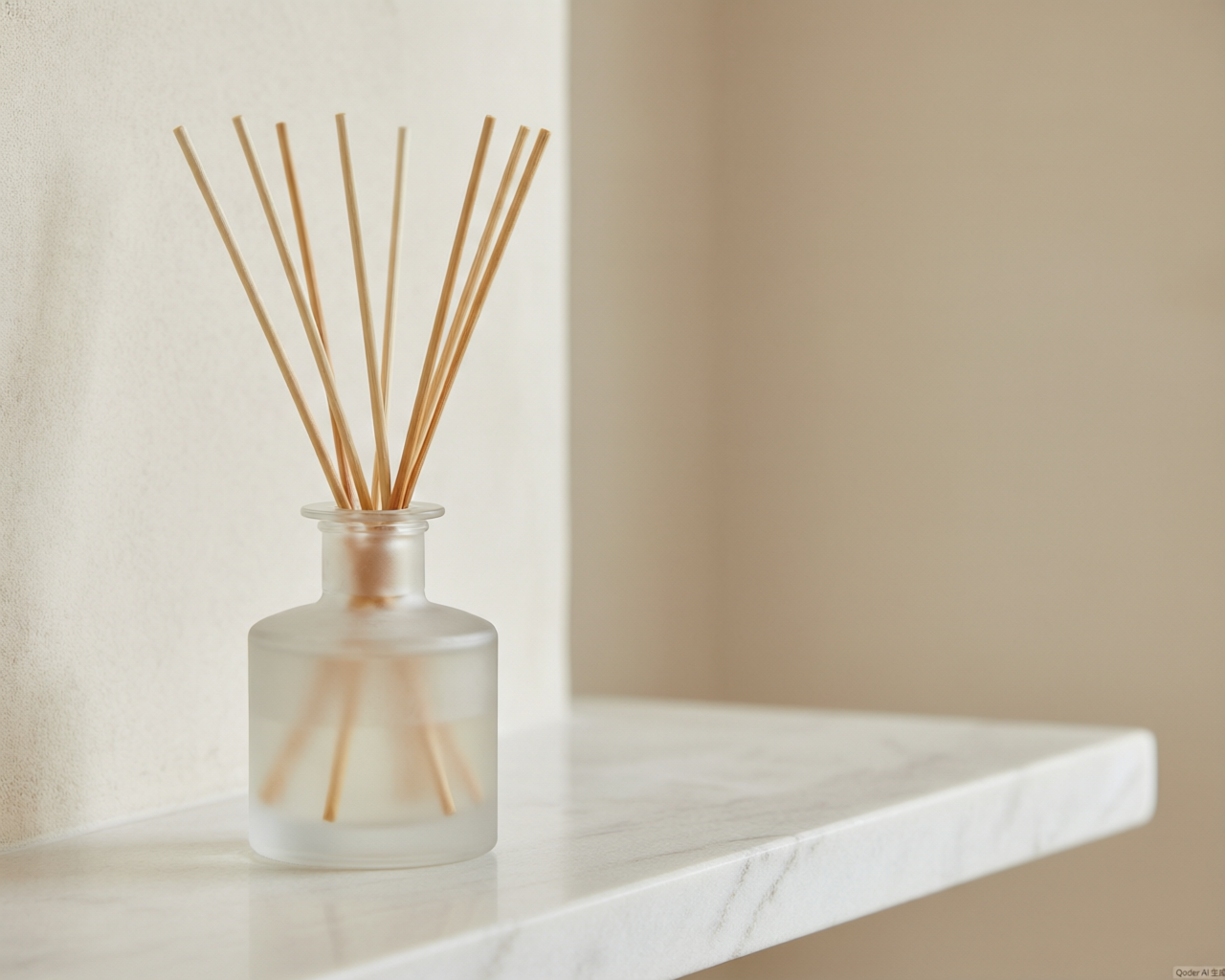
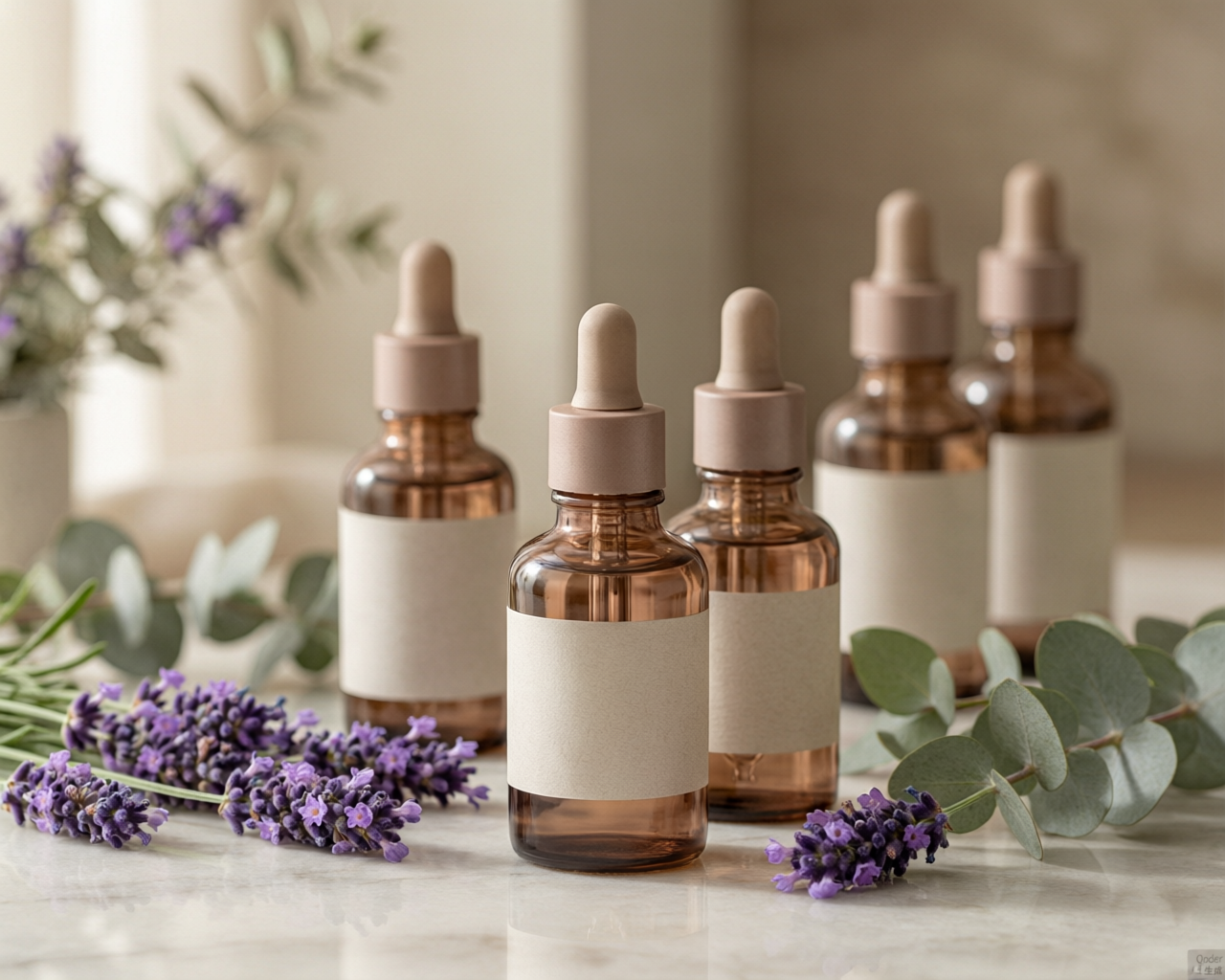
- Format details — reed count and length, dropper vs. pump, carton configuration for FBA-ready shipments.
Typical timelines & cost drivers
Your unit price in this category is driven by a handful of factors you control:
| Factor | How it moves your price |
|---|---|
| Fragrance load & oil type | The biggest lever. A 10% load of a natural-heavy blend can cost several times a 6% synthetic blend |
| Vessel & packaging | Custom molds and specialty finishes add both unit cost and lead time |
| Order quantity | Tooling and setup amortize across units; prices step down at 1,000, 3,000, 5,000+ |
| Compliance extras | Market-specific testing (e.g., additional allergen declarations) adds modest lab fees |
| Season | Q3 is peak — factories fill up before holiday sailings, and rush premiums apply |
A realistic planning number: 8–14 weeks from brief to delivered goods on ODM, with samples in your hands within 7–10 days of scent approval.
How to choose an OEM partner
Use this checklist when you evaluate any manufacturer — including us:
- Certifications. ISO 9001 for the quality management system; IFRA compliance for every fragrance sold. Ask to see the certificates, not just the claim.
- In-house lab. A serious factory runs GC-MS batch testing on fragrance lots, plus stability and burn testing. Ask what happens to a batch that fails.
- Sample policy. Samples in 7–10 days, a clear revision policy, and samples made on production equipment — not a hand-poured one-off that won’t match mass production.
- MOQ flexibility. A partner offering MOQ from 500 units lets you pilot a SKU without tying up cash in inventory.
- Audit openness. Will they host a visit or a third-party audit? A 12,000 m² campus should be something they are proud to show you — see our factory for what that looks like at Aromiso.
- Track record. Ask how many private-label projects they have shipped. We have completed 500+, and it taught us exactly where first-time programs usually go wrong.
- Communication. One project manager who answers in your timezone, in clear English, with weekly updates.
Common mistakes first-time buyers make
- Starting without a brief. “Something like [competitor]” is not a spec. Define your target retail price, market, scent direction, and quantity first.
- Judging samples by cold throw alone. A candle must be burn-tested; a diffuser needs a real-room diffusion test over several days.
- Treating compliance as an afterthought. CLP labels and SDS are required before your goods clear EU customs — not something you arrange after shipping.
- Skipping the pilot run. A 500-unit pilot catches wick, fill, and label issues cheaply. A 5,000-unit order catches them expensively.
- Not locking a golden sample. Sign and date the approved sample; it is the reference every production batch gets compared against.
- Optimizing unit price first. Cutting fragrance load from 9% to 6% saves cents and kills the reason the product exists.
- Underestimating packaging lead time. Specialty boxes often take longer to produce than the candle inside them.
Next steps
Private-label aroma products are a proven path to a differentiated brand — as long as the process behind them is disciplined: a clear brief, honest sampling, compliance done early, and a manufacturer whose lab and audits stand up to scrutiny.
Ready to start? Browse our product catalog to see what’s possible, learn how our OEM & ODM program is structured, or request a quote with your brief — samples ship within 7–10 days.