Buyer FAQ
What Reeds Should I Choose for My Diffuser Product?

What Reeds Should I Choose for My Diffuser Product?
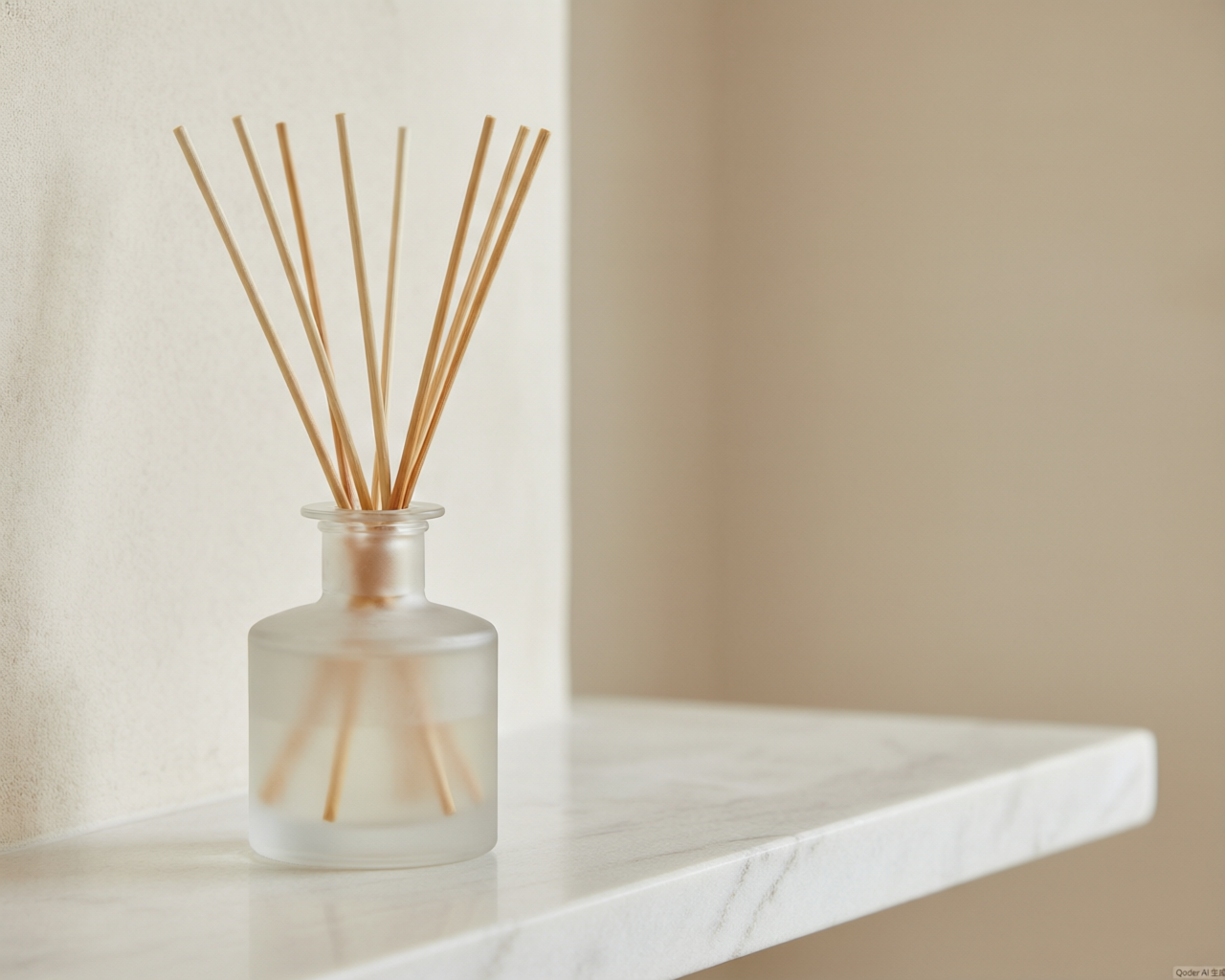
Reeds are the engine of a reed diffuser. The wrong choice weakens scent throw, clogs within weeks, or clashes with your brand aesthetic. Here is a direct comparison and a decision framework.
The Two Main Reed Types
Rattan reeds are natural stems harvested from rattan palm. They have a honeycomb internal structure with 20 to 30 microscopic channels that wick oil upward by capillary action.
Fiber reeds are synthetic, made from compressed polyester or rayon fibers. They have a uniform porous structure engineered for consistent wicking.
A third option, cotton reeds, exists but is uncommon in commercial diffusers because of poor durability.
Side-by-Side Comparison
| Factor | Rattan Reeds | Fiber Reeds |
|---|---|---|
| Scent throw | Moderate | Strong (20-30% more) |
| Wicking consistency | Variable (natural) | Highly consistent |
| Clogging tendency | Higher (channels block) | Lower |
| Color options | Natural tan, dyed black/brown | Any Pantone color |
| Aesthetic | Natural, organic, classic | Modern, uniform, premium |
| Cost (8 reeds, 25 cm) | $0.18-$0.30 | $0.22-$0.40 |
| Lifespan in use | 4-8 weeks | 8-12 weeks |
| Eco profile | Biodegradable, renewable | Synthetic, recyclable in some markets |
| Best for | Natural brands, rustic decor | Premium brands, modern decor |
Why Fiber Reeds Throw Stronger
Fiber reeds have a more open and uniform pore structure than rattan. The oil travels up the reed and evaporates from the entire exposed surface. Rattan channels are narrower and irregular, so less oil reaches the top, and the woody exterior does not evaporate fragrance as efficiently.
In side-by-side tests with identical 150 ml diffusers at 25% concentration:
- Fiber reeds produce detectable scent at 3 meters within 24 hours
- Rattan reeds produce detectable scent at 3 meters within 48 to 72 hours
- Fiber reeds maintain peak throw for 6 to 8 weeks
- Rattan reeds peak at week 2 to 3, then decline
For customers who want a strong, immediate scent presence, fiber is the better choice. For customers who prefer a subtle, gradual fragrance, rattan works well.
Matching Reeds to Bottle and Fragrance
Bottle neck diameter. A 150 ml bottle typically has a 15 mm to 22 mm neck. Use 6 to 8 reeds of 3 mm diameter, or 8 to 10 reeds of 2 mm diameter. The reeds should fill roughly 60% to 70% of the neck opening. Too few reeds and throw suffers; too many and they bunch and wick poorly.
Reed length. Standard formula: reed length equals 1.5 to 2 times the bottle height. A 15 cm tall bottle uses 22 to 30 cm reeds. Longer reeds increase evaporation surface but look awkward if they exceed 2x bottle height.
Fragrance viscosity. Heavy fragrances with high natural oil content (above 30%) wick poorly through rattan. Use fiber reeds for these blends. Light, fresh fragrances wick well through either type.
Bottle color. Dark glass hides the reed stems from view, so reed color matters less. Clear glass shows the reeds, so choose color deliberately. Black fiber reeds in clear glass give a modern look; natural rattan in amber glass gives an apothecary aesthetic.
Common Mistakes
- Using too few reeds. A 200 ml diffuser with only 5 reeds will underperform. Match reed count to neck diameter and fragrance strength.
- Mixing reed types in one product. Fiber and rattan wick at different rates, creating inconsistent throw. Pick one.
- Skipping the flip instruction. Tell customers to flip reeds weekly. Without flipping, scent throw drops 40% to 60% after the first 2 weeks.
- Cheap rattan with sealed channels. Some low-grade rattan has sealed or painted ends that block wicking entirely. Source from suppliers who cut and inspect each reed.
- Ignoring reed packaging. Loose reeds puncture packaging and scratch bottles. Bundle reeds in PE bags or paper sleeves.
Our Default Recommendation
For most private label clients, we recommend 3 mm black fiber reeds, 25 cm length, 8 reeds per 150 ml bottle. This combination delivers strong throw, consistent performance, a modern aesthetic that photographs well, and a per-set cost of about $0.28.
For natural or eco-positioned brands, we recommend natural rattan reeds, 3 mm diameter, 25 cm length, 8 per bottle. The throw is slightly lower but the brand alignment is stronger.
Sampling Before You Commit
Always test reeds with your actual fragrance and bottle before bulk production. Request 5 to 10 sample sets from your factory and run them for 4 weeks. Evaluate:
- Scent throw at 1 meter and 3 meters
- Color stability (some dyed reeds fade in sunlight)
- Clogging rate (visible oil residue at reed tips)
- Aesthetic match with bottle and packaging
Aromiso provides free reed samples with any fragrance sample request. Send us your bottle dimensions and fragrance brief, and we will recommend the optimal reed specification.