Market Guides
Private Label Home Fragrance in the UK: A Sourcing Guide

The UK home fragrance market reached GBP 1.9 billion in retail value in 2024, growing at roughly 6% annually according to Euromonitor. A significant share of that growth comes from independent brands launching private label product lines through UK retailers, subscription boxes, and direct-to-consumer channels. For these brands, sourcing from Chinese manufacturers offers margins that domestic UK production cannot match. This guide covers the practical realities of that supply relationship.
Why UK Brands Source from China
UK-based candle and diffuser manufacturers typically charge GBP 4-8 per unit for a 200g soy candle at 500-unit runs. A Chinese factory produces an equivalent specification at USD 2.50-4.50 FOB (approximately GBP 2.00-3.60), even before volume discounts. At 3,000-unit quantities, the gap widens further.
The cost advantage comes from integrated supply chains. A factory in Guangdong or Zhejiang sources glass vessels, wax, fragrance oils, wicks, and packaging within a 200 km radius. UK producers import most of these components individually, adding freight and handling at each stage.
Product Categories and Typical Specifications
UK private label buyers most commonly order:
- Scented candles: 180-300g soy or coconut-soy blend in glass jars, 40-50 hour burn time, 6-10% fragrance load. FOB pricing: USD 2.50-5.50 at 1,000 units.
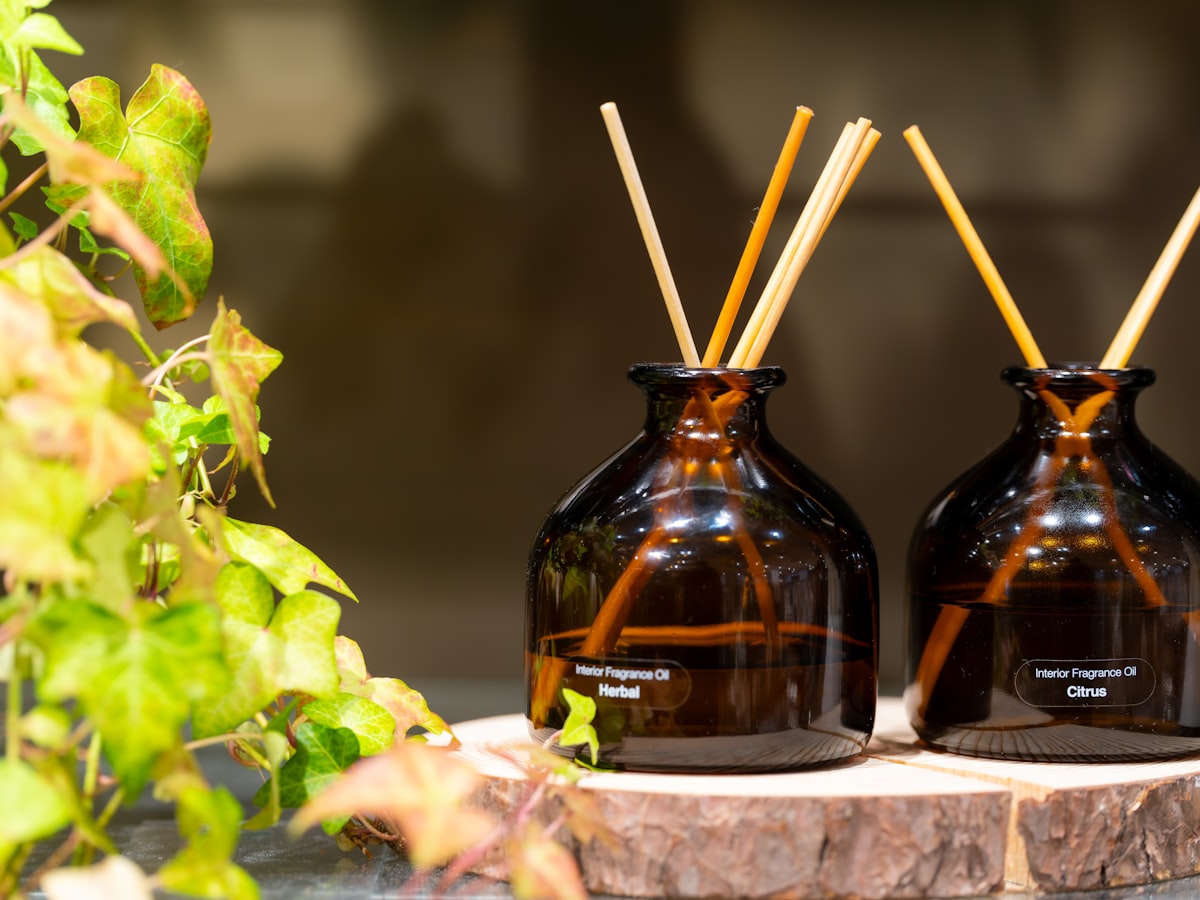
- Reed diffusers: 100-200ml in glass bottles with fibre reeds, 8-12 week lifespan. FOB pricing: USD 1.80-4.00 at 1,000 units.
- Room sprays: 100-150ml in PET or glass bottles with fine mist atomisers. FOB pricing: USD 1.20-2.80 at 2,000 units.
- Wax melts and melts sets: 60-100g clamshell packs, 10-12% fragrance load. FOB pricing: USD 0.80-1.80 at 2,000 units.
Minimum Order Quantities and Lead Times
Most Chinese home fragrance factories set MOQs between 500 and 1,000 units per SKU for standard specifications. Custom formulations (unique fragrance blends, proprietary wax mixes, custom vessel shapes) typically require 2,000-3,000 units to justify tooling and development costs.
Production lead times from order confirmation to FOB shipment:
- Standard products with stock components: 25-35 days
- Custom fragrance development: Add 15-20 days for perfumer iterations
- Custom packaging and labeling: Add 10-15 days for print proofs and production
- Peak season (August-October for Q4 retail): Add 10-15 days buffer
Total door-to-door time from China to a UK warehouse, including sea freight via Felixstowe or Southampton, is typically 55-70 days.
Margin Structure for UK Brands
A typical private label candle with a FOB cost of USD 3.50 lands in the UK at approximately GBP 4.20-4.80 after freight (USD 0.30-0.50 per unit in a shared container), import duty (4.7% for candles under HS code 3406), and VAT (20%). A brand retailing at GBP 18-24 achieves a gross margin of 65-75%, compared to 45-55% when sourcing domestically.
For reed diffusers, the margin story is even stronger. A USD 2.20 FOB diffuser lands at roughly GBP 3.00-3.40 all-in. Retail pricing of GBP 14-20 yields margins above 75%.
Quality Control and Compliance
UK buyers should build compliance into the sourcing process from the sampling stage:
- Request CLP-compliant safety data sheets for every fragrance oil before approving samples.
- Confirm UK responsible person arrangements — your importer of record must be named on labels.
- Require IFRA compliance certificates for fragrance formulations, confirming allergen limits.
- Commission third-party inspection (SGS, Bureau Veritas, or Intertek) at pre-shipment stage. Cost: USD 250-400 per inspection visit.
- Obtain burn test reports for candles — a 3-candle burn test per SKU is standard, costing USD 50-100 at the factory.
Finding and Vetting Suppliers
UK brands typically source through three channels:
- Alibaba and Global Sources: Useful for initial discovery, but verify factory credentials independently. Look for suppliers with ISO 9001 certification and at least 3 years of export history to the UK or EU.
- Trade shows: The China International Gift Fair (Shenzhen, October) and Ambiente (Frankfurt, February) attract established exporters.
- Direct factory engagement: For orders above 5,000 units, direct negotiation eliminates trading company margins of 10-20%.
When evaluating a factory, request references from existing UK or EU clients, confirm they hold BSCI or Sedex audit reports, and verify their export documentation capability (commercial invoices, packing lists, certificates of origin).
Building a Long-Term Supply Partnership
The most successful UK private label brands treat their Chinese supplier as a development partner rather than a transactional vendor. Practical steps:
- Place initial trial orders of 500-1,000 units across 2-3 SKUs to test quality consistency.
- Agree on a quality manual covering acceptable defect rates (typically below 2%), packaging standards, and labeling specifications.
- Schedule quarterly video calls to review sales forecasts and align production planning.
- Negotiate annual pricing agreements with raw material adjustment clauses tied to paraffin wax and soy wax index prices.
The UK home fragrance market shows no signs of slowing. Consumer spending on premium and artisanal scented products continues to grow, driven by gifting culture and the “treat yourself” segment. Brands that establish reliable Chinese supply partnerships position themselves to capture that growth with healthy margins and consistent product quality.