Sourcing & Procurement
OEM vs ODM in Fragrance Manufacturing: Which Model Fits Your Brand?
When sourcing fragrance products from Chinese factories, you will encounter two dominant production models: OEM and ODM. Choosing between them affects your development timeline, minimum order quantities, unit costs, and how much control you retain over the final product. This guide breaks down both models with real numbers so you can make an informed decision.
What OEM and ODM Actually Mean in Fragrance
OEM (Original Equipment Manufacturer) means the factory produces products according to your specifications. You provide the fragrance formula, packaging design, labeling artwork, and quality standards. The factory’s role is execution: compounding, filling, assembling, and packing to your blueprint.
ODM (Original Design Manufacturer) means the factory provides ready-made or semi-customizable products. You select from their existing catalog of formulations, vessel shapes, and packaging options, then apply your brand name. The factory handles both design and production.
Cost Comparison: Real Numbers
The cost gap between these models is significant, especially at lower volumes.
OEM typical costs:
- Custom fragrance development: $300-$800 per scent (R&D fee, often waived at 5,000+ unit orders)
- Custom mold for vessels or caps: $500-$3,000 depending on complexity
- Minimum order quantity: 3,000-10,000 units per SKU
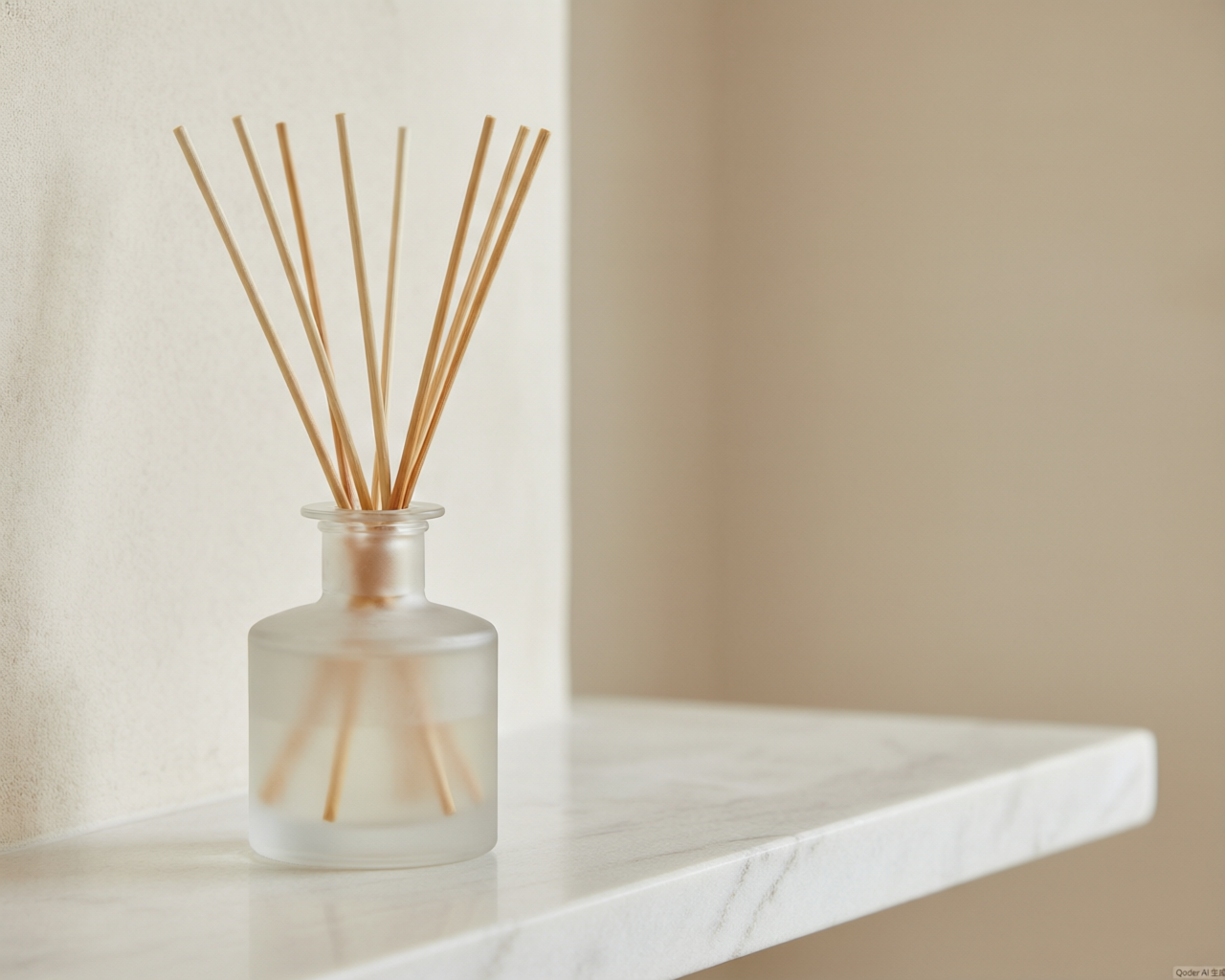
- Unit price (e.g., 200ml reed diffuser): $2.80-$4.50 at 5,000 units
- Packaging setup and plate fees: $200-$600 per design
ODM typical costs:
- No development fee (you pick from existing formulas)
- No mold costs (standard vessels already in production)
- Minimum order quantity: 500-2,000 units per SKU
- Unit price (same 200ml reed diffuser): $3.20-$5.00 at 1,000 units
- Label printing only: $50-$150 per design
At first glance, ODM looks cheaper for small runs. But at 10,000+ units, OEM pricing often drops 15-25% below ODM because you eliminate the factory’s design margin.
Timeline Differences
Speed to market is where ODM wins decisively.
ODM timeline: 20-35 days from order confirmation to shipment. You spend 3-5 days selecting products and approving label proofs, then 15-25 days for production, plus 5 days for packing and logistics handoff.
OEM timeline: 55-90 days for a first order. Fragrance development and testing takes 15-25 days. Custom packaging sourcing adds 20-30 days. Production itself runs 20-30 days. Add 5-10 days for sampling rounds and revisions.
For reorders, OEM timelines compress to 25-35 days since formulas and packaging are already established.
Control and Differentiation
OEM gives you full control over:
- Fragrance composition (top, middle, base notes at exact ratios)
- Ingredient sourcing (natural vs. synthetic, allergen-free requirements)
- Vessel shape, material, and finish
- Packaging structure and unboxing experience
- Compliance documentation for specific markets (EU CLP, US CPSC, IFRA standards)
ODM limits you to:
- The factory’s existing scent library (typically 50-200 options)
- Standard vessel shapes already in their production line
- Label-only branding (your logo on their box)
- Their default compliance framework
If your brand positioning depends on a signature scent or unique packaging, OEM is the only viable path. If you are testing a market or building a broad catalog quickly, ODM gets you shelf-ready faster.
Which Model Fits Your Situation?
Choose ODM if:
- You are launching your first fragrance line and need to validate demand
- Your order volume is under 2,000 units per product
- You need products within 30 days
- Your brand differentiates on curation or marketing rather than product uniqueness
- You want to test 5-10 SKUs without heavy upfront investment
Choose OEM if:
- You have an established brand with specific product requirements
- Your volume exceeds 5,000 units per SKU
- You need exclusive formulations that competitors cannot replicate
- Your target market has strict regulatory requirements (EU, Australia, Japan)
- You plan to build long-term product lines where tooling costs amortize over multiple reorders
A Hybrid Approach Many Brands Use
Experienced importers often combine both models. They launch with ODM products to generate revenue and market data within 30 days, then transition top sellers to OEM production once volume justifies custom development. This approach reduces initial capital outlay from $15,000-$30,000 (full OEM launch) to $3,000-$8,000 (ODM test batch), while still building toward a differentiated product line.
Questions to Ask Your Factory
Before committing, ask any potential manufacturing partner:
- What is your MOQ for OEM vs. ODM orders?
- Do you waive R&D fees at certain volume thresholds?
- Can I start with ODM and convert to OEM later without changing suppliers?
- Who owns the fragrance formula in an OEM arrangement?
- What is your sample lead time and cost for custom development?
A transparent factory will answer all five clearly. At Aromiso, for example, we support both models and allow brands to transition from ODM catalog products to fully custom OEM production as their volumes grow, with no penalty or re-onboarding required.
Final Consideration
Neither model is inherently superior. The right choice depends on your budget, timeline, volume, and brand strategy. Calculate your total landed cost per unit at your expected volume for both models, factor in the 60-day difference in time to market, and choose the path that gets your product in front of customers with acceptable risk. The factory relationship matters more than the model, so prioritize partners who communicate clearly and support your growth from whichever starting point you choose.