Sourcing & Procurement
How to Choose a Reed Diffuser Manufacturer: A Buyer's Guide

The global reed diffuser market is projected to reach $1.2 billion by 2027, and China produces an estimated 60% of the world’s reed diffuser units. For B2B buyers building a home fragrance line, choosing the right manufacturer determines your product quality, margin structure, and time to market.
This guide covers what to evaluate before signing a production agreement.
Understanding Reed Diffuser Manufacturing
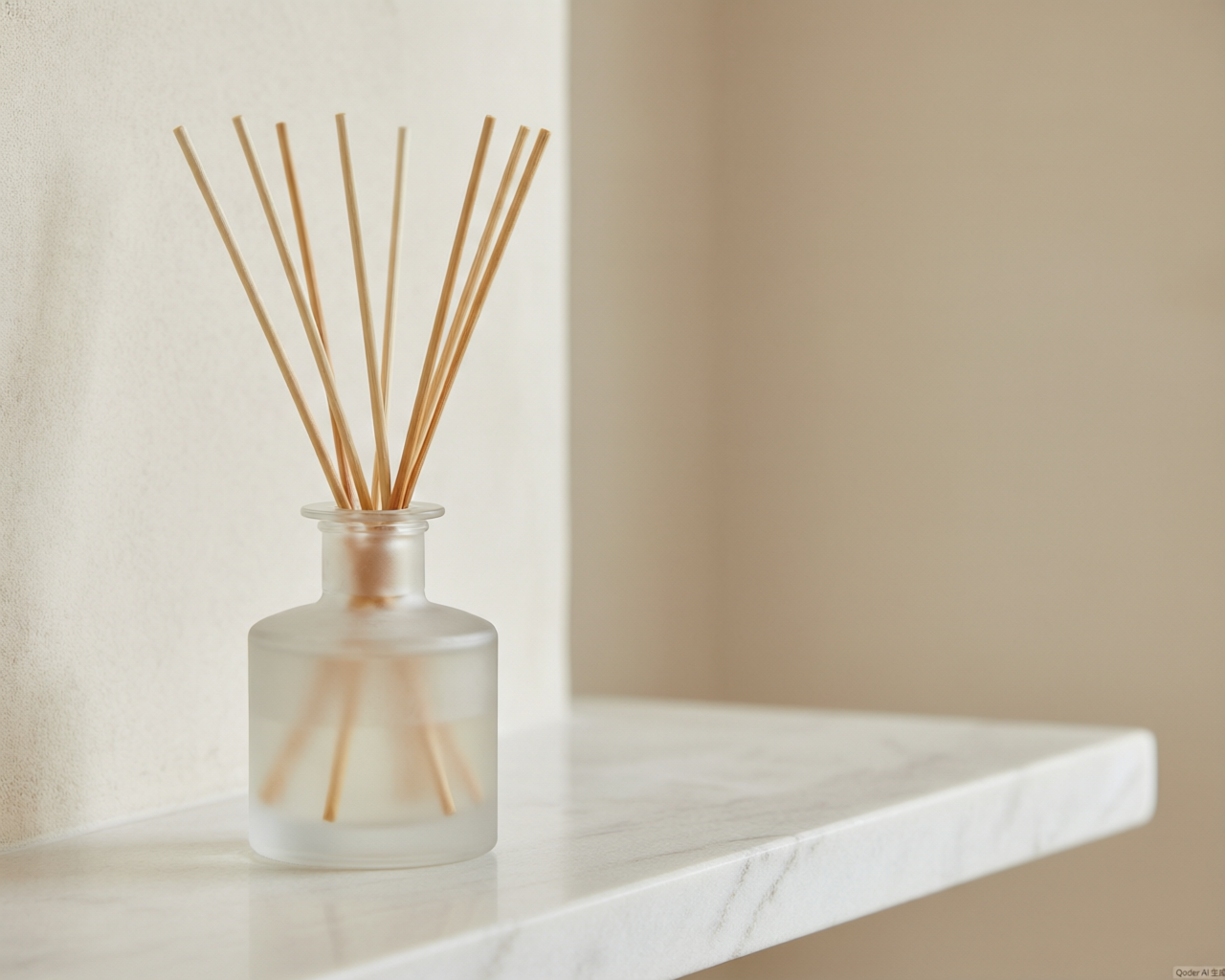
A reed diffuser consists of three components: the fragrance oil blend, the carrier solvent base, and the reed sticks (typically rattan or fiber). Manufacturing involves:
- Formulation: Blending fragrance oils (15-30% concentration) with a solvent base such as DPG (dipropylene glycol), isopropyl myristate, or Augeo Clean Multi.
- Filling: Automated or semi-automated filling into glass, ceramic, or PET vessels.
- Assembly: Inserting reeds, applying caps or collars, and packaging.
A competent manufacturer controls all three stages in-house. Outsourced formulation or filling introduces quality variance and IP risk.
Selection Criteria for B2B Buyers
Formulation Capability
The single most important differentiator. Ask potential manufacturers:
- Do you develop fragrances in-house or source from third-party houses?
- What concentration range do you offer (standard is 20-25% fragrance load)?
- Can you provide IFRA compliance documentation for each formulation?
- What is the expected scent throw duration? (Quality diffusers maintain noticeable fragrance for 8-12 weeks with 100 ml of solution.)
Factories that partner with established fragrance houses (Givaudan, Symrise, Mane, or reputable domestic suppliers) deliver more consistent scent profiles than those blending generic oils.
Solvent Base Quality
Cheap manufacturers use methanol-based solvents, which evaporate too quickly and pose health risks. Require written confirmation that the base is methanol-free. Acceptable bases include:
- DPG (most common, cost-effective)
- Isopropyl myristate (slower evaporation, premium positioning)
- Augeo Clean Multi (bio-based, marketed as eco-friendly)
Request a Safety Data Sheet (SDS) for the finished product, not just individual components.
Vessel and Packaging Options
Confirm whether the factory produces or sources vessels. In-house glass production (common in Hebei and Shandong provinces) reduces cost by 15-25% versus purchased vessels. For custom shapes, expect mold fees of $800-$3,000 and a 20-30 day mold production timeline.
Compliance and Testing
For different markets, verify:
- EU: CLP labeling, REACH compliance, CPNP notification support
- USA: California Prop 65 assessment, ASTM standards adherence
- Australia: NICNAS compliance for imported fragrance chemicals
A manufacturer experienced in your target market will prepare compliance documentation as part of the standard service, not as a paid add-on.
Pricing Benchmarks
For a standard 100 ml reed diffuser (glass bottle, 8 rattan reeds, kraft box packaging):
| Order Volume | FOB Unit Cost | Notes |
|---|---|---|
| 500 units | $3.50 - $5.50 | Higher per-unit due to setup |
| 3,000 units | $2.40 - $3.80 | Most common trial volume |
| 10,000+ units | $1.80 - $2.90 | Best pricing tier |
Additional cost factors:
- Custom fragrance development: $200-$600 per scent
- Fiber reeds vs. rattan: +$0.10-$0.25 per unit
- Premium packaging (magnetic box, foam insert): +$0.50-$1.20 per unit
- Third-party lab testing (SGS, Intertek): $150-$400 per SKU
MOQ Expectations
Most Chinese reed diffuser factories set MOQs between 500 and 3,000 units per SKU. Factories specializing in private label (rather than their own brand) typically accept:
- 500 units for stock vessel + stock fragrance options
- 1,000 units for custom label on stock vessels
- 3,000 units for fully custom formulations and packaging
Negotiate a mixed-SKU MOQ: some manufacturers allow 3,000 total units split across 3-5 scents, reducing your per-scent commitment to 600-1,000 units.
Production Timeline
Standard lead times from confirmed order:
- Sample development: 10-15 days
- Production (3,000 units): 20-30 days
- Production (10,000+ units): 35-45 days
- Ocean shipping to US/EU: 18-35 days
Plan 10-14 weeks total from initial inquiry to warehouse delivery for a first order.
Questions to Ask Before Signing
- What is your defect rate, and what is your replacement policy? (Acceptable: under 2%)
- Can I arrange a pre-shipment inspection via SGS or Bureau Veritas?
- What is the shelf life of the finished product? (Expect 24-36 months sealed)
- Do you hold inventory of raw materials, or purchase per order?
- What payment terms do you offer? (Standard: 30% T/T deposit, 70% before shipment)
Making the Final Decision
Request samples from 3-4 shortlisted manufacturers simultaneously. Evaluate each sample for:
- Cold throw intensity at 24 hours and 7 days
- Reed absorption rate (reeds should darken within 2-4 hours)
- Liquid clarity and color stability
- Packaging durability after simulated transit (drop test from 80 cm)
The manufacturer that delivers consistent samples, transparent documentation, and responsive communication will serve you better than the one offering the lowest unit price. A $0.30 per-unit saving means little if 5% of your shipment arrives with leaking caps or faded labels.