Market Entry
How to Sell Fragrance Products in the USA: A Complete Market Entry Guide
The United States is the largest home fragrance market in the world, worth an estimated USD 5.5–6.2 billion at retail in 2025 and growing 4–5% per year. For overseas brand owners and procurement teams, the opportunity is obvious: premium scented candles, reed diffusers, and essential-oil blends command retail markups of 4x–6x landed cost. The challenge is that the US market punishes unprepared importers. A mislabeled candle can be detained at the port, an undocumented fragrance oil can trigger an FDA refusal, and a product that fails California Proposition 65 review can be pulled from shelves — and from Amazon — within weeks of launch.
This guide is for B2B buyers who intend to sell candles, reed diffusers, essential oils, car fragrances, or commercial diffusers in the USA. It covers market sizing, federal and state regulation, labeling, importing, channel selection, and unit economics, with realistic cost ranges and timelines. The goal is simple: clear the regulatory hurdles once, then sell with confidence.
1. Understand the US Fragrance Market Before You Commit
Before sourcing a single SKU, validate where your product fits. The fragrance market usa buyers shop in is segmented by channel, price tier, and scent story, each with different margin and compliance expectations.
- Mass retail (Walmart, Target, TJX): Volume-driven, price points of USD 4–15 per candle. Buyers demand EDI capability, UPC codes, and consistent replenishment. Margins are thin but predictable.
- Specialty and boutique (Anthropologie, West Elm, independent gift shops): Mid-premium, USD 18–45. Story, packaging, and scent originality matter more than volume.
- Premium and luxury (Sephora, Nordstrom, DTC brands): USD 45–95+. Heavy emphasis on brand narrative, clean-ingredient claims, and refill programs.
- E-commerce (Amazon, Shopify, Walmart.com): Fastest-growing channel, now 30–35% of home fragrance sales. Low barrier to entry but high ad costs — Amazon PPC for “scented candles” runs USD 1.80–3.50 per click.
A practical first step: pick one channel and one price tier, then reverse-engineer landed cost. A candle retailing at USD 28 in specialty stores should land at USD 3.50–5.00 fully burdened (product, freight, duty, inspection) to support a wholesale price of USD 12–14.
2. Map the Regulatory Landscape: FDA, CPSC, and State Rules
US candle regulations and fragrance rules are split across several agencies; the right classification determines everything else.
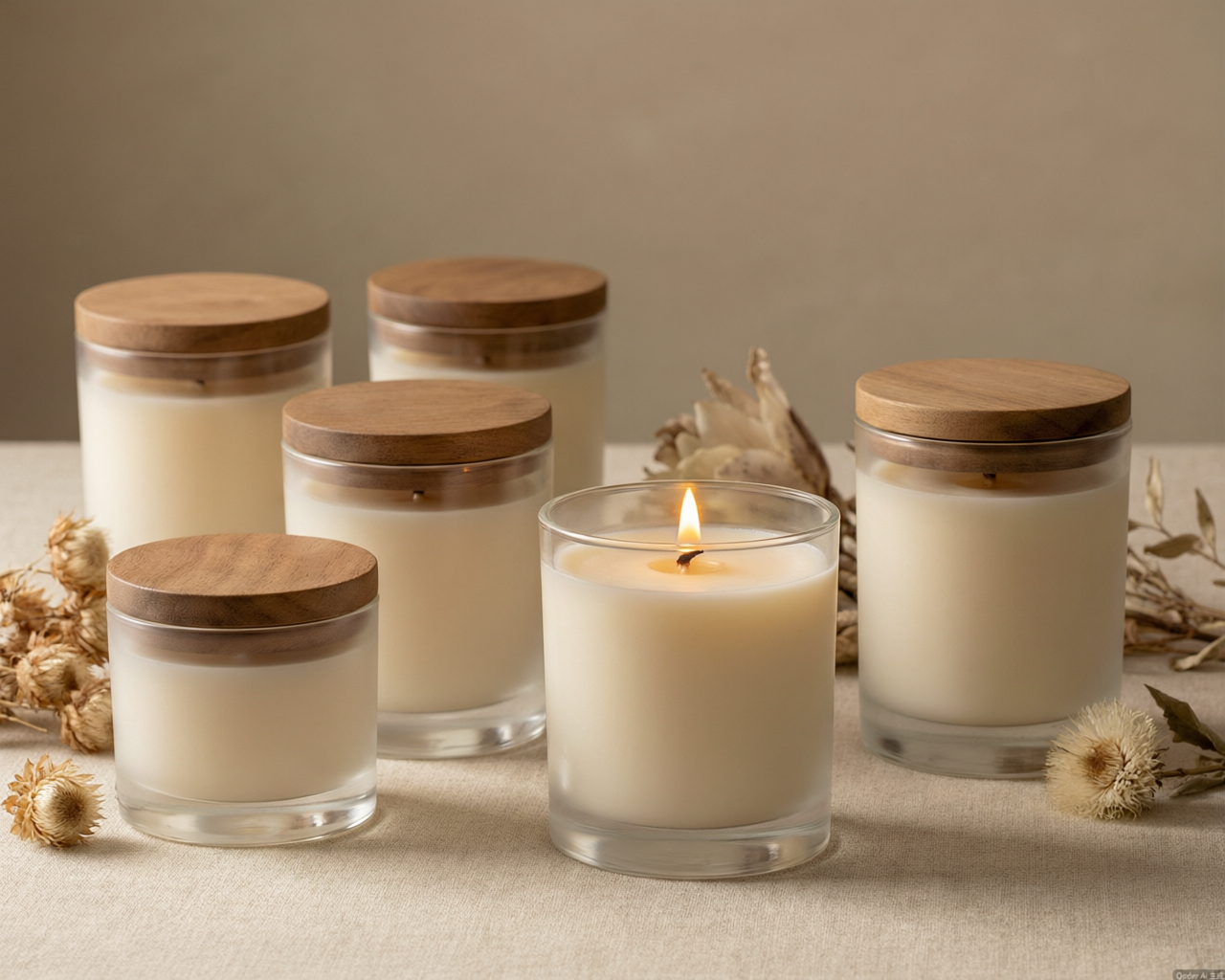
- Scented candles are consumer products regulated by the Consumer Product Safety Commission (CPSC). They must meet ASTM F2417 (fire safety for candles) and ASTM F2601 (labeling). Lead-core wicks have been banned since 2003.
- Reed diffusers, room sprays, and fragrance oils sold for scenting a room are generally consumer products, but if marketed with therapeutic claims (“relieves anxiety,” “kills germs”), they cross into EPA or FDA drug territory. Keep claims cosmetic-style or neutral.
- Essential oils and personal-adjacent products marketed for skin or wellness fall under FDA cosmetics rules. Under the Modernization of Cosmetics Regulation Act (MoCRA) of 2022, facilities that manufacture or process cosmetics for the US must register with the FDA and list products, renewing every two years.
- Car fragrances are consumer products but must comply with state VOC limits and, in some cases, Department of Transportation rules for shipping flammable liquids.
- California Proposition 65 requires warnings if a product exposes consumers to listed chemicals above safe-harbor levels. Many fragrance ingredients (for example, certain phthalates and benzene derivatives) trigger this requirement.
Budget USD 1,500–4,000 per SKU family for compliance review and lab testing (ASTM F2417 burn testing, IFRA certificate review, Prop 65 screening). Skipping this is the most common — and most expensive — mistake new importers make.
3. Get Labeling Right the First Time
Labeling errors cause a large share of US customs holds and Amazon listing suspensions. US candle regulations under ASTM F2601 require specific safety labeling on every candle, and the FTC’s Fair Packaging and Labeling Act adds net-quantity and identity rules.
A compliant US candle label should include:
- Identity statement — for example, “Scented Soy Candle.”
- Net weight in both metric and US customary units (e.g., “227 g / 8 oz”), placed in the bottom 30% of the principal display panel.
- Manufacturer or distributor name and address — a US-based responsible party is strongly recommended and required for some categories.
- Country of origin — “Made in China” must be legible and conspicuous.
- ASTM F2601 safety pictograms and warnings — burn instructions, “keep away from children,” trim-wick guidance, and the burn-time symbol.
- Ingredient disclosure for allergens where required, plus a Prop 65 warning if applicable.
For reed diffusers and room sprays, follow consumer-product chemical labeling (signal word, hazard statements, precautionary statements) and verify state VOC limits — California’s CARB caps VOC content for air-freshener categories at 3–25% depending on product type.
4. Plan the Import: HS Codes, Duties, and Landed Cost
A home fragrance usa import program lives or dies on landed-cost accuracy. Most fragrance products enter under predictable HS codes, but classification errors can cost thousands in penalties.
| Product | Typical HS Code | Base US Duty (2025) | Notes |
|---|---|---|---|
| Scented paraffin/soy candles | 3406.00.00 | ~3.2% | Subject to additional Section 301 tariffs on China origin |
| Reed diffuser oil (fragrance blend) | 3302.90 | ~5.5% | Alcohol-based blends may face excise rules |
| Essential oils (single oil) | 3301.xx | 0–5.5% | Varies by plant; citrus oils often duty-free |
| Room sprays / air fresheners | 3307.49 | ~4.9% | Check state VOC limits before shipping |
| Ceramic/glass vessels (empty) | 6912 / 7013 | 0–6.6% | Often shipped separately to reduce breakage |
Add to base duty: Section 301 tariffs on many Chinese goods (commonly 7.5–25%, with periodic exclusions), Merchandise Processing Fee (0.3464% of value, capped near USD 614 per entry), Harbor Maintenance Fee (0.125% for ocean freight), and customs-broker fees of USD 150–350 per entry. As a planning rule, model landed cost as FOB + 18–35% for duty, freight, and fees on China-origin fragrance goods.
Work with a licensed US customs broker and confirm classification before the first container ships. A binding ruling from CBP takes 30–90 days but eliminates classification risk.
5. Choose Your Sales Channels and Sequence Them
Most successful entrants sequence channels rather than launching everywhere at once. A typical 12-month rollout:
- Months 1–3: DTC and Amazon. Launch a Shopify store and an Amazon FBA listing. Use this phase to validate scent, packaging, and price. Expect USD 3,000–8,000 in launch marketing.
- Months 4–8: Wholesale via Faire, Tundra, and NY NOW. These platforms connect you with 100,000+ US boutiques. Minimum opening orders of USD 100–300 are normal; offer net-60 terms to win accounts.
- Months 9–12: Regional specialty retail and hotel/commercial accounts. Approach chains with a sell-through story from your DTC and boutique data. Commercial diffuser programs for hotels, spas, and offices can add USD 20,000–100,000 in annual recurring revenue per account.
For each channel, prepare a line sheet (PDF, 1–2 pages per SKU), UPC codes from GS1 US (USD 250 for a single prefix), and product liability insurance — most US retailers require USD 1–2 million in coverage and ask to be named as additional insured.
6. Build a Sourcing Strategy That Survives Scale
If you are sourcing from China, the difference between a hobby brand and a scalable business is supplier depth. A trading company can get you to 1,000 units; an OEM/ODM factory gets you to 100,000.
- Audit the factory, not the brochure. Request BSCI, Sedex, or ISO 9001 certificates and verify them on the issuing body’s website. A credible factory shares IFRA certificates for every fragrance oil and SDS sheets for every formula.
- Lock the spec sheet. Wax blend, fragrance load (typically 6–10% for candles), wick type, vessel dimensions, and packaging — all in writing, signed by both parties. Tolerance ranges should be explicit (e.g., fragrance load 8% ± 0.5%).
- Stage payments around milestones. A common structure is 30% deposit, 70% against bill of lading copy. Never wire 100% upfront.
- Inspect before shipment. Pre-shipment inspection (PSI) by SGS, Bureau Veritas, or Intertek costs USD 250–450 per man-day and catches defects while leverage still exists.
- Order samples in two waves. First wave: 3–5 scent and vessel options for internal review (USD 80–200 plus courier). Second wave: pre-production samples from the actual production line (USD 200–500). Approve in writing before bulk runs.
Aromiso runs an OEM program built around these milestones, with documented spec sheets, IFRA-compliant fragrance libraries, and PSI-ready production lines. When comparing factories, start with the product catalog to confirm the supplier covers your full category mix — candles, reed diffusers, essential oils, car fragrances, and commercial diffusers — under one roof.
7. Model Unit Economics Before You Sign a PO
A simple unit-economics model prevents most launch failures. Below is a realistic build for an 8 oz soy candle retailing at USD 28 in US specialty stores.
| Cost Line | Amount (USD) |
|---|---|
| FOB factory price | 2.10 |
| Ocean freight + insurance (allocated) | 0.55 |
| Duty + Section 301 + fees | 0.85 |
| Customs broker + inspection (allocated) | 0.20 |
| US 3PL pick, pack, storage | 0.90 |
| Landed + fulfilled cost | 4.60 |
| Wholesale price (to retailer) | 12.00 |
| Retail price (MSRP) | 28.00 |
At this structure, gross margin at wholesale is roughly 62%, leaving room for trade shows, sales reps (typically 15% commission), and marketing. If landed cost creeps above 40% of wholesale, renegotiate freight, raise MOQ, or simplify packaging before launch.
8. Prepare a 90-Day Launch Checklist
Compress launch into a disciplined 90-day sprint:
- Days 1–15: Finalize SKU list, register the US entity (or appoint a US agent), open GS1 US prefix, secure product liability insurance.
- Days 16–45: Confirm factory spec sheets, order pre-production samples, file FDA cosmetic facility registration if applicable, draft ASTM-compliant labels.
- Days 46–75: Approve samples, place 30% deposit, schedule PSI, book ocean freight (allow 25–40 days China-to-US port time), engage customs broker.
- Days 76–90: Goods arrive, clear customs, deliver to 3PL, activate Amazon FBA and Shopify, send opening orders to first 20–50 wholesale accounts.
Next Steps
Selling fragrance in the USA rewards brands that treat compliance, landed cost, and channel sequencing as one system. The winners are not the ones with the prettiest vessel — they are the ones who clear customs without drama, restock in 30 days, and walk into buyer meetings with IFRA certificates, ASTM test reports, and a clean unit-economics model in hand.
Start with three actions: review the product catalog to shortlist SKUs, explore the OEM program for custom formulation and private-label options, and request a quote with your target retail price, MOQ, and timeline. Aromiso’s team will return a landed-cost estimate, compliance checklist, and production schedule within two business days.