Market Entry
Brazil Home Fragrance Market: Latin America's Largest Scent Economy

Brazil consumes more fragrance per capita than nearly any country on earth. With 215 million people, a tropical climate that makes scent a daily necessity rather than an indulgence, and a retail fragrance market exceeding USD 7 billion across all categories, the home fragrance segment alone generates an estimated USD 1.9 billion at retail. For a procurement manager or brand owner sourcing reed diffusers, scented candles, or car fragrances from China, Brazil represents the single highest-volume opportunity in Latin America — and one of the most operationally demanding markets to enter profitably.
The challenge is not demand. The challenge is execution: a cascading tax system that adds 60-100% to your CIF cost, ANVISA regulatory classification that determines whether your product ships in 6 weeks or 12 months, port congestion at Santos that can add 10-20 days to clearance during peak season, and retail payment terms stretching to 120 days. Brands that treat Brazil as “just another export market” burn cash. Brands that invest upfront in compliance architecture, local partnerships, and tax-efficient structuring build durable revenue. This guide walks through each layer with the numbers you need to plan realistically.
Market size, growth, and consumer behavior
The fragrance market in Brazil benefits from structural advantages that few markets can match:
- Per capita consumption — Brazilians purchase fragrance products at 3-4x the global per capita rate. Urban households buy air fresheners and home scents on a monthly cycle, not a seasonal one.
- Climate-driven repurchase — In northeastern cities like Fortaleza and Salvador, average temperatures above 27C year-round accelerate evaporation. A 120 ml reed diffuser that lasts 8-10 weeks in a temperate market lasts 4-6 weeks here, effectively doubling annual unit consumption per household.
- Urban density — 87% urbanization rate, with the majority living in 40-75 m2 apartments. Compact formats (80-200 ml diffusers, 150-250 g candles) dominate volume. Oversized luxury formats underperform outside gift channels.
- Digital commerce growth — Online channels (Mercado Livre, Shopee, Amazon.com.br) now represent 18-22% of home fragrance sales, growing 25%+ year-over-year. This is the lowest-barrier entry point for new brands.
The mass-market price band sits at BRL 25-60 (approximately USD 5-12) at shelf. Premium and gifting products reach BRL 90-250, but 70%+ of unit volume occurs below BRL 60.
ANVISA classification and regulatory requirements
ANVISA (Agencia Nacional de Vigilancia Sanitaria) is Brazil’s health regulatory authority. Whether your product requires registration depends entirely on its legal classification — and the difference between categories can mean 6 weeks versus 12 months of lead time.
| Product category | Regulatory status | Registration needed | Typical timeline |
|---|---|---|---|
| Decorative scented candles | Consumer product (INMETRO safety) | No ANVISA registration | 2-4 weeks (safety testing) |
| Reed diffusers (ambient scent only) | Household product | No registration | Immediate upon import clearance |
| Room sprays (no health claims) | Household product | No registration | Immediate upon import clearance |
| Sprays with antimicrobial/sanitizing claims | Saneante (sanitizer) | ANVISA notification | 3-6 months |
| Essential oils marketed for skin or therapeutic use | Cosmetic Grade 1 or 2 | Full ANVISA registration | 6-18 months |
| Electric/plug-in diffusers | Electronic consumer product | INMETRO certification mandatory | 6-10 weeks testing |
Critical compliance actions:
- Lock your product claims before formulation. A “calming lavender room mist” is a household product. Add “promotes sleep” or “apply to wrists” and it crosses into cosmetic or health-product territory requiring full registration.
- Appoint a Brazilian legal entity (Empresa Titular). ANVISA registrations must be held by a company with a CNPJ (Brazilian tax ID) registered in Brazil. Budget BRL 3,000-8,000 per month for a regulatory affairs partner.
- Portuguese labeling is non-negotiable. Every consumer-facing label must include: product name in Portuguese, full INCI ingredient list, manufacturer and importer name/address, batch number, manufacturing and expiry dates, country of origin (“Fabricado na China”), and ANVISA registration number where applicable. Budget USD 500-1,500 per SKU for professional regulatory translation — machine translation gets rejected at retail onboarding.
Import duties, taxes, and true landed cost
Brazil’s tax cascade is the single biggest surprise for first-time importers. A reed diffuser with a FOB price of USD 2.80 can land at USD 5.40-6.80 before any commercial margin. Here is the breakdown for HS code 3307.49 (odoriferous preparations) entering via Santos:
| Cost layer | Rate | Applied to |
|---|---|---|
| Import duty (II) | 18% | CIF value |
| Industrial products tax (IPI) | 5-10% | CIF + II |
| PIS/COFINS social contributions | 11.75% combined | CIF value |
| State VAT (ICMS) | 17-25% (Sao Paulo: 18%) | Grossed-up taxable base |
| AFRMM maritime surcharge | 8% | Ocean freight cost |
| Customs brokerage and port fees | USD 800-2,500 per container | Flat fee |
Operational guidance:
- Hire a despachante aduaneiro (licensed customs broker) with specific experience in household fragrance products. Expect BRL 1,500-4,000 per shipment. A broker unfamiliar with HS 3307 classification will cost you more in delays than they save.
- Verify your HS code before production. Misclassifying a reed diffuser under 3406 (candles) instead of 3307.49 changes your duty rate by 4-8 percentage points. This decision should be confirmed with your broker before goods leave the factory.
- Plan for interstate tax differences. Shipping from a Sao Paulo warehouse to Bahia or Pernambuco triggers DIFAL (differential ICMS), adding 4-7% to your effective tax. Model your distribution geography before choosing a warehouse location.
Product formats and fragrance preferences
What sells in Brazil differs meaningfully from North American or European patterns. Volume lives in accessible, climate-appropriate formats:
Top-performing formats by channel velocity:
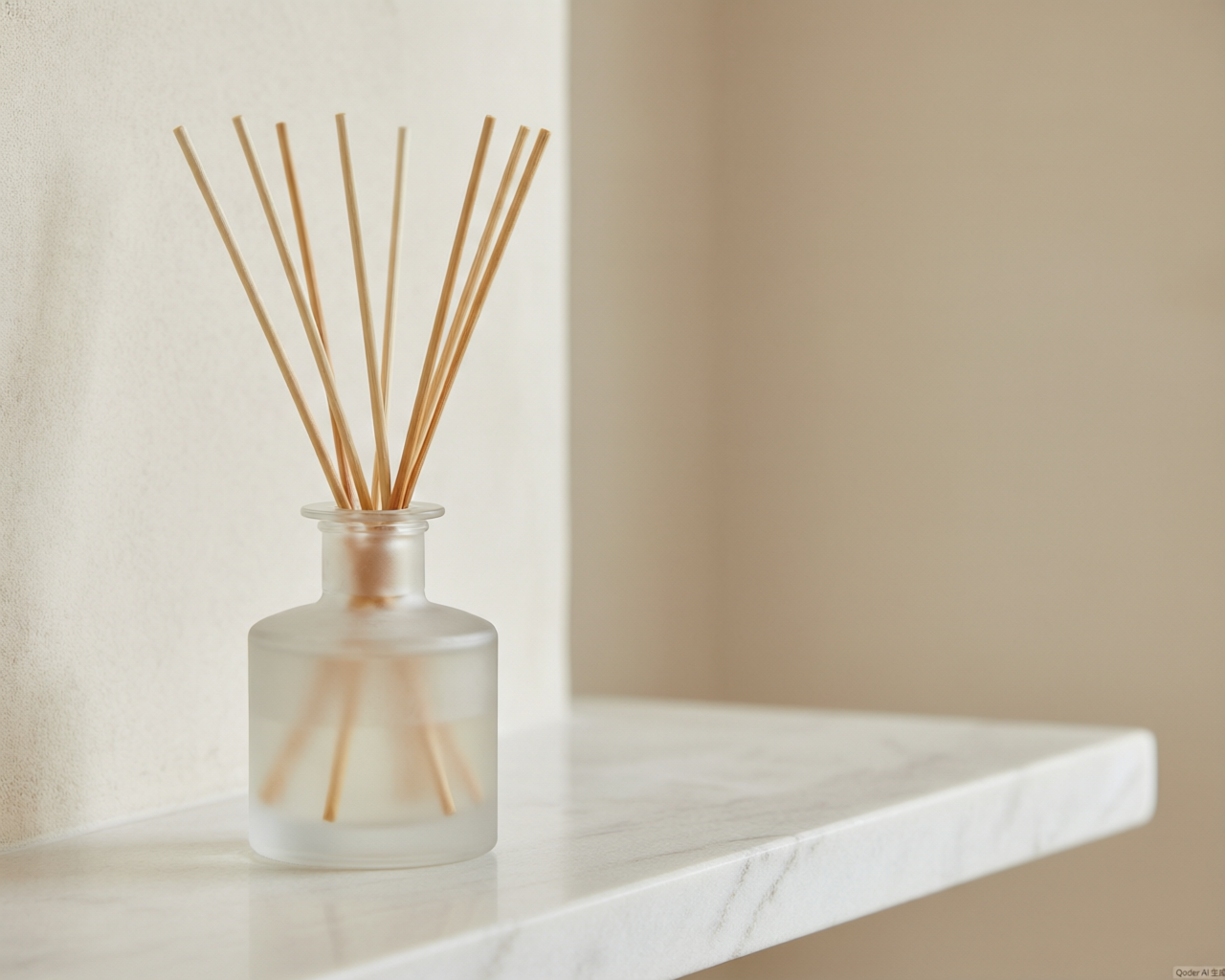
- Reed diffusers, 100-250 ml — Fastest-growing category. Glass vessels with decorative appeal; 8-12 bamboo reeds standard, fiber reeds gaining premium share. Target FOB USD 1.80-3.50 for mass-to-mid positioning.
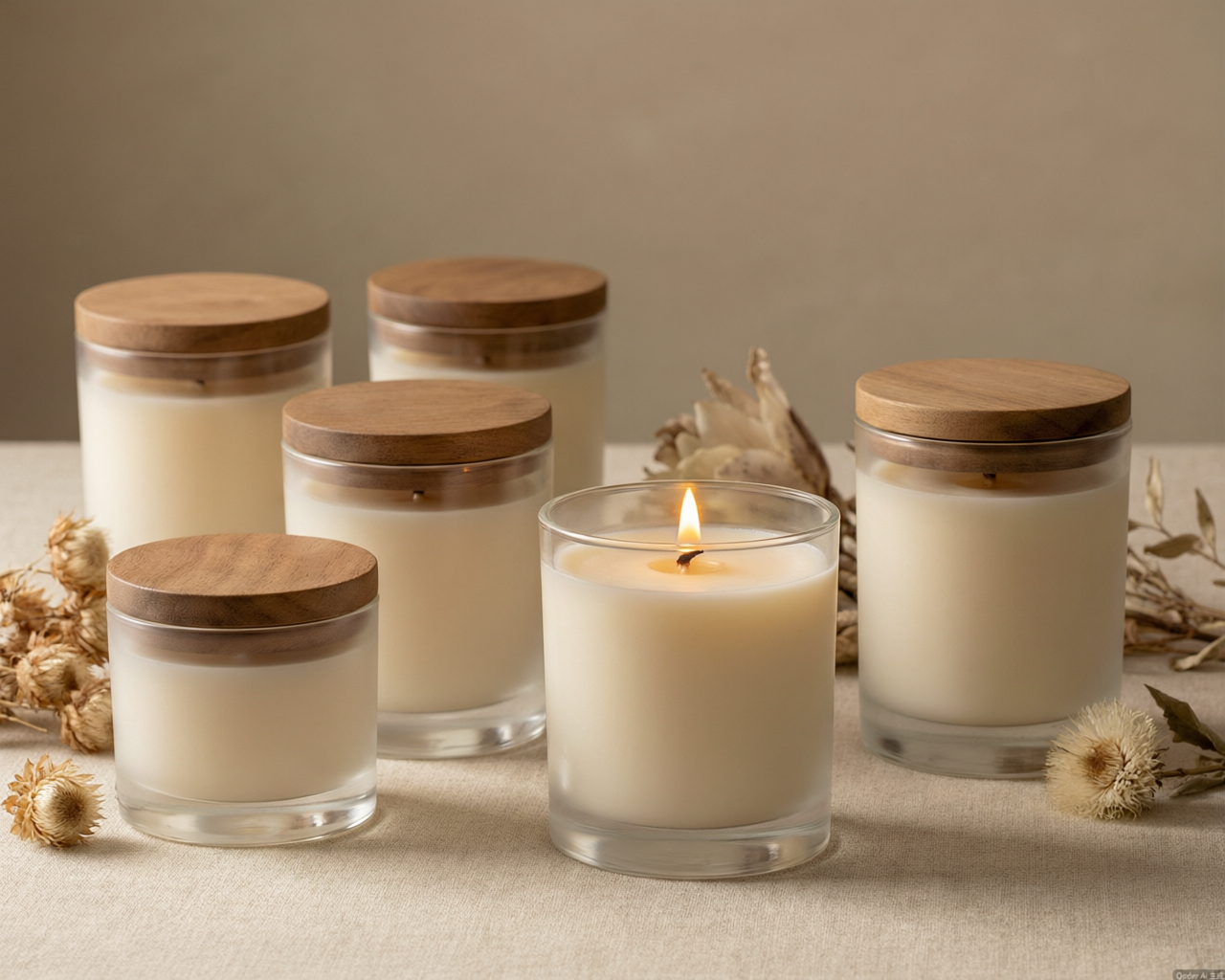
- Scented candles, 150-300 g — Soy-coconut wax blends align with sustainability messaging popular among 25-40 urban buyers. Single-wick glass jars with lids are the dominant format. Multi-wick formats underperform (impractical in small apartments, perceived as wasteful).
- Car fragrances — Brazil has 115+ million registered vehicles. Liquid vent-clip diffusers growing at 15%+ annually. Low unit cost, high repeat rate.
- Room sprays, 200-500 ml — Highest-velocity consumable. Pump-spray formats growing in premium channels.
Fragrance profile preferences:
- Tropical fruits — Maracuja (passion fruit), acai, manga (mango), and coco (coconut) are perennial volume leaders.
- Brazilian florals — Jasmim, frangipani, and orquidea outperform European rose or peony profiles.
- Fresh and clean for mass market — Lavanda, Brisa do Mar (sea breeze), Alecrim (rosemary), and Capim-Limao (lemongrass) dominate supermarket shelves.
- Woody and warm for premium gifting — Sandalo (sandalwood), ambar (amber), and baunilha (vanilla) in BRL 80+ products.
Approach with caution: Oud-based profiles (low consumer familiarity), large 3-wick candles (poor fit for apartment living), and plug-in electric diffusers (require INMETRO certification: 6-10 weeks, USD 2,000-5,000 in testing fees).
Distribution channels and market entry sequence
| Channel | Market share | Entry requirements | Typical margin structure |
|---|---|---|---|
| Supermarkets (Carrefour, GPA, Assai) | ~35% | BRC/IFS audit, EDI capability, 60-90 day payment terms | 35-45% retailer margin |
| E-commerce (Mercado Livre, Shopee, Amazon.br) | ~20% | CNPJ, nota fiscal system, local fulfillment or 3PL | 12-20% platform fees |
| Pharmacies (Raia Drogasil, Pague Menos) | ~15% | ANVISA documentation, barcoded packaging, planogram compliance | 40-50% retailer margin |
| Specialty home (Tok&Stok, Camicado) | ~12% | Brand narrative, 12+ SKU range, seasonal collections | 50-60% retailer margin |
| B2B / hospitality / corporate gifting | ~10% | Custom branding, volume pricing, project-based contracts | Negotiated per project |
Recommended entry sequence for a new brand:
- Months 1-3: Launch 3-5 SKUs on Mercado Livre and Shopee. Validate fragrance preferences and price elasticity with minimal fixed cost.
- Months 4-8: Secure 2-3 specialty retail accounts (Tok&Stok, regional home stores) for brand credibility and shelf presence.
- Months 9-14: Approach pharmacy chains once documentation, volume capacity, and sell-through data are proven.
- Months 15+: Negotiate supermarket listings only when you can guarantee consistent replenishment and absorb 60-90 day payment terms.
Sourcing from China: supplier criteria and logistics timeline
China supplies an estimated 60-70% of Brazil’s imported home fragrance products. Selecting the right OEM/ODM partner determines whether your first shipment clears customs in 5 days or 20.
Supplier evaluation checklist:
- Brazil-specific documentation — Ask whether they have shipped to Brazil before. You need Portuguese-ready label files, INCI lists formatted for ANVISA submission, and safety data sheets (FISPQ format). A supplier who has done this before saves 4-6 weeks of back-and-forth.
- Fragrance compliance depth — IFRA certificates are necessary but insufficient. Confirm your supplier’s fragrance house maintains data aligned with ANVISA RDC resolutions for restricted substances.
- Packaging engineered for tropical transit — Ocean transit to Santos is 30-40 days. Container humidity regularly exceeds 85%. Require moisture-barrier inner bags, silica gel (minimum 50 g per carton), and shrink-wrapped pallets. Corrugated cartons should be 5-layer minimum.
- MOQ flexibility for market entry — A supplier offering 500-1,000 units per SKU for initial orders lets you test 4-6 fragrances without overcommitting capital. Explore the OEM program for tiered minimums designed specifically for market-entry volumes.
Shipping timeline (Shenzhen/Shanghai to Santos, door-to-door):
| Stage | Duration |
|---|---|
| Production and quality control | 30-45 days |
| Export clearance and container loading | 5-7 days |
| Ocean transit | 30-40 days |
| Santos customs clearance (normal / peak season) | 5-10 / 10-20 days |
| Inland delivery (Sao Paulo metro area) | 2-4 days |
| Total door-to-door | 72-126 days |
Plan inventory around a 4-month minimum replenishment cycle. Stockouts during November-February (summer gifting and holiday season) damage retailer relationships that take years to rebuild.
Pricing model and common pitfalls
A worked example for a 200 ml reed diffuser targeting mass-market positioning:
- FOB cost: USD 2.80
- Ocean freight (allocated per unit): USD 0.35
- Duties and taxes (cascading): USD 2.10-2.40
- Brokerage and port fees (allocated): USD 0.15
- Landed cost: USD 5.40-5.70
After distributor margin (30%) and retailer margin (45%), the shelf price reaches approximately BRL 70-75 (USD 13-15) — the upper boundary of mass-market. To hit the BRL 40-50 volume sweet spot, target FOB costs under USD 1.80 through simpler packaging, smaller formats (100-120 ml), or higher container utilization. Review the product catalog for formats engineered at different price tiers.
Pitfalls that cost first-time entrants real money:
- Underestimating ANVISA timelines — Start registration 12+ months before planned launch for any skin-contact or therapeutic-claim product. No expedited pathway exists.
- Cash flow gaps from payment terms — Brazilian retail operates on 60-90 day terms, sometimes 120. Combined with 4-month supply lead times, you need working capital covering 7-8 months before first revenue arrives.
- Labeling shortcuts — Machine-translated or incomplete labels trigger retail rejection and customs inspections. This is the most common (and most avoidable) cause of shipment delays.
- Ignoring INMETRO for electronics — USB-powered or plug-in diffusers without INMETRO certification are seized at customs. No exceptions, no retroactive certification.
- Wrong HS code selection — The difference between 3307.49 and 3406 changes your duty by 4-8 percentage points. Confirm classification with your despachante before production begins.
Next Steps
Brazil rewards brands that invest in regulatory groundwork, build local partnerships early, and commit to a multi-year horizon. A well-executed entry with a focused 3-5 SKU range can reach BRL 1-3 million in first-year revenue through e-commerce and specialty retail alone — without touching supermarket channels.
To move from planning to execution:
- Classify every SKU — Determine which products require ANVISA registration and which enter as unregulated household products. This single decision shapes your entire timeline and budget.
- Request landed-cost modeling — Request a quote with your target SKUs, volumes, fragrance profiles, and destination state. A detailed quote should include FOB pricing, recommended HS codes, packaging specs optimized for Brazilian humidity, and Portuguese label templates.
- Secure local partners before ordering — Engage a despachante aduaneiro and a regulatory consultant. Budget BRL 5,000-12,000 per month during the setup phase.
- Order market-entry quantities — Start with 500-1,000 units per SKU across 3-5 fragrances. Test on Mercado Livre for 8-12 weeks before committing to full-container replenishment orders.
- Build a 12-month supply calendar — Work backward from your target retail date: 4 months production and shipping, 6-12 months ANVISA registration (if applicable), 2 months retailer onboarding and planogram placement.
The brands building real revenue in Brazil are the ones that treat it as a long-term market, not a one-off export destination. Start with compliance, price for the tax reality, and choose a manufacturing partner who understands what Brazilian shelves — and Brazilian customs — actually demand.