Buyer FAQ
What Is Fragrance Throw? Cold Throw vs Hot Throw Explained
When customers say a candle “has no smell” or “fills the whole room,” they are describing fragrance throw. For B2B buyers, understanding throw is essential because it is the single most common driver of positive reviews and product returns.
What Is Fragrance Throw?
Fragrance throw is the distance and intensity at which a scented product disperses its aroma into the surrounding air. It is not a single measurement but a performance characteristic influenced by wax type, fragrance load, wick size, room conditions, and formulation quality.
There are two types: cold throw and hot throw.
What Is Cold Throw?
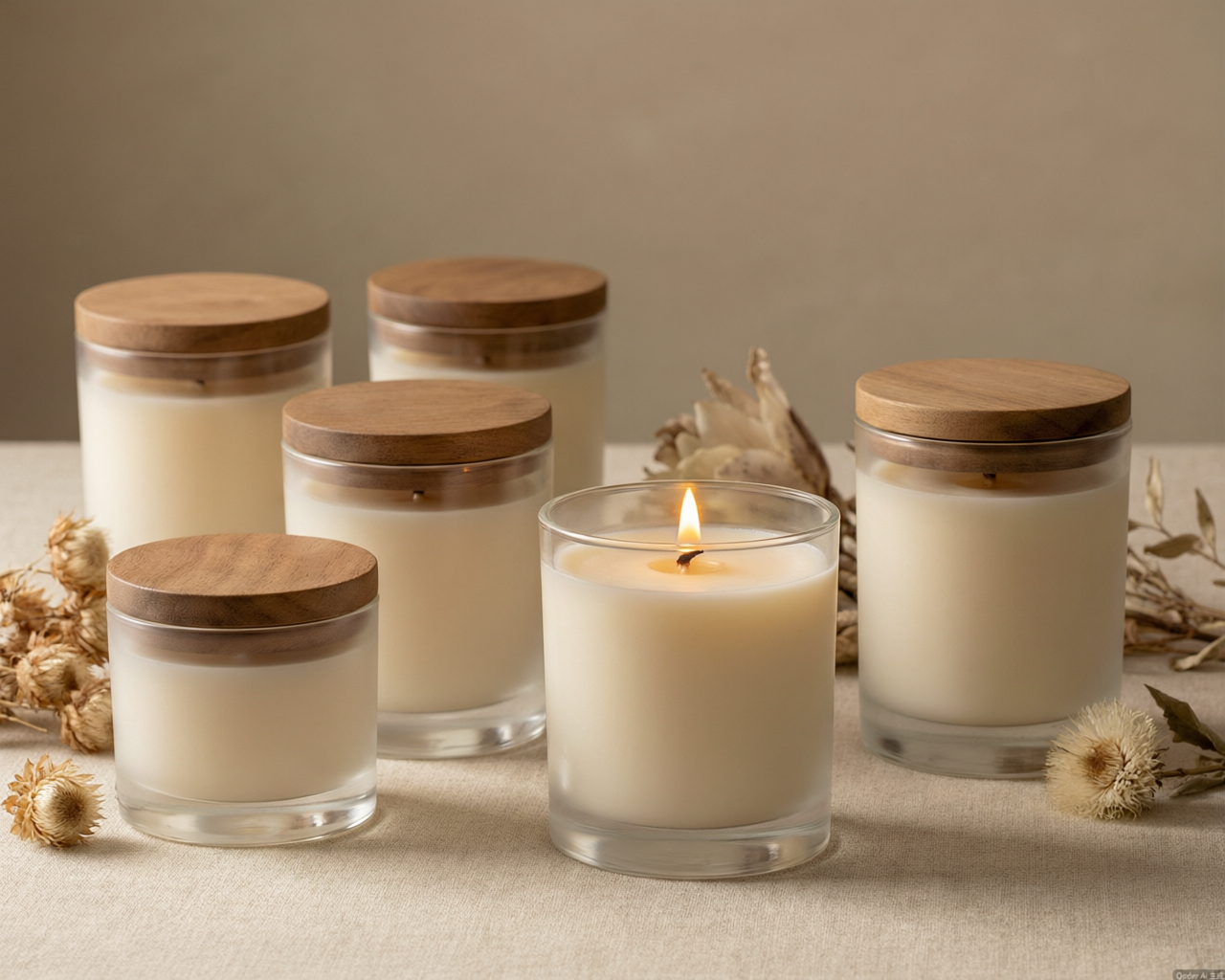
Cold throw is the scent you perceive from an unlit candle or unopened diffuser. It is the first impression a customer gets when they pick up the product in a store or open the shipping box.
Why it matters for buyers:
- In retail, cold throw drives impulse purchases. A customer who picks up a candle and smells nothing will put it back.
- In e-commerce, cold throw drives the unboxing experience and first impressions in reviews.
- Weak cold throw is the number one complaint in 1-star candle reviews on Amazon.
What affects cold throw:
- Fragrance oil concentration (typical load: 6% to 10% for soy candles)
- Wax type (paraffin releases cold scent more readily than soy)
- Cure time (uncured soy candles have 30% to 40% weaker cold throw)
- Container seal (lidded jars preserve cold throw; open-top candles lose it faster)
What Is Hot Throw?
Hot throw is the scent released when the candle is burning and the wax melt pool is active. This is the performance your customer experiences during actual use.
Why it matters for buyers:
- Hot throw determines whether a customer repurchases or leaves a 5-star review.
- It is the primary differentiator between a $12 candle and a $35 candle in the consumer’s mind.
- Weak hot throw generates “scentless when lit” complaints, which are the hardest negative reviews to overcome.
What affects hot throw:
- Fragrance oil quality and composition (synthetic vs. natural, top-note vs. base-note ratio)
- Wax temperature at pour (pouring too hot burns off top notes; ideal soy pour temperature is 55 to 65 degrees C)
- Wick size relative to container diameter (too small = insufficient melt pool; too large = soot and burnt scent)
- Fragrance load percentage (above 10% in soy wax, the oil may not bind properly and the candle sweats)
- Room size and ventilation (a 200g candle effectively scents 15 to 25 square meters)
Cold Throw vs Hot Throw: Quick Comparison
| Factor | Cold Throw | Hot Throw |
|---|---|---|
| When perceived | Unlit, at rest | During burning |
| Primary driver | Surface fragrance evaporation | Melt pool heat diffusion |
| Key variable | Fragrance load and cure time | Wick size and wax formulation |
| Customer impact | Purchase decision, unboxing | Repurchase, reviews, loyalty |
| Typical complaint | ”Smells like nothing in the jar" | "No scent when burning” |
How Do You Evaluate Throw When Sourcing?
When you receive samples from a factory, test throw systematically:
Cold throw test:
- Remove the lid and hold the candle 15 cm from your nose.
- Note intensity on a 1-to-5 scale (1 = barely detectable, 5 = strong from 50 cm away).
- Repeat after 24 hours in a sealed room to check consistency.
Hot throw test:
- Burn the candle in a closed room of approximately 20 square meters.
- Allow a full melt pool to form (typically 2 to 3 hours for a 200g candle).
- Enter the room from outside and note scent intensity immediately.
- Record burn time to full melt pool and total burn duration.
At Aromiso, we conduct both tests on every production batch and include throw ratings in our QC reports. Our standard: cold throw must rate 3.5 or above (out of 5) and hot throw must fill a 20-square-meter room within 30 minutes of full melt pool.
How Can You Improve Throw in Your Product Line?
If your current product has weak throw, these adjustments help:
- Increase fragrance load from 6% to 8% or 9%. Cost increase: approximately $0.15 to $0.25 per 200g candle.
- Switch wax blend. A coconut-soy blend (70/30) typically produces 20% to 30% stronger hot throw than 100% soy.
- Optimize wick size. A wick that is one size larger increases melt pool diameter and scent diffusion. Test carefully to avoid soot.
- Use a fragrance with stronger base notes. Vanilla, amber, and musk persist longer and project further than citrus or green notes.
- Ensure full cure time. 14 days for soy, not 3.
What Throw Performance Should You Expect?
For a well-formulated 200g soy candle at 8% fragrance load:
- Cold throw detectable at: 30 to 50 cm
- Hot throw effective range: 15 to 25 square meters
- Time to full room scent: 20 to 40 minutes after lighting
- Total burn time: 40 to 55 hours
If your samples do not hit these benchmarks, the formulation needs adjustment before you commit to production.
The Bottom Line
Fragrance throw is what your customer actually pays for. Cold throw sells the first unit; hot throw sells every repeat purchase. When sourcing from a factory, test both systematically, specify your performance expectations in writing, and choose a supplier that includes throw testing in their standard QC.
Want samples with documented throw performance data? Request your evaluation set at aromiso.com.