Market Guides
US Home Fragrance Market Trends: What American Buyers Want

The US home fragrance market is one of the most mature and competitive in the world, and it is still growing. For B2B buyers sourcing candles, diffusers, and room sprays from China, understanding what American consumers actually want, and how those preferences are shifting, is the difference between a sell-through success and a warehouse full of dead stock. This guide summarizes the data and translates it into sourcing decisions.
Market Size and Growth
The US home fragrance category, including candles, reed diffusers, room sprays, wax melts, plug-ins, and electric diffusers, generated approximately USD 5.5 to USD 6 billion in retail sales in 2024 according to industry trackers including Circana and Statista. The category has grown at a CAGR of 4 to 6 percent over the past five years, with candles representing roughly 55 to 60 percent of total value.
Several structural forces are sustaining growth:
- Continued work-from-home patterns increasing time spent in living spaces
- The “wellness home” trend, with fragrance positioned as self-care
- Premiumization, with average candle prices rising from USD 14 in 2019 to USD 19 in 2024
- Gifting demand, with home fragrance among the top five gift categories in Q4
Scent Preferences by Region and Season
American scent preferences are not monolithic. Broad patterns from retail sell-through data:
- Northeast and Midwest favor warm, bakery, and wood scents: vanilla, cinnamon, pumpkin, sandalwood, tobacco.
- South leans toward floral and fruity: magnolia, peach, sweet tea, honeysuckle.
- West Coast prefers clean, green, and citrus: eucalyptus, sage, sea salt, bergamot, fig.
- Mountain states favor outdoorsy profiles: pine, cedar, campfire, sagebrush.
Seasonally, the US market runs on a predictable calendar:
| Quarter | Dominant scent families |
|---|---|
| Q1 (Jan to Mar) | Clean linen, eucalyptus, fresh citrus |
| Q2 (Apr to Jun) | Floral, fruity, garden herbs |
| Q3 (Jul to Sep) | Citrus, tropical, late-summer fruit |
| Q4 (Oct to Dec) | Pumpkin, cinnamon, pine, vanilla, cranberry |
Q4 alone accounts for roughly 35 to 40 percent of annual candle sales, which is why US buyers place orders with Chinese factories between May and August.
Product Format Trends
Candles
Soy and coconut-soy blends have overtaken paraffin in the premium segment, driven by consumer perception of cleaner burning. Wood wicks have grown from a niche feature to a mainstream premium differentiator, supporting USD 5 to USD 10 price premiums. Multi-wick candles in 16 to 22 oz vessels are the fastest-growing format in mass-market retail.
Reed Diffusers
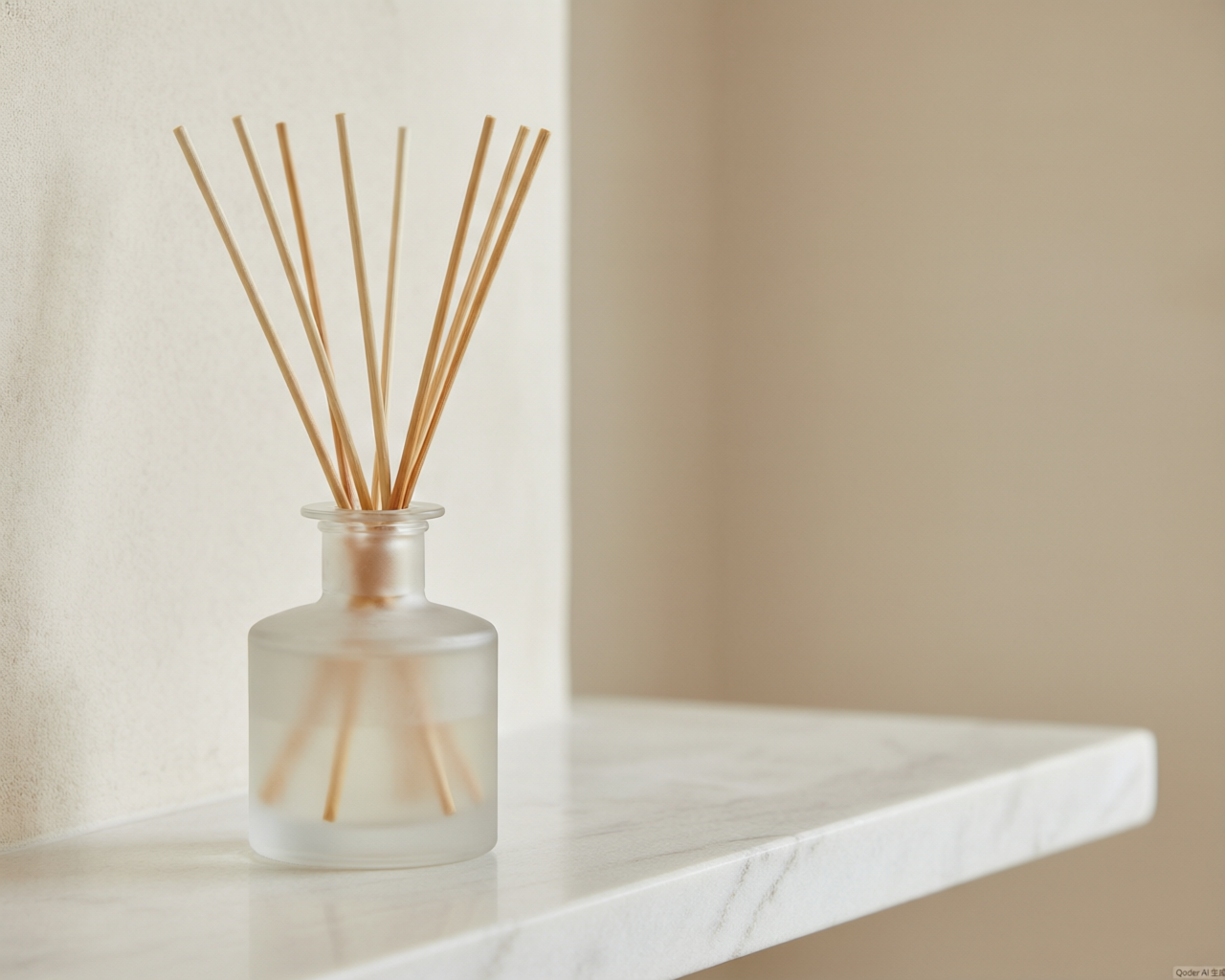
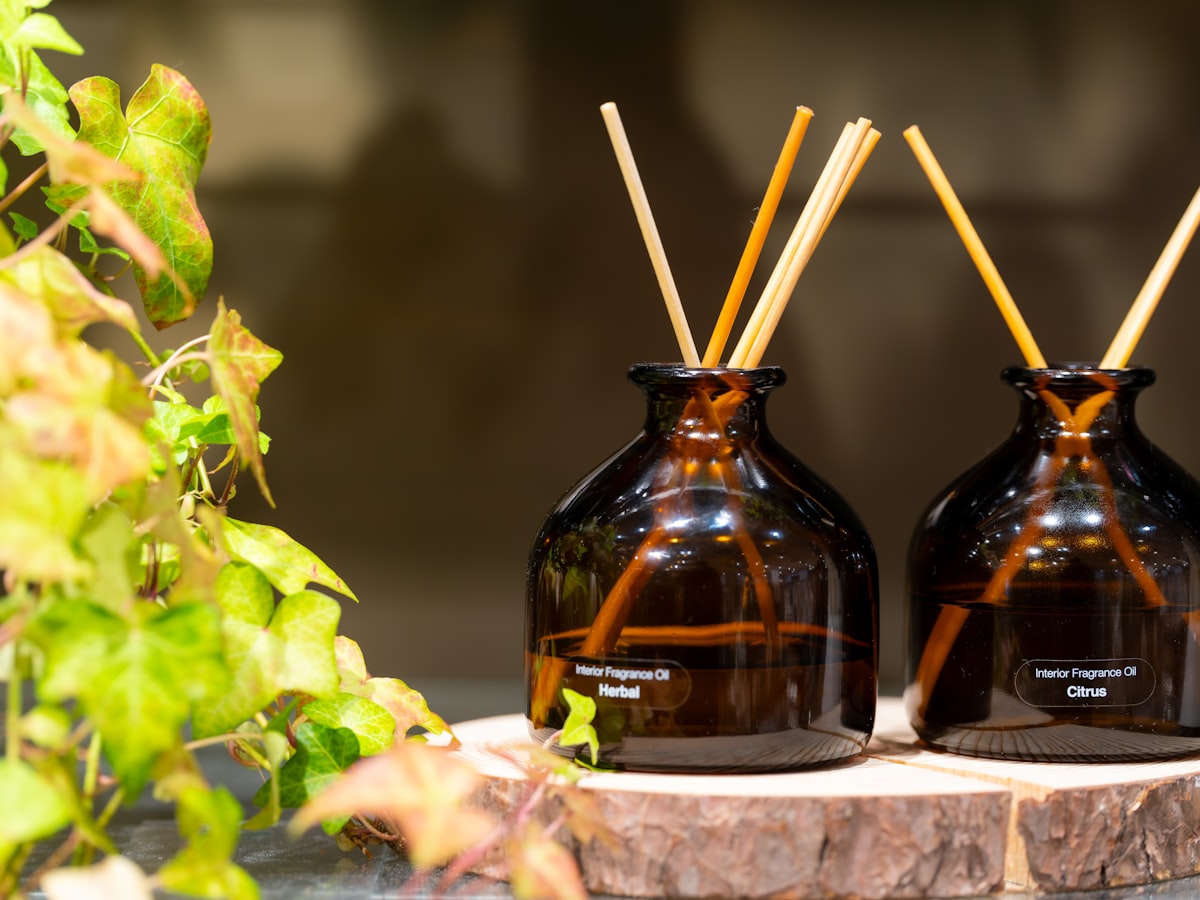
Reed diffusers are the fastest-growing home fragrance format in the US, with double-digit growth in 2023 and 2024. Consumers cite flame-free safety and continuous scent as the primary purchase drivers. The 3.4 to 6.8 oz size range dominates, with premium brands moving toward refillable glass vessels.
Electric and Smart Diffusers
USB and app-connected essential oil diffusers continue to grow, particularly in the wellness segment. The category faces saturation at the low end, but premium designs in ceramic and wood finishes are gaining shelf space.
Wax Melts
Wax melts remain a strong value segment, with multi-pack tart formats performing well at mass retail and on Amazon. Average price points of USD 9 to USD 16 make them an accessible entry product for new brands.
Channel Shifts
- Amazon remains the largest single online channel for home fragrance, with category sales estimated above USD 1.5 billion annually.
- TikTok Shop has emerged as a breakout channel for fragrance, with several candle brands crossing USD 1 million in monthly GMV through creator content.
- Target and Walmart continue to expand premium private-label fragrance lines, squeezing mid-tier national brands.
- Independent boutiques and gift shops remain a critical channel for premium and luxury candles, with wholesale margins of 50 percent.
- Farmers markets and craft fairs are a meaningful launch channel for small brands, with over 8,000 active markets nationwide.
Consumer Values Driving Purchase
Surveys from the National Candle Association and Mintel point to four purchase drivers:
- Scent quality and throw — still the number one factor, cited by over 70 percent of buyers.
- Clean formulation — soy, coconut, beeswax, phthalate-free fragrance, lead-free wicks.
- Sustainable packaging — recyclable glass, FSC-certified paper, refillable formats.
- Brand story and aesthetics — particularly for gifting and premium purchases.
“Clean fragrance” claims grew over 30 percent year-over-year in US product launches, and phthalate-free has become a baseline expectation rather than a differentiator.
Implications for Sourcing from China
For US buyers working with Chinese OEMs, the trend data translates into specific decisions:
- Specify soy or coconut-soy wax for any premium positioning; paraffin is increasingly limited to mass-market price tiers.
- Build a seasonal scent calendar and place Q4 orders by July to secure production slots.
- Invest in reed diffusers as a growth category with fewer hazmat complications than aerosols.
- Demand IFRA and phthalate-free documentation from your factory as standard.
- Specify recyclable packaging and document sustainability claims to avoid FTC Green Guide enforcement.
- Order 60 to 90 days ahead of seasonal peaks; Chinese factories book out 3 to 4 months before Q4.
At Aromiso, US buyers can access trend-driven scent collections updated quarterly, including 2025 favorites such as smoked vanilla, eucalyptus mint, coastal sage, and spiced pear, all formulated to IFRA standards and Prop 65 evaluated.
Final Thoughts
The US home fragrance market rewards buyers who treat trend data as a sourcing input rather than a marketing afterthought. Soy and coconut waxes, reed diffusers, seasonal scent calendars, and clean-fragrance documentation are no longer optional; they are the price of entry. Brands that align their Chinese manufacturing partners with these trends early will capture share from competitors still pouring paraffin into generic jars.