Market Guides
US Customs Duty on Fragrance Products from China: HS Codes and Rates

Customs classification is the single largest variable cost in importing fragrance products from China to the United States. A misclassified shipment can mean overpaying duty by tens of thousands of dollars, or underpaying and facing CBP penalties years later. This guide breaks down the relevant HS codes, MFN duty rates, Section 301 tariffs, and the additional fees that determine true landed cost.
The Classification Framework
The United States uses the Harmonized Tariff Schedule (HTS), administered by the US International Trade Commission (USITC), with the first six digits aligned to the global Harmonized System maintained by the World Customs Organization. Digits seven through ten are US-specific statistical suffixes.
Classification follows the General Rules of Interpretation (GRI), which prioritize the heading text, then chapter and section notes, then essential character. For fragrance products, the relevant chapters are:
- Chapter 33 — Essential oils, perfumery, cosmetics
- Chapter 34 — Soaps, waxes, candles
- Chapter 39 — Plastics (relevant for diffuser caps and packaging)
- Chapter 70 — Glass (relevant for empty vessels imported separately)
Key HS Codes for Fragrance Products
| Product | HS Code | MFN Duty Rate |
|---|---|---|
| Candles, tapers, and similar | 3406.00.00 | Free |
| Indoor odoriferous preparations (reed diffusers, potpourri) | 3307.49.00 | 4.0% ad valorem |
| Perfumes and toilet waters | 3303.00.10 / 3303.00.30 | 4.9% ad valorem |
| Essential oils of citrus (terpenic) | 3301.12 / 3301.13 / 3301.19 | Free to 0.6 cents/kg |
| Essential oils other than citrus | 3301.29 | Free to 4.7% ad valorem |
| Resinoids and oleoresins | 3301.30 | Free |
| Mixtures of odoriferous substances (fragrance oils) | 3302.90 | 3.1% ad valorem |
| Soap and organic surface-active preparations | 3401 | Free to 3.5% |
| Empty glass bottles and jars | 7010 | Free to 6.6% |
| Glass candle vessels (decorative) | 7013 | 6.6% ad valorem |
The most important takeaway: finished candles enter duty-free under MFN, but fragrance oils, diffusers, and essential oils carry modest duties of 3 to 5 percent.
Section 301 Tariffs on Chinese Goods
The Section 301 tariffs imposed under the Trade Act of 1974 remain the dominant cost driver for Chinese fragrance imports. As of 2025:
- List 1, 2, 3, and 4A goods carry an additional 25 percent ad valorem duty.
- List 4A includes many consumer goods, with exclusions that have been extended and reinstated multiple times.
- Candles (3406.00.00) and many fragrance preparations have appeared on various lists; the current status should be verified at the time of each entry.
In addition, 2025 IEEPA-based reciprocal tariffs introduced temporary additional duties on Chinese goods, with rates that have fluctuated between 10 and 145 percent throughout the year before settling at negotiated levels. Importers must confirm the current rate with their customs broker before each shipment, because the effective additional duty can exceed the underlying MFN rate by an order of magnitude.
Other Fees at Entry
Beyond duty, US importers pay:
| Fee | Rate |
|---|---|
| Merchandise Processing Fee (MPF), formal entry | 0.3464% of cargo value, min USD 31.67, max USD 614.35 |
| Harbor Maintenance Fee (HMF), ocean cargo only | 0.125% of cargo value |
| Customs broker fee | USD 100 to USD 250 per entry |
| Bond (single entry) | Roughly 0.5% of cargo value, min USD 50 |
| Bond (continuous, annual) | USD 500 to USD 2,000 depending on volume |
| ISF filing (ocean) | USD 25 to USD 50 per shipment |
For a USD 20,000 ocean shipment, expect USD 250 to USD 500 in non-duty entry fees.
Landed Cost Worked Examples
Example 1: 8 oz Soy Candles, FOB Shenzhen USD 3.00 each, 5,000 units
| Item | Amount |
|---|---|
| FOB value | USD 15,000 |
| Ocean freight (LCL, ~6 CBM) | USD 600 to USD 900 |
| Insurance (0.4%) | USD 60 |
| MFN duty (3406.00, free) | USD 0 |
| Section 301 additional (if applicable, 25%) | USD 3,750 |
| MPF | USD 51.95 |
| HMF | USD 18.75 |
| Broker and bond | USD 200 |
| Drayage | USD 400 to USD 700 |
| Landed cost | USD 20,081 to USD 20,681 |
| Per unit landed | USD 4.02 to USD 4.14 |
The Section 301 tariff, when applicable, adds roughly USD 0.75 per unit, more than the ocean freight.
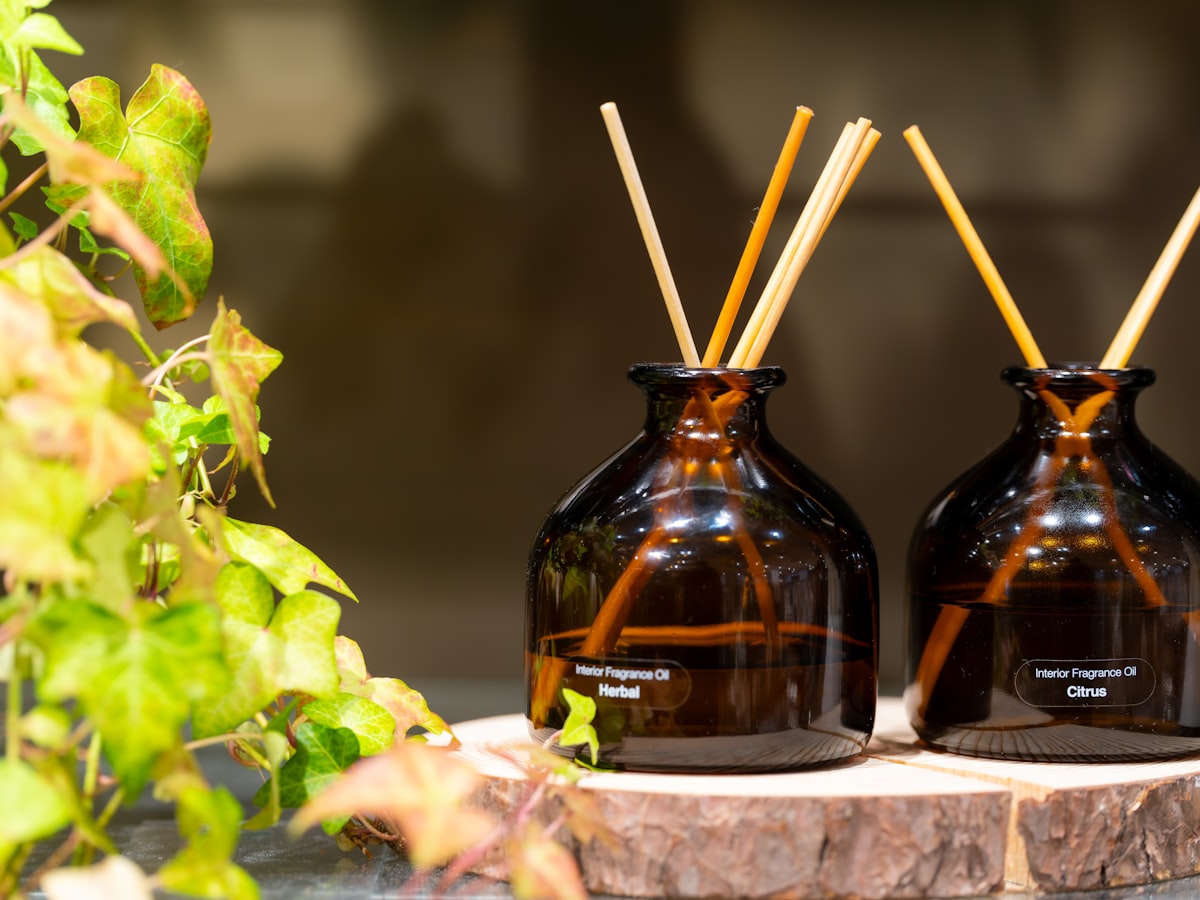
Example 2: Reed Diffusers, FOB USD 4.50 each, 2,000 units
| Item | Amount |
|---|---|
| FOB value | USD 9,000 |
| Ocean freight (LCL, ~3 CBM) | USD 350 to USD 500 |
| Insurance | USD 40 |
| MFN duty (3307.49, 4%) | USD 360 |
| Section 301 additional (if applicable, 25%) | USD 2,250 |
| MPF and HMF | USD 42 |
| Broker and bond | USD 175 |
| Drayage | USD 300 to USD 500 |
| Landed cost | USD 12,517 to USD 12,867 |
| Per unit landed | USD 6.26 to USD 6.43 |
Classification Strategy
Legitimate classification decisions can materially affect duty:
- Candles sold as part of a gift set may be classified by essential character (usually the candle, 3406) rather than as a mixed set.
- Diffusers sold with refill oil may be classified as the diffuser preparation (3307.49) or as separate components.
- Custom-blended fragrance oils for industrial use fall under 3302.90, while retail-packaged room fragrances fall under 3307.49.
A binding ruling from CBP (free, but takes 30 to 90 days) provides legal certainty for high-volume SKUs and is worth requesting for any product where classification is debatable.
Working with Your Manufacturer
A professional Chinese OEM should provide:
- Recommended HS code on the commercial invoice (the importer of record retains final responsibility)
- Country of origin documentation (Form CO or self-certified)
- Detailed product composition to support classification
- Section 301 list status awareness for the relevant tariff line
At Aromiso, every US-bound shipment includes a recommended HS code, full composition disclosure on the commercial invoice, and coordination with the buyer’s customs broker on classification questions before production.
Final Thoughts
Customs duty on fragrance products from China ranges from zero (candles) to roughly 5 percent (diffusers, fragrance oils) under MFN, but Section 301 and reciprocal tariffs can multiply that cost several times over. The brands that protect margin are the ones that confirm classification and tariff status before each order, request binding rulings for ambiguous products, and treat the customs broker as a strategic partner rather than a paperwork vendor.