Product Comparisons
Sea Freight vs Air Freight for Fragrance Products: When to Use Each
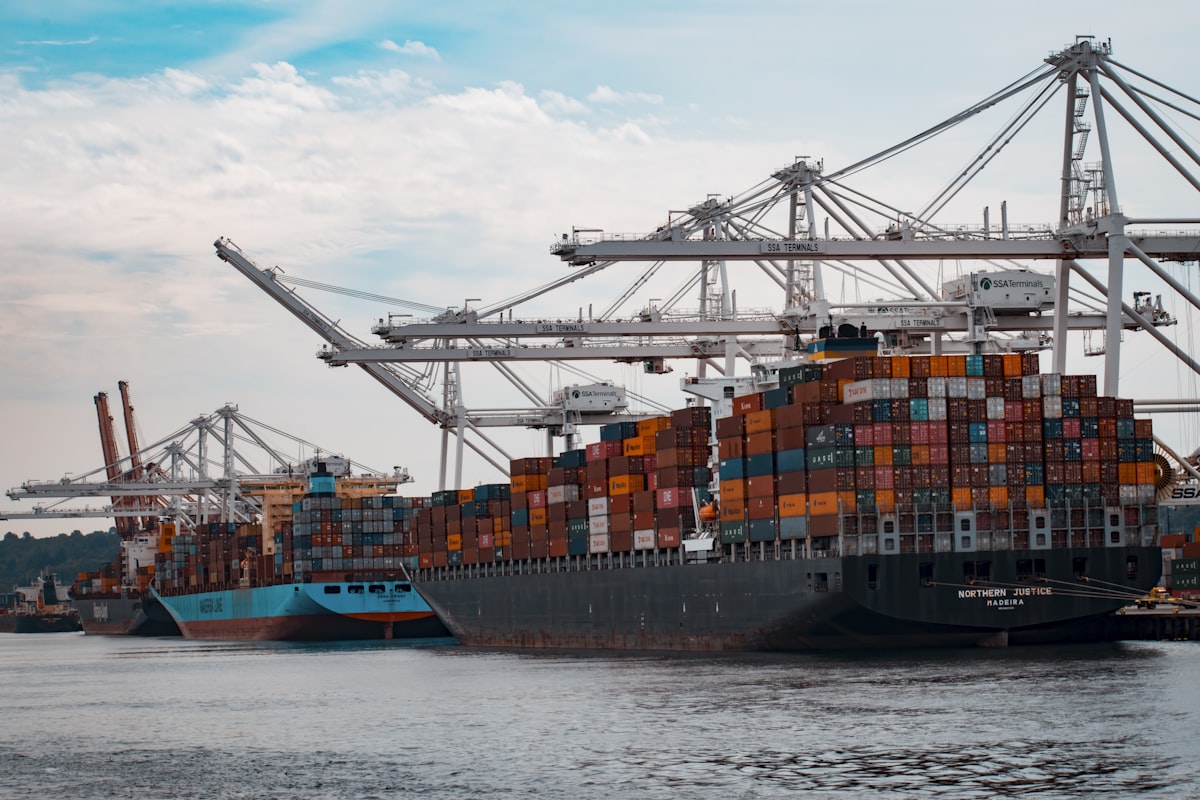
Shipping fragrance products internationally involves cost, speed, and regulatory trade-offs that differ from general cargo. Candles, diffusers, essential oils, and room sprays each present unique logistics considerations. B2B buyers importing from Chinese manufacturers need a clear framework for choosing between sea and air freight on every order.
Cost Comparison
Sea freight is priced by container or by cubic meter for less-than-container-load (LCL) shipments. Air freight is priced by chargeable weight (the greater of actual weight or volumetric weight).
Typical rates from major Chinese ports (Shenzhen, Shanghai, Ningbo) to the US West Coast:
Sea freight (FCL, 20-foot container, approximately 28 cubic meters):
- Base rate: $1,800 to $3,500 per container (varies by season)
- Per-unit cost for 200-gram candles (approximately 14,000 units per container): $0.13 to $0.25 per unit
Sea freight (LCL, per cubic meter):
- Rate: $45 to $90 per cubic meter
- A pallet of 500 candles (approximately 1.2 cubic meters): $54 to $108
Air freight (per kilogram, chargeable weight):
- Rate: $4.50 to $8.00 per kilogram (standard cargo)
- A 200-gram candle with packaging weighs approximately 450 grams: $2.03 to $3.60 per unit
- A 100 ml reed diffuser with packaging weighs approximately 500 grams: $2.25 to $4.00 per unit
To US East Coast or European destinations, add 20 to 40 percent to these rates.
The cost ratio is stark: air freight costs 8 to 15 times more per unit than sea freight for typical fragrance products. For a 5,000-unit candle order, sea freight costs $650 to $1,250 while air freight costs $10,150 to $18,000.
Transit Time
Sea freight from China:
- To US West Coast (Los Angeles, Long Beach): 14 to 18 days port-to-port
- To US East Coast (New York, Savannah): 28 to 35 days port-to-port
- To Europe (Rotterdam, Hamburg): 28 to 35 days port-to-port
- To Australia (Sydney, Melbourne): 14 to 20 days port-to-port
Add 3 to 7 days at each end for customs clearance, drayage, and last-mile delivery. Total door-to-door time for sea freight is typically 21 to 45 days depending on destination.
Air freight from China:
- To any major global hub: 2 to 5 days airport-to-airport
- Total door-to-door including customs: 5 to 10 days
The time differential is 15 to 35 days. For seasonal products or urgent restocking, this speed advantage may justify the cost premium.
Dangerous Goods Classification
This is a critical factor for fragrance products specifically.
Candles (wax-based, no alcohol): Generally classified as non-dangerous goods. No special shipping documentation required beyond standard commercial invoices and packing lists.
Reed diffusers (DPG/IPM base, under 30 percent fragrance): Generally non-dangerous goods. Some carriers may request a Material Safety Data Sheet (MSDS) confirming flash point above 60 degrees Celsius.
Room sprays and products containing ethanol above 24 percent: Classified as UN1266 (perfumery products) or UN1950 (aerosols). These are limited quantity dangerous goods requiring:
- Dangerous goods declaration
- UN-specification packaging
- Hazard labels (Class 3 flammable liquid)
- Restricted to specific air cargo categories (cargo aircraft only for higher concentrations)
Essential oils: Classification varies by oil. Citrus oils (flash point below 60 degrees Celsius) may be Class 3 flammable. Most other essential oils ship as non-dangerous goods with an MSDS.
Sea freight accepts all dangerous goods classes with proper documentation. Air freight restricts or prohibits certain classes and quantities. For alcohol-based sprays, sea freight may be the only viable option for large quantities.
Product Integrity During Transit
Sea freight exposes products to:
- Temperature variation (0 to 45 degrees Celsius in containers)
- Humidity (condensation during ocean crossing)
- Vibration and stacking pressure
- Transit duration of 3 to 5 weeks
These conditions can affect fragrance products. Candles may develop frosting (white crystalline bloom on soy wax) or slight warping in extreme heat. Diffuser liquids may expand and contract, stressing seals. Essential oils are generally stable but should be shipped in dark, sealed containers.
Air freight exposes products to:
- Rapid pressure changes (cabin altitude equivalent)
- Shorter duration of temperature stress
- Less vibration overall
For temperature-sensitive products or orders shipping during summer months, air freight reduces the risk of heat damage. For standard candles and diffusers in proper packaging, sea freight is safe with basic precautions (desiccant packs, ventilation holes in cartons, avoiding container floor contact).
When to Use Sea Freight
Sea freight is the right choice when:
- Order volume exceeds 500 kilograms or 2 cubic meters
- Lead time allows 4 to 6 weeks for delivery
- Products are non-dangerous goods (candles, DPG-based diffusers)
- Unit economics require freight cost below $0.50 per unit
- You are building inventory for a planned sales period
- Products are alcohol-free and temperature-stable
Approximately 85 to 90 percent of fragrance product shipments from China move by sea. It is the default mode for planned production orders.
When to Use Air Freight
Air freight is justified when:
- You need samples or development units within 1 to 2 weeks
- A retail commitment requires delivery in under 3 weeks
- Order value per unit is high enough to absorb $2 to $5 freight cost (luxury candles, concentrated perfume oils)
- Products are temperature-sensitive and sea transit risk is unacceptable
- You are testing a new market with a small initial order (under 200 units)
- A stockout is costing more in lost sales than the air freight premium
Hybrid Strategy
Experienced importers often combine both modes:
- Place a production order of 5,000 units shipped by sea (arrives in 5 weeks)
- Simultaneously air-ship 200 to 500 units from the same production run (arrives in 1 week)
- Use the air-shipped units for immediate sales, marketing, and retail commitments
- Sea freight replenishes inventory before the air-shipped stock depletes
This approach costs approximately $800 to $1,500 more than pure sea freight but eliminates the 4-week revenue gap while waiting for ocean transit.
Reducing Freight Costs
Practical steps to lower shipping costs for fragrance orders:
- Optimize carton dimensions to maximize container utilization (aim for 90+ percent fill rate)
- Use nesting packaging designs for candles (stack vessels without individual dividers where safe)
- Consolidate multiple SKUs into one shipment rather than separate orders
- Book sea freight 3 to 4 weeks in advance for better rate availability
- Avoid peak season (August to October) surcharges when possible
- Request FOB terms from your manufacturer and use your own freight forwarder for rate comparison
Working with Aromiso
Aromiso handles export documentation, fumigation certificates, MSDS preparation, and customs paperwork for all shipments. We pack to export standards with corner protection, desiccant, and stretch wrap. For dangerous goods products, we coordinate DG-certified logistics partners. Our team can provide FOB, CIF, or DDP quotations depending on your preference. Contact us with your destination and order volume for a freight-inclusive proposal.