Product Knowledge
Pillar vs Container Candles: Which Format Suits Your Brand?

Format selection is one of the first decisions in candle product development. Pillar candles and container candles serve different retail channels, require different production capabilities, and carry different cost structures. For B2B buyers evaluating which format to add to their product line, this comparison covers the practical factors that affect sourcing, logistics, and commercial performance.
Production Complexity
Container Candles
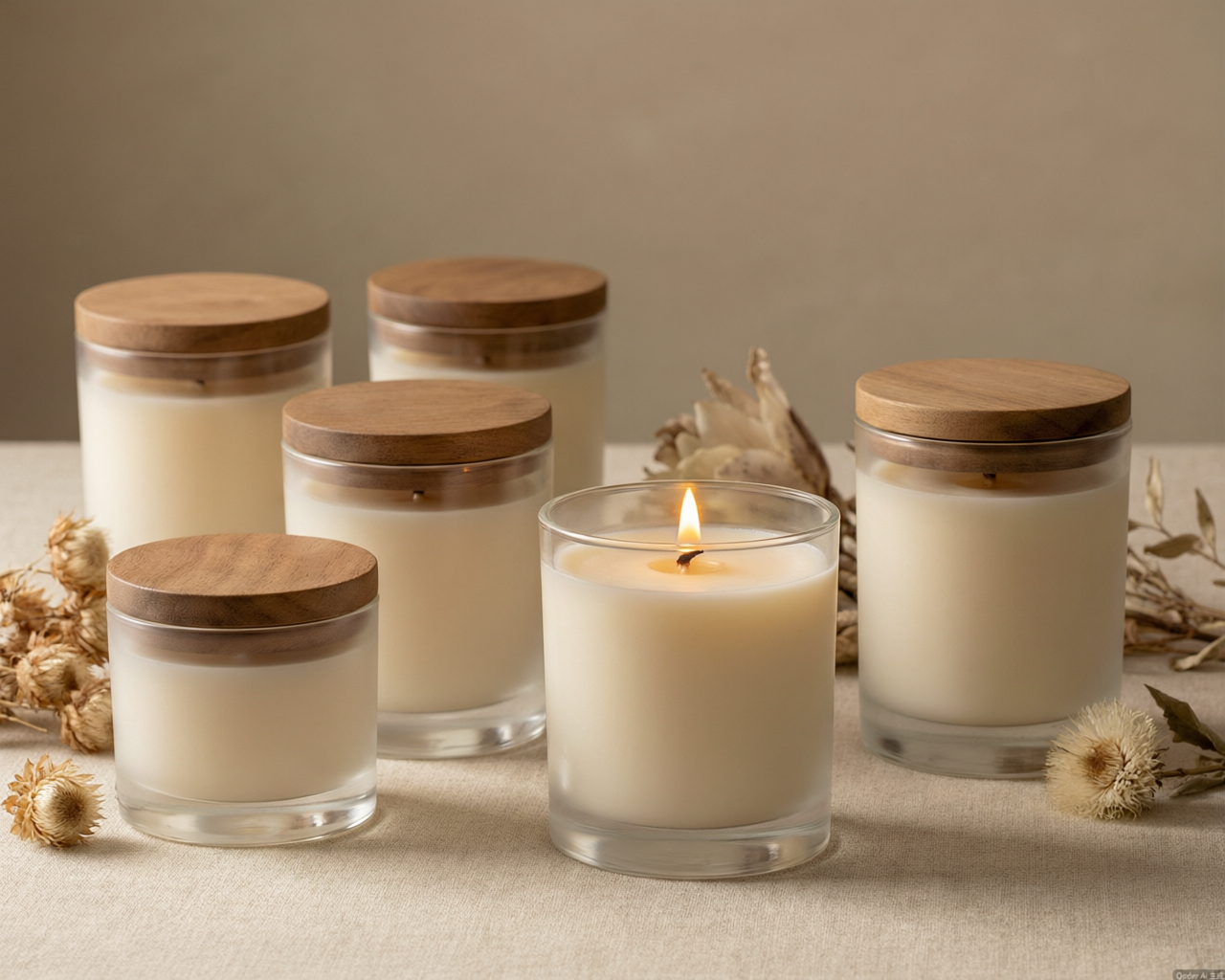
Container candles (poured into glass jars, tins, or ceramic vessels) are the simpler format to produce at scale.
- Wax is melted, fragranced, and poured into pre-prepared containers.
- The vessel provides structural support, so wax formulation can prioritize scent throw over mechanical strength.
- Softer waxes (soy, coconut blends) work well because the container holds the shape.
- Production speed: Automated lines produce 1,000-3,000 units per hour for standard sizes.
- Defect rate: Typically 2-4 percent (wet spots, sinkholes, frosting) with experienced operators.
Pillar Candles
Pillar candles are freestanding and must support their own structure throughout the burn cycle.
- Wax must be harder (higher melt point paraffin, palm wax, or beeswax blends) to maintain shape.
- Molding is required: wax is poured into aluminum or silicone molds, cooled, and demolded.
- Demolding adds a production step and introduces risk of surface damage, seam lines, and dimensional variation.
- Multi-pour techniques are needed for layered or embedded designs.
- Production speed: 300-800 units per hour depending on mold complexity and cooling time.
- Defect rate: 4-8 percent (cracking, warping, mold release marks, color inconsistency).
Implication for buyers: Pillar candles require more skilled labor and longer production time per unit. Factories specializing in container candles may not have pillar molding capability. Verify equipment before placing orders.
Shipping and Logistics
Container Candles
- Glass containers add significant weight: a 200g wax candle in a glass jar weighs 400-550g total.
- Glass is fragile, requiring protective packaging (foam inserts, dividers, bubble wrap).
- Shipping cost per unit is higher due to weight and volume of protective packaging.
- Breakage rate in transit: 1-3 percent with proper packing; higher with inadequate protection.
- Container dimensions are fixed by the vessel, limiting packing density optimization.
Pillar Candles
- Lighter per unit of wax: a 200g pillar weighs approximately 210-230g total (no vessel).
- No glass fragility risk, though surface scratching and denting remain concerns.
- Can be packed more densely with tissue or thin foam separation.
- Shipping cost per unit of wax is 30-40 percent lower than equivalent container candles.
- Irregular shapes (tapered, carved, novelty) reduce packing efficiency.
Implication for buyers: If your market is geographically distant from the factory (e.g., sourcing from China for European retail), pillar candles offer meaningful freight savings. For a 40-foot container, you can ship approximately 40-60 percent more pillar candle units than equivalent-weight container candles.
Retail Positioning
Container Candles
- Dominant format in mid-to-premium retail (department stores, specialty home fragrance, online DTC brands).
- The vessel adds perceived value and justifies higher price points.
- Reusable container extends brand presence in the consumer’s home after the candle is consumed.
- Lid options (wood, metal, glass) add premium cues.
- Standard retail price range: $15-$65 for 150-300g sizes.
Pillar Candles
- Strong in home decor, hospitality, events, and seasonal/gift categories.
- Positioned as decorative objects even when unlit.
- Format variety (cylindrical, square, spherical, carved, tapered) enables distinctive visual merchandising.
- Often sold in sets (3-piece graduated sizes) which increases average order value.
- Standard retail price range: $8-$35 for single pillars; $25-$80 for sets.
Implication for buyers: Container candles suit brands built around fragrance experience. Pillar candles suit brands built around visual aesthetics and interior design positioning.
MOQ Implications
Container Candles
- Standard glass jars are widely available; factories stock common sizes (200ml, 300ml, 400ml).
- MOQ for standard containers: as low as 500-1,000 units per SKU.
- Custom vessels (unique shapes, colored glass, ceramic) require mold fees of $1,000-$5,000 and MOQs of 3,000-5,000 units.
- Fragrance customization does not affect MOQ significantly.
Pillar Candles
- Standard cylinder molds are common; MOQ for basic shapes: 1,000-2,000 units.
- Custom shapes require mold fabrication: $500-$3,000 per mold (aluminum) or $200-$800 (silicone).
- Mold lead time: 15-30 days for custom shapes.
- Color and embed variations within a single mold shape do not require new tooling.
- Minimum viable production run per color/scent: typically 500 units to justify mold setup and color matching.
Implication for buyers: Container candles offer lower entry MOQs for new brands testing the market. Pillar candles require higher initial investment if custom shapes are desired but offer lower per-unit costs at volume.
Cost Comparison (200g Candle, 10,000 Units)
| Cost Element | Container (Glass Jar) | Pillar (Molded) |
|---|---|---|
| Wax (soy blend) | $0.80 | $0.80 |
| Vessel/mold amortization | $0.60-$1.20 | $0.05-$0.15 |
| Wick and tab | $0.05 | $0.05 |
| Fragrance (8 percent load) | $0.50 | $0.50 |
| Labor | $0.30 | $0.45 |
| Packaging | $0.40 | $0.25 |
| Total unit cost | $2.65-$3.25 | $2.10-$2.20 |
Pillar candles are approximately 20-30 percent cheaper per unit at equivalent wax weight, primarily due to the absence of a glass vessel.
Fragrance Performance Differences
- Container candles generally deliver stronger hot throw because the melt pool is contained and heats efficiently.
- Pillar candles have a smaller melt pool diameter (the outer wall remains solid), releasing less fragrance per hour.
- To compensate, pillar formulations often use higher-impact fragrance concentrates or slightly higher loads (9-11 percent versus 6-8 percent for containers).
- Cold throw is comparable between formats if fragrance load is equivalent.
Hybrid Approaches
Some brands combine both formats:
- Container candles as the core fragrance line (consistent, repeatable, premium)
- Pillar candles as seasonal or decorative extensions (holiday shapes, gift sets, event collections)
This approach maximizes retail presence while managing production complexity. Discuss with your factory whether they offer both capabilities to consolidate sourcing.
At Aromiso, we produce both container and pillar candles in the same facility, allowing buyers to develop coordinated product ranges under a single production order. Contact us to discuss format mix for your brand positioning.