Product Knowledge
Luxury Reed Diffuser Branding: Vessel, Cap, and Label Choices
In the luxury home fragrance segment, the liquid is necessary but not sufficient. Customers buy the object as much as the scent — the weight of the glass in the hand, the click of the cap, the texture of the label. Two diffusers with identical formulation can sit at $30 and $90 retail purely on the strength of their packaging. For a brand owner, understanding which physical choices create perceived value lets you spend your packaging budget where it actually moves the price ceiling.
The vessel: glass weight and finish
Glass is the foundation of luxury perception. The single most reliable signal of quality is weight. A premium diffuser vessel uses thick-walled glass with a heavy base — commonly 350–600g of glass for a 150–200ml capacity. That heft reads as quality before the customer even registers the design. Budget vessels at 150–200g feel disposable by comparison.
Finish options each carry a different positioning:
- Clear glass showcases the liquid and works well for pale, clean formulations. It demands a flawless fill and a crystal-clear base, since any cloudiness is visible.
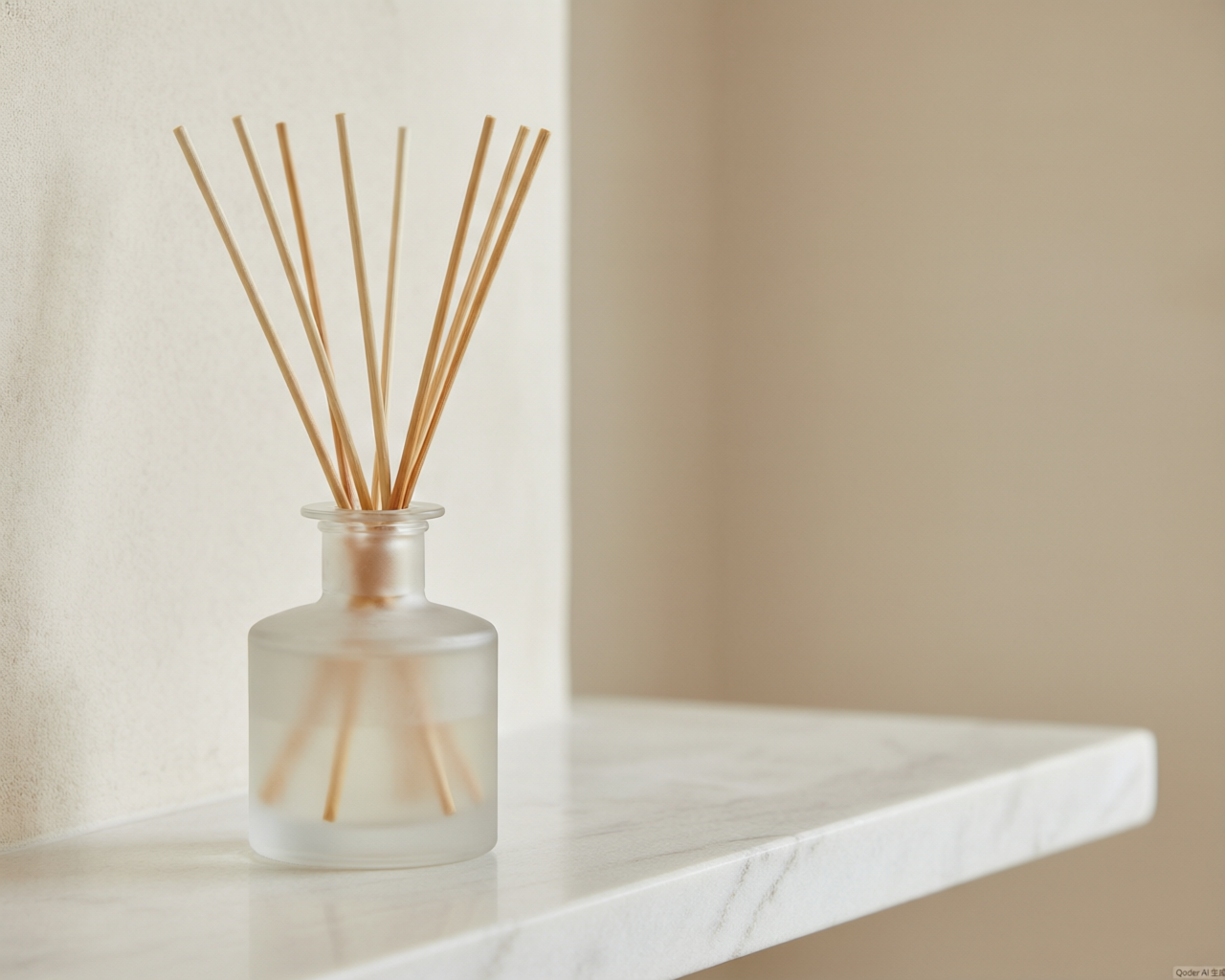
- Frosted or acid-etched glass softens the contents, hides minor liquid imperfections, and gives a tactile, matte surface that photographs well. It adds roughly $0.20–$0.50 per unit.
- Spray-coated or painted glass in matte black, deep green, or muted earth tones signals contemporary luxury and supports strong shelf contrast. Coating adds $0.30–$0.70 per unit and requires adhesion testing to prevent flaking.
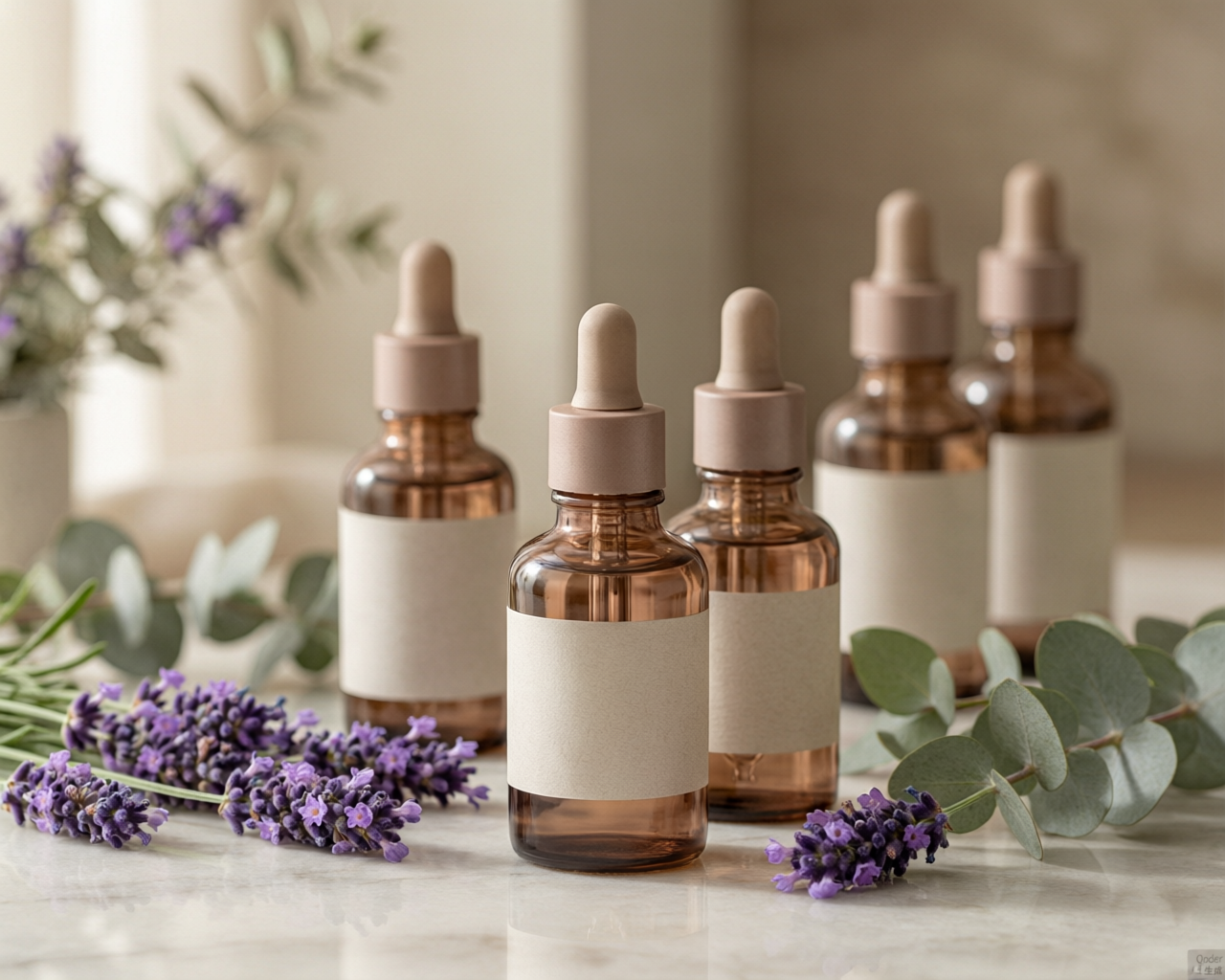
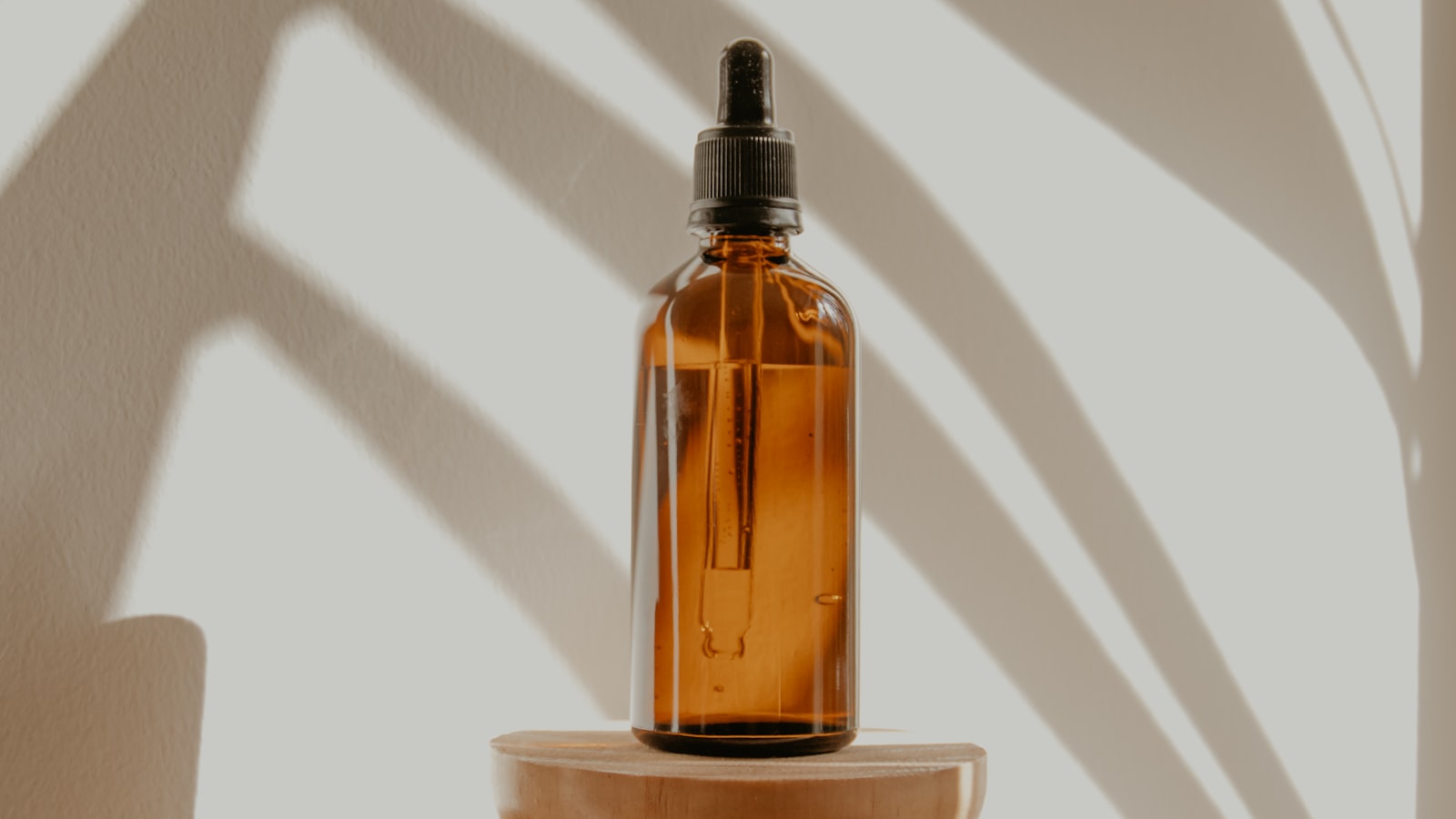
- Colored glass (amber, cobalt) is functional as well as aesthetic — it filters UV and slows fragrance degradation, a genuine benefit for light-sensitive formulations.
Specify the glass by capacity, wall thickness, base weight, and finish, and request a drop-test report. Heavy glass is also more fragile in transit, so factor protective packaging into your landed cost.
The cap and collar
The cap is the most-handled component and a disproportionate carrier of perceived quality. Options span a wide cost and feel range:
- Plastic (PP/ABS) caps are the budget default at $0.05–$0.15. Even with a metallic spray finish, they read as mass-market in the hand.
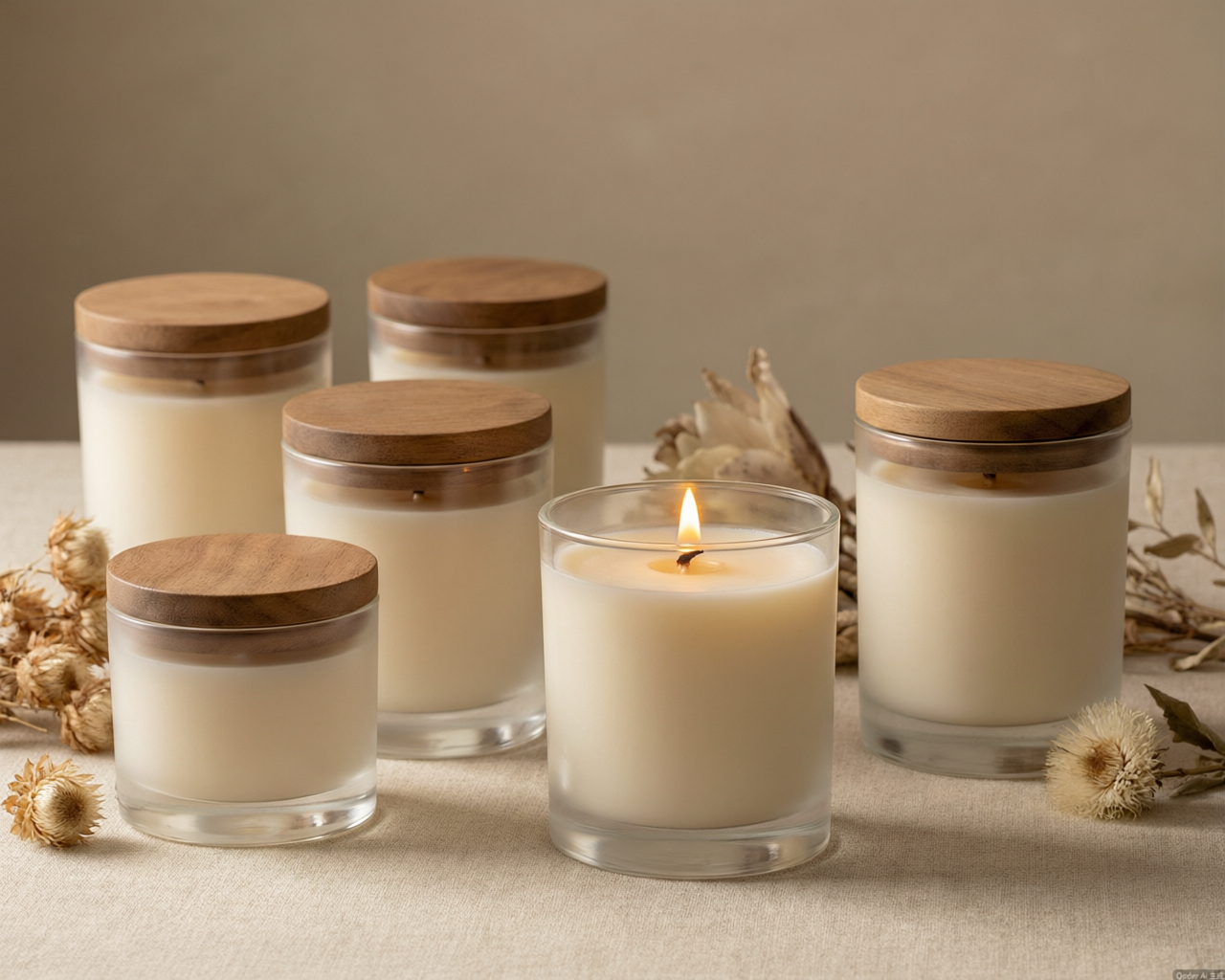
- Wooden caps (beech, ash, bamboo) at $0.30–$0.80 deliver a warm, natural-luxury feel and pair well with frosted or coated glass. Specify FSC-certified stock and a sealed finish to prevent oil staining.
- Aluminum caps at $0.25–$0.60 give a crisp, modern, machined feel and excellent color consistency through anodizing.
- Solid metal or weighted caps at $0.80+ are the top tier, adding genuine mass and a premium closure feel.
A matching collar or neck ring can unify the cap and vessel visually for a small incremental cost. Whichever material you choose, the thread fit must be precise — a loose or cross-threaded cap undermines every other luxury cue.
The label: material and finishing
Labels are where brand identity is literally printed, and finishing choices compound quickly:
- Paper stock with a soft-touch or textured laminate conveys craft and pairs with natural positioning.
- Clear BOPP or vinyl gives a “no-label” look on clear glass, letting the liquid and vessel speak.
- Metallic foil stamping (gold, silver, copper) adds a light-catching premium detail at roughly $0.10–$0.30 per unit.
- Embossing or debossing creates tactile depth that customers feel before they read.
- Spot UV raises selected elements (a logo, a motif) with a glossy contrast against a matte field.
For luxury positioning, a common high-impact combination is a textured paper label with foil-stamped logo and embossed brand mark. Keep copy minimal — luxury packaging whispers. Print method matters too: digital printing suits short runs and frequent SKU changes; offset delivers sharper consistency and lower per-unit cost above roughly 3,000 units.
Perceived value and the price ceiling
The cumulative effect of these choices is what allows a price premium. A heavy frosted vessel, a wooden or aluminum cap, and a foil-finished label can move a diffuser from a $30 to a $70+ retail tier while adding perhaps $1.50–$3.00 to unit packaging cost. That is among the highest-return investments in the entire product.
The discipline is coherence: every element should reinforce one positioning. A natural-organic brand wants wood, textured paper, and muted tones; a contemporary luxury brand wants weighted glass, metal, and foil. Mismatched cues — a premium vessel with a plastic cap, a luxury label on thin glass — cap the price regardless of the liquid inside.
Specify each component with samples and tolerance ranges, and approve a complete assembled unit before production. Your factory should be able to source and QC the full package under one roof, which keeps the design intent intact from sample to container.