Buying Guides
Choosing Fragrances for Reed Diffusers: What Works Best

Fragrance selection determines whether a reed diffuser sells, gets returned, or sits stagnant on a shelf. Unlike candles, where heat alters scent expression, reed diffusers rely on passive evaporation. This means not every fragrance oil performs well in a cold-throw application. For B2B buyers, understanding which scent profiles translate effectively to reed diffusion is critical for building a range that moves.
How Reed Diffuser Fragrance Works
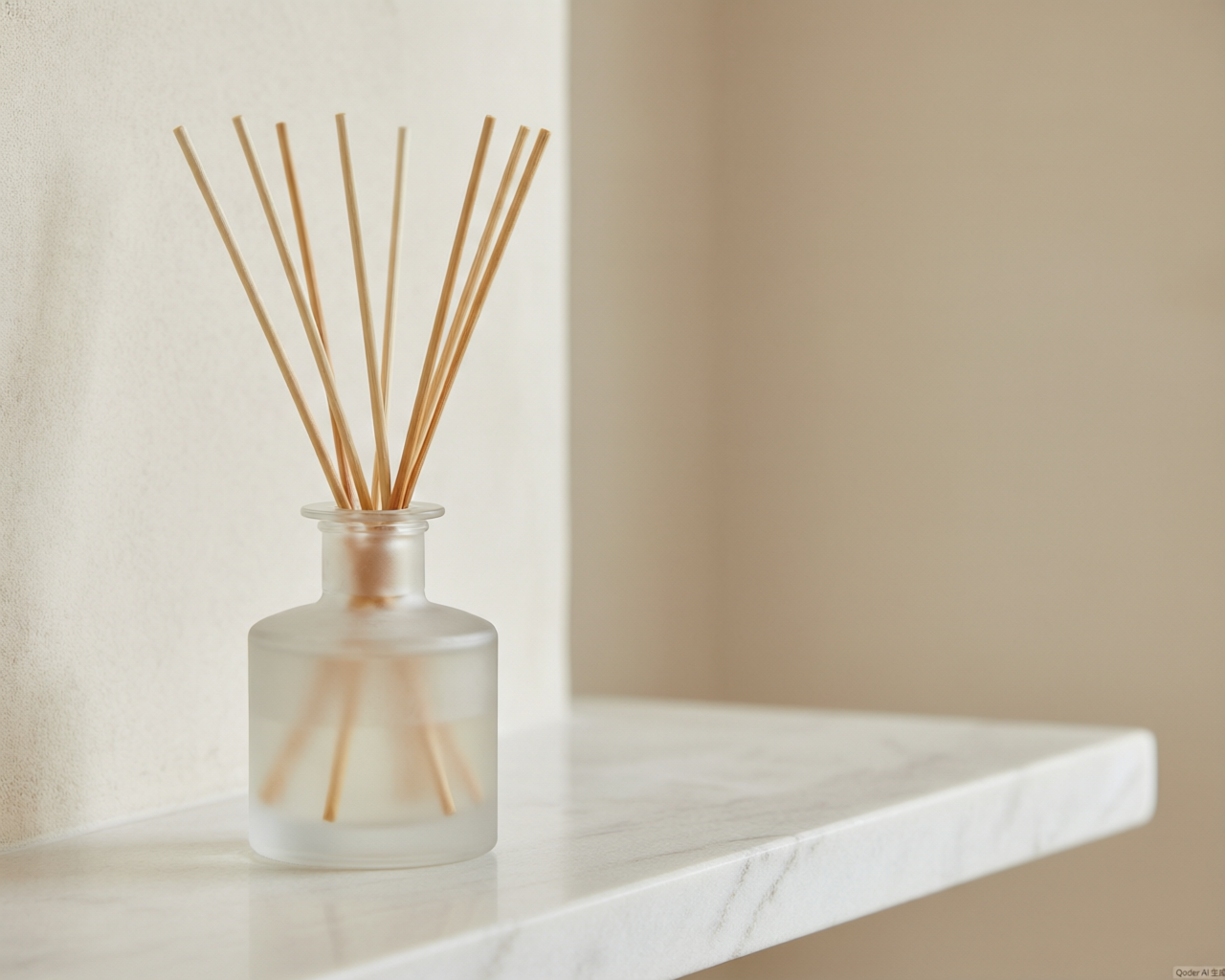
A reed diffuser releases scent through capillary action: liquid travels up porous reeds and evaporates from the exposed surface. The rate and quality of this evaporation depend on:
- Molecular weight of aroma compounds: Light top notes (citrus, eucalyptus) evaporate within 1-2 weeks. Heavier base notes (sandalwood, musk, vanilla) persist for 8-12 weeks.
- Fragrance load: A 20% fragrance-to-base ratio is standard. Below 15%, throw is weak. Above 30%, the solution may become cloudy or separate.
- Solvent compatibility: Some aroma chemicals interact poorly with DPG or IPM bases, causing discoloration or precipitation. Always request compatibility testing.
Scent Families That Perform Best in Reed Diffusers
Based on production data and retail sell-through, these categories consistently outperform:
1. Woody and amber (30-35% of top sellers) Sandalwood, cedarwood, oud, amber, and vetiver. These heavy molecules evaporate slowly, providing consistent scent over 10+ weeks. They anchor a blend and prevent the “scent cliff” where a diffuser smells strong for two weeks then goes flat.
2. Fresh and clean (20-25%) Linen, cotton, sea breeze, green tea, and cucumber. These are safe, universally appealing scents for hospitality and gifting. They perform best with a 22-25% fragrance load and 8+ reeds to compensate for lighter molecular weight.
3. Floral (20%) Jasmine, peony, rose, lavender, and frangipani. Mid-weight molecules that last 6-10 weeks. Rose and jasmine require careful formulation because some natural absolutes can discolor the base to a deep amber over time.
4. Gourmand and sweet (10-15%) Vanilla, caramel, coffee, and baked goods. Strong initial impact but can become cloying in small rooms. Best blended with a woody or musky base to add longevity.
5. Citrus and fruity (5-10%) Lemon, bergamot, grapefruit, and berry. These are top-note dominant and fade within 3-5 weeks in a reed diffuser. Use them as accent notes (10-20% of the blend) rather than the primary character.
Fragrance Load and Concentration Guidelines
| Product Tier | Fragrance Load | Expected Throw Radius | Lifespan (100ml) |
|---|---|---|---|
| Economy | 10-15% | 1-2 meters | 6-8 weeks |
| Standard | 18-22% | 2-4 meters | 8-10 weeks |
| Premium | 25-30% | 4-6 meters | 10-14 weeks |
Higher fragrance loads increase raw material cost by $0.30-$0.80 per 100ml unit but justify a 40-60% higher retail price.
IFRA Compliance and Safety
Every fragrance oil used in a reed diffuser must comply with IFRA (International Fragrance Association) standards for Category 10A (non-skin-contact household products). Key requirements:
- Maximum usage levels for restricted materials (e.g., linalool capped at specific percentages).
- Full allergen declaration for labeling (EU CLP regulation requires listing 26 recognized allergens above 0.01% concentration).
- A valid IFRA certificate and Safety Data Sheet (SDS) for each fragrance oil.
Request these documents from your supplier before production. Reputable factories like Aromiso maintain IFRA-compliant libraries of 500+ fragrances and can provide certificates on demand.
Seasonal and Market Planning
Plan your fragrance lineup around retail cycles:
- Q1 (Jan-Mar): Fresh starts. White tea, eucalyptus, clean cotton, green herbal.
- Q2 (Apr-Jun): Spring florals. Peony, lilac, cherry blossom, fresh citrus.
- Q3 (Jul-Sep): Summer and tropical. Coconut, frangipani, sea salt, watermelon.
- Q4 (Oct-Dec): Warm and festive. Cinnamon, vanilla, pine, spiced apple, amber.
For evergreen SKUs that sell year-round, stock sandalwood, lavender, vanilla, and ocean breeze. These four scents typically account for 40-50% of annual volume for most retailers.
Custom Fragrance Development
If stock scents do not differentiate your brand, commission a bespoke fragrance:
- Brief: Provide 3-5 reference scents, target mood, and intended room type.
- Sampling: Expect 2-3 rounds of modifications. Each round takes 7-10 days.
- Cost: $150-$400 per fragrance for sampling. Production pricing depends on raw material complexity, typically $18-$45 per kg of compound.
- MOQ: 1,000-3,000 units per custom scent.
- Exclusivity: Negotiate a 12-24 month exclusivity window if the fragrance is developed specifically for your brand.
Testing Before Committing
Before approving a fragrance for a full production run:
- Cold throw test: Fill 3 sample units and evaluate scent strength at 1 meter, 3 meters, and 5 meters after 24 hours, 7 days, and 30 days.
- Stability test: Store samples at 40 degrees Celsius for 4 weeks (accelerated aging). Check for color change, separation, or sediment.
- Consumer panel: If possible, test 3-5 scents with 10-20 target consumers. Track preference ranking and perceived intensity.
- Shelf simulation: Place samples in a room matching the intended use environment (size, ventilation) and log scent perception weekly.
Final Recommendation
Build your initial range with 4-6 fragrances: two woody or amber anchors, one fresh, one floral, and one seasonal. This covers the broadest consumer preference while keeping SKU complexity manageable. Scale to 10-12 scents once you have sell-through data identifying your top performers.