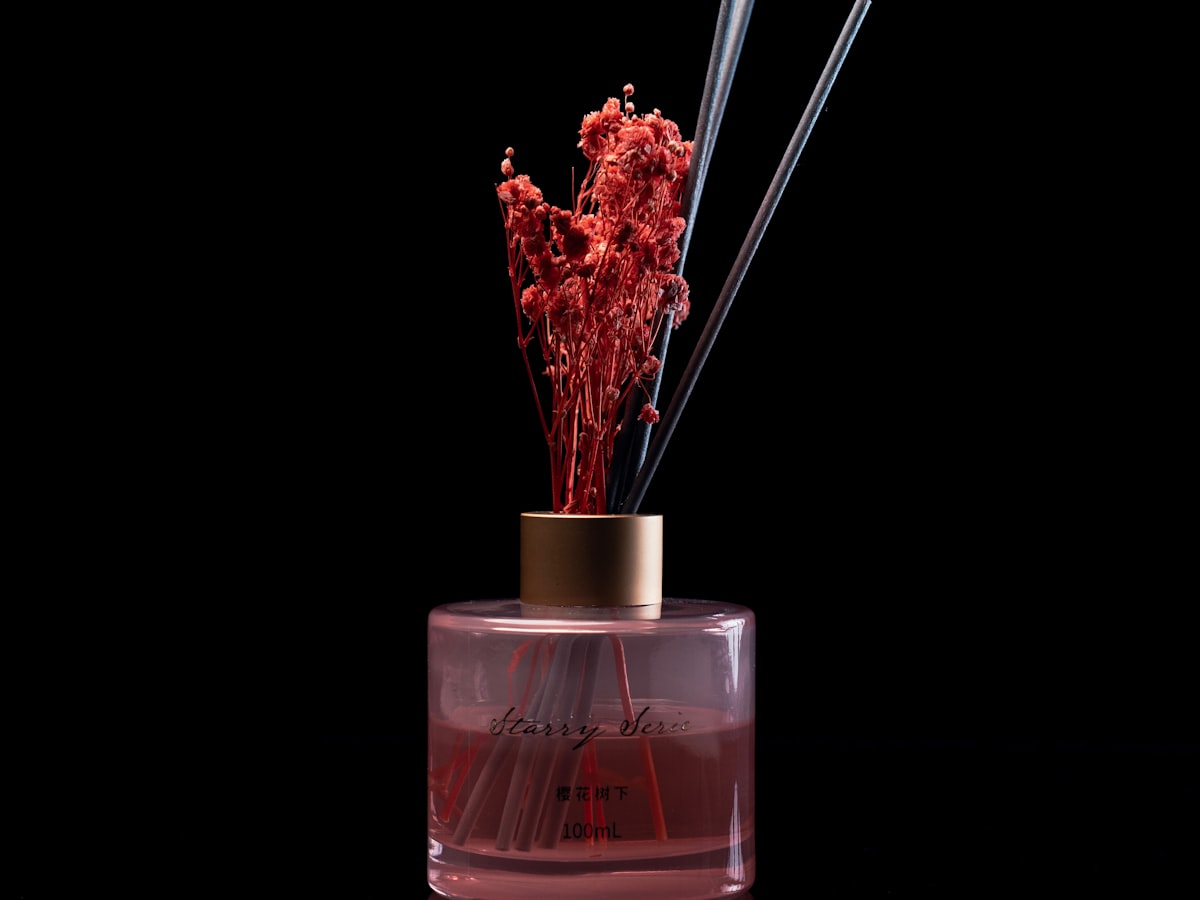
Diffusers
Matching Reed Diffuser Oil Viscosity and Reed Count
When international B2B buyers compare reed diffusers, two physical variables determine most of the guest experience: the viscosity of the fragrance oil and the number of reeds in the bottle. Viscosity controls how quickly the oil travels up each reed. Reed count controls how much oil surface is exposed to air. The two must be matched, or the diffuser will underperform or finish too quickly.
1. How oil viscosity shapes evaporation
Viscosity is the oil’s resistance to flow. A low-viscosity oil moves quickly through the reed’s capillary channels. It reaches the top of the reed faster and evaporates more readily. This can produce a strong initial scent impression but often shortens the life of the diffuser because more oil evaporates per day.
A high-viscosity oil moves more slowly. It may not climb the reed efficiently, especially if the reed has narrow or irregular capillaries. The result can be weak scent throw, even though the liquid level appears to drop only slightly. In hotel corridors or spa treatment rooms, that weak throw often leads to housekeeping complaints before the oil is half used.
The base solvent and fragrance load influence viscosity. Different solvent systems can have very different flow behaviour even when they look similar. Fragrance ingredients themselves also change the oil’s thickness. This is why a single reed type will not perform the same across every stock keeping unit. A formulation that works with three reeds in one scent may need five reeds in another scent if the viscosity is significantly higher.
For B2B buyers, the principle is simple: before ordering bulk, ask the factory which reed material and reed count were used to validate the formulation. Do not assume that all oils in the same collection share the same viscosity profile.
2. Reed count, surface area, and scent throw
Reed count is the most visible variable end users adjust. Each reed adds evaporation surface and increases the amount of fragrance released per hour. Reducing the reed count lowers intensity and extends the product life.
The relationship is not strictly linear. Doubling the reed count does not necessarily double scent throw, because factors such as air flow, room temperature and humidity also affect evaporation. However, within a typical indoor space, more reeds generally mean a stronger smell and faster oil consumption.
Reed material matters as much as the number. Natural rattan reeds have open channels and can vary in porosity from batch to batch. Synthetic or composite reeds can be more consistent, but they may wick differently depending on oil viscosity. A factory-matched pairing reduces the guesswork.
For retail and hospitality buyers, we recommend offering a fixed reed count in the default packaging, but including a short instruction that guests can remove one or two reeds to soften the scent. This improves customer satisfaction without changing the oil formula.
3. Troubleshooting common viscosity and reed count issues
Here are the most frequent issues buyers report and the physical causes behind them.
- Weak scent throw in a closed room: The oil may be too viscous for the supplied reeds, or the reed count may be too low. Ask the factory for a higher-count recommendation or a reed with better wicking for that oil viscosity.
- Oil evaporates too quickly: The oil may be low-viscosity or the reed count may be too high for the target room size. Reduce reeds first, then ask whether a thicker base is available for longer life.
- Reeds become clogged or stop releasing scent: Over time, heavier oil fractions or dust can block the capillary channels. Rotating or replacing reeds restores evaporation, but if clogging happens within days, the oil and reed pairing likely needs review.
- Uneven scent from one bottle to another: Natural reed material can vary. If consistency matters for your brand, ask the factory about reed batch controls or alternative reed types.
- Condensation or leaking at the bottle neck: This is often less about viscosity and more about bottle design and fill level, but a very low-viscosity oil can amplify wicking overflow if too many reeds are used.
A structured complaint log that records reed count, room size, temperature and days to empty will help the factory diagnose issues quickly.
4. Maintenance and turnover in guest-facing spaces
Hotels, spas and serviced apartments need predictable turnover. The maintenance routine should be based on the oil’s tested evaporation rate, not on a generic calendar. Before rollout, test one or two rooms with the planned reed count and note how many days pass before scent becomes too weak or the liquid reaches the bottom.
Common housekeeping practices include flipping the reeds to refresh the scent. Flipping re-exposes oil-saturated surfaces and temporarily boosts scent throw, but it also increases evaporation. A property should decide whether staff will flip reeds weekly or only when guests check out, and then keep that standard consistent.
Reeds should be replaced when they become saturated with an old scent or when pores clog. Using old reeds with a new oil blend can lead to mixed or blocked delivery. Many properties replace reeds with each oil refill, but the exact replacement cycle depends on the formulation and usage environment.
For retail buyers, packaging should explain this maintenance clearly. A short insert covering reed count adjustment, flipping and reed replacement reduces negative reviews and repeat purchase hesitation.
5. Buying guide: what to evaluate from a factory
When you evaluate a fragrance factory for private-label or bulk reed diffusers, focus on the physical match between oil viscosity and reed count.
Ask these questions:
- What reed type and diameter are used in your standard tests for each formulation?
- Do you have evaporation profiles for different reed counts in a controlled room?
- Can you adjust the solvent base or fragrance load to target a specific product life?
- What are the batch-to-batch variations in reed porosity, and how do you control them?
- Can you supply reeds separately for refill programs, and do you recommend the same count for every scent?
Request samples with at least two reed counts and run them side by side in the intended room size. Record first impression, peak scent throw, and days until the scent drops below an acceptable level. This simple test gives more useful procurement data than a spec sheet alone.
Starting with our ready-to-ship catalog lets you see existing formulations and reed pairings that have already been tested for common hospitality and retail use. For a deeper checklist on evaluating fragrance performance, see our buyer guides. If you need help with bulk or export packaging, our export support team can advise on logistics without changing the oil-reed match.