E-commerce
Fragrance Retail Distribution: Getting Into Boutiques & Chains
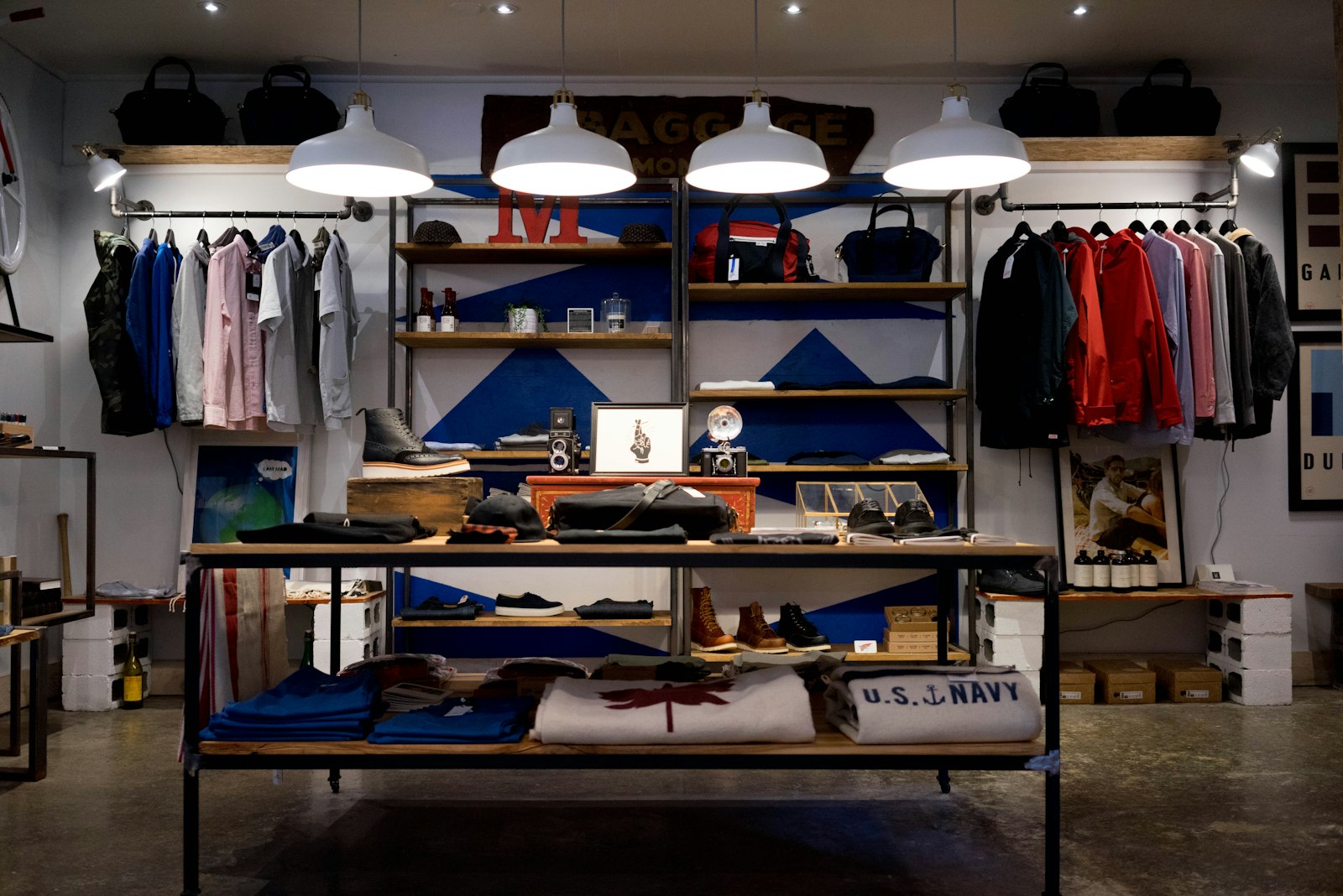
You have a fragrance line that tests well with consumers, your margins hold at 60% or above, and your packaging looks shelf-ready. Yet getting buyers at independent boutiques or regional chains to return your emails remains the hardest part of the business. Most fragrance brands spend 12 to 18 months between their first wholesale inquiry and their first 50-door retail placement, not because the product is weak, but because the distribution playbook is unclear. The gap between a strong DTC brand and a retail-ready brand is rarely the scent itself. It is compliance documentation, case-pack logistics, margin architecture, and the ability to guarantee replenishment within 14 days.
This guide breaks down the exact steps procurement managers and brand owners use to build a fragrance retail distribution strategy from zero to multi-channel. Whether your goal is to get candles in boutiques across three states or to land a vendor agreement with a 200-door candle retail chain, the framework below covers channel selection, pitch preparation, pricing structures, and the operational readiness checks that separate funded brands from stalled ones. Every section includes specific numbers, timelines, and checklists so you can benchmark your current position against what buyers actually require.
Understanding the Retail Channel Landscape
Before sending a single line sheet, map which channels match your current production capacity and brand positioning. Fragrance retail distribution falls into four primary tiers, each with distinct volume thresholds and margin expectations.
- Independent boutiques and gift shops — Order quantities of 12 to 72 units per SKU. Buyers expect 50% wholesale margins, net-30 payment terms, and free freight on orders above $300. Decision cycles run 2 to 6 weeks.
- Regional specialty chains (10 to 80 doors) — Minimum opening orders of 200 to 500 units per SKU. Margins compress to 45 to 48%. These accounts require EDI capability or a platform like NuORDER / Joor for order management.
- National big-box and department stores — Volume commitments start at 5,000 units per SKU per quarter. Margins drop to 40 to 45%, plus co-op advertising fees of 3 to 5% of invoice. Lead times of 90 days are standard.
- Online marketplaces with retail programs (Amazon Vendor, Wayfair, Nordstrom.com) — Hybrid models that blend wholesale margins (42 to 50%) with platform fees. Useful for building velocity data that strengthens pitches to physical chains.
A realistic fragrance distribution strategy for a brand doing under $500K annual revenue starts with 15 to 30 independent boutiques, adds 2 to 3 regional chains in year two, and approaches national accounts only after demonstrating 95%+ fill rates across existing doors.
Preparing Your Product Line for Retail Readiness
Retail buyers reject more submissions for operational gaps than for product quality issues. Run through this readiness audit before building your pitch:
- Compliance documentation — IFRA certificates for every fragrance oil, SDS sheets per SKU, California Prop 65 warnings where applicable, and CLP labeling for any EU-bound inventory. Budget $800 to $1,500 per SKU for full testing through labs like SGS or Intertek.
- Barcode and labeling — GS1 UPC codes ($250 for a 10-code prefix), scannable at 99.5% accuracy or higher. Include case-pack GTINs if targeting chains that use EDI 850 purchase orders.
- Packaging durability — Products must survive a 3-foot drop test and 72-hour vibration simulation (ISTA 3A). Scented candles in glass vessels need corrugated inserts with minimum 32 ECT board.
- Shelf presentation — Provide a planogram suggestion showing facing count, shelf height, and adjacency recommendations. Buyers at gift boutiques allocate 12 to 18 inches of linear shelf per new vendor.
- Replenishment capacity — Confirm you can ship replacement stock within 10 to 14 business days of a reorder. If you source from an overseas OEM, factor 30 to 45 days ocean transit plus 7 days customs clearance into your safety stock calculations.
Brands that manufacture through a vertically integrated partner like Aromiso can compress production lead times to 15 to 20 days for reorders, which makes 14-day domestic replenishment feasible when you hold 60 days of safety stock in a U.S. 3PL warehouse.
Building Your Pitch for Independent Boutiques
Getting candles in boutiques requires a different approach than pitching a chain buyer. Boutique owners make purchasing decisions emotionally first, then validate with margin math. Your outreach kit should include:
- A curated line sheet — Limit to 6 to 10 SKUs maximum. Show wholesale price, MSRP, case-pack quantity, and minimum opening order. PDF format, under 3 MB, with lifestyle photography at 300 DPI.
- A sample program — Ship 3 to 5 hero SKUs in branded packaging at no cost. Include a handwritten note and a one-page sell-through data sheet if you have DTC conversion numbers above 3.5%.
- Margin calculator — Provide a simple spreadsheet showing the boutique’s gross profit per unit, projected monthly revenue at 2 units per week sell-through, and comparison to their current candle vendor margins.
- Terms sheet — Net-30 terms for orders above $250, 2% discount for payment within 10 days (2/10 net 30), free shipping above $300, and a 90-day return policy on unsold stock for first orders.
Target a 10% to 15% response rate on cold outreach. Plan to contact 100 boutiques to secure 10 to 15 meetings and close 5 to 8 accounts in your first quarter. Trade shows like NY NOW (January and August) or Atlanta Gift Show compress this timeline by putting you in front of 50+ buyers in three days, though booth costs run $4,500 to $12,000 for a 10x10 space.
Approaching Regional and National Chains
Candle retail chain buyers operate on structured vendor onboarding processes. Expect the following sequence:
- Initial submission — Most chains accept new vendor applications through portals (RangeMe for Target, Walmart Marketplace for Walmart, or direct category manager introductions via LinkedIn). Prepare a 12-slide deck covering brand story, product assortment, pricing tiers, marketing support, and supply chain capacity.
- Buyer meeting — 30 minutes, typically virtual. Bring physical samples, a finalized cost sheet with volume breaks at 1,000 / 5,000 / 10,000 units, and proof of product liability insurance ($2M aggregate minimum).
- Trial program — Chains typically test 20 to 50 doors for 90 days. You must hit a sell-through rate of 1.5 to 2.0 units per door per week to earn expansion. Provide in-store display units and staff training sheets.
- Rollout agreement — If trial metrics pass, expect a 12-month vendor agreement with quarterly volume commitments, chargeback clauses for late shipments (3 to 5% of invoice), and annual cost reviews.
| Channel | Min. Order / SKU | Wholesale Margin | Payment Terms | Onboarding Timeline |
|---|---|---|---|---|
| Independent boutique | 12–72 units | 50% | Net 30 | 2–6 weeks |
| Regional chain (10–80 doors) | 200–500 units | 45–48% | Net 60 | 2–4 months |
| National chain (100+ doors) | 5,000+ units | 40–45% | Net 60–90 | 4–9 months |
| Online retail program | 500–2,000 units | 42–50% | Net 30–60 | 6–12 weeks |
Pricing Architecture and Margin Protection
A common mistake in fragrance distribution strategy is setting a single wholesale price across all channels. Instead, build a tiered pricing model that protects your brand equity:
- MSRP anchoring — Set your consumer price first (typically $28 to $65 for a 200g scented candle, $35 to $90 for a 250ml reed diffuser). Work backward to wholesale at 50% of MSRP for boutiques.
- Volume discount tiers — Offer 2% off invoice at 500+ units, 5% at 2,000+ units, and 8% at 5,000+ units. Never exceed 10% total discount or you erode the margin your retail partners depend on.
- MAP policy — Enforce a Minimum Advertised Price agreement across all online sellers. Violations should trigger a written warning, then a 30-day shipping hold, then account termination.
- Freight strategy — Absorb shipping on orders above $300 for boutiques. For chains, quote FOB origin and let their logistics team manage inbound freight, or offer prepaid freight with a 3% surcharge built into unit cost.
Work with your OEM partner to lock unit costs for 12 months. Aromiso’s OEM program provides fixed pricing on annual volume commitments, which eliminates the margin surprises that derail chain negotiations mid-contract.
Logistics and Inventory Planning for Multi-Channel Fulfillment
Once you serve more than 10 retail accounts, inventory management becomes your primary operational challenge. Plan for:
- Safety stock formula — Hold (average daily units sold x replenishment lead time in days) + 20% buffer. For a brand shipping 80 units per day with a 21-day lead time, that is 2,016 units of safety stock per SKU.
- 3PL selection — Budget $2.50 to $4.50 per order for pick-and-pack, plus $0.75 to $1.20 per cubic foot per month for storage. Require your 3PL to support EDI ASN (856) transmissions if you supply chains.
- Case-pack configuration — Standard case packs of 6 or 12 units for boutiques, 24 or 48 units for chains. Palletize at 48 inches x 40 inches, maximum 60 inches height, under 1,500 lbs per pallet.
- Seasonal planning — Fragrance retail peaks in Q4 (October through December account for 40 to 55% of annual candle sales). Place production orders by July for holiday inventory. Confirm ocean freight bookings 90 days before needed in-warehouse date.
Browse the product catalog to review case-pack specifications and MOQ details for reed diffusers, scented candles, and car fragrances before finalizing your assortment plan.
Measuring Sell-Through and Building the Case for Expansion
Retail buyers renew and expand vendors based on data, not relationships. Track these KPIs from day one:
- Sell-through rate — Units sold divided by units shipped, measured weekly per door. Target 70%+ sell-through within the first 60 days for boutiques, 80%+ within 90 days for chains.
- Revenue per square foot — Calculate your product’s contribution relative to shelf space consumed. Boutiques benchmark $150 to $300 per square foot annually for gift categories.
- Return and damage rate — Keep below 3% of units shipped. Track breakage by carrier and packaging configuration quarterly.
- Reorder frequency — Healthy accounts reorder every 30 to 45 days. If reorder intervals stretch beyond 60 days, investigate whether pricing, placement, or scent assortment needs adjustment.
Compile a quarterly business review (QBR) document for each chain account showing these metrics alongside marketing activities you funded (social campaigns, influencer seeding, in-store events). Buyers who see a vendor actively driving demand are 3x more likely to approve additional door expansion.
Next Steps
Getting your fragrance products into retail is a sequence of operational milestones, not a single sales event. Start by auditing your compliance documentation and packaging against the readiness checklist above. Then identify 30 target boutiques in your region, build your line sheet and sample kit, and begin outreach with a goal of 5 new accounts within 90 days.
If you are scaling production to meet chain volume requirements or need a manufacturing partner who can guarantee consistent quality across 10,000-unit runs, request a quote from Aromiso’s team. We provide full compliance documentation, custom packaging, and flexible MOQs starting at 500 units per SKU, so you can enter retail negotiations with confirmed capacity and locked-in unit costs.
Your fragrance deserves shelf space. The brands that win retail distribution are not the ones with the best scent alone. They are the ones who treat distribution as a product discipline: documented, measurable, and relentlessly executed.