Formulation
Fragrance Load Percentage: Optimal Oil Ratios by Product Type

Getting the fragrance load percentage wrong is the single most expensive formulation mistake in home fragrance manufacturing. Too little oil and the product smells flat on the shelf, generating returns and negative reviews. Too much and you waste raw material budget, risk safety non-compliance, and create products that sweat, separate, or fail burn tests. For procurement managers and brand owners sourcing from Chinese OEM factories, this variable sits at the center of every cost negotiation, quality inspection, and regulatory filing you will handle.
The challenge is that there is no universal number. The optimal scent load changes with the product type, the carrier medium, the wax or solvent base, and the target market’s regulatory ceiling. A reed diffuser formulation at 25% fragrance oil behaves completely differently from a soy candle at 10%. This guide breaks down the working ranges for each major product category, explains the cost and performance trade-offs at each level, and gives you a practical framework for specifying loads when you brief your manufacturing partner.
What Fragrance Load Percentage Actually Measures
Fragrance load percentage is the weight of fragrance oil divided by the total weight of the finished product (or, in some formulations, by the weight of the base medium alone). The distinction matters when you read supplier spec sheets.
- Total-weight basis: Oil weight / (oil + base) x 100. Common in candles and car fragrances.
- Base-weight basis: Oil weight / base weight x 100. Common in reed diffusers where the solvent carrier is measured separately.
- IFRA ceiling: The International Fragrance Association sets maximum usage levels per product category. Your load must stay below this ceiling for the specific fragrance compound used.
Always confirm with your supplier which calculation method they use. A 10% load on a total-weight basis is roughly 11.1% on a base-weight basis — a small gap that becomes significant at scale and during safety audits.
Recommended Fragrance Load by Product Type
The table below summarizes the working ranges we use across production runs at Aromiso, aligned with typical IFRA Category limits and market performance benchmarks.
| Product Type | Minimum Load | Optimal Range | Maximum (IFRA-dependent) | Typical Carrier |
|---|---|---|---|---|
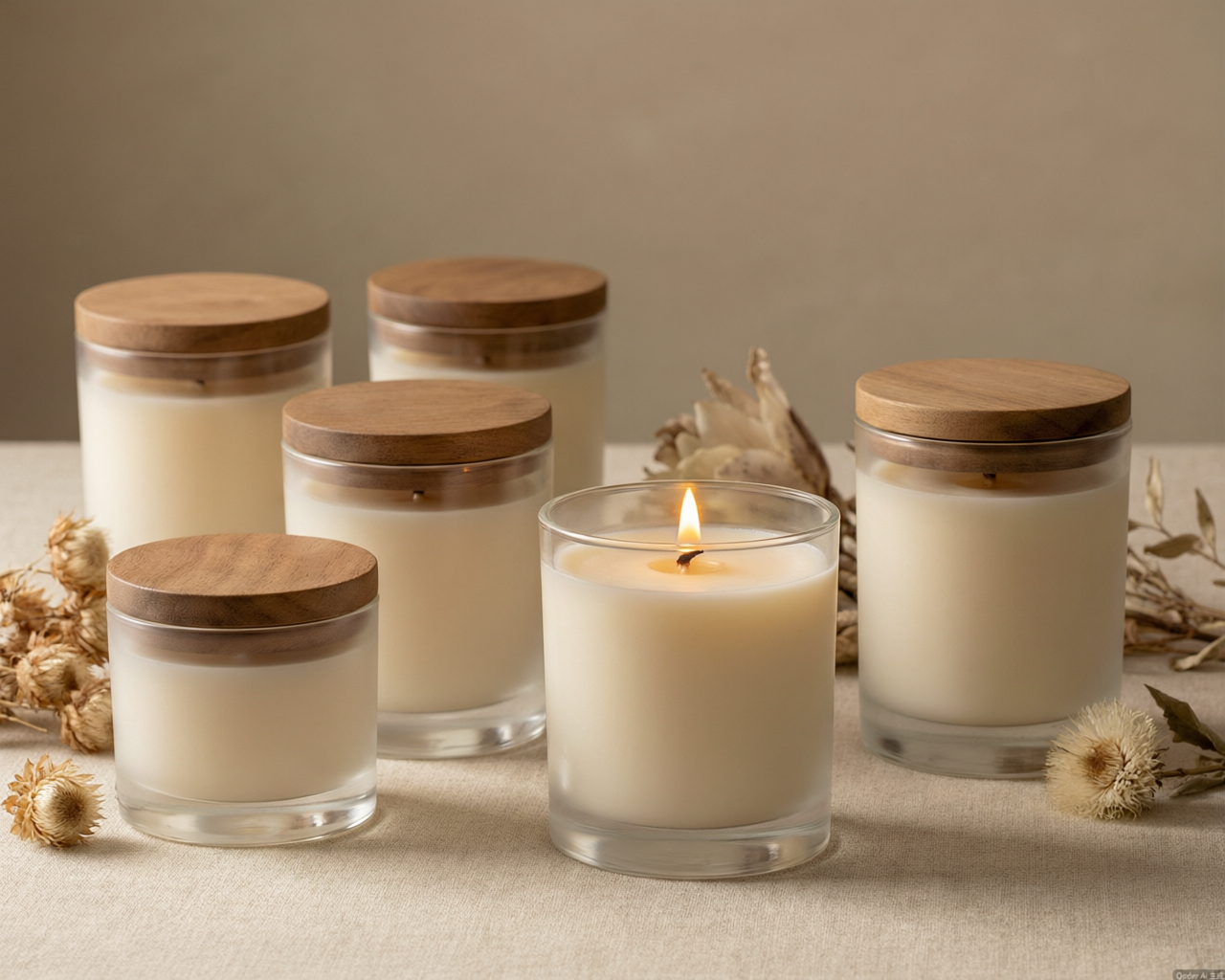
| Soy / coconut wax candle | 6% | 8–10% | 12% | Wax |
| Paraffin candle | 5% | 6–8% | 10% | Wax |
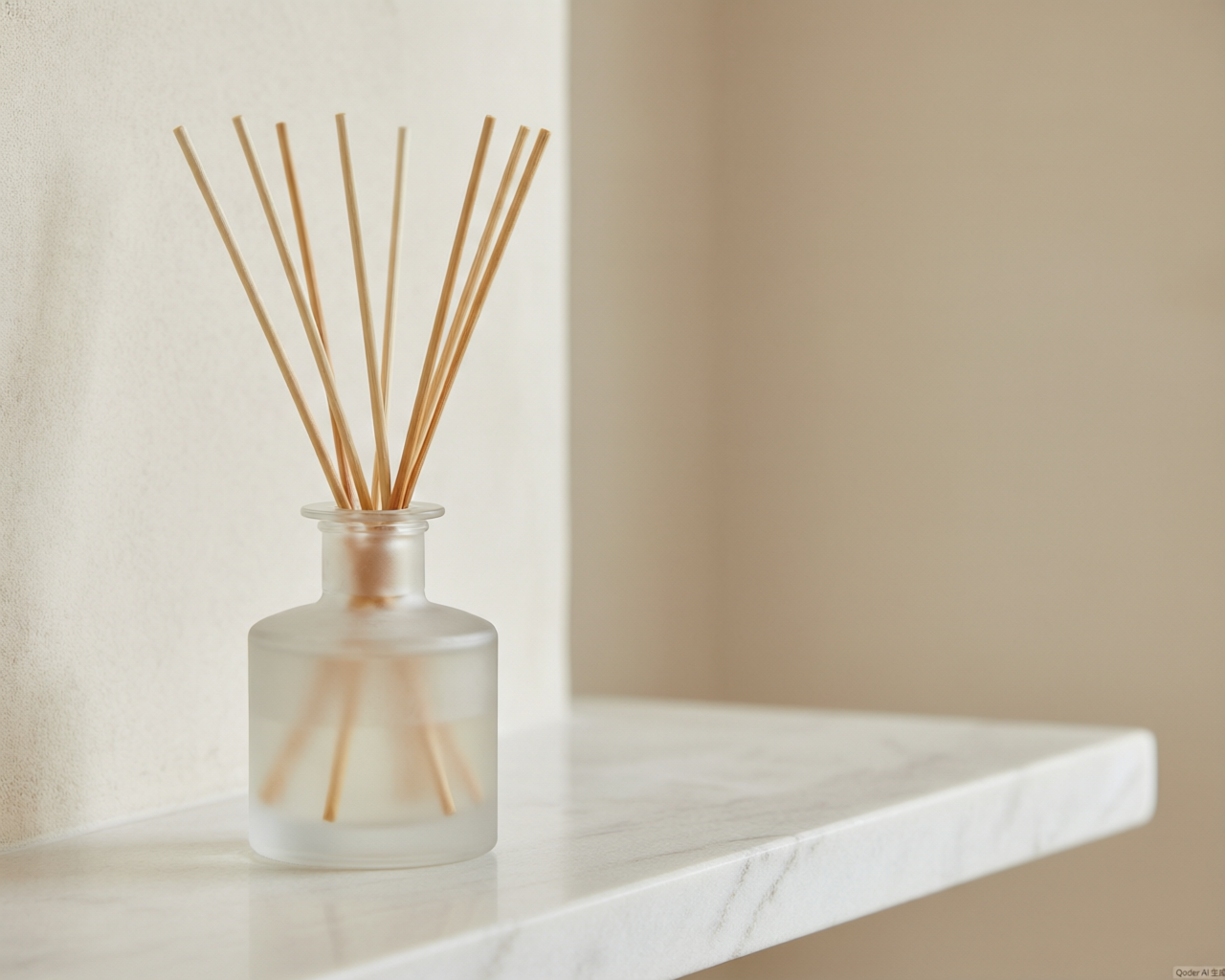
| Reed diffuser | 15% | 20–30% | 40% | DPG / isopropyl myristate |
| Room spray | 3% | 5–10% | 15% | Ethanol / water |
| Car fragrance (fiber pad) | 10% | 15–25% | 35% | Fiber / EVA |
| Car fragrance (vent clip gel) | 5% | 8–12% | 18% | Gel polymer |
| Commercial HVAC diffuser | 50% | 80–100% | 100% | Pure oil / nano-mist |
| Essential oil roll-on | 2% | 5–15% | 25% | Jojoba / fractionated coconut |
These ranges assume standard-grade fragrance oils (specific gravity 0.90–1.05). Heavy base-note oils such as sandalwood or oud may perform well at the lower end, while light citrus top-notes often need the upper end to achieve comparable throw.
How Base Material Affects Scent Throw
The carrier medium determines how much fragrance it can hold and release. Understanding this interaction prevents over-ordering oil for a base that simply cannot absorb it.
- Soy wax: Holds up to 12% fragrance oil by weight, but cold throw drops noticeably above 10%. Pour temperature (typically 55–60 degrees Celsius) also affects oil binding. Pour too hot and volatile top-notes evaporate before the wax sets.
- Paraffin wax: Lower oil-holding capacity (around 10% max) but superior hot throw per percentage point. Many mass-market brands run 6–7% and still achieve strong room fill.
- DPG-based diffusers: Dipropylene glycol dilutes oil for controlled evaporation through reed sticks. At 25% fragrance concentration, a 150 ml diffuser lasts 8–12 weeks in a 20-square-meter room.
- Ethanol-based sprays: Alcohol acts as both solvent and flash-evaporation carrier. Loads above 10% can cause skin irritation claims and fail EU CLP labeling thresholds for certain allergens.
When you request samples from your OEM partner, specify the base material alongside the target load. A 10% oil ratio in soy wax and a 10% ratio in paraffin will produce measurably different scent profiles in blind testing.
Cost Impact: What Each Percentage Point Adds
Fragrance oil is the most expensive raw material in most home fragrance SKUs. At current market rates (2025–2026), mid-range fragrance oils from Chinese suppliers run USD 12–28 per kilogram, while premium naturals and branded compounds (Givaudan, Firmenich, IFF) can reach USD 45–120 per kilogram.
- Candle example (200 g soy candle): Moving from 8% to 10% load adds 4 g of oil per unit. At USD 20/kg oil cost, that is USD 0.08 per candle — roughly USD 800 per 10,000-unit order.
- Reed diffuser example (150 ml): Moving from 20% to 30% adds approximately 15 ml of oil per unit. At the same oil price, that is USD 0.30 per unit, or USD 3,000 per 10,000-unit run.
- Room spray example (100 ml): A jump from 5% to 10% doubles oil cost per unit, adding roughly USD 0.10–0.15 depending on oil grade.
For a full breakdown of how formulation choices affect landed cost, review our product catalog pricing tiers or request a custom quotation through our OEM program.
Regulatory Ceilings and Market Compliance
Every target market imposes limits that override your performance preferences.
- EU / UK (CLP + IFRA 51st Amendment): Maximum usage levels are set per fragrance material per product category. You must hold a valid safety data sheet and allergen declaration for each SKU. Loads above category limits require reclassification and additional labeling.
- USA (CPSC + California Prop 65): No federal fragrance load cap, but individual chemicals (e.g., linalool above 0.01% in leave-on contexts) trigger warnings. Candle loads above 12% may also affect flash-point testing for shipping classification.
- Middle East / GCC (GSO standards): Requires Arabic-language hazard labeling and, for aerosol products, conformity certificates from accredited labs.
- Australia (NICNAS / AICIS): New fragrance ingredients introduced after 2020 require industrial chemical notification before import.
Ask your Chinese supplier for IFRA certificates and full ingredient disclosure (CAS numbers) before committing to a load level. Reputable OEM factories provide this documentation within 5–7 business days of request.
Testing Protocol Before Locking Your Load
Do not approve a production run based on a single sample. Use this five-step validation sequence:
- Bench test (Day 1–3): Produce 5 units at your target load. Check for oil pooling, separation, or surface sweating after 72 hours at 25 degrees Celsius.
- Cold throw evaluation (Day 4): Smell the unlit product at 30 cm distance. Rate intensity on a 1–5 scale with at least 3 panelists.
- Hot throw / diffusion test (Day 4–7): Burn the candle for 2 hours in a 20-square-meter room, or set up the diffuser with 8 reed sticks. Measure perceived throw at 1 m and 3 m.
- Stability aging (Week 2–6): Store samples at 40 degrees Celsius (accelerated aging) for 4 weeks. Re-evaluate scent, color, and phase separation.
- Regulatory pre-check (Week 3–6): Submit the formulation to a third-party lab (SGS, Intertek, Bureau Veritas) for IFRA compliance and flash-point testing. Budget USD 200–500 per SKU.
Total timeline from first sample to production approval: 6–8 weeks for a new formulation. If you are adjusting an existing formula by 1–2 percentage points, you can compress this to 3–4 weeks.
Common Mistakes When Specifying Load with an OEM Supplier
- Quoting load without specifying the calculation basis. Always state whether your percentage is total-weight or base-weight.
- Ignoring oil specific gravity. A 10% load by weight of a dense oud oil (SG 1.05) delivers fewer volatile molecules than 10% of a light citrus blend (SG 0.88). Ask for volume-equivalent performance data.
- Skipping the cure-time variable. Soy candles need 10–14 days of cure time for full scent development. Testing at Day 2 will understate performance and tempt you to over-load.
- Assuming one load fits all SKUs. A brand launching a candle, a diffuser, and a spray in the same scent family will need three different load levels to achieve consistent perceived intensity.
- Not requesting oil retention data. Some waxes and gels release oil unevenly over the product life. Ask your supplier for evaporation curves, not just initial throw numbers.
Working with Aromiso on Custom Formulations
When you brief our formulation team, provide the following to accelerate sampling:
- Target product type and base material (e.g., soy-coconut blend, DPG diffuser, fiber car pad).
- Desired fragrance load range or, if unknown, a reference product we can benchmark against.
- Target market and regulatory requirements (EU, US, GCC, etc.).
- Fragrance oil source — supply your own oil or select from our library of 200+ stock compounds.
- Order volume estimate so we can optimize unit cost at your load level.
We return initial samples within 7–10 business days, with full IFRA documentation and recommended load adjustments included. For brands scaling from pilot to container-load orders, our OEM program covers formulation, filling, labeling, and export packaging under one roof.
Next Steps
Dialing in the right fragrance load percentage is a balance of performance, cost, and compliance — and it is the specification you will revisit every time you change a base material, switch oil suppliers, or enter a new market. The brands that get it right treat load percentage as a living variable, re-testing with every formulation change rather than locking a number once and hoping it holds.
If you are ready to validate your current ratios or develop a new product line from scratch, request a quote with your target load, product type, and order volume. Our formulation engineers will confirm feasibility, flag any regulatory constraints, and ship benchmark samples within two weeks. Browse our full product catalog to see the standard load ranges we run across candles, diffusers, car fragrances, and commercial scent systems — then let us customize from there.