Industry Applications
Wedding Favor Fragrances: A Niche Product Line for Suppliers
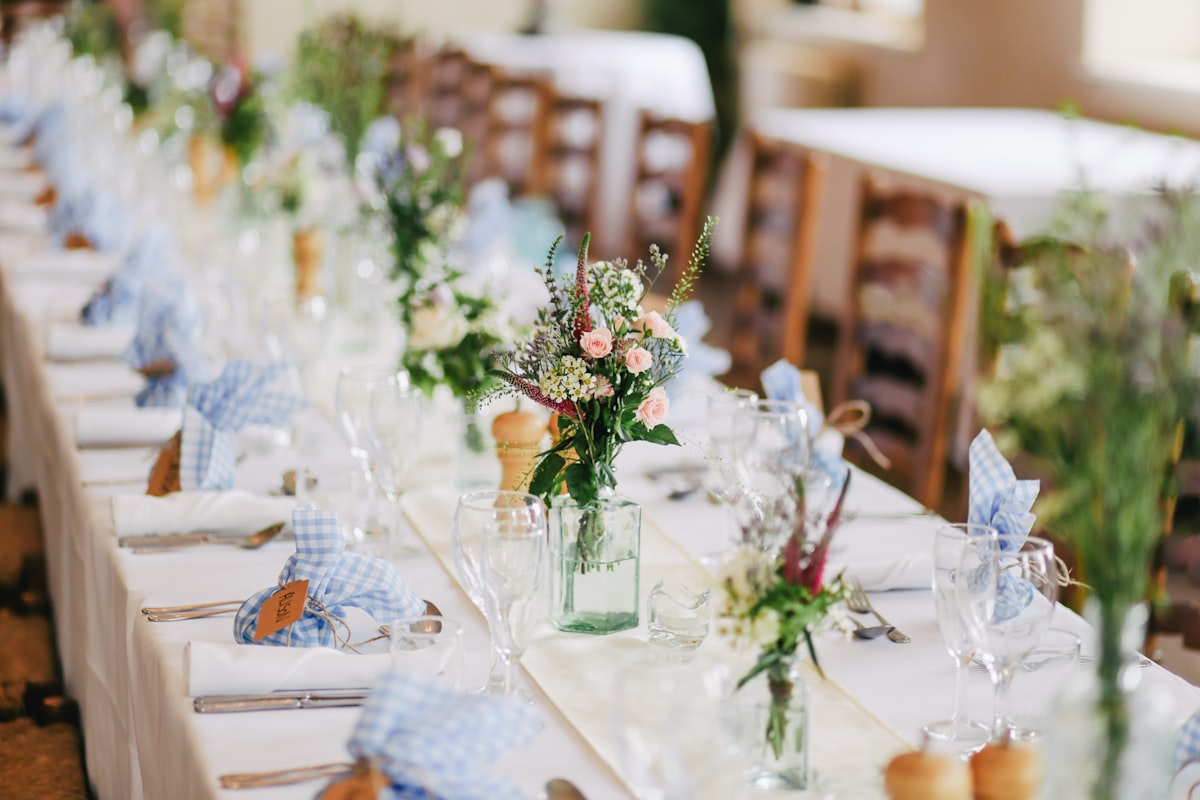
The US wedding industry is worth roughly $70 billion annually, with an average wedding cost above $30,000. Within that, wedding favors and guest gifts represent a $1–2 billion niche that is structurally underserved by fragrance suppliers. Most candle factories chase retail and hospitality contracts; most wedding favor sellers are small Etsy operators with no manufacturing capability. The middle — a factory-grade supplier offering custom mini candles, small diffusers, and labeled favors at event-scale MOQs — is a defensible and profitable position. Here is how to build it.
Market structure and buyer types
The wedding favor channel has three distinct buyer types, each with different specifications and order patterns:
- Couples and families (direct). 60–70% of volume. Order sizes 50–250 units. High customization, low price tolerance, long decision cycles. Typically reached through Etsy, Instagram, and wedding marketplaces (The Knot, Zola, WeddingWire).
- Wedding planners and event designers. 20–25% of volume. Order sizes 100–500 units across multiple weddings per year. They are the leverage point — one good planner relationship produces 8–20 orders per year.
- Venues, hotels, and corporate event teams. 10–15% of volume. Order sizes 200–1,000+ units. They buy at scale but demand consistency, insurance documentation, and reliable delivery.
A supplier who treats all three the same will fail. Couples need hand-holding and visual proofs. Planners need trade pricing and reliability. Venues need compliance and volume capacity.
Product specifications for the channel
Wedding favor fragrance products have specific size, packaging, and labeling requirements that differ from retail.
Mini candles (the dominant SKU):
- Capacity: 30 ml (1 oz) to 100 ml (3.4 oz). The 60 ml / 2 oz size is the volume sweet spot — large enough to feel substantial, small enough to fit a $4–$8 unit budget.
- Vessel: clear or amber glass jars with metal or wood lids; tins for budget tier; ceramic for luxury tier.
- Burn time: 8–20 hours depending on size.
- Wax: soy or soy-coconut blend preferred (clean-burning story matters to this buyer); paraffin avoided.
- Fragrance load: 6–8% (lower than retail because the unit is small and burn time is short).
- Scent profiles: white floral (jasmine, peony, gardenia), soft gourmand (vanilla, honey, almond), fresh linen, and “his and hers” paired sets.
Mini reed diffusers:
- Capacity: 30–50 ml, with 3–5 reeds.
- Vessel: slim glass bottles, often with custom-shaped shoulders.
- Lifespan: 30–45 days.
- Popular for destination weddings where open-flame candles are restricted by venue rules.
Other formats gaining share:
- Scented wax melts in branded pouches (5–10 g per favor, $1.20–$2.50 unit cost).
- Mini room sprays (15–30 ml, $1.80–$3.50 unit cost).
- Scented sachets for linen closets ($0.80–$1.80 unit cost) — the budget-tier volume leader.
Custom labels and personalization
Personalization is the entire value proposition of the channel. Standard options:
- Custom label printing with couple’s names, wedding date, and a short message. Digital print runs at $0.15–$0.45 per label for short runs; offset becomes economical above 1,000 units.
- Custom vessel decoration: screen print directly on glass ($0.30–$0.80 per unit, plus $150–$400 screen setup), or UV print for full-color photographic designs ($0.50–$1.20 per unit, no screen cost).
- Custom box and tag: kraft or white gift box with a tied tag, $0.40–$1.20 per unit. Wax seals add $0.30–$0.60 per unit and photograph well for Instagram.
- Scent naming: “Sarah and James, June 14” as the scent name on the label, with a printed story card.
The supplier who offers a 48-hour digital proof turnaround wins the channel. Couples decide fast once they see their names on the product; suppliers who take two weeks to render a proof lose to those who take two days.
MOQ for event orders
This is where most fragrance suppliers leave money on the table. Standard retail MOQs (1,000+ units per SKU) do not fit the channel. Realistic event MOQs:
- Stock vessel + custom label: 50 units minimum, $4.50–$7.00 per unit at this volume.
- Stock vessel + custom label + custom box: 75 units minimum, $5.50–$8.50 per unit.
- Custom vessel + full custom packaging: 300–500 units minimum, $3.50–$6.00 per unit.
- Custom fragrance development: 500+ units, with a $500–$1,500 development fee often waived at volume.
The 50-unit minimum is operationally painful for a factory, but it is the price of entry. The way to make it work: batch small orders into shared production runs by vessel type, with custom labels applied as the variable. A factory that runs 20 small wedding orders per week on the same vessel base, with label changeover between runs, can hold margin at the 50-unit tier.
Seasonal patterns
Wedding favor demand is more seasonal than retail fragrance, and the production calendar must reflect it:
- Peak production: March–October. US weddings concentrate May–October, with June and September the two largest months. Orders are placed 3–6 months ahead, so the production peak runs February–August.
- Engagement season: November–January. Roughly 30% of US engagements happen between Thanksgiving and Valentine’s Day. This is the marketing window — couples who get engaged in December start shopping for favors in January and February.
- Holiday and destination weddings: November–December create a secondary, smaller peak.
- Off-season (November–January) is the time for catalog refresh, planner outreach, and trade show attendance (The Knot Worldwide Wedding Expo, regional bridal shows).
A supplier who staffs and stocks for the peak and uses the off-season for business development will outperform one that treats wedding favors as a steady-state line.
Building the channel: three structural moves
- A dedicated wedding catalog and landing page, with size guides, scent profiles, real-wedding photography, and a clear “order timeline” tool (“Order by March 1 for a June 14 wedding”). The planning tool alone lifts conversion measurably.
- A planner trade program with 20–30% trade discount, dedicated account contact, and sample kits sent on request. Ten good planner relationships produce more revenue than 200 one-off couple orders, with lower service cost.
- A sample program at $25–$45 per sample kit (3–5 mini candles with custom-style labels). Sample-to-order conversion in this channel runs 25–40% — among the highest in fragrance — because the buyer is emotionally invested and time-bound.
Wedding favors are not a high-volume channel for a fragrance factory. They are a high-margin, high-loyalty, low-competition niche that rewards suppliers who respect the buyer’s timeline and emotional stakes. The couples become repeat customers at baby showers, housewarmings, and anniversaries. The planners become a sales force. The niche compounds quietly while bigger suppliers ignore it.