Industry Applications
How to Create a Spa Signature Scent: From Concept to Product

A spa signature scent is more than a pleasant smell pumped through a diffuser. It is a proprietary olfactory identity that guests associate with relaxation, a specific brand promise, and the memory of their treatment experience. When executed well, it drives retail sales, strengthens brand recall, and differentiates the spa in a crowded wellness market. This article outlines the complete development process from initial concept through multi-format product deployment.
Phase 1: Defining the Scent Strategy
Before any fragrance is blended, the spa leadership team must align on strategic parameters:
Brand Positioning Questions
- What emotion should the scent evoke? (Serenity, renewal, luxury, energy, grounding)
- What is the spa’s visual and material palette? (Warm woods and earth tones suggest different notes than cool marble and glass)
- Who is the primary guest? (Medical wellness patients, luxury leisure guests, fitness-focused members)
- What scents do competitors in the same market use? (Differentiation audit)
Practical Constraints
- Treatment compatibility: The signature scent must not clash with treatment-specific aromatherapy. A lavender-dominant signature conflicts with a lavender massage protocol.
- Allergen profile: Public-space scents should minimize the EU 26 listed allergens. Linalool, limonene, and geraniol are common but can trigger sensitivity in enclosed treatment environments.
- Climate considerations: Tropical spa locations accelerate top-note evaporation; formulations may need heavier base-note anchoring.
Aromiso provides a structured Scent Strategy Workshop (90 minutes, remote or on-site) that produces a documented olfactory brief. This workshop is complimentary for projects with confirmed development budgets above $3,000.
Phase 2: Concept Development and Blending
With the brief finalized, the perfumer develops initial concepts.
The Blending Process
- Accord construction: The perfumer builds 3-5 distinct accords (top, heart, base combinations) aligned with the brief.
- Internal evaluation: Concepts are assessed on sniffing strips at 15 minutes, 1 hour, and 4 hours to evaluate evolution.
- Submission to client: 3-5 concepts delivered as 10 ml samples with written descriptions (note pyramid, emotional narrative, suggested applications).
- Client feedback round: Structured scoring on 5 criteria: brand fit, pleasantness, uniqueness, versatility across formats, and guest appeal.
- Revision: 2-3 revision rounds refine the selected concept. Typical total concepts presented: 8-12 across all rounds.
Timeline and Cost
- Concept development: 3-4 weeks
- Revision rounds: 1-2 weeks each
- Total development fee: $1,200-$2,500 (includes up to 15 concepts, 3 revisions, and final formula documentation)
- Formula ownership: Upon full payment, the client owns the formula exclusively. Aromiso does not resell or reuse custom formulas.
Phase 3: Application Testing
The approved formula must be validated across every intended product format. A spa signature scent typically deploys in 4-7 formats:
| Format | Application | Key Test Parameters |
|---|---|---|
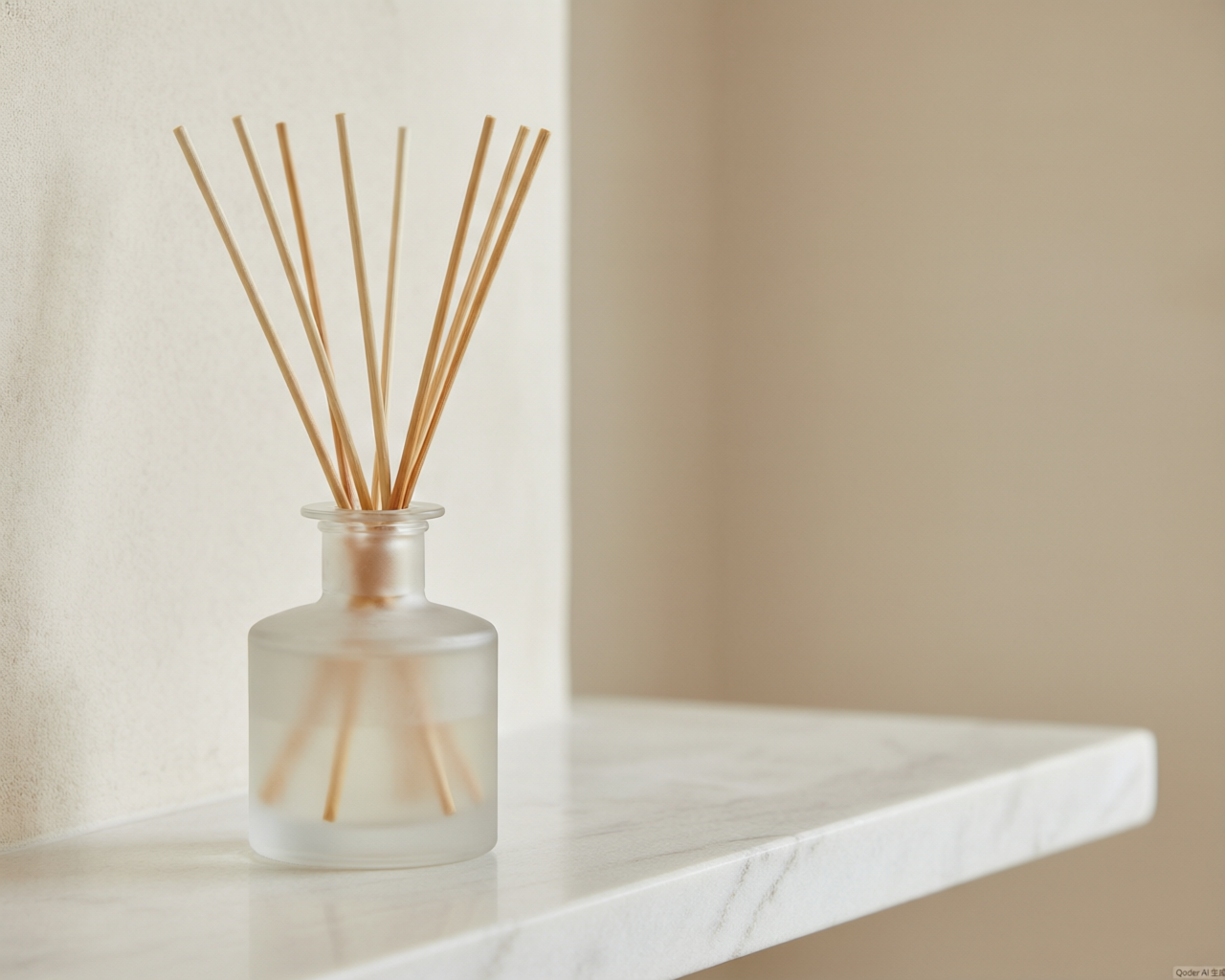
| HVAC/room diffuser oil | Lobby, relaxation areas | Atomization quality, throw at 3m, 8-hour longevity |
| Treatment room candle | Massage rooms, suites | Burn cleanliness, scent throw at 60C wax pool, 4-hour performance |
| Massage/body oil | Therapist-applied | Skin feel, absorption rate, scent evolution on skin over 2 hours |
| Linen spray | Towels, robes, sheets | Dry-down character on cotton, longevity after 24 hours |
| Retail candle | Guest take-home | Cold throw (unlit), hot throw (lit), 50-hour consistency |
| Retail room spray | Guest take-home | Initial burst, 30-minute dry-down, bottle stability |
| Amenity toiletries | Shower gel, lotion | Scent retention after rinse (rinse-off) or 4 hours (leave-on) |
Stability and Compatibility Testing
Each format undergoes:
- Accelerated stability: 40C/75% RH for 8 weeks (equivalent to 12 months ambient)
- Packaging compatibility: 4-week contact test with final packaging material
- Freeze-thaw cycling: 3 cycles (-5C to 40C) for liquid products
- Photostability: 7-day UV exposure for transparent packaging
Testing cost: $400-$800 per format, typically bundled into the development package for multi-format programs.
Phase 4: Regulatory Documentation
Before production, each product format requires regulatory clearance:
- IFRA certificate: Confirming the formula complies with current IFRA standards for each product category (rinse-off, leave-on, fine fragrance, household).
- Safety Data Sheet (SDS): Per GHS format, in destination-market languages.
- Allergen declaration: Quantified content of EU 26 allergens per format.
- Cosmetic notification: For skin-contact products in EU (CPNP), UK (SCPN), or China (NMPA) markets.
- Candle safety: ASTM F2417 (US) or EN 15493 (EU) compliance documentation.
Aromiso’s regulatory team prepares all documentation as part of the development package. Additional market-specific filings are quoted separately (typically $200-$500 per market per SKU).
Phase 5: Production and Deployment
Initial Production Run
For a spa launching a signature scent across 5 formats, a typical initial order:
| Product | Quantity | Unit Cost | Total |
|---|---|---|---|
| Diffuser oil (500 ml) | 50 units | $32.00 | $1,600 |
| Treatment candles (150 g) | 200 units | $4.60 | $920 |
| Massage oil (1,000 ml) | 100 units | $6.80 | $680 |
| Linen spray (500 ml) | 100 units | $2.20 | $220 |
| Retail candles (200 g, boxed) | 300 units | $6.50 | $1,950 |
| Total initial investment | $5,370 |
Plus one-time development fee: $1,200-$2,500.
Reorder Economics
Once the program is established, quarterly reorders at higher volumes reduce per-unit costs by 15-25%. Annual programs exceeding $15,000 qualify for Aromiso’s priority production scheduling (15-day lead time vs. standard 25-35 days).
Phase 6: Guest Experience Integration
The product alone does not create a signature scent experience. Deployment best practices:
- Scent zoning: Lobby and relaxation areas carry the full signature; treatment rooms use a diluted version (50% intensity) to avoid competing with treatment protocols.
- Staff training: Therapists should be able to describe the scent’s notes and story to guests. Provide a one-page scent narrative card for each treatment room.
- Retail adjacency: Display retail products at the reception desk and relaxation lounge exit, where the ambient scent is strongest and purchase impulse peaks.
- Consistency monitoring: Assign a staff member to check diffuser oil levels weekly and candle burn quality daily. Scent inconsistency damages brand trust.
Measuring Success
Track these KPIs post-launch:
- Retail attach rate: Percentage of guests purchasing take-home fragrance products (benchmark: 8-15% for well-executed programs)
- Guest survey scent scores: Target 4.2+ on a 5-point scale
- Social media scent mentions: Track organic mentions in reviews and posts
- Repeat purchase rate: Guests buying refills or additional formats within 6 months
Starting Your Scent Journey
The first step is a 30-minute discovery call to assess your spa’s positioning, guest profile, and product ambitions. Aromiso’s spa fragrance team has developed over 80 proprietary scents for wellness operators across 30 countries.
Book a consultation and request your complimentary scent strategy session at aromiso.com.