Industry Applications
Real Estate Scent Marketing: Products and Opportunities

Real estate is one of the most underdeveloped channels in commercial scent marketing, and one of the most logically obvious. A buyer’s first impression of a property is olfactory before it is visual: the entry scent registers within seconds and colors every subsequent judgment about cleanliness, value, and “feel.” Studies cited by the Sense of Smell Institute and Journal of Consumer Research show that congruent ambient scent increases perceived property value and time-on-site during showings. Yet most residential and commercial real estate operators still rely on a vanilla plug-in from a hardware store. The suppliers who professionalize this channel are building a recurring-revenue business with three distinct product lines.
Property staging scents
Staging scent is the entry product. The buyer is a home stager, a real estate agent, or a property manager preparing a unit for showing. Specifications differ from retail home fragrance in three ways:
- Scent must be neutral-positive, not distinctive. The goal is “clean, warm, well-kept home,” not “brand identity.” The dominant profiles: white tea, fresh linen, light citrus, soft vanilla, cedar-and-sage. Heavy gourmands (cinnamon, pumpkin, chocolate) are actively counterproductive — they read as masking odors rather than ambient quality.
- Intensity must be low and consistent. A showing lasts 15–40 minutes. The scent should be detectable within 5 seconds of entry and fade to background within 30 seconds. Over-scenting is the most common failure mode and the most common buyer complaint.
- Application must be set-and-forget. Stagers manage 5–50 properties simultaneously. They cannot babysit a diffuser. Products must run for 30–90 days without intervention.
Standard product specifications for staging:
- Cold-air nebulizing diffusers ($120–$350 unit) for high-value listings ($1M+). Coverage 80–200 m², programmable timer, 100–250 ml oil capacity, 30–60 day runtime.
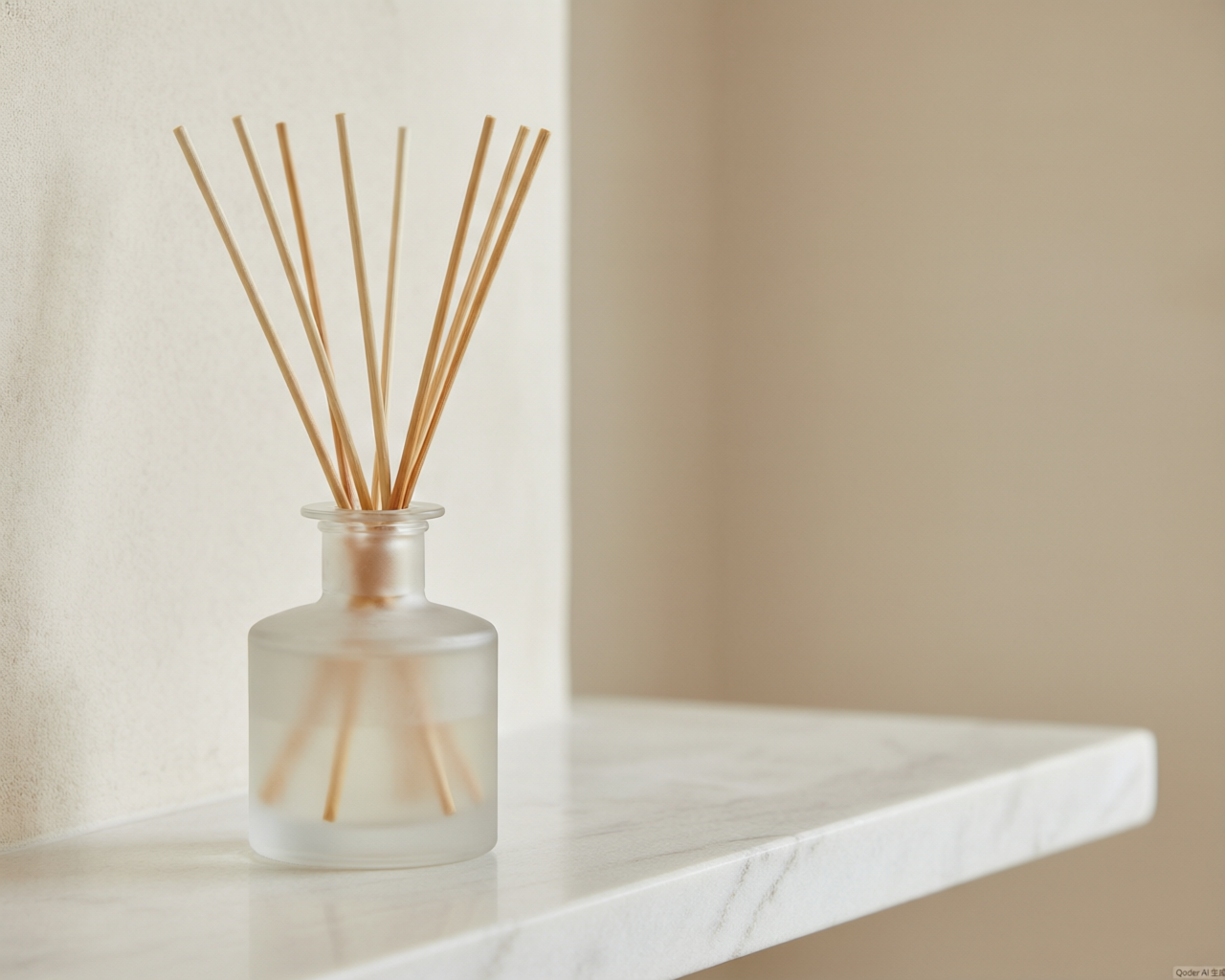
- Passive reed diffusers ($18–$45 retail) for mid-market listings. 150–200 ml, 60–90 day life, placed in entry and primary bath.
- HVAC clip-on or register-mounted scent cards ($3–$8 unit) for budget tier and rental turnovers. 30-day life, replaced per showing cycle.
- Pre-showing room sprays ($8–$18 per 100 ml) for agents to use 10 minutes before each open house.
A staging-focused supplier should offer a 3-tier kit (entry, mid, luxury) at $75, $180, and $450, with refill subscriptions at $25–$90 per quarter. The recurring refill is the business; the hardware is the onboarding.
HVAC integration for commercial property
Commercial real estate — office buildings, multifamily lobbies, retail centers, hotels-as-residences — moves from portable diffusers to HVAC-integrated systems. This is the highest-value tier of the channel.
System specifications:
- Inline nebulizing units installed in the air handling unit (AHU) or on a dedicated duct branch. Coverage 500–2,500 m² per unit. Hardware cost $1,500–$5,000 installed; fragrance consumption 80–250 ml per day depending on intensity and airflow.
- Zoned systems for mixed-use properties: lobby, elevator bank, fitness center, and residential corridors each on independent scent programs (or scent-off zones).
- IoT-connected controllers with scheduling, intensity adjustment, and oil-level telemetry. Property managers expect remote monitoring; a unit that requires a site visit to check oil level loses bids.
- Fragrance oil specifications: IFRA-compliant, low-residue formulation (HVAC systems accumulate residue from cheap oils and require duct cleaning), 12-month shelf life, batch-coded.
Contract structure:
- Hardware: sold or leased. Leasing at $80–$200/month per unit is increasingly common and shifts the buyer’s capex to opex, which property managers prefer.
- Service: monthly or quarterly refill and maintenance visits, $50–$150 per visit per location.
- Fragrance: annual contract, $2,000–$15,000 per property depending on size.
A 30-building multifamily portfolio on a lobby scent program represents $60,000–$300,000 in annual recurring revenue for the supplier. The sales cycle is 3–9 months; the contract length is typically 24–36 months. This is the channel’s anchor economics.
Branded take-home products
The third product line is the one most suppliers miss. A buyer who tours a beautifully scented property and then receives a small branded candle or diffuser as a closing gift extends the scent association into their own home. The property brand (developer, brokerage, hotel-residence) becomes a fragrance memory.
Standard configurations:
- Closing gift for residential buyers: branded 8 oz candle or 100 ml diffuser, $18–$35 unit cost at volume, presented in a gift box with the development’s logo and a “welcome home” card. Order volumes: 50–500 units per development phase.
- Leasing office retail: branded candles and sprays sold or gifted to prospective tenants, $25–$55 retail. Multifamily operators with lifestyle branding (Greystar, AvalonBay tier properties) run these as amenity retail.
- Open house takeaway: mini 30 ml candle or scented sachet, $2.50–$6.00 unit, branded to the listing agent or brokerage. Volume: 100–1,000 units per agent team per year.
The branded take-home line converts a one-time property experience into a recurring consumer fragrance interaction. For developers building multi-phase projects, it also creates a brand consistency story across sales, marketing, and resident experience.
Agent gifting and brokerage programs
Real estate agents are an under-served gifting channel with strong unit economics. The US has roughly 1.5 million active real estate licensees; the top 10% (150,000 agents) close enough volume to maintain client gift budgets of $1,000–$10,000 per year each.
Program structures that work:
- Brokerage-branded programs: a regional or national brokerage (Compass, Keller Williams team level, Sotheby’s) licenses a custom scent and branded gift line for all agents. The brokerage pays a program fee; agents purchase at trade pricing. Order volumes: 500–10,000 units per year per brokerage.
- Agent team programs: a high-producing team (50+ transactions/year) orders custom-branded closing gifts in batches of 50–200 units quarterly.
- Title company and lender co-branding: settlement service providers gift branded fragrance sets at closing, often co-branded with the agent. Order volumes: 200–2,000 units per year per provider.
Specifications agents expect:
- Personalization at the unit level: agent name, brokerage logo, sometimes a handwritten note service.
- Mixed shipping: gifts sent directly to client addresses, with the agent’s branding (not the supplier’s) on all packaging.
- Fast turnaround: 2–3 weeks from order to delivery, with rush options for closings that move quickly.
- A simple online ordering portal — agents will not email spreadsheets back and forth.
Channel economics summary
| Tier | Buyer | Order size | Annual revenue per account | Sales cycle |
|---|---|---|---|---|
| Staging kits | Stagers, agents | $75–$450 + refills | $300–$2,000 | Days–weeks |
| HVAC programs | Property managers, developers | $5,000–$50,000 install + service | $5,000–$50,000 | 3–9 months |
| Branded take-home | Developers, brokerages | 50–1,000 units per order | $5,000–$100,000 | 1–4 months |
| Agent gifting | Agents, teams, brokerages | 50–500 units per order | $2,000–$30,000 | Weeks |
The channel rewards suppliers who package these four lines as a single “real estate scent program” rather than four unrelated SKUs. The buyer in this channel is not shopping for a candle. They are shopping for a property experience system. Suppliers who speak that language win contracts; suppliers who speak in product specs win one-off orders.