Industry Applications
Best Hotel Room Fragrance Products Guide
Dieser Artikel ist noch nicht auf Deutsch verfügbar. Sie lesen die englische Version.

Selecting in-room fragrance products is no longer a cosmetic afterthought for hotel operators. Guest satisfaction surveys consistently rank scent among the top three sensory factors influencing review scores, and procurement teams are now tasked with sourcing products that deliver consistent olfactory experiences across hundreds or thousands of rooms. This guide breaks down the primary product categories, technical specifications, and commercial terms that buyers should evaluate.
Product Categories for In-Room Scenting
Reed Diffusers
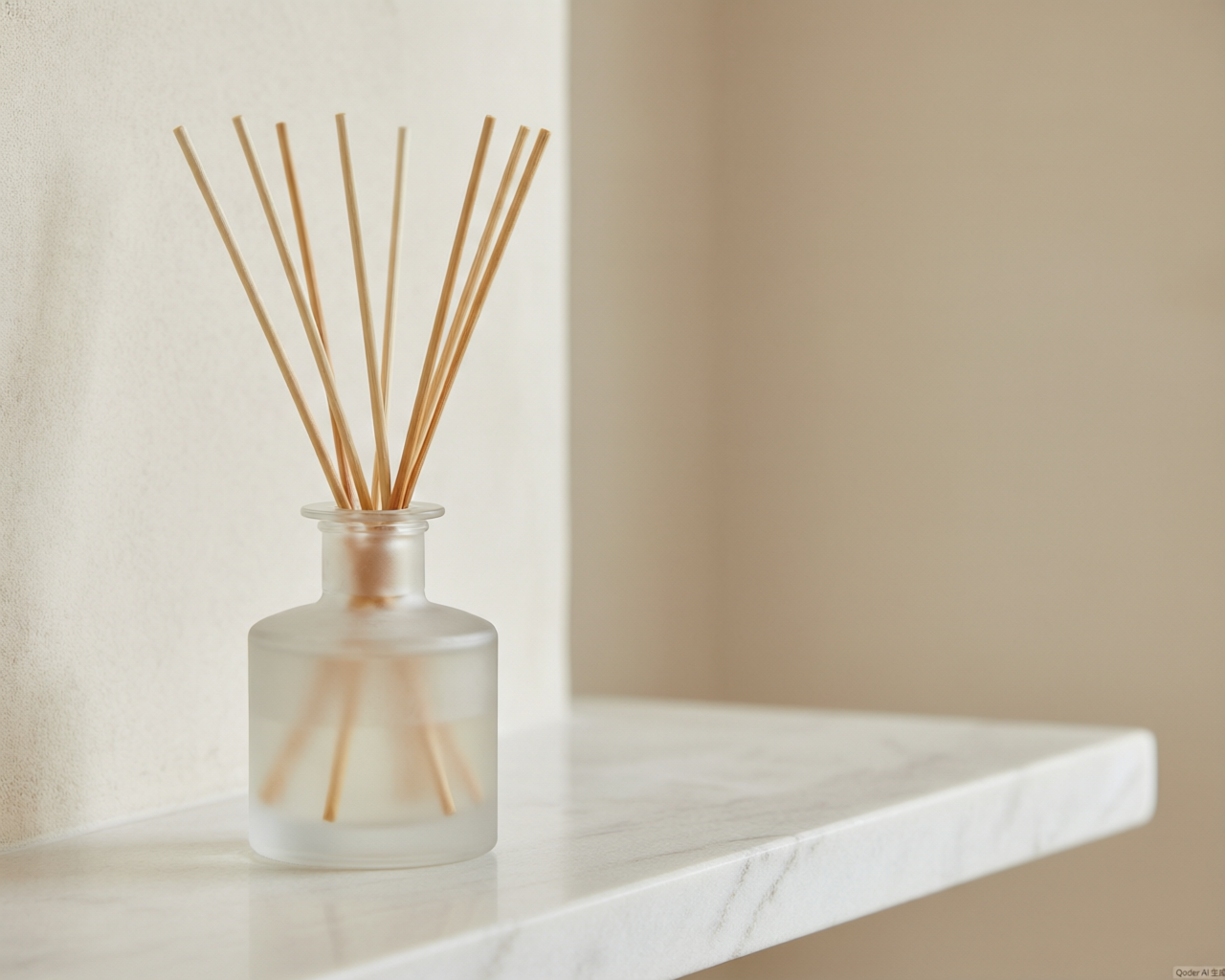
Reed diffusers remain the most widely deployed in-room fragrance format because they require zero electricity and deliver passive, continuous scent for 60 to 90 days. For hotel buyers, the critical specifications are:
- Vessel volume: 100 ml and 150 ml are standard for guest rooms; 200 ml suits suites and executive floors.
- Reed count and material: 6 to 8 fiber reeds (25 cm length) provide optimal wicking. Natural rattan reeds are available for eco-positioned brands.
- Fragrance oil concentration: 20-25% aromatic compound in a DPG or isopropyl myristate base ensures longevity without overwhelming small spaces.
- Throw radius: A 100 ml unit effectively scents 15-20 square meters, appropriate for standard king rooms.
At Aromiso, our hotel-grade reed diffusers start at an MOQ of 500 units per SKU. Pricing tiers are structured as follows: 500-999 units at $3.80-$4.50 per unit, 1,000-4,999 units at $3.20-$3.70, and 5,000+ units at $2.60-$3.10, depending on vessel material (glass, ceramic, or PET) and fragrance complexity.
Room Sprays and Pillow Mists
Room sprays serve a dual purpose: they allow housekeeping to refresh a room instantly between guests, and they can be placed as a branded amenity for guest use. Key specifications include:
- Format: 30 ml travel-size PET bottles for amenity placement; 250 ml trigger-spray bottles for housekeeping carts.
- Fragrance load: 10-15% for pillow mists (alcohol-based, fast-evaporating); 15-20% for general room sprays.
- Spray mechanism: Fine-mist atomizers delivering 0.1 ml per actuation, with a minimum 300-actuation lifespan.
- Safety compliance: IFRA-compliant formulations, SDS documentation, and VOC content below regional thresholds (typically under 70% for EU markets).
MOQs for room sprays begin at 1,000 units for standard formulations. Custom fragrance development adds a one-time R&D fee of $800-$1,500. Volume pricing for 10,000+ units drops to $1.10-$1.60 per 30 ml unit.
Scented Sachets and Drawer Liners
A lower-cost entry point for fragrance programs, scented sachets are placed in wardrobes, drawers, and turndown trays. Specifications:
- Fill weight: 8-12 g of vermiculite or silica beads infused with 15-20% fragrance oil.
- Sachet material: Non-woven polypropylene or breathable cotton-linen blend.
- Active scent life: 30-45 days in sealed drawer environments.
- Dimensions: Standard 10 x 12 cm; custom die-cut shapes available for branded programs.
Sachets carry the lowest MOQ in our catalog: 2,000 units per design. Pricing ranges from $0.35-$0.55 per unit at 2,000-9,999 units, dropping to $0.22-$0.35 at 20,000+ units.
In-Room Candle Programs
For luxury and boutique properties, scented candles elevate the in-room experience. Procurement specs to evaluate:
- Wax type: Soy-coconut blend (clean burn, 45-50 hour burn time for 200 g) or paraffin-soy hybrid for cost efficiency.
- Fragrance load: 8-10% for soy blends; up to 12% for paraffin blends.
- Vessel: Reusable glass jars (amber, clear, or frosted) with metal or wooden lids.
- Safety: Self-extinguishing wicks, warning labels per ASTM F2417, and UN38.3-compliant packaging for shipping.
Candle MOQs start at 300 units per SKU. Pricing: $4.50-$6.20 per 200 g unit at 300-999 units; $3.40-$4.80 at 5,000+ units.
Evaluating Fragrance Quality: What Buyers Should Request
When comparing suppliers, procurement teams should request:
- IFRA compliance certificates for every fragrance compound.
- Stability test reports confirming 12-month shelf life under standard storage (25C, 60% RH).
- Batch consistency documentation, including GC-MS chromatograms showing lot-to-lot variation below 5%.
- Customs-ready documentation including HS codes, SDS in destination-market language, and country-of-origin certificates.
Packaging and Branding Considerations
Most hotel groups require private-label packaging. Standard options include:
- Screen printing (1-3 colors) on glass vessels at no additional cost above 1,000 units.
- Full-wrap heat-shrink labels for complex graphics.
- Custom rigid gift boxes (350 gsm art paper with matte lamination) for VIP amenity presentations.
Lead times for private-label orders are typically 25-35 days from artwork approval, with sample delivery in 7-10 days.
Building a Tiered Program
Many chains deploy different product tiers by room category:
| Room Tier | Product Mix | Approximate Cost/Room |
|---|---|---|
| Standard | Sachet + 30 ml spray | $1.50-$2.20 |
| Deluxe | 100 ml reed diffuser + pillow mist | $4.00-$5.50 |
| Suite | 200 ml diffuser + candle + spray set | $9.00-$13.00 |
This tiered approach allows properties to manage per-room amenity budgets while maintaining a cohesive scent identity across the guest experience.
Next Steps for Procurement Teams
Request a sample kit from your shortlisted suppliers, evaluate scent throw in a real guest room environment over 7 days, and confirm all compliance documentation before issuing a purchase order. Aromiso provides complimentary sample kits (up to 5 SKUs) for qualified hotel buyers, with dedicated account management for orders exceeding $10,000.
For specification sheets, pricing calculators, or custom fragrance consultations, contact our hospitality sales team at aromiso.com.