Buying Guides
How to Buy Essential Oils Wholesale: A B2B Procurement Guide
Dieser Artikel ist noch nicht auf Deutsch verfügbar. Sie lesen die englische Version.

Buying essential oils wholesale is not the same as buying retail bottles off a shelf. Volume changes the economics, the documentation, the risk profile, and the questions you should be asking before money changes hands. This guide walks through the procurement process the way a factory like Aromiso expects serious buyers to approach it.
Start With a Specification, Not a Wishlist
Before requesting quotes, lock down what you are actually buying. A vague request like “lavender oil, 100 kg” invites mismatched offers. A useful request looks like this:
- Botanical name: Lavandula angustifolia (true lavender), not Lavandula hybrida (lavandin)
- Origin: France or Bulgaria, steam-distilled from flowering tops
- Grade: therapeutic / aromatherapy grade, suitable for cosmetic formulation
- Volume: 100 kg initial order, 500 kg annual forecast
- Packaging: 25 kg aluminum drums, UN-rated if required for transport
- Documents required: GC/MS report, COA, SDS, IFRA certificate
Suppliers price against specifications. The tighter the spec, the fewer surprises at delivery.
Understand the Pricing Structure
Wholesale essential oil pricing is tiered and volatile. As a rough framework:
- 1-5 kg: retail-adjacent pricing, often 30-60% above bulk
- 25-100 kg: standard wholesale tier
- 500 kg to 1 metric ton: contract pricing, typically 15-25% below the 25 kg tier
- Multi-ton annual contracts: negotiated against harvest forecasts
Prices also move with harvest cycles. Citrus oils (sweet orange, lemon) track the juice industry and can swing 20-40% year over year. Rose otto and jasmine absolute are priced per kilogram in the thousands of dollars and rarely discount. Ask suppliers whether quotes are valid for 14, 30, or 60 days, and whether they are tied to a specific harvest.
Minimum Order Quantities and How to Work With Them
Most factories quote MOQs in two ways: per SKU and per order. A common structure is 25 kg per oil, with a 100 kg minimum order across SKUs. For private label finished goods (10 ml bottles, roll-ons, blends), MOQs typically run 1,000 to 5,000 units per SKU.
If you are launching, negotiate a mixed-SKU MOQ. A factory that will fill 5,000 units across five SKUs at 1,000 each is more useful than one that demands 5,000 of a single scent.
Sampling: Pay for It, Then Credit It
Free samples of premium oils are a red flag, not a perk. A 5 ml sample of rose otto costs the supplier real money. Serious buyers pay sample fees (often USD 30-150 per oil plus courier) and negotiate credit against the first bulk order. Sample protocol:
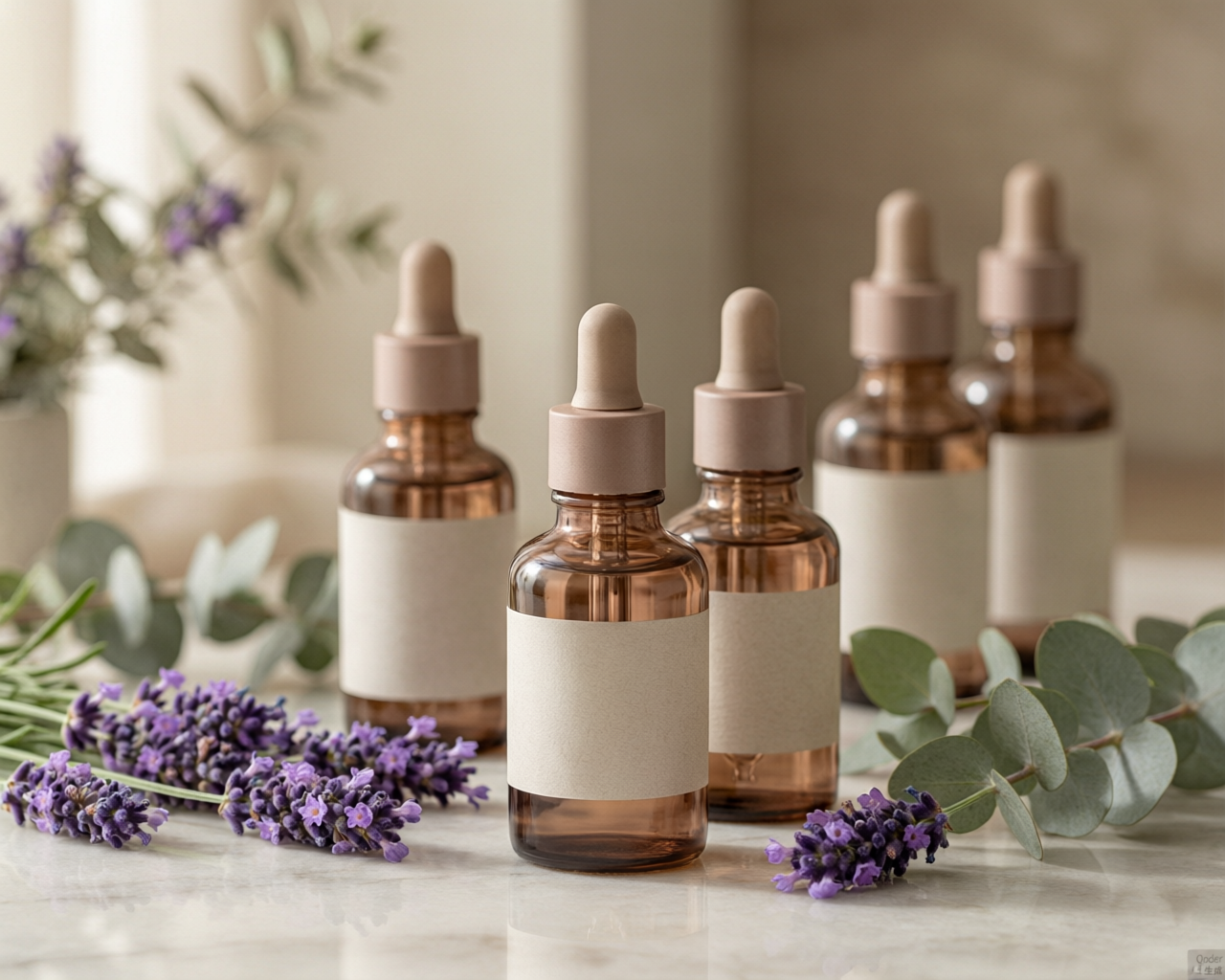
- Request 5-10 ml per oil, in amber glass with a tamper-evident cap.
- Run your own GC/MS or send to a third-party lab (USD 80-200 per sample).
- Compare against ISO standards (for example, ISO 3515 for lavender, ISO 9842 for peppermint).
- Test in your final application at use levels of 0.5-5% before approving.
Verify the Supplier
Ask for and actually read these documents:
- Business license and export registration
- ISO 9001 (quality) and, for cosmetics, ISO 22716 (GMP)
- GC/MS reports for every lot, not a generic library report
- IFRA compliance certificates for fragrance applications
- SDS in GHS format, current revision
- Allergen declarations under EU Regulation 1223/2009
A factory that cannot produce lot-specific GC/MS within 48 hours is reselling, not manufacturing.
Payment and Incoterms
Standard terms for first orders are 30% deposit, 70% before shipment, against a proforma invoice. Established accounts move to 30/60/90 day terms or LC at sight. Incoterms matter: FOB Shanghai or Shenzhen means you handle ocean freight and import clearance; CIF or DDP shifts that to the supplier. For orders under 100 kg, air freight DDP often beats ocean on total landed cost.
Build a Two-Supplier Strategy
Single-sourcing a flagship oil is a continuity risk. Harvest failures, regulatory changes, and currency swings all happen. Qualify a primary supplier and a backup at a 70/30 or 80/20 split. Re-qualify the backup annually with a fresh GC/MS panel so the relationship stays warm.
The Procurement Checklist
Before issuing a purchase order, confirm:
- Botanical name, chemotype, origin, and extraction method in writing
- Lot-specific GC/MS, COA, SDS, and IFRA documents attached
- Packaging spec, fill weight tolerance (typically +/- 1%), and labeling language
- Incoterms, payment terms, lead time (typically 25-40 days for bulk)
- Rejection and return clauses tied to documented spec failures
Wholesale essential oil buying rewards preparation. Buyers who show up with specifications, forecasts, and a sampling protocol get better pricing, faster turnaround, and a supplier relationship that survives the next harvest shock.