Trends & Innovation
Gender-Neutral Home Fragrance: The Unisex Scent Movement
Esta guía aún no está disponible en español. La estás viendo en inglés.
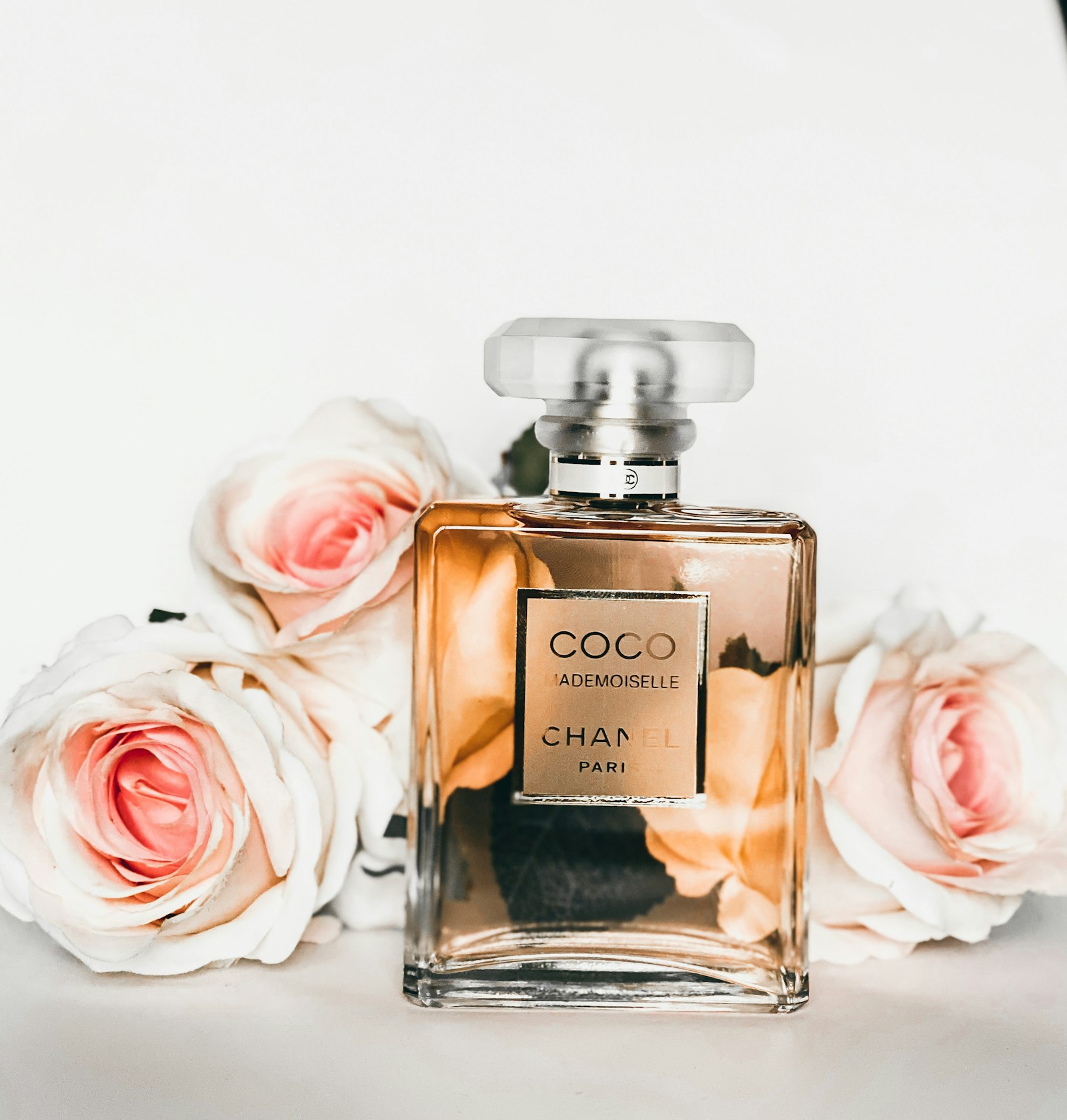
If you manage a home fragrance product line, you have likely watched your SKU count swell as you split scents into “for him” and “for her” variants that share 80 percent of the same formula. The result is doubled inventory, fragmented marketing budgets, and confused retail buyers who cannot justify shelf space for two nearly identical candles in different colored jars. Meanwhile, consumer research from Mintel and NPD Group consistently shows that 56 percent of adults aged 18-34 do not believe fragrance should be gendered at all, and unisex fragrance sales grew 23 percent year-over-year between 2023 and 2025 in the home category alone.
For procurement managers and brand owners sourcing from Chinese OEM factories, the gender neutral fragrance trend is not a philosophical debate. It is a margin decision. Consolidating gendered SKUs into a curated unisex home scent collection can reduce your inventory carrying costs by 30-40 percent, simplify your supply chain, and open retail doors that were previously locked behind binary merchandising plans. This guide walks through the commercial logic, formulation strategy, packaging considerations, and sourcing specifics you need to execute the shift profitably.
The Market Case for Genderless Home Scent
The numbers make the business case clear before any creative discussion begins.
- Consumer demand is structural, not seasonal. A 2025 Circana report found that gender-neutral fragrance products accounted for 38 percent of new home scent launches in North America and Europe, up from 19 percent in 2021. This is a five-year trajectory, not a spike.
- Retail buyers are consolidating shelves. Major retailers including Target, Selfridges, and Sephora Home have removed gendered signage from fragrance aisles. Buyers now request “scent family” organization rather than “his and hers” segmentation.
- Average order value increases. Brands that market a single unisex fragrance trend collection report 12-18 percent higher AOV because customers bundle complementary scents without the psychological barrier of crossing a gender line.
- Returns and dead stock drop. Gendered products see 22 percent higher unsold inventory rates at season end compared to genderless candle lines, according to internal data shared by three mid-size US brands at the 2025 NY NOW trade show.
If your current catalog is split more than 60/40 toward gendered SKUs, you are carrying measurable dead-weight cost.
Scent Families That Work Across Gender
Not every fragrance note translates well into a unisex home scent. The formulation goal is to avoid notes that consumers culturally code as strongly masculine (heavy tobacco, aggressive leather) or strongly feminine (powdery violet, sweet peony) as the dominant character. Instead, build around these universally appealing families:
| Scent Family | Example Notes | Best Product Format | Typical Fragrance Load |
|---|---|---|---|
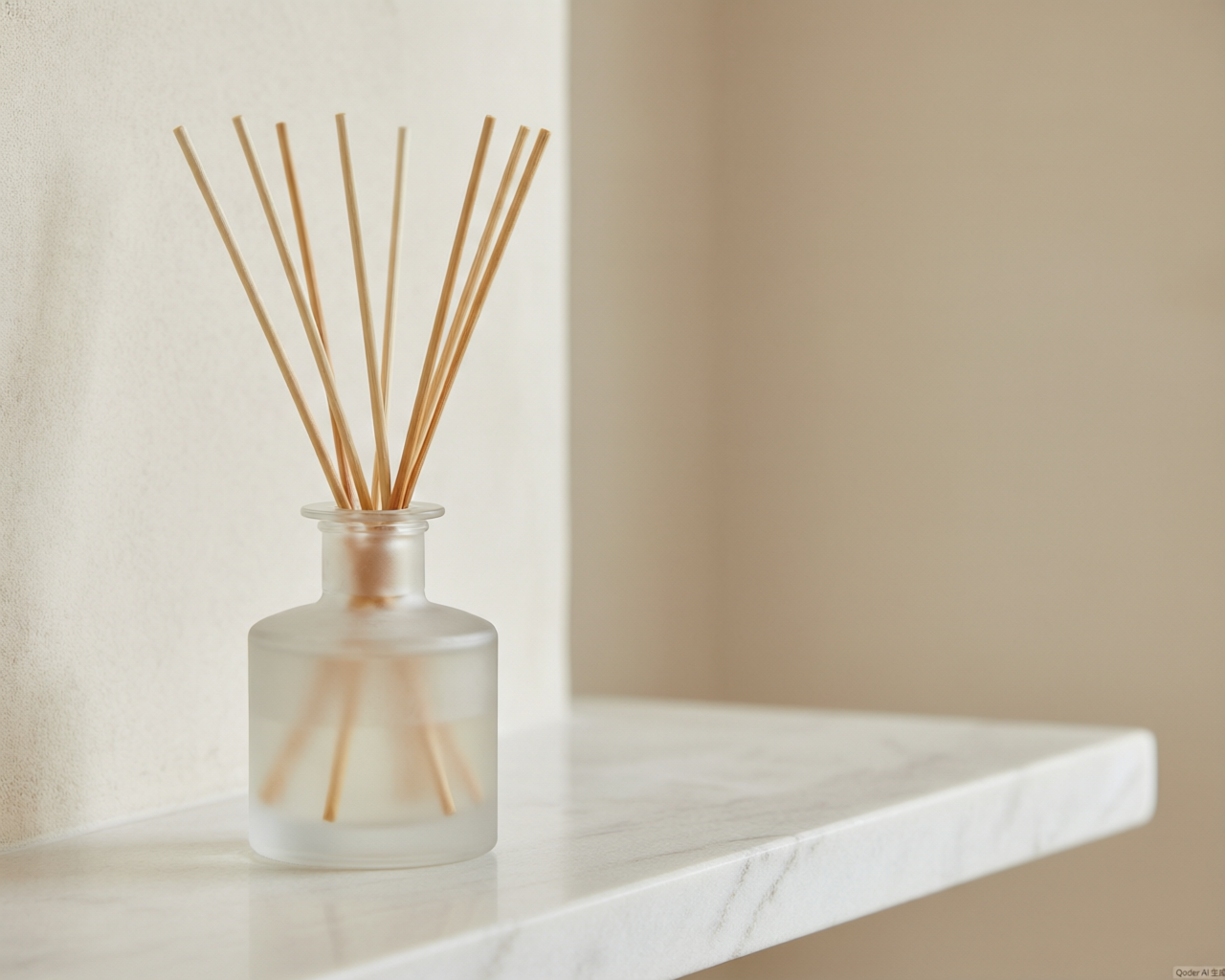
| Woody-Aromatic | Cedarwood, sandalwood, vetiver, sage | Reed diffuser, candle | 8-12% |
| Fresh-Citrus | Bergamot, yuzu, neroli, white tea | Car fragrance, room spray | 5-8% |
| Green-Earthy | Fig leaf, tomato vine, moss, rain accord | Candle, commercial diffuser | 10-15% |
| Warm-Spice | Cardamom, amber, tonka, smoked vanilla | Reed diffuser, candle | 10-12% |
| Clean-Mineral | Sea salt, ozone, white musk, linen | Room spray, car fragrance | 4-7% |
When briefing your OEM partner, request samples across at least three families. A balanced genderless candle collection typically launches with 4-6 SKUs spanning two to three families, giving retailers enough breadth without overcommitting to a single olfactory direction.
Reformulating an Existing Gendered Line
If you already sell gendered products, a full rebrand is rarely necessary. A structured consolidation approach works better:
- Audit your current formulas. List every SKU and flag the top three notes in each. You will typically find that “his” and “her” variants of the same concept share a base and differ only in one or two top notes.
- Identify merge candidates. Any two SKUs sharing 70 percent or more of their formula by weight are candidates for consolidation into a single unisex fragrance trend SKU.
- Adjust the bridge notes. Work with your supplier’s perfumer to replace the gendered top note with a neutral bridge. For example, swap a rose top note and a tobacco top note for a shared cardamom-and-bergamot opening.
- Run blind panel testing. Recruit 20-30 participants across genders. Present the merged scent without labeling. Target a minimum 72 percent “pleasant” or “very pleasant” rating before committing to production.
- Phase out legacy SKUs over two order cycles. Do not cut old SKUs abruptly. Run them down over 8-12 weeks while introducing the new gender neutral fragrance line to avoid a revenue gap.
Most brands complete a 6-SKU consolidation in 10-14 weeks from initial brief to first production run, assuming the OEM has existing stock formulas to modify rather than building from scratch.
Packaging and Labeling for a Unisex Audience
Packaging is where many brands undermine an otherwise strong unisex home scent strategy. The product may be genderless, but a pink jar with script font still signals “for her” on a shelf.
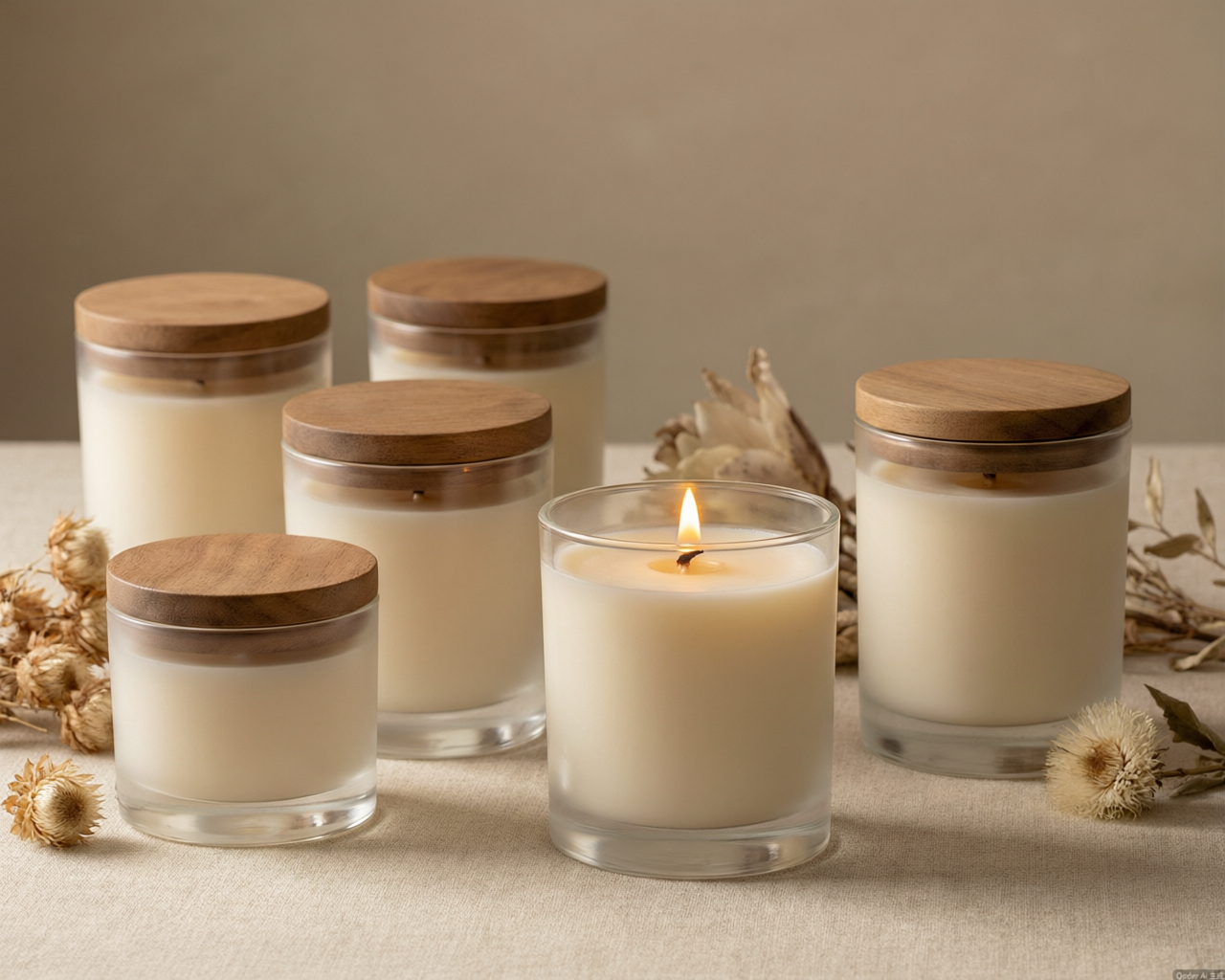
- Color palette. Shift from gender-coded pastels and dark tones toward neutral earth tones (terracotta, sage green, warm grey, cream) or bold monochrome (matte black, white, deep amber glass). Neutral palettes test 15-20 percent better across mixed-gender focus groups.
- Typography. Use clean sans-serif or modern serif typefaces. Avoid script fonts and overly angular “industrial” lettering that code feminine or masculine respectively.
- Naming conventions. Name scents by place, memory, or material rather than persona. “Coastal Fog” and “Fireside Cedar” outperform “Gentleman’s Study” or “Rose Boudoir” in unisex positioning.
- Vessel reuse. Standardize on one or two vessel shapes across the collection. This reduces your MOQ per container type from 3,000-5,000 units down to a single 5,000-unit run, saving 10-15 percent on glass costs.
- Label compliance. Ensure labels meet IFRA and destination-market regulations (EU CLP, US CPSC) without gendered marketing claims that could complicate customs classification in some markets.
Request packaging mockups from your OEM before committing to tooling. A reputable factory will provide 3D renders within 5-7 business days at no charge for orders above 3,000 units.
Sourcing Gender-Neutral Lines From a Chinese OEM
China remains the dominant manufacturing base for home fragrance products, accounting for roughly 65 percent of global reed diffuser and scented candle export volume. When sourcing a gender neutral fragrance collection, evaluate suppliers on these criteria:
- In-house perfumery capability. The factory should employ at least two full-time perfumers and maintain a library of 500+ stock formulas. This lets you modify existing unisex bases rather than paying USD 2,000-5,000 per custom creation.
- MOQ flexibility. For a first unisex collection, target an OEM that accepts 1,000-2,000 units per SKU for candles and 2,000-3,000 units for reed diffusers. Factories with 5,000-unit minimums per SKU will force you to overcommit on a 4-SKU launch.
- Certification readiness. Confirm the supplier holds ISO 9001, BSCI or Sedex audit reports, and can provide IFRA-compliant MSDS documentation for every formula. Request certificates before sampling, not after.
- Speed to sample. Expect 7-10 days for fragrance samples and 15-20 days for pre-production prototypes including custom vessels. Anything longer than 25 days signals capacity constraints.
- Private label support. The OEM should handle label design adaptation, barcode placement, and retail-ready packaging assembly. This saves 3-4 weeks of coordination with a separate packaging vendor.
Aromiso maintains a dedicated unisex home scent program with 40+ pre-tested genderless formulas across all five scent families listed above. You can browse the current product catalog to identify base formulas, then work directly with the formulation team through the OEM program to customize notes, concentrations, and packaging.
Cost Structure and Budget Planning
Understanding unit economics prevents margin surprises at scale. Below are typical FOB cost ranges for a genderless candle and reed diffuser collection manufactured in Guangdong, China, at a 3,000-unit-per-SKU volume:
| Product Type | Unit Cost (FOB) | Fragrance Cost Share | Packaging Share | Landed Cost Add-On |
|---|---|---|---|---|
| Scented candle (200g, soy blend) | USD 2.80 - 4.50 | 25-35% | 30-40% | +18-25% (freight, duty) |
| Reed diffuser (150ml) | USD 3.20 - 5.80 | 30-40% | 35-45% | +18-25% |
| Car fragrance (8ml clip) | USD 1.10 - 2.40 | 20-30% | 25-35% | +15-20% |
| Room spray (100ml) | USD 1.80 - 3.20 | 25-35% | 30-40% | +18-25% |
Key budget levers for a unisex fragrance trend launch:
- Consolidated vessels save 10-15 percent. One jar shape across four scents versus four unique shapes reduces tooling amortization and raises per-SKU volume discounts.
- Stock formulas save USD 2,000-5,000 per SKU in development fees versus custom perfumery briefs.
- Combined shipping. A 4-SKU collection in standardized packaging fits efficiently into a single 20-foot container (approximately 8,000-12,000 units total), reducing per-unit ocean freight to USD 0.35-0.60.
- Payment terms. Negotiate 30/70 (30 percent deposit, 70 percent against bill of lading) rather than 50/50 to preserve cash flow during the 35-45 day production and transit window.
Launch Timeline and Retail Readiness
A realistic timeline from supplier selection to retail shelf for a 4-SKU gender neutral fragrance collection:
- Weeks 1-2: Supplier shortlisting, NDA execution, formula brief submission. Request 6-8 sample scents across your target families.
- Weeks 3-4: Sample evaluation, blind panel testing (20-30 participants), down-select to 4 final formulas. Confirm vessel and packaging specs.
- Weeks 5-6: Pre-production prototype approval. Label artwork finalization. Compliance documentation review (CLP, CPSC, IFRA certificates).
- Weeks 7-12: Mass production. Typical lead time is 30-40 days for 12,000-16,000 total units across 4 SKUs.
- Weeks 13-16: Ocean freight transit (25-35 days to North America, 18-25 days to Europe). Customs clearance and warehouse intake.
- Weeks 17-18: Retail distribution, e-commerce listing activation, trade press outreach.
Total elapsed time: 16-18 weeks. Compress to 12-14 weeks by selecting stock formulas and standard packaging from your OEM’s existing inventory.
Next Steps
The unisex fragrance trend is no longer an emerging niche. It is the default merchandising framework for the fastest-growing segment of home scent retail. Brands that consolidate now reduce costs, simplify operations, and align with where buyer demand is heading through 2028 and beyond.
To move forward this quarter:
- Audit your current SKU list and flag merge candidates using the 70 percent formula-overlap rule.
- Request 6-8 unisex sample formulas from a qualified OEM. Aromiso ships samples within 7 business days with no minimum commitment.
- Run a 20-person blind scent panel before locking your collection.
- Request a quote with your target volume, destination market, and timeline to receive a detailed FOB breakdown within 48 hours.
The brands winning shelf space in 2026 are not the ones with the most SKUs. They are the ones with the right four scents, in the right vessel, positioned for every customer who walks past the shelf. Start the consolidation conversation with your manufacturing partner this week.