Product Guides
Choosing the Right Fragrance Concentration: A B2B Buyer's Guide
Esta guía aún no está disponible en español. La estás viendo en inglés.
Concentration is the single most consequential formulation decision a fragrance buyer makes, because it simultaneously sets your cost of goods, your regulatory category, your performance profile, and your marketing claims. Pick too low and the product underperforms on the shelf; pick too high and you blow the unit economics and may breach IFRA usage limits. This guide gives you the working concentration ranges for each product type, the cost math behind them, and a decision framework for matching concentration to application.
The Concentration Ladder
“Fragrance concentration” means the percentage of aromatic compound in the finished product, with the remainder being carrier — ethanol, water, wax, or a diffuser solvent like DPG. The fine-fragrance industry uses standardized labels that buyers should know precisely, because they carry consumer expectations you will be held to.
| Label | Aromatic Concentration | Typical Longevity | Common Use |
|---|---|---|---|
| Eau de Cologne (EDC) | 2–5% | 1–2 hours | Body splash, light refresh |
| Eau de Toilette (EDT) | 5–15% | 3–4 hours | Everyday personal fragrance |
| Eau de Parfum (EDP) | 15–20% | 5–8 hours | Premium personal fragrance |
| Parfum / Extrait | 20–40% | 8+ hours | Luxury, high-margin SKUs |
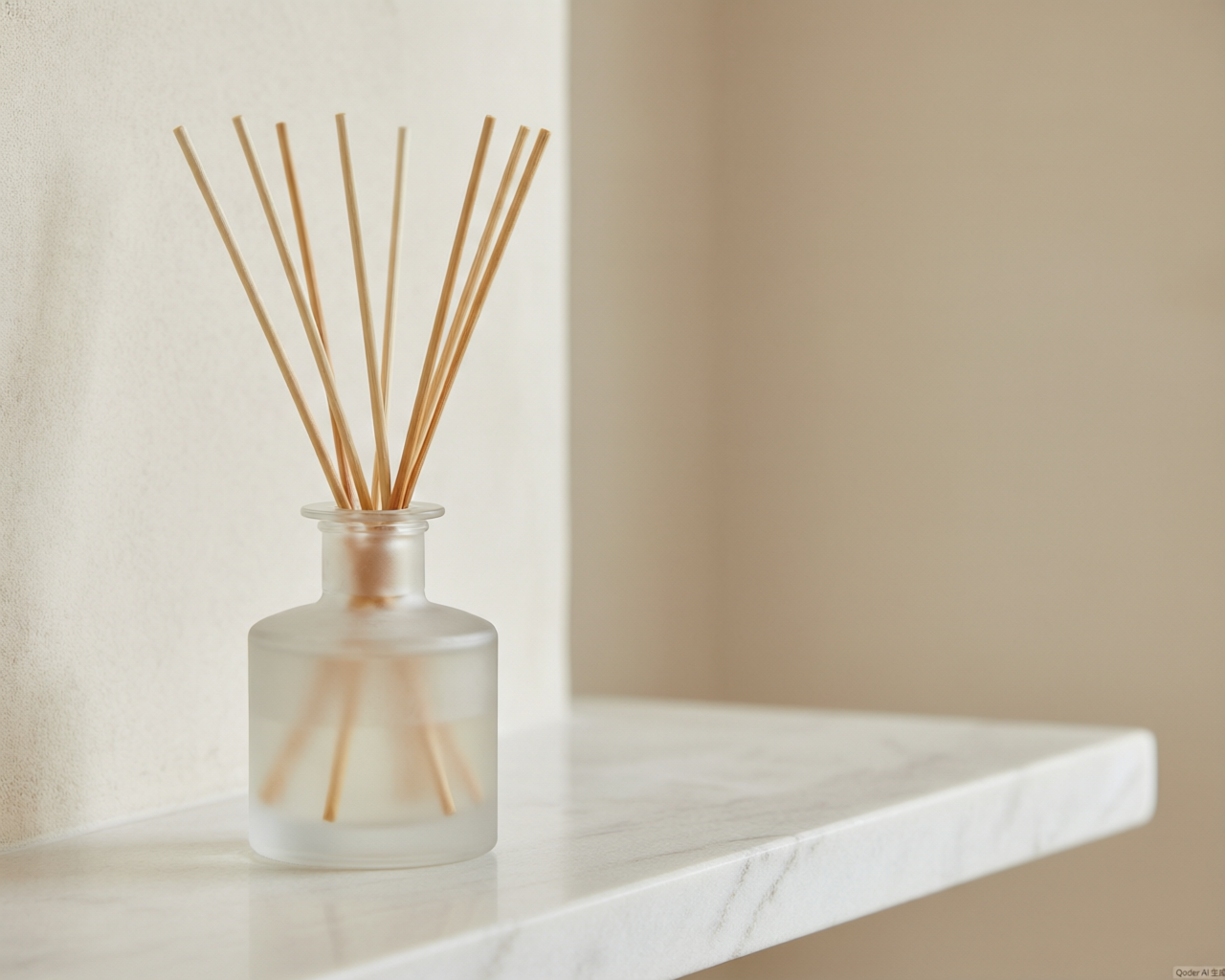
| Reed diffuser | 10–30% | Weeks to months | Home fragrance |
| Room / linen spray | 3–10% | Hours | Ambient home fragrance |
Note that home-fragrance products do not follow the personal-fragrance ladder. A reed diffuser at 20–30% is normal, while a room spray rarely exceeds 10% because it is dispersed into air rather than worn on skin.
How Concentration Drives Cost
The aromatic compound is almost always the most expensive component per kilogram, so concentration moves your unit cost roughly in proportion — but not perfectly linearly, because higher loads can require pricier solubilizers and stabilizers.
| Concentration | Approx. Compound Share of COGS | Cost Implication |
|---|---|---|
| 5% (EDT) | 25–35% | Lowest material cost, volume play |
| 15% (EDP) | 45–55% | Balanced cost-to-performance |
| 30% (parfum/diffuser) | 60–70% | Premium pricing required to protect margin |
A practical rule: doubling concentration rarely doubles perceived strength. Olfactory response is logarithmic, so moving from 10% to 20% does not make a product smell “twice as strong” — it extends longevity and projection. Buyers chasing a louder product often get better results from reformulating the accord (more top-note impact materials) than from simply adding more oil.
Matching Concentration to Application
The right concentration is dictated by how the product is used, the size of the space, and the regulatory category. Use this framework:
- Worn on skin (personal fragrance): Match to price tier and longevity claim. EDT for accessible everyday lines, EDP for premium, parfum for luxury. Higher concentration justifies a higher retail price and supports “long-lasting” claims.
- Passive home diffusion (reed diffuser): 15–25% is the working band. Below 15% the throw is weak in rooms over ~15 m²; above 30% you risk wicking problems and a cloying first impression.
- Active spray (room/linen): 3–10%. Higher loads risk staining fabrics and create a heavy initial burst that fades fast.
- Heat-driven (candle): Concentration is expressed as fragrance load in wax, typically 6–12%, and is constrained by the wax’s oil-holding capacity and burn safety.
Always confirm the IFRA category for your application before fixing concentration. IFRA sets maximum use levels per material per product category, and a skin-worn parfum has a stricter effective ceiling than a non-contact diffuser.
Stability Testing at Different Concentrations
Higher concentration raises stability risk. More aromatic material means more opportunity for oxidation, color shift, and phase separation in the carrier. Build these tests into development:
- Accelerated aging: 4 weeks at 45°C approximates roughly 12 months of shelf life. Check for odor change and discoloration.
- Solubility / clarity: Especially critical above 20% in ethanol and in diffuser bases — watch for clouding or precipitate.
- Color fastness: Concentrated formulas, especially those rich in naturals, darken with age. Test in the actual packaging since light exposure accelerates this.
- Headspace check: Verify the scent profile is unchanged after aging, not just that it still smells.
A formula that is stable at 10% can fail at 20% with the same materials, so re-run stability whenever you change concentration — do not assume the lower-load data carries over.
A Decision Framework for Buyers
- Start from the application and regulatory category, not from a competitor’s label.
- Set a landed-cost ceiling and work backward to the concentration your margin supports.
- Test performance, not just percentage. A well-built 12% EDP can outperform a poorly-built 20% one.
- Validate stability at the chosen load before committing to bulk.
- Align your marketing claim to the concentration so labeling and advertising stay defensible.
Working with Aromiso
Aromiso formulates across the full concentration range — from 3% room sprays to 30% diffusers and parfum-grade personal fragrance — all built to IFRA category limits. We provide stability-tested formulas with supporting documentation, and our MOQ starts at just 100 pieces so you can validate a concentration choice before scaling. Tell us your application, target market, and cost ceiling, and we will recommend the optimal concentration with a quoted formula.