Product Guides
Car Fragrance Manufacturing: Vent Clips, Hanging Cards & Gel Types
Esta guía aún no está disponible en español. La estás viendo en inglés.
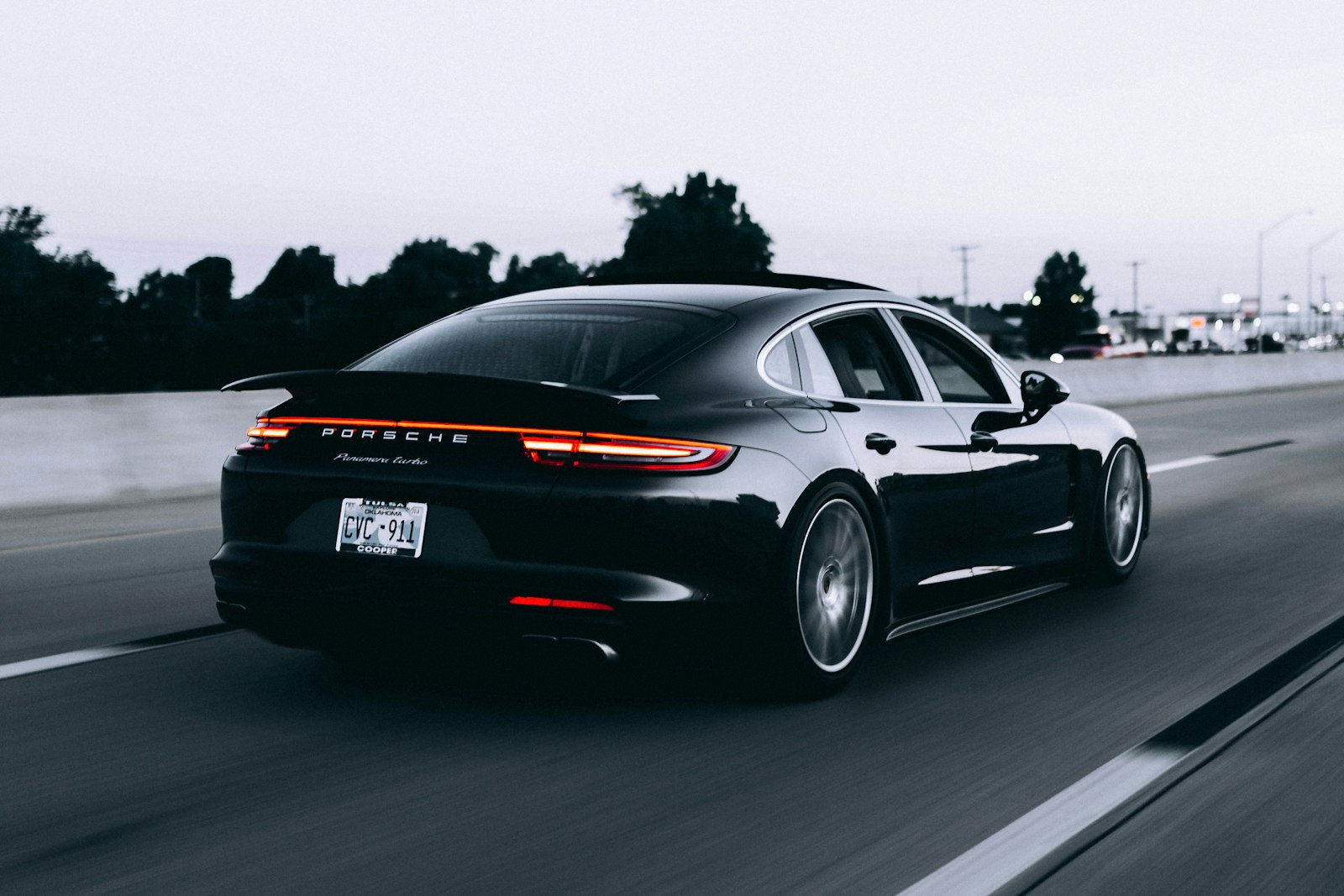
The global car air freshener market is projected to exceed USD 4.2 billion by 2028, yet most brand owners and private-label buyers still struggle with the same three problems: inconsistent scent throw across production batches, unclear MOQ structures that inflate per-unit costs, and suppliers who cannot differentiate between a vent clip engineered for HVAC airflow and a decorative hanging card designed for passive diffusion. If you are sourcing car fragrances from China for the first time — or switching manufacturers after a quality failure — the gap between a polished sales deck and actual production capability can cost you 8 to 12 weeks of lost selling season.
This guide breaks down the three dominant product formats (vent clips, hanging cards, and gel-based units), walks through the OEM manufacturing process step by step, and provides the cost benchmarks, compliance checkpoints, and supplier evaluation criteria that procurement teams actually need. Whether you are launching a branded line of 5,000 units or scaling an existing SKU to 200,000 units per quarter, the specifics below will help you negotiate better terms and avoid the most common production pitfalls.
Product Format Comparison: Choosing the Right Type
Before requesting samples, align your product format with your retail channel, price point, and target scent longevity. Each format carries distinct tooling costs, material requirements, and shelf-life considerations.
| Attribute | Vent Clip | Hanging Card | Gel Canister |
|---|---|---|---|
| Typical retail price | $4.99–$12.99 | $1.99–$5.99 | $6.99–$14.99 |
| Scent longevity | 30–60 days | 14–30 days | 45–90 days |
| Tooling cost (new mold) | $800–$2,500 | $200–$600 (die-cut) | $1,000–$3,000 |
| MOQ (China OEM) | 3,000–5,000 pcs | 5,000–10,000 pcs | 2,000–5,000 pcs |
| Unit cost at 10K qty | $0.45–$1.20 | $0.12–$0.45 | $0.80–$1.80 |
| Best retail channel | Auto parts, Amazon | Grocery, impulse buy | Specialty auto, gift |
| Fragrance load | 15–25% in PP/EVA pellet | 20–35% in paper fiber | 8–15% in polymer gel |
- Vent clips command the highest margin per unit but require precision injection molding for the clip mechanism. Tolerance on the clip arm should be held to plus or minus 0.15 mm to fit standard 3 mm to 5 mm HVAC slats without cracking.
- Hanging car air freshener cards are the lowest barrier to entry. Die-cut tooling is inexpensive, and you can test 3 to 5 scent variants in a single production run without significant cost penalty.
- Gel car fragrance units offer the longest scent life and work well for subscription models, but the sealed canister format adds assembly labor (typically 2 extra steps: gel pouring and lid ultrasonic welding).
OEM Manufacturing Process: From Brief to Bulk
A standard car vent clip OEM program from a Chinese factory follows a 6-stage timeline. Total lead time from approved brief to FOB shipment is typically 35 to 50 days for a first order.
- Brief and fragrance selection (Days 1–5): Submit your target scent profile, reference samples, Pantone colors, and packaging dieline. A capable manufacturer will provide 3 to 5 fragrance lab samples within this window.
- 3D modeling and mold quotation (Days 5–12): For vent clips and gel canisters, the factory produces STEP files and quotes mold steel (P20 or 718H for runs exceeding 100K shots). Approve the 3D file before cutting steel.
- T1 sample and scent validation (Days 12–22): First-article samples arrive with your chosen fragrance loaded. Test scent throw in a 2 m x 2 m enclosed chamber at 25 degrees Celsius and 60 percent RH. Reject if perceived intensity drops below 60 percent of the reference by Day 14.
- Pre-production run (Days 22–30): A 200 to 500 unit pilot run validates assembly line speed, packaging fit, and drop-test performance. Request photos and a 5-unit golden sample set.
- Bulk production (Days 30–45): Injection molding, fragrance compounding, assembly, and QC inspection occur in parallel. A 10,000-unit vent clip order typically requires 12 to 15 production days.
- Final QC and shipment (Days 45–50): AQL 2.5 Level II inspection on finished goods. Confirm carton drop test (ISTA 1A), barcode scannability, and fragrance intensity spot-check before releasing the balance payment.
For a deeper look at how Aromiso structures its OEM workflow, review the OEM program page, which includes downloadable spec sheet templates.
Fragrance Formulation and Scent Engineering
The fragrance compound is the single highest-cost variable in a car air freshener — often 30 to 45 percent of total BOM. Getting it right on the first iteration saves both time and reformulation fees ($150–$400 per revision at most labs).
- Carrier compatibility: Vent clips use PP or EVA pellets that are compounded with fragrance oil at 180–220 degrees Celsius. Not all fragrance molecules survive extrusion heat. Ask your supplier for a thermostability report on any citrus or aldehyde-heavy formulations.
- Evaporation rate control: For hanging cards, the paper substrate (typically 2 mm to 3 mm cotton-linter board) is saturated in a fragrance-solvent bath. Adding 3–5 percent DPG (dipropylene glycol) slows evaporation and extends perceived scent life by 7 to 10 days.
- Gel matrix stability: Gel car fragrance units use a cross-linked polymer (usually carbomer or sodium polyacrylate) with 8–15 percent fragrance load. Above 15 percent, the gel weeps and the canister fogs. Specify a clarity test at 40 degrees Celsius for 72 hours in your QC protocol.
- IFRA compliance: All fragrance compounds must meet IFRA 51st Amendment limits for Category 11 (non-skin-contact air fresheners). Request a full allergen declaration (EU CLP Annex III list) before approving any formula for European distribution.
Cost Structure and MOQ Negotiation
Understanding the cost stack lets you identify where a supplier is padding margins. For a standard vent clip at 10,000 units FOB Ningbo:
- Injection-molded housing and clip: $0.18–$0.35 (PP resin at ~$1.10/kg, cycle time 18–25 sec)
- Fragrance compound (20% load, 4 g unit): $0.12–$0.30
- Assembly and QC labor: $0.04–$0.08
- Packaging (blister card + printed insert): $0.08–$0.18
- Factory margin and overhead: $0.05–$0.15
- Total FOB unit cost: $0.47–$1.06
MOQ leverage points: Most factories quote their best unit price at 20,000 to 50,000 units. If your initial order is 3,000 to 5,000 units, expect a 15–25 percent per-unit premium. Negotiate a tiered pricing schedule in the PO that locks pricing for reorders within 12 months. Also confirm whether the mold cost is amortized into the unit price or billed separately — separate billing gives you ownership of the tooling and portability if you switch suppliers.
Quality Control and Regulatory Compliance
Car fragrances sit at the intersection of chemical product regulation and consumer goods safety. Non-compliance can trigger Amazon listing removal, EU RAPEX alerts, or US CPSC recalls.
- REACH and CLP (EU): Any fragrance substance on the SVHC candidate list above 0.1 percent w/w requires notification. For gel types, the polymer matrix itself may need registration if imported as a substance.
- California Prop 65: Common fragrance allergens (e.g., d-limonene, linalool) are not listed, but certain solvents (toluene, n-hexane) are. Require a Prop 65 screening panel from an accredited lab (SGS, Bureau Veritas, Intertek) — budget $350–$600 per SKU.
- Amazon hazmat review: Gel and liquid formats trigger a dangerous goods classification review on Amazon US. Provide a UN 38.3-exempt MSDS and a flash-point test report (closed-cup, expect >93 degrees Celsius for standard formulations) to expedite approval.
- In-line QC checkpoints: Specify three hold points in your PO: post-injection (dimensional check), post-fragrance-loading (weight check, plus or minus 0.2 g), and pre-packing (visual and scent intensity grading on a 1–5 scale).
Packaging, Branding, and Customization
Packaging is where a $0.50 product becomes a $9.99 retail item. Budget 10–20 percent of your unit cost for packaging at volume.
- Vent clips: PET blister with printed backing card (350 gsm C1S, 4-color offset + spot UV). Add a hang-tab euro-slot for peg display. Minimum print run for custom litho: 5,000 sheets.
- Hanging cards: The product IS the package in many cases. Add a OPP poly bag with header card for retail. For premium positioning, use a rigid mailer box (E-flute corrugate, magnetic closure) at $0.35–$0.60 per unit.
- Gel canisters: Shrink-sleeve label (PETG, 45 micron) wraps the canister for 360-degree branding. Sleeve application adds $0.03–$0.06 per unit. For a full product catalog of available formats and decoration options, browse the Aromiso range.
- Private label readiness: Provide print-ready AI/PDF files with 3 mm bleed. Confirm barcode placement (EAN-13 or UPC-A) meets retailer planogram specs. Turnaround for custom packaging proofs: 3 to 5 business days.
Supplier Evaluation Checklist
Before issuing a PO, score potential partners against these eight criteria. A factory that checks all eight will save you 4 to 6 weeks of remediation compared to a price-first supplier.
- In-house mold workshop: Confirms they control tooling timelines and can execute T1 revisions within 5 days rather than outsourcing to a third-party mold shop.
- Fragrance compounding lab: Look for a GC-MS unit on-site and at least 2 perfumers on staff. This indicates they can match scents and troubleshoot batch variation without external labs.
- ISO 9001 and BSCI/SEDEX audit: Non-negotiable for EU and North American retail compliance. Request the audit certificate number and verify it on the registrar’s website.
- Export documentation capability: They should provide MSDS, IFRA certificate, COA, and fumigation certificate as standard. Ask for a sample document set before ordering.
- Production transparency: Weekly photo/video updates during bulk runs. Factories that resist this typically have capacity-sharing arrangements that dilute your priority.
- Sample turnaround: First samples within 7 to 10 days of brief approval. Longer timelines signal overloaded engineering teams.
- Defect rate history: Ask for their trailing 12-month customer complaint rate. Below 1.5 percent is strong; above 3 percent is a red flag.
- Payment flexibility: Standard terms are 30 percent deposit, 70 percent before shipment. Established buyers can negotiate 30/70 against BL copy or LC at sight for orders above $50,000.
Next Steps
If you are ready to move from research to production, here is the fastest path to a validated sample:
- Define your format (vent clip, hanging card, or gel), target retail price, and initial order quantity.
- Prepare a one-page brief: scent direction (or reference product), colorway, packaging style, and target market (US, EU, or multi-region).
- Request a quote from Aromiso with your brief attached. Include your timeline — standard sampling is 7 to 10 days, and bulk production slots fill 4 to 6 weeks out during Q3 peak season.
Aromiso manufactures all three car fragrance formats in-house, from mold cutting to fragrance compounding to final packaging. For brands that need a car vent clip OEM partner capable of 500,000 units per month with full IFRA and REACH documentation, the team can provide a factory audit package and reference customer list on request. Start with samples, validate scent performance in your target climate, and lock tooling before committing to volume. The manufacturers who make this process easiest are the ones who treat your first 5,000-unit order with the same engineering rigor as a 200,000-unit program.