Product Knowledge
Soy vs Paraffin: Choosing the Right Wax for Private Label Candles
Este artículo aún no está disponible en español. Lo estás viendo en inglés.

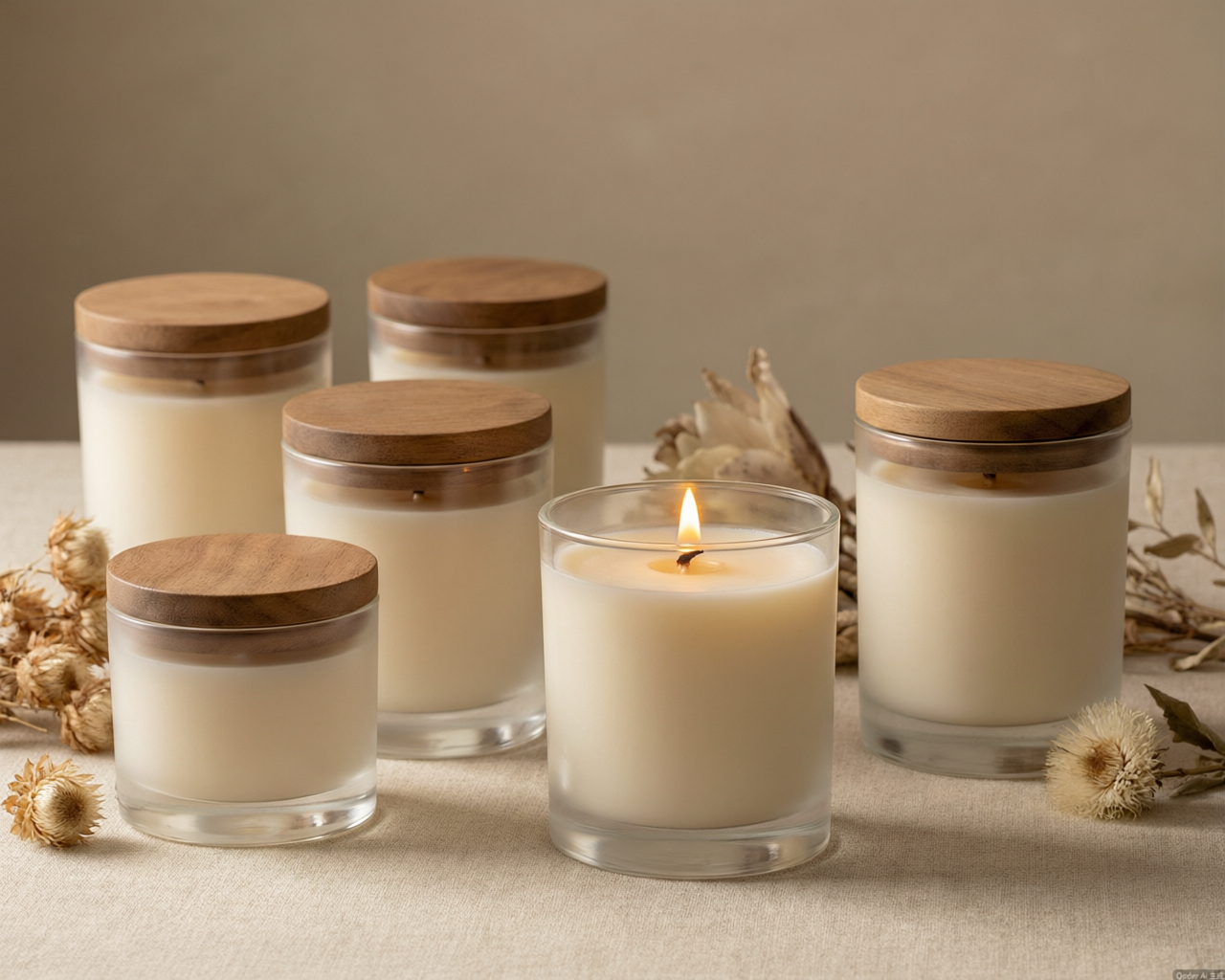
Selecting the right wax is one of the most consequential decisions in private-label candle production. It affects burn performance, fragrance load capacity, unit cost, shipping logistics, and how your brand is perceived at retail. For B2B buyers sourcing from OEM factories, understanding the technical differences between soy and paraffin wax ensures you specify the right material for your product line.
Melt Point and Burn Characteristics
Paraffin wax typically melts between 46-68 degrees Celsius, depending on the grade. Fully refined paraffin used in container candles usually sits at 54-62 degrees Celsius. Soy wax melts lower, generally between 43-54 degrees Celsius.
This difference matters in production and performance. Paraffin’s higher melt point produces a hotter flame and faster melt pool formation, which translates to stronger hot throw in the first 30 minutes of burning. Soy wax forms a cooler, slower melt pool, resulting in a more gradual fragrance release that some consumers describe as subtler but longer-lasting.
Burn time per gram of wax favors soy by approximately 30-50 percent. A 200g soy candle typically delivers 40-50 hours of burn time versus 25-35 hours for an equivalent paraffin candle. For brands marketing longevity as a value proposition, soy provides a measurable advantage.
Scent Throw Performance
Hot throw (fragrance released during burning) and cold throw (fragrance perceived when unlit) differ significantly between the two waxes.
Paraffin accepts fragrance loads of 6-10 percent by weight and releases scent aggressively due to its higher combustion temperature. This makes it the traditional choice for heavily scented products where immediate room-filling aroma is the goal.
Soy wax typically handles 6-8 percent fragrance load. Its cooler burn releases scent more slowly. However, soy’s advantage lies in cold throw: the wax holds fragrance well at room temperature, meaning the product smells appealing on the shelf before the customer ever lights it. For retail environments where shelf sniffing drives purchase decisions, this is commercially significant.
Blended waxes (soy-paraffin mixes at ratios like 70/30 or 50/50) are increasingly common in OEM production, offering a middle path that balances throw intensity with burn duration.
Cost Structure
Paraffin remains the lower-cost option. As a petroleum byproduct, wholesale paraffin wax runs approximately $1.20-$2.00 per kilogram depending on refinement grade and market conditions. Soy wax, derived from hydrogenated soybean oil, typically costs $2.50-$4.50 per kilogram.
For a 200g container candle, the wax cost differential is roughly $0.25-$0.50 per unit. At production volumes of 10,000+ units, this adds up. However, soy’s longer burn time means you can sometimes use less wax per unit while maintaining equivalent burn hours, partially offsetting the raw material premium.
Sustainability and Market Positioning
Soy wax is renewable, biodegradable, and derived from agricultural feedstock. Paraffin is a fossil fuel derivative. For brands targeting eco-conscious consumers or selling into markets with strong sustainability expectations (Scandinavia, Germany, Australia), soy or soy-blend formulations align better with brand messaging.
That said, sustainability claims require substantiation. Buyers should verify that soy wax suppliers provide non-GMO certification or RSPO-equivalent traceability documentation if making environmental claims on packaging.
Production Considerations for OEM Buyers
When briefing your factory, consider these production factors:
Pour temperature: Paraffin pours at 70-80 degrees Celsius; soy pours at 55-65 degrees Celsius. Soy’s lower pour temperature reduces energy costs but requires tighter temperature control to avoid frosting (white crystalline patches on the surface).
Curing time: Soy candles require 7-14 days of curing for optimal scent throw. Paraffin candles can ship after 24-48 hours. This affects production lead times and warehouse planning.
Adhesion: Soy wax contracts more during cooling, which can cause wet spots (areas where wax pulls away from glass). Factories experienced with soy use pre-heated containers and controlled cooling environments to minimize this.
Additives: Paraffin often requires vybar or microcrystalline additives for opacity and fragrance retention. Soy is naturally opaque and typically needs fewer additives, simplifying the ingredient list for labeling.
Making the Decision
For B2B buyers, the choice often comes down to three questions:
- What is your target retail price point? Paraffin suits value-tier products; soy supports premium positioning.
- What markets are you selling into? EU and Nordic buyers increasingly expect plant-based wax.
- What is your fragrance strategy? High-load, bold scents perform better in paraffin; nuanced, layered fragrances develop well in soy.
Many successful private-label brands run both: a paraffin or blend line for volume retail and a soy line for premium channels. Discuss dual-line production with your OEM partner to optimize MOQs across both formats.
At Aromiso, we produce both soy and paraffin container candles with fragrance loads calibrated to each wax type. Request samples to compare performance firsthand for your target market.