Product Knowledge
Reed Types and Performance: Fiber, Rattan, and Bamboo Compared
Este artículo aún no está disponible en español. Lo estás viendo en inglés.

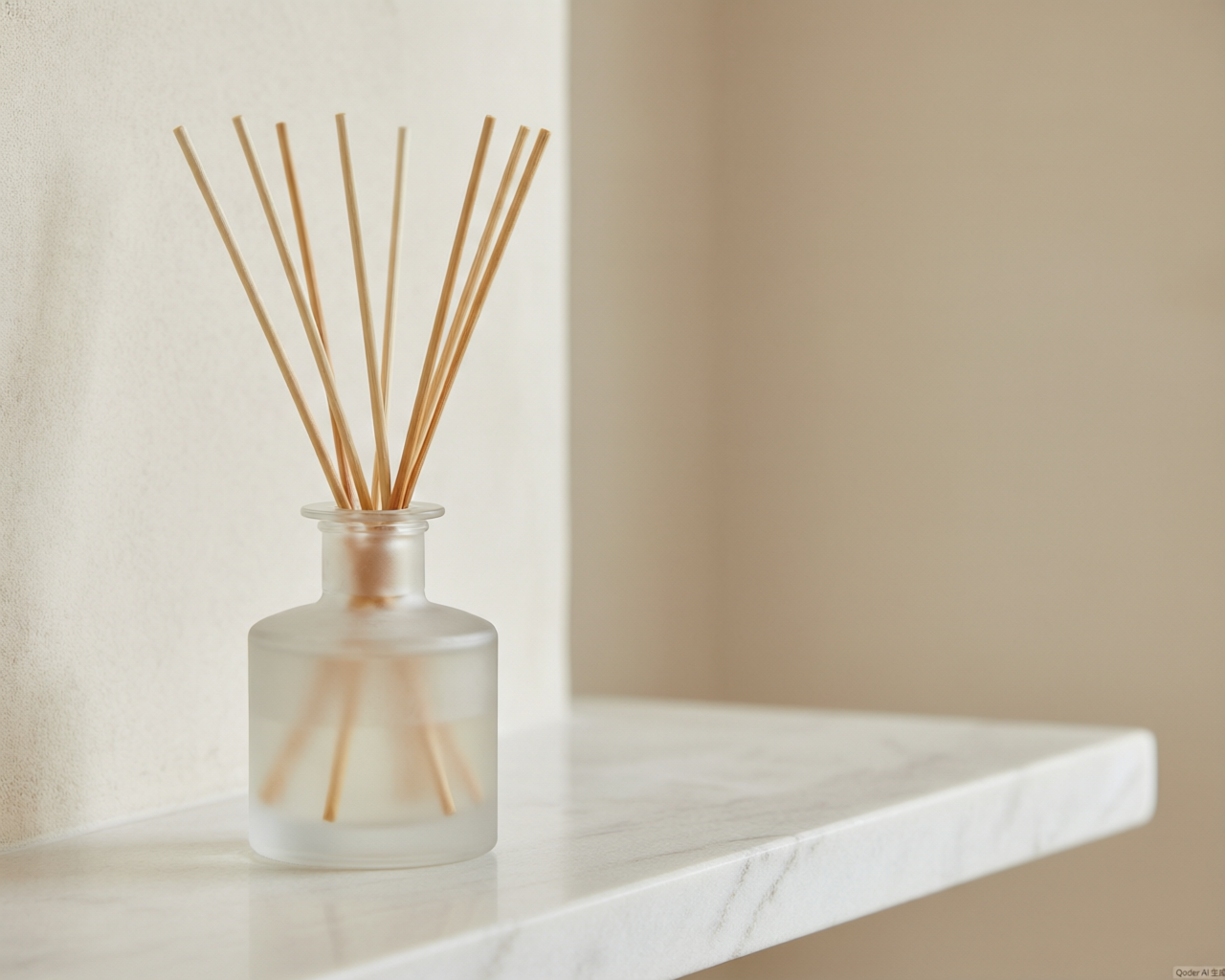
The reed is the engine of a diffuser, yet it is the component buyers most often under-specify. Two diffusers with identical liquid can perform completely differently based solely on the stick inside the bottle. Reed choice controls wicking rate, scent throw, flip frequency, and the visual language of the product. Here is a technical breakdown of the three dominant reed types and where each one earns its place in a product line.
Pore structure and how it drives performance
Wicking is a capillary process: liquid travels up internal channels and evaporates from the reed surface. The size, density, and continuity of those channels determine everything.
Rattan reeds are cut from Calamus rotang palms and contain a network of natural vascular channels. The channels are irregular in diameter and can be partially blocked by pith, especially in lower grades. This gives rattan a moderate, somewhat variable wicking rate. Premium hand-selected rattan (3–4mm diameter, kiln-dried to 8–12% moisture) wicks consistently; budget machine-cut rattan often has blocked channels and high moisture that invites mold.
Fiber reeds are engineered from a polyester or rayon-based composite with a uniform, high-density microporous structure. The channels are consistent by design, so fiber wicks faster and more evenly than rattan — typically delivering 30–50% stronger scent throw in the first weeks of use. The trade-off is a faster liquid depletion rate.
Bamboo reeds are solid or near-solid with very limited internal channeling. They wick poorly and are rarely used as functional reeds in modern diffusers; they appear mostly as decorative accents. Where bamboo is sold as a wicking reed, expect weak throw and frequent customer complaints.
Scent throw and flip frequency
Throw strength and maintenance are inversely related to reed density. Because fiber wicks aggressively, it produces a strong cold throw with minimal intervention — many fiber systems need flipping only every 2–3 weeks, and some not at all. Rattan, with slower wicking, benefits from weekly flipping to refresh the saturated ends and revive projection. Bamboo requires constant flipping yet still underperforms.
For a brand, this matters for the post-purchase experience. A diffuser that smells strong on day one earns positive reviews; one that needs constant attention to perform generates returns. Fiber reeds are the reason most premium diffusers now ship with low-maintenance performance as a selling point.
Liquid depletion and longevity
Stronger throw costs liquid. A 150ml diffuser with eight fiber reeds in a standard DPG/IPM base typically depletes in 8–12 weeks. The same volume with eight rattan reeds may stretch to 12–16 weeks but with noticeably weaker projection in the second half. Bamboo extends longevity on paper but at the cost of an effectively unscented product for much of its life.
Buyers can tune this balance. Reducing reed count (six instead of eight) slows depletion; increasing reed diameter or count intensifies throw. A competent factory will recommend a reed count matched to your bottle volume and base viscosity rather than defaulting to a fixed number.
Cost per unit
Reed cost is a small line item that has an outsized effect on perceived quality. Approximate per-stick costs at volume:
- Rattan: $0.03–$0.08 per stick, depending on grade and origin (Indonesia and the Philippines dominate supply). Premium selected-and-sealed rattan sits at the top of that range.
- Fiber: $0.06–$0.15 per stick. Engineered consistency commands a premium, but the price gap has narrowed as fiber adoption has scaled.
- Bamboo: $0.02–$0.05 per stick, cheap but functionally marginal.
For an eight-reed diffuser, the total reed cost difference between budget rattan and quality fiber is often under $0.50 per unit — a trivial amount against a $40+ retail price, yet it materially changes the customer’s experience of the product.
Specifying reeds for your line
A sensible default for a premium line is uniform fiber reeds, 3mm diameter, cut to a length roughly 1.5x the bottle height, in a count matched to volume (six to ten reeds for 100–200ml). Specify color consistency, sealed cut ends, and a documented wicking-rate test. If your brand story leans on natural materials, premium hand-selected rattan is defensible — but insist on kiln-dried, channel-checked stock and set expectations for a more maintenance-oriented user.
Whatever you choose, request a wicking and depletion test report from your factory: weight loss measured over a fixed period at controlled temperature. That single data point separates a specified product from a guess.