Product Comparisons
DPG vs IPM as Diffuser Base: Evaporation, Scent Throw, and Cost
Este artículo aún no está disponible en español. Lo estás viendo en inglés.

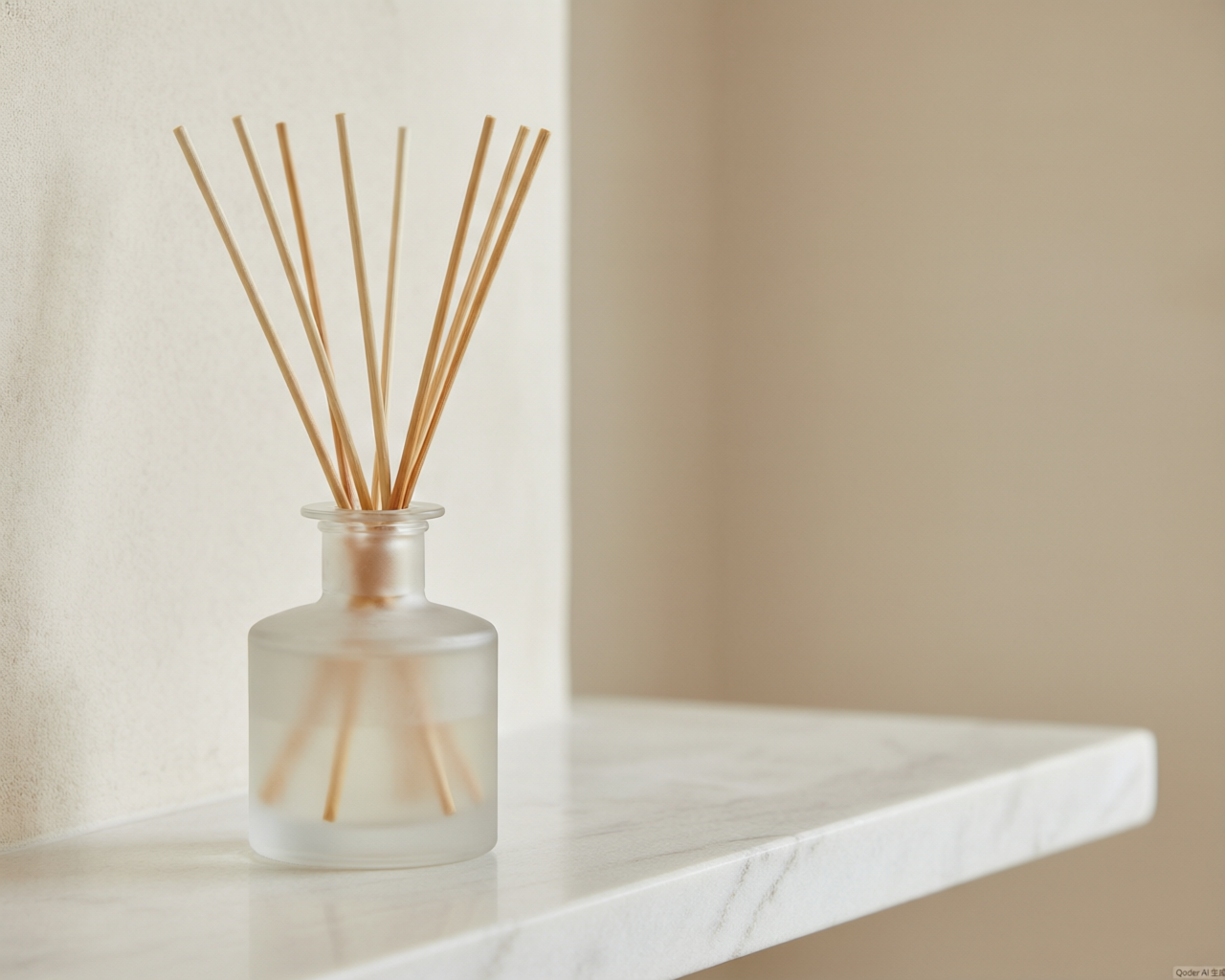
The carrier solvent in a reed diffuser determines how quickly fragrance evaporates, how long the product lasts, and how the scent is perceived in the room. The two most common bases are Dipropylene Glycol (DPG) and Isopropyl Myristate (IPM). Each has distinct physical properties that affect product performance and cost. This guide helps B2B buyers choose the right base for their diffuser line.
Chemical Properties
DPG (CAS 25265-71-8) is a colorless, nearly odorless liquid with a molecular weight of 134.17 g/mol. It has a boiling point of 232 degrees Celsius and a viscosity of approximately 75 mPa-s at 25 degrees Celsius. DPG is fully miscible with most fragrance oils and alcohols.
IPM (CAS 110-27-0) is an ester of isopropanol and myristic acid with a molecular weight of 270.45 g/mol. It has a boiling point of 167 degrees Celsius at reduced pressure (approximately 338 degrees Celsius at atmospheric pressure) and a viscosity of approximately 11 mPa-s at 25 degrees Celsius. IPM is a lighter, less viscous liquid that flows more readily through reed sticks.
Evaporation Rate
This is the most critical performance difference. IPM evaporates approximately 3 to 5 times faster than DPG under standard room conditions (22 degrees Celsius, 50 percent relative humidity).
In practical terms, a 100 ml reed diffuser using a pure IPM base with 8 fiber reeds will last approximately 4 to 6 weeks. The same volume in a DPG base lasts 8 to 12 weeks. A 50/50 DPG-IPM blend typically delivers 6 to 9 weeks of effective scent life.
The faster evaporation of IPM produces a stronger initial scent throw. In headspace analysis, IPM-based diffusers release 2 to 3 times more volatile fragrance compounds in the first 48 hours compared to DPG-based units. This makes IPM attractive for products where immediate impact matters, such as retail displays or hotel lobbies.
DPG provides a slower, more consistent release. The scent level remains relatively stable over the product life rather than peaking early and declining.
Fragrance Load and Compatibility
Both solvents are compatible with most fragrance oil compositions. Standard formulation ratios are:
- DPG base: 20 to 30 percent fragrance oil, 70 to 80 percent DPG
- IPM base: 15 to 25 percent fragrance oil, 75 to 85 percent IPM
- DPG/IPM blend: 20 to 25 percent fragrance oil, balance is solvent blend
IPM’s lower viscosity allows fragrance molecules to migrate through reed sticks more efficiently. In wicking tests with 3-millimeter fiber reeds, IPM-based solutions travel the full 25-centimeter reed length in approximately 4 hours. DPG-based solutions require 8 to 12 hours for full saturation.
However, DPG’s higher viscosity reduces the risk of leaking during shipping and handling. IPM-based diffusers are more prone to seepage around cap seals, especially in warm conditions above 35 degrees Celsius.
Cost Comparison
DPG trades at approximately $2.50 to $4.00 per kilogram at bulk volumes (drum quantities of 200 kg or more). IPM trades at approximately $4.50 to $7.00 per kilogram depending on grade and origin.
For a 100 ml diffuser (approximately 95 grams of liquid fill):
- Pure DPG base: $0.24 to $0.38 in solvent cost per unit
- Pure IPM base: $0.43 to $0.67 in solvent cost per unit
- 50/50 blend: $0.33 to $0.52 in solvent cost per unit
The solvent cost differential is modest per unit but becomes significant at scale. Over 50,000 units, choosing DPG over IPM saves approximately $9,500 to $14,500 in raw material cost.
Regulatory and Safety Profile
DPG is classified as non-hazardous under GHS in most jurisdictions. It has a flash point of 135 degrees Celsius, well above the 60-degree threshold for flammable liquid classification. This simplifies shipping documentation and reduces freight surcharges.
IPM has a flash point of approximately 110 degrees Celsius and is also generally non-hazardous for transport. However, some markets require additional labeling for ester-based products. Both solvents are approved for use in household fragrance products under IFRA and EU CLP regulations when used within standard concentration limits.
Neither solvent requires dangerous goods classification for sea or air freight at typical diffuser concentrations, though the finished product may require labeling depending on the fragrance oil content.
Market Positioning
DPG-based diffusers are positioned as long-lasting, low-maintenance home fragrance products. They suit subscription models where customers expect 2 to 3 months of use per refill.
IPM-based diffusers are positioned as high-impact, intense fragrance products. They suit hospitality clients, retail environments, and consumers who prioritize scent strength over longevity.
Many premium brands use a layered approach: a DPG/IPM blend at 60/40 or 70/30 ratio to balance throw and longevity. This is the formulation we most commonly produce at Aromiso for private-label diffuser clients.
Production Notes
Both solvents are easy to work with in manufacturing. They require no heating, simply cold-blend mixing with fragrance oil for 10 to 15 minutes. IPM’s lower viscosity makes it slightly faster to fill on automated lines, reducing fill time by approximately 10 percent compared to DPG.
Storage requirements are identical: sealed containers, ambient temperature, away from direct sunlight. Shelf life of the finished product is 24 months or more for both bases when properly sealed.
Recommendation
For most B2B buyers launching a reed diffuser line, we recommend starting with a 70/30 DPG-to-IPM blend. This provides adequate scent throw in the first week, a product life of 8 to 10 weeks, manageable viscosity for filling and shipping, and a cost profile closer to pure DPG. Adjust the ratio based on customer feedback after the first production run.
Aromiso offers custom diffuser base formulation, filling, and packaging with MOQs from 2,000 units. Contact us for sample kits comparing pure DPG, pure IPM, and blended bases.