Product Knowledge
The Diffuser Refill Business Model: Recurring Revenue for Brands
Este artículo aún no está disponible en español. Lo estás viendo en inglés.

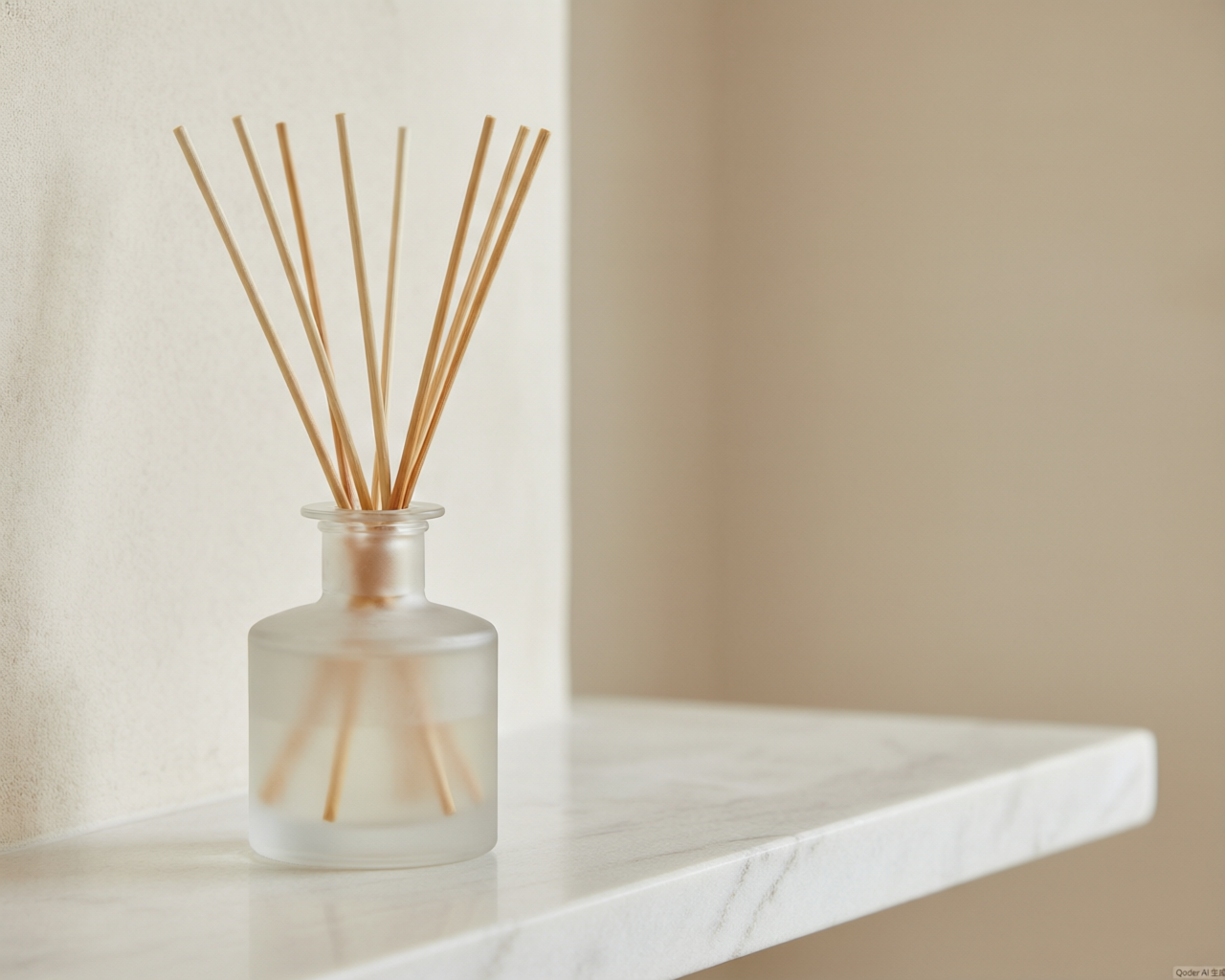
The first reed diffuser a customer buys is a one-time sale. Every refill after that is recurring revenue — and the brands that build a refill program around their diffuser line consistently outperform those that sell only finished units. A diffuser is, structurally, a consumable product housed in a durable vessel. That separation of consumable and durable is the same dynamic that powers razor-and-blade, printer-and-ink, and coffee-pod businesses. Here is how to engineer it into a fragrance line.
Why refills change the economics
A customer who buys a $55 diffuser and never returns has a lifetime value of $55. A customer who buys the same diffuser and then reorders a $22 refill every three months for two years has a lifetime value near $230 — from the same acquisition. The acquisition cost, the marketing spend, and the trust barrier are all paid once; the refills arrive against an already-won customer.
Refills also carry structurally better margins. A refill pouch contains the liquid and reeds but no glass vessel, no decorative cap, and minimal packaging. Where a complete 150ml diffuser might cost $3.50–$5.00 to produce, the equivalent refill — liquid, reeds, and a sealed pouch or simple bottle — lands at roughly $1.20–$2.00. Sold at $20–$25, the refill sustains gross margins of 88–92%, several points above the finished unit, while still feeling like a bargain to the customer relative to buying a whole new diffuser.
Refill formats
There are three common formats, each with different cost and positioning implications:
- Refill pouches (spouted stand-up pouches) are the lowest-cost and most sustainable option. A multi-layer laminate pouch holds the liquid, ships flat, uses a fraction of the material of a glass bottle, and reduces freight weight dramatically. Pouch cost is typically $0.15–$0.40 per unit. The trade-off is a less premium unboxing, so pouches suit an eco-conscious or value positioning.
- Refill bottles (plain glass or PET) give customers a familiar pour-from-bottle experience and a reusable feel. PET is light and cheap; plain glass elevates the perception at modest added cost. This format works well for brands that want refills to feel like a product rather than a utility.
- Reed-only refills are a low-price add-on. Reeds lose wicking efficiency over time and benefit from replacement every few months. Selling reed packs separately captures additional revenue and improves the customer’s experience of the liquid refill.
Most successful programs offer a liquid refill plus a reed pack, optionally bundled.
Subscription models
Refills convert naturally into subscriptions because depletion is predictable. A 150ml diffuser on eight fiber reeds lasts roughly 10–12 weeks, which gives you a clean quarterly cadence. Subscription mechanics that work in this category:
- Subscribe-and-save: 10–15% off the refill price for an auto-renewing order. This modest discount is usually enough to lock in repeat purchase and lift retention.
- Prepaid annual plans: four refills billed upfront at a deeper discount. This improves cash flow and reduces churn by committing the customer for a year.
- Scent-rotation subscriptions: a seasonal scent each quarter rather than a repeat of the original. This keeps the program fresh and exposes customers to your full range, driving cross-sell.
The operational requirement is reliable fulfillment timing and a dunning process for failed payments. Even a basic email reminder ahead of the expected depletion date recovers a meaningful share of would-be lapses.
Sustainability as a selling point
Refills are genuinely more sustainable, and that is a real commercial advantage with a growing segment of buyers. Reusing the vessel and shipping liquid in a lightweight pouch cuts glass, packaging, and freight emissions per use cycle. A pouch refill can reduce packaging waste by 70–80% versus a complete new unit. For brands selling into environmentally conscious retail channels or markets with packaging-waste regulation, a refill program is increasingly a qualification to stock, not just a nice-to-have.
Building the program with your factory
To make refills work, design them in from the start rather than retrofitting. Specify a vessel intended to be kept — durable, timeless, worth retaining — and a refill that matches its capacity exactly. Standardize the liquid formulation so refills are identical to the original, and document it with a retained reference sample. Confirm pouch compatibility with your base solvent (some aggressive bases require specific laminate barriers), and run a leak and shelf-life test on the filled pouch.
A factory that produces both the finished unit and the refill under one roof keeps your formulation, QC, and freight consolidated — and makes it far easier to scale the program as recurring revenue compounds.