Industry Applications
How to Develop a Candle Collection: From 3 SKUs to 30
Este artículo aún no está disponible en español. Lo estás viendo en inglés.

How to Develop a Candle Collection: From 3 SKUs to 30
Every successful candle brand starts small. A focused launch of 3 to 5 scents lets you validate demand, refine operations, and build cash flow without overcommitting inventory. But growth requires expansion—retail buyers want breadth, consumers want novelty, and seasonal peaks reward brands with timely limited editions.
This guide maps the journey from a 3-SKU startup collection to a 30-SKU catalog, with production planning, cost structures, and strategic frameworks drawn from our work with over 150 private label brands at Aromiso.
Phase 1: The Foundation (3 SKUs)
Your initial collection should cover three distinct fragrance families to appeal to different customer preferences while maintaining a cohesive brand identity.
Recommended structure:
- SKU 1: A fresh or citrus scent (broad appeal, low return risk)
- SKU 2: A warm or woody scent (depth, sophistication, evening use)
- SKU 3: A floral or gourmand scent (emotional connection, gift appeal)
Production specs for launch:
- Format: 200 g single-wick candles in uniform vessels
- Wax: Coconut-soy blend, 8 to 9 percent fragrance load
- MOQ: 500 units per SKU (1,500 total)
- Unit cost: $3.80 to $4.60 including vessel, wax, fragrance, label, and lid
- Total investment: $5,700 to $6,900 for product
Timeline: 45 to 60 days from brief to delivery (10 days sampling, 30 days production, 5 to 20 days shipping).
The goal at this phase is not profit maximization—it is learning which scent family resonates, which retail channels convert, and whether your unit economics work at scale.
Phase 2: Validate and Extend (6 to 10 SKUs)
Once you have 3 to 6 months of sales data, expand strategically:
Double down on winners. If your woody scent outsells the others 2-to-1, develop two variations: a lighter “woody-citrus” for spring and a deeper “woody-amber” for fall.
Add a second format. Introduce the top 2 scents as 90 g travel tins ($1.80 to $2.40 per unit at 1,000 MOQ) or 3-wick 450 g statement candles ($7.50 to $9.80 per unit at 300 MOQ). Format expansion lets you test price elasticity without new fragrance development costs.
Introduce one seasonal SKU. A holiday or summer limited edition creates urgency and tests your ability to execute time-bound production. Order 300 to 500 units maximum for the first seasonal test.
Cost structure at this phase:
- Total SKUs: 6 to 10
- Annual production volume: 5,000 to 12,000 units
- Blended unit cost: $3.20 to $5.50 (format mix dependent)
- Volume discount: 5 to 8 percent off initial pricing at 5,000+ annual commitment
Phase 3: Build the Architecture (12 to 18 SKUs)
At this stage, organize your collection into a clear architecture that retail buyers can merchandise and consumers can navigate.
Scent family pillars (example):
| Pillar | Scents | Formats |
|---|---|---|
| Fresh | Sea Salt, Bergamot, Cucumber Mint | 200 g, travel tin, diffuser |
| Warm | Sandalwood, Amber Oud, Fireside | 200 g, 3-wick, diffuser |
| Floral | Peony, Jasmine Noir, Fig Blossom | 200 g, travel tin |
| Seasonal | Rotating limited editions | 200 g only |
Add complementary formats:
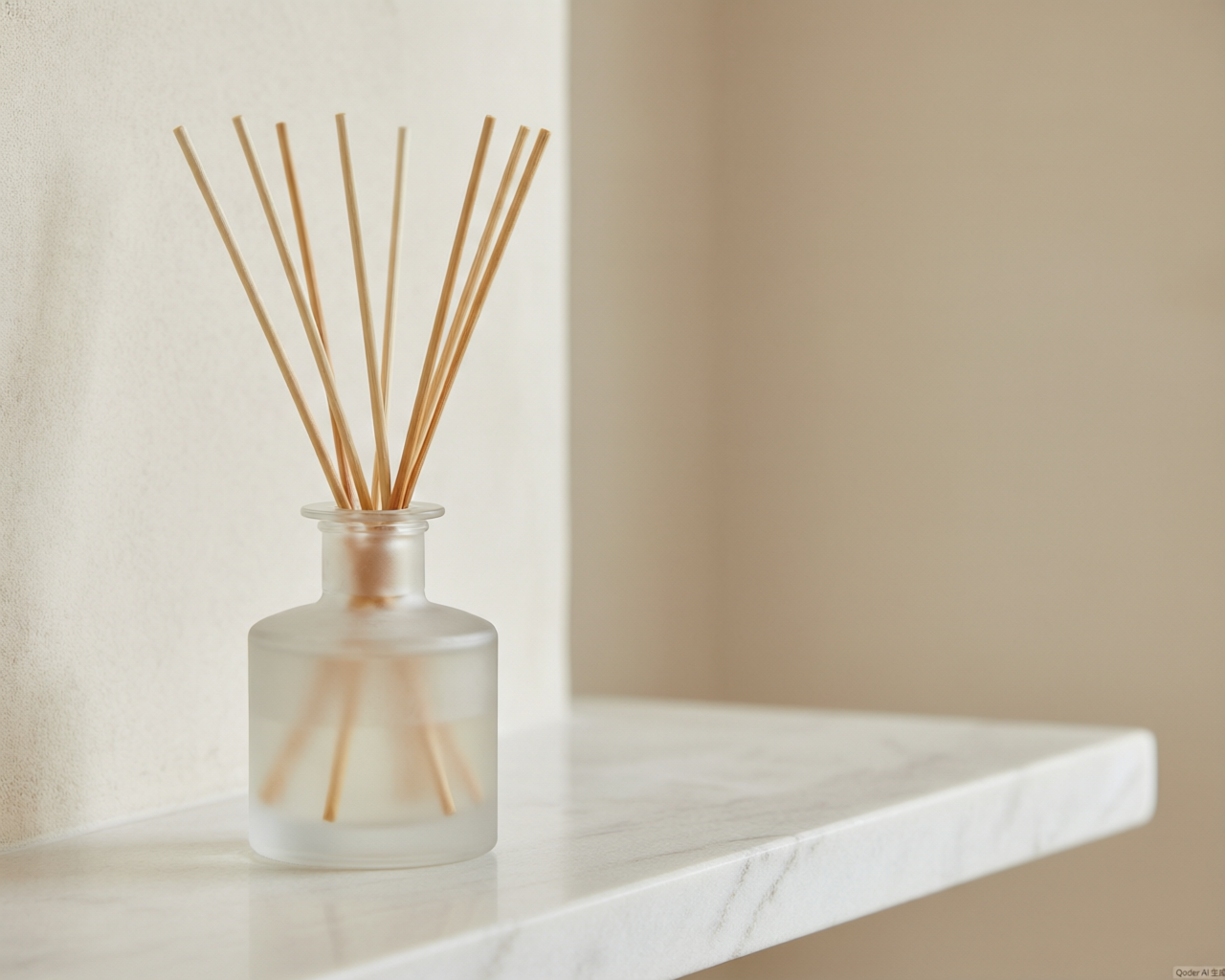
- Reed diffusers (200 ml): $3.80 to $5.20 per unit at 500 MOQ
- Room sprays (100 ml): $2.20 to $3.40 per unit at 1,000 MOQ
- Wax melts (6-cavity pack, 60 g): $1.50 to $2.20 per pack at 1,000 MOQ
Each format reuses existing fragrances, so development cost is zero—only new tooling or packaging components.
Production planning: At 12+ SKUs, shift from per-order production to quarterly production planning. Aromiso offers a blanket order program: commit to an annual volume (e.g., 20,000 units) and draw down in quarterly batches. This locks pricing for 12 months and reduces per-shipment logistics costs.
Phase 4: Full Catalog (20 to 30 SKUs)
A 30-SKU catalog positions you as a full-line brand capable of filling retail endcaps, supporting department store concessions, and sustaining DTC subscription models.
Composition at 30 SKUs:
- 12 to 15 core candles (4 to 5 scent families, 2 to 3 formats each)
- 6 to 8 complementary home fragrance products (diffusers, sprays, melts)
- 4 to 6 seasonal or limited editions (rotating quarterly)
- 2 to 3 gift sets or bundles
Operational requirements:
- Safety stock: 60 to 90 days of cover on top 10 sellers
- Production cadence: Monthly or bi-monthly production runs
- Quality control: Batch-level burn testing, fragrance GC-MS verification
- Warehousing: Climate-controlled storage (candles soften above 35 degrees Celsius)
Cost advantages at scale:
- 30,000+ annual units: 12 to 18 percent below initial pricing
- Custom vessel molds amortized: $2,000 to $4,000 mold cost spread over 10,000+ units = $0.20 to $0.40 per unit
- Dedicated production lines: Reduced changeover time, tighter consistency
Seasonal Planning Calendar
For brands targeting 30 SKUs, seasonal releases drive 30 to 40 percent of annual revenue:
- January: New year “reset” scents (eucalyptus, clean cotton)
- March/April: Spring florals (peony, lilac, rain)
- June/July: Summer fresh (coconut, sea breeze, citrus)
- September: Fall launch (pumpkin, cedar, apple)—order by June
- November: Holiday gift sets—order by August
- December: Post-holiday clearance planning for Q1
At Aromiso, we recommend placing seasonal orders 90 to 120 days before your sell-through window. Our production calendar fills quickly in Q3 for holiday programs, so early commitment secures capacity and pricing.
Avoiding Common Scaling Mistakes
- Expanding scents before formats. A new format of a proven scent is lower risk than a new scent in a proven format.
- Ignoring MOQ math. Launching 10 new SKUs at 500 units each means 5,000 units of untested inventory. Test with 200 to 300 units where possible.
- Neglecting core restocks. New launches are exciting, but your top 3 SKUs likely generate 50 percent of revenue. Never let them go out of stock.
- Skipping stability testing. New wax-fragrance combinations need 4-week stability tests before production. Aromiso includes this in our development timeline at no extra charge.
Working with Aromiso Across Growth Phases
Our private label program scales with your brand. Start with 500-unit test runs, graduate to quarterly blanket orders, and eventually access dedicated production slots with custom tooling. We assign a single account manager from first sample to 100,000-unit programs, ensuring institutional knowledge of your brand standards.
Request a collection planning worksheet and tiered pricing schedule to map your path from 3 SKUs to 30.