Product Comparisons
Rattan Reeds vs Fiber Reeds: Performance and Cost Compared
Dieser Artikel ist noch nicht auf Deutsch verfügbar. Sie lesen die englische Version.

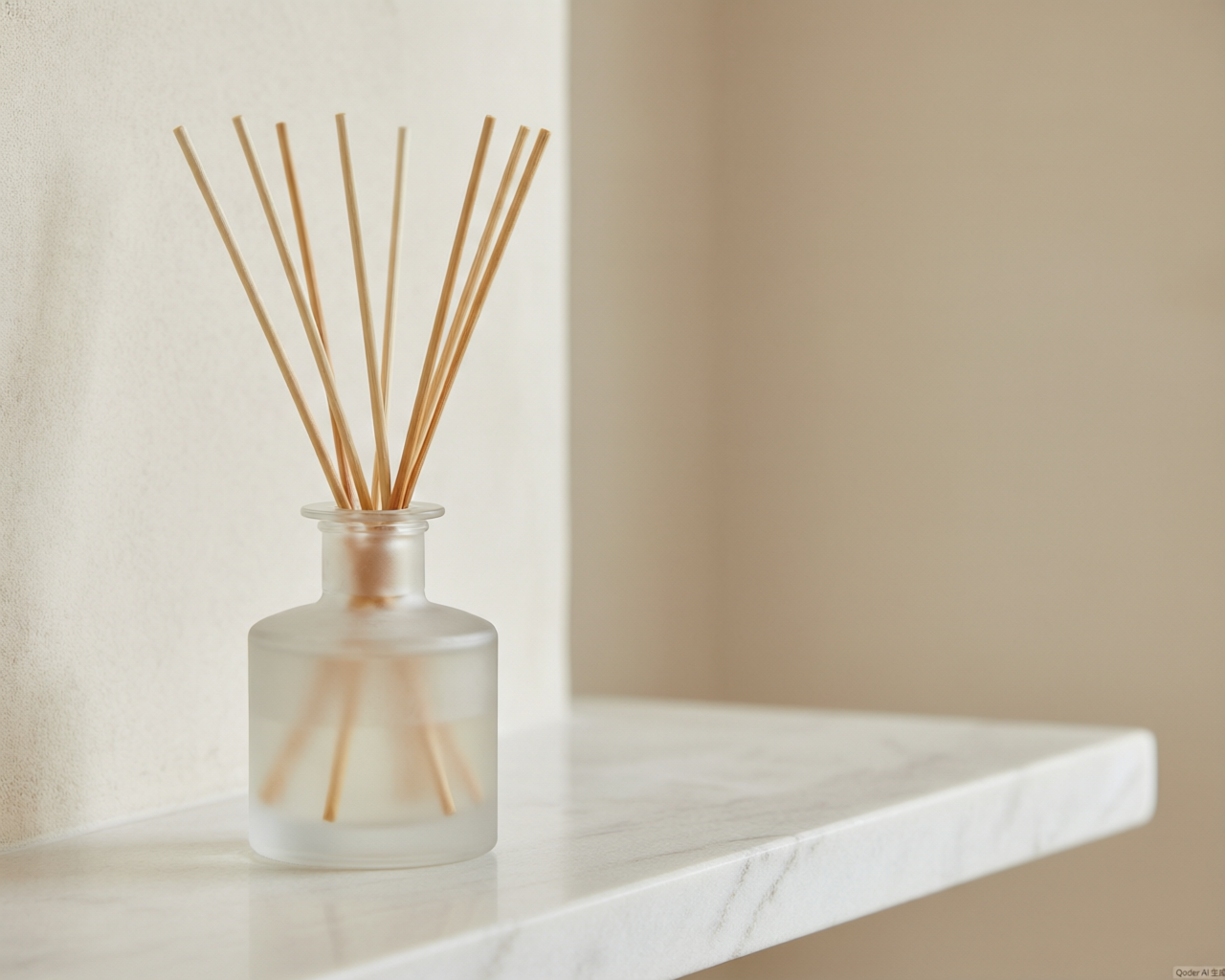
Reed sticks are the functional engine of a reed diffuser. They draw fragrance liquid from the vessel and release it into the air through capillary action and evaporation. The choice between natural rattan and synthetic fiber reeds affects scent throw, product lifespan, visual presentation, and unit cost. This comparison provides the specifications B2B buyers need for sourcing decisions.
Material Overview
Rattan reeds are cut from the rattan palm (Calamus rotang), a tropical vine native to Southeast Asia. They are natural hollow-stem channels with internal pores that wick liquid upward. Indonesia and the Philippines supply over 80% of global rattan reed material.
Fiber reeds (also called polyester reeds or synthetic reeds) are manufactured from compressed polyester or rayon fibers bonded into a uniform stick. They are produced industrially, primarily in China and South Korea, with consistent diameter and porosity.
Physical Specifications
| Specification | Rattan Reeds | Fiber Reeds |
|---|---|---|
| Diameter | 3-4 mm (natural variation) | 3 mm or 4 mm (uniform) |
| Length options | 20-30 cm (cut to order) | 20-30 cm (precision cut) |
| Color | Natural tan/cream | Black, white, gray, custom colors |
| Surface texture | Slightly rough, natural grain | Smooth, uniform |
| Internal structure | Hollow channels (2-4 pores) | Compressed fiber matrix |
| Weight per stick (25cm) | 1.2-1.8g | 1.5-2.0g |
| Flexibility | Moderate (can snap if bent) | High (bends without breaking) |
| Dust attraction | Moderate (rough surface) | Low (smooth surface) |
Wicking and Diffusion Performance
Testing conducted with 200ml diffuser (DPM base, 20% fragrance load), 8 reeds, 25cm length, at 22C and 50% RH:
| Performance Metric | Rattan Reeds | Fiber Reeds |
|---|---|---|
| Initial wicking time (liquid reaches top) | 4-8 hours | 1-3 hours |
| Scent throw at 24 hours (1-10 scale) | 5-6 | 7-8 |
| Scent throw at 7 days (1-10 scale) | 6-7 | 7-8 |
| Scent throw at 30 days | 5-6 | 6-7 |
| Scent throw at 60 days | 3-4 | 5-6 |
| Effective lifespan | 45-60 days | 60-90 days |
| Liquid consumption rate | 2.5-3.5 ml/day | 3.0-4.5 ml/day |
| Clogging tendency | Moderate (pores narrow with dust) | Low (open fiber matrix) |
| Performance after flipping | Restored 80-90% | Restored 90-95% |
Fiber reeds deliver stronger initial throw and longer effective life. Rattan reeds provide a gentler, more gradual diffusion that some consumers prefer for smaller rooms.
Cost Comparison
Per-unit pricing at 10,000-stick MOQ, FOB China:
| Cost Factor | Rattan Reeds | Fiber Reeds |
|---|---|---|
| Price per stick (25cm, standard) | $0.025-$0.045 | $0.035-$0.065 |
| Price per stick (30cm) | $0.030-$0.055 | $0.045-$0.080 |
| Custom color surcharge | N/A (natural only) | +$0.005-$0.015 |
| Packaging (per 8-stick set) | $0.02-$0.04 | $0.02-$0.04 |
| Cost per diffuser (8 reeds) | $0.22-$0.40 | $0.30-$0.56 |
| Cost premium | Baseline | +35-45% |
For a 5,000-unit diffuser order, the total reed cost difference is approximately $400-$800. In the context of a $3.50-$5.50 total unit cost, reeds represent 6-10% of product cost.
Aesthetic and Brand Considerations
| Aesthetic Factor | Rattan Reeds | Fiber Reeds |
|---|---|---|
| Visual style | Natural, organic, artisanal | Modern, sleek, uniform |
| Color consistency | Variable (natural material) | Perfectly uniform |
| Available colors | Natural tan only (or bleached white) | Black, white, gray, brown, custom |
| Brand positioning fit | Eco, botanical, handmade | Contemporary, luxury, minimalist |
| Consumer recognition | High (“real reeds” perception) | Growing (perceived as premium) |
| Photography/visual merchandising | Warm, textured | Clean, graphic |
Premium brands increasingly favor black fiber reeds for their visual consistency and modern appearance. Natural and eco-positioned brands prefer rattan for authenticity.
Quality Control and Defect Rates
| QC Factor | Rattan Reeds | Fiber Reeds |
|---|---|---|
| Diameter tolerance | Plus or minus 0.5mm | Plus or minus 0.1mm |
| Length tolerance | Plus or minus 3mm | Plus or minus 1mm |
| Defect rate (incoming) | 5-12% (cracks, uneven pores, bends) | 1-3% (manufacturing consistency) |
| Mold risk in storage | Yes (natural material, humid conditions) | No |
| Shelf life (stored) | 12-18 months (keep dry) | Unlimited |
| Batch-to-batch variation | High | Minimal |
| Inspection labor | Higher (visual sort needed) | Lower (spot check sufficient) |
Rattan’s 5-12% defect rate means a 10,000-stick order may yield only 8,800-9,500 usable reeds. Buyers should order 10-15% overage or specify AQL 2.5 inspection.
Supply Chain Factors
| Factor | Rattan Reeds | Fiber Reeds |
|---|---|---|
| Primary origin | Indonesia, Philippines | China, South Korea |
| Production method | Harvested, dried, cut, sorted | Extruded, compressed, cut |
| Lead time | 25-40 days (harvest + shipping) | 10-20 days (manufacturing) |
| MOQ (raw material) | 50,000 sticks | 10,000 sticks |
| Seasonal availability | Year-round but quality varies by season | Year-round, consistent |
| Sustainability certification | FSC available (limited) | Recycled polyester options |
| Price trend (2023-2025) | Rising 8-12% annually (labor costs) | Stable to declining (automation) |
Rattan harvesting is labor-intensive and subject to rising wage costs in Indonesia. Fiber reed production is increasingly automated, creating a widening cost gap over time.
Application Recommendations
| Scenario | Recommended Reed | Reason |
|---|---|---|
| Premium diffuser ($40+ retail) | Fiber (black) | Consistent aesthetics, strong throw |
| Eco/natural brand positioning | Rattan | Authenticity, biodegradable |
| Commercial scenting (hotels, retail) | Fiber | Reliable performance, low maintenance |
| Small room (under 15 sqm) | Rattan (6 reeds) | Gentler diffusion, not overwhelming |
| Large room (30+ sqm) | Fiber (10-12 reeds) | Maximum throw |
| High-humidity markets | Fiber | No mold risk, consistent wicking |
| Subscription/replacement reed packs | Fiber | Uniform appearance across shipments |
Environmental Considerations
| Factor | Rattan Reeds | Fiber Reeds |
|---|---|---|
| Biodegradability | Yes (6-12 months composting) | No (polyester, 100+ years) |
| Recyclability | Compostable | Technically recyclable (PET) |
| Carbon footprint (per stick) | Low (harvest + transport) | Moderate (petrochemical + manufacturing) |
| Consumer disposal | Compost or general waste | General waste |
| ”Plastic-free” marketing claim | Supported | Not supported |
Brands with strong sustainability positioning may prefer rattan despite performance trade-offs. Recycled-PET fiber reeds are emerging as a compromise, though availability is still limited.
Sourcing Recommendations
For buyers ordering complete diffuser units from a factory, reed selection is typically included in the quotation. Specify clearly:
- Material: rattan or fiber (polyester)
- Diameter: 3mm or 4mm
- Length: match to vessel height plus 5-8cm extension
- Color: natural (rattan) or specify Pantone (fiber)
- Quantity per unit: 6-12 depending on vessel opening and room size target
- Packaging: banded, poly bag, or boxed
At Aromiso, we stock both rattan and fiber reeds in multiple lengths and colors. Our diffuser assembly line accommodates either type, and we provide wicking test reports showing 60-day evaporation curves for each reed-base-fragrance combination before production approval.