Product Knowledge
The Private Label Process: From Concept to Shelf in 8 Weeks
Dieser Artikel ist noch nicht auf Deutsch verfügbar. Sie lesen die englische Version.

Eight weeks is a realistic target for a private label fragrance project when the buyer comes prepared and the factory has capacity. Some projects finish in six; others stretch to twelve when revisions pile up or components are back-ordered. This timeline shows what happens each week, where delays originate, and what you can do to keep the schedule tight.
Week 1: Brief and Quotation
The process starts with a structured brief: product type, target fragrance profile, volume per SKU, packaging specification, destination market, and compliance requirements (IFRA category, EU allergen labeling under Regulation (EC) No 1223/2009, or US FDA 21 CFR if applicable). A complete brief lets the factory return a quotation within 2-3 business days. Incomplete briefs add a round of clarification that costs 3-5 days.
Deliverables this week: confirmed quotation, preliminary BOM (bill of materials), and a signed NDA if formula confidentiality is required.
Week 2: Formulation and Raw Material Check
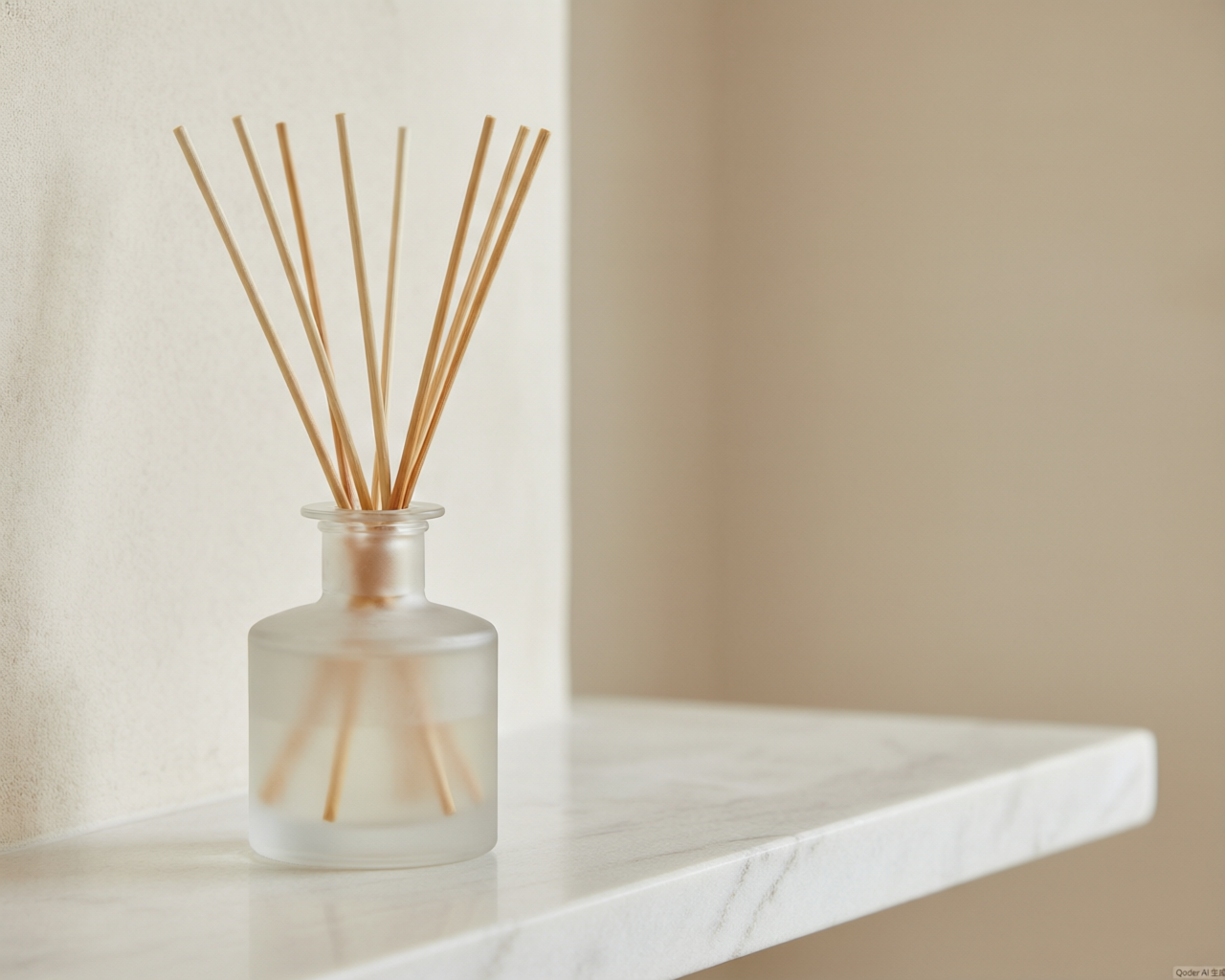
The R&D team builds or adapts a formula. For a standard reed diffuser at 20% fragrance load in a DPG base, formulation takes 2-3 lab days. Custom fine fragrance compositions take longer, typically 5-7 days for an initial direction. Simultaneously, procurement checks raw material availability. Most commodity ingredients (DPG, ethanol, isoparaffinic solvents) are in stock. Specialty naturals such as oud CO2 extract or iris absolute may carry 2-3 week lead times, and this is the most common hidden delay.
Deliverables: lab batch record, initial cost-per-unit confirmation, raw material availability report.
Week 3: Sampling
The lab produces 2-3 sample variants per SKU, typically in 50-100 mL quantities. Samples are evaluated for scent profile, color stability, and compatibility with the intended container. The factory ships samples via express courier (DHL, FedEx), which takes 3-5 days to most destinations. Buyers should plan 3-4 days on their side for internal evaluation and stakeholder sign-off.
Deliverables: physical samples with sample cards, GC-MS summary if requested, shipping tracking.
Week 4: Sample Approval and Revision
The buyer approves, requests a minor adjustment (for example, “reduce the top-note citrus by 10%”), or rejects and restarts. One revision cycle adds 4-5 days. Two revision cycles push the project past the 8-week target. To avoid this, involve all internal decision-makers before the sample ships. A signed sample approval form, including the sample code, date, and evaluator name, becomes the reference standard for bulk production.
Deliverables: signed sample approval form, revised formula if applicable, confirmed final BOM.
Week 5: Packaging Artwork and Component Ordering
With the formula locked, packaging moves forward. The buyer supplies print-ready artwork (AI or PDF, CMYK, 300 DPI minimum, with 3 mm bleed). The factory’s pre-press team checks dielines, barcode placement (EAN-13 or UPC-A), and regulatory text positioning. Component ordering begins: bottles, caps, labels, boxes, and inserts. Standard components ship in 7-10 days from domestic suppliers. Custom molds or hot-stamping dies add 15-20 days and should have been ordered in Week 2 if the design was finalized early.
Deliverables: approved digital proof, component purchase orders, confirmed delivery dates.
Week 6: Production
Bulk compounding happens first. A 5,000-unit run of 100 mL reed diffusers requires approximately 500 liters of finished liquid, compounded in 200-500 L stainless steel vessels. Mixing time is 30-60 minutes per batch, followed by a 24-48 hour maceration period for fragrance-base integration. Filling lines then run at 2,000-4,000 units per hour for standard bottle formats. A 5,000-unit order typically fills in one production day.
Deliverables: batch production records, in-process QC logs (fill weight checks every 30 minutes, torque tests on caps).
Week 7: Quality Control and Packaging
Finished goods undergo AQL inspection per ISO 2859-1. For a standard Level II inspection at AQL 2.5, a 5,000-unit lot requires a sample size of 200 units. Inspectors check fill weight (tolerance typically +/-2%), label alignment, seal integrity, carton marking, and visual defects. Fragrance verification compares a retained sample from the bulk batch against the approved Week 4 reference using a controlled sniff test at 20 degrees Celsius.
Packaging into retail boxes, shrink-wrap, and master cartons (usually 24 or 48 units per carton, 5-ply corrugated, with shipping marks) happens on the same line or the following day.
Deliverables: QC inspection report with photos, certificate of analysis (CoA), MSDS/SDS for the finished product.
Week 8: Shipping and Documentation
Goods move to the port or airport. For sea freight (FCL or LCL), the factory prepares the commercial invoice, packing list, bill of lading, certificate of origin, and any phytosanitary or dangerous-goods declarations (ethanol-based products above 24% ABV may classify as UN 1266, Class 3). LCL consolidation adds 3-5 days at the origin port. Air freight reduces transit to 3-5 days but costs 4-6x more per kilogram.
Deliverables: full shipping document set, container loading photos, tracking or vessel schedule.
Keeping the Schedule Honest
The three most common causes of slippage are: (1) slow buyer approval, (2) custom packaging components ordered too late, and (3) formula revisions after Week 4. Assign a single decision-maker on the buyer side, confirm packaging designs before sampling begins, and treat the sample approval as a hard gate. With those disciplines, 8 weeks from brief to bill of lading is achievable for most standard private label fragrance programs.