Product Knowledge
Developing a Car Fragrance Line: Formats, Materials & Market Fit
Dieser Artikel ist noch nicht auf Deutsch verfügbar. Sie lesen die englische Version.
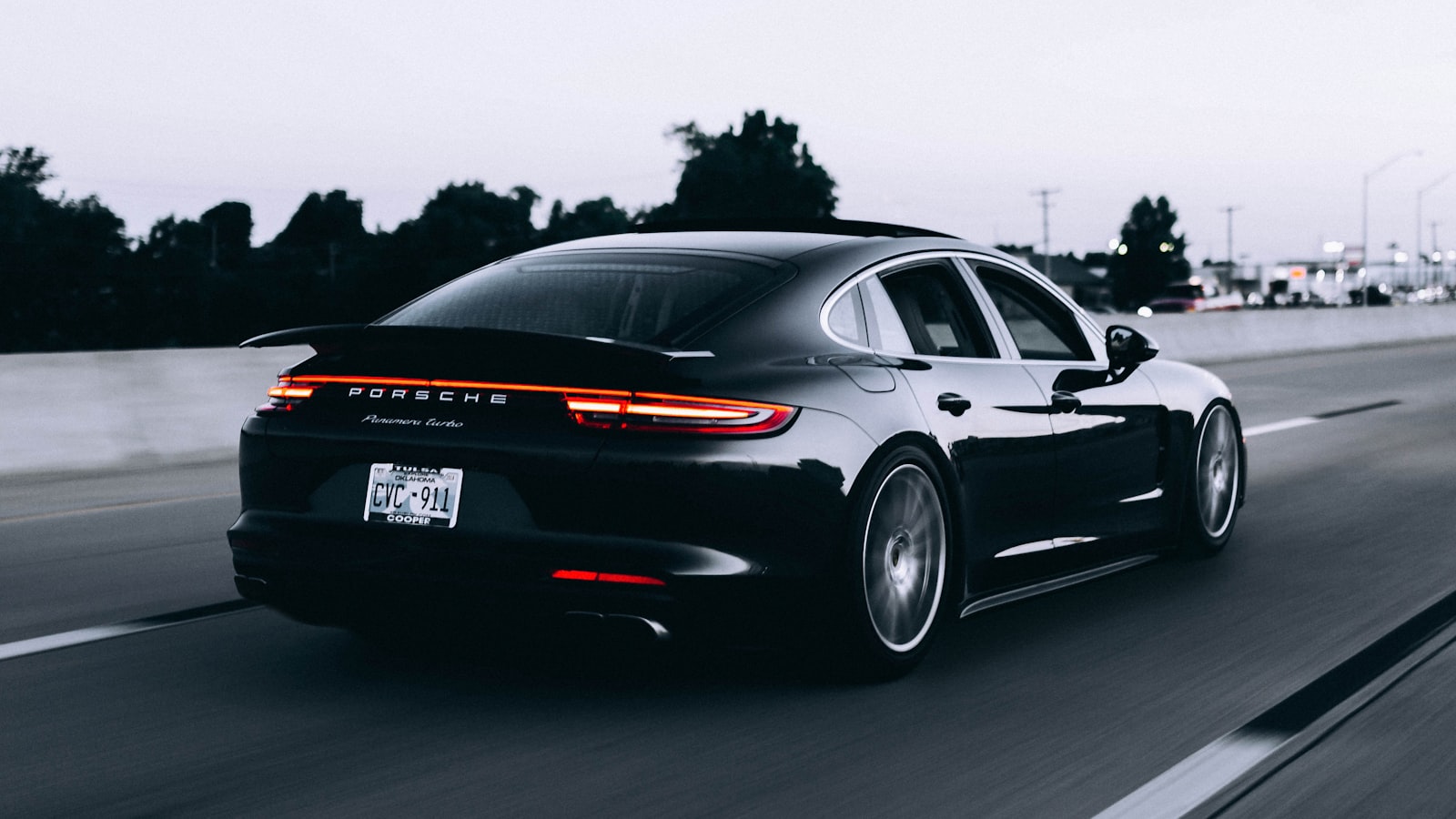
The global automotive air freshener market was valued at approximately $4.1 billion in 2025 and is tracking toward $5.6 billion by 2030. Growth is driven by longer vehicle ownership cycles (average US ownership now exceeds 12.5 years), ride-share drivers maintaining cabin quality, and the premiumization of car accessories as a lifestyle category. For B2B buyers, car fragrance offers higher unit velocity and lower per-unit cost than home fragrance, but the engineering constraints are significantly tighter. Temperature extremes, material compatibility, and regulatory exposure make this a category where product development decisions carry real financial consequences.
Format Comparison: Five Options, Five Trade-Offs
Vent Clip
The dominant format by unit volume. A plastic housing clips to the air vent; fragrance is delivered via a replaceable scented tablet or gel insert. Typical retail: $8-15. Lifespan: 30-60 days per insert.
- Materials: ABS or PP housing, EVA or PE scented insert
- MOQ: 5,000-10,000 units for custom mold; 3,000 for stock mold with custom color and print
- Unit cost (FOB): $0.80-1.80 depending on mold complexity and insert fragrance load
- Advantage: High repeat-purchase rate (insert refills), strong retail shelf presence
- Risk: Clip mechanism breakage in cold climates; requires impact testing at -20°C
Hanging Card
The lowest-cost entry format. A cellulose or fiberboard card saturated with fragrance oil, suspended from the rearview mirror. Typical retail: $3-8. Lifespan: 14-30 days.
- Materials: 2mm-3mm cotton cellulose board, PE or PET lamination optional
- MOQ: 10,000 units for custom die-cut shape; 5,000 for standard shapes
- Unit cost (FOB): $0.15-0.45
- Advantage: Lowest tooling cost, fastest production (7-10 days), ideal for promotional and impulse channels
- Risk: Short lifespan limits premium positioning; fragrance saturation must be even to avoid dripping at high temperatures
Gel Can
A sealed aluminum or tin can containing fragrance-infused gel, opened by removing a lid or peeling a membrane. Typical retail: $5-12. Lifespan: 45-90 days.
- Materials: Aluminum can (65mm or 80mm diameter), water-based or solvent-based gel matrix
- MOQ: 5,000 units
- Unit cost (FOB): $0.60-1.20
- Advantage: Long lifespan, no moving parts, works in cup holders and under seats
- Risk: Gel shrinkage over time (visual defect); solvent-based gels may trigger DG shipping classification
Diffuser Bottle
A small glass bottle (5ml-10ml) with a wooden or fiber cap that wicks fragrance. Hung from the mirror or mounted on a vent. Typical retail: $10-20. Lifespan: 30-45 days.
- Materials: Glass bottle, beechwood or rattan cap, cotton wick
- MOQ: 3,000-5,000 units
- Unit cost (FOB): $1.20-2.50
- Advantage: Premium aesthetic, aligns with “clean” positioning (visible liquid, natural wood)
- Risk: Glass breakage in transit (requires inner packaging); liquid may leak if cap seal fails at altitude (air freight)
Solid Fragrance (Plaster/Polymer)
A scented solid disc or shape (plaster, PVC-free polymer, or compressed fiber) placed in a vent holder or under-seat tray. Typical retail: $6-14. Lifespan: 30-60 days.
- Materials: Plaster (calcium sulfate), EVA foam, or thermoplastic elastomer
- MOQ: 5,000 units for custom shape; 2,000 for stock shapes
- Unit cost (FOB): $0.50-1.50
- Advantage: No liquid (simplifies shipping, avoids DG classification), customizable shapes for brand identity
- Risk: Fragrance throw is lower than liquid formats; requires higher fragrance load (12-18%) to compensate
Temperature Resistance: The Non-Negotiable Engineering Constraint
A car interior in Phoenix, AZ reaches 70°C+ in summer. In Minneapolis or Moscow, it drops to -20°C or below in winter. Your product must survive both without deforming, leaking, cracking, or losing fragrance integrity.
Specific requirements by material:
- EVA inserts: Must remain flexible at -20°C (specify Shore A hardness 40-60) and not deform at 70°C
- PP/ABS housings: Heat deflection temperature above 80°C; impact resistance at -20°C per ISO 179
- Glass bottles: Thermal shock testing (transition from -10°C to 60°C without cracking)
- Adhesive pads: Must maintain bond strength across the full range; specify 3M VHB or equivalent
Request accelerated aging data from your supplier: 72 hours at 70°C followed by 24 hours at -20°C, then visual and functional inspection. Any supplier that cannot provide this test protocol is not producing automotive-grade product.
Fragrance Longevity Engineering
Longevity in car fragrance is a function of three variables: fragrance oil concentration in the substrate, evaporation rate of the carrier, and surface area exposed to airflow.
- Vent clips benefit from forced airflow, so lower concentrations (8-12%) suffice
- Hanging cards rely on passive evaporation; they need higher initial saturation (15-25% by weight) but lose potency faster
- Gel formats use a slow-release polymer matrix that extends lifespan but reduces initial throw
Ask your supplier for evaporation curve data: weight loss measured at 25°C and 60°C over 30 days. A product that loses more than 40% of its weight in the first 7 days at 60°C will underperform in real-world summer conditions.
Regulatory Requirements by Market
EU: REACH and CLP
Fragrance substances in car products fall under REACH registration requirements. Any substance manufactured or imported above 1 tonne per year per legal entity requires registration. Additionally, CLP labeling applies: if the product contains sensitizing substances above threshold, the packaging must carry H317 warnings. Gel cans containing solvents with flash points below 60°C require full DG labeling under CLP.
US: California Proposition 65
If your product contains any of the 900+ listed chemicals above safe harbor levels, it must carry a Prop 65 warning. Common fragrance-adjacent triggers: diethylhexyl phthalate (DEHP) in PVC components, formaldehyde in certain adhesives, and toluene in solvent-based gels. Specify “Prop 65 compliant” in your purchase order and require a test report from an accredited lab (SGS, Intertek) before shipment.
Middle East: GSO Standards
GCC countries follow GSO technical regulations for consumer products. Car fragrances must comply with GSO 1943 (safety requirements for air fresheners) and carry Arabic-language labeling including manufacturer, ingredients, and hazard warnings.
MOQ and Cost Structure by Format
| Format | Typical MOQ | Tooling Cost | Unit Cost (FOB) | Lead Time |
|---|---|---|---|---|
| Vent clip (custom mold) | 5,000-10,000 | $1,500-4,000 | $0.80-1.80 | 35-45 days |
| Hanging card | 10,000 | $200-500 (die) | $0.15-0.45 | 15-20 days |
| Gel can | 5,000 | $300-800 | $0.60-1.20 | 25-35 days |
| Diffuser bottle | 3,000-5,000 | $500-1,500 | $1.20-2.50 | 30-40 days |
| Solid (plaster) | 5,000 | $300-1,000 | $0.50-1.50 | 20-30 days |
These are typical ranges for Chinese manufacturing. Actual costs depend on fragrance complexity, packaging specification, and order volume. A 20,000-unit order typically reduces per-unit cost by 15-25% versus the stated MOQ quantity.
Building Your Line: A Practical Sequence
- Select 2-3 formats that match your channel (auto parts retail favors vent clips and gel cans; lifestyle and gifting favors diffuser bottles and solids)
- Develop 4-6 scents per format, including one universal (new car, ocean), one gourmand (vanilla, coffee), and one premium (oud, leather)
- Specify temperature testing in your sampling approval criteria
- Confirm regulatory compliance for your destination market before committing to production tooling
- Order samples from 2-3 suppliers with identical specs to benchmark quality and cost
Car fragrance rewards buyers who treat it as an engineered product rather than a commodity accessory. The difference between a $0.90 vent clip that cracks in January and a $1.30 vent clip that survives two Minnesota winters is a material specification and a test protocol, not luck.
Aromiso develops automotive fragrance programs across all five formats, with temperature-cycle testing and market-specific regulatory documentation included in every project scope.