Product Comparisons
Private Label Candles vs DIY: When to Outsource Production
Dieser Artikel ist noch nicht auf Deutsch verfügbar. Sie lesen die englische Version.
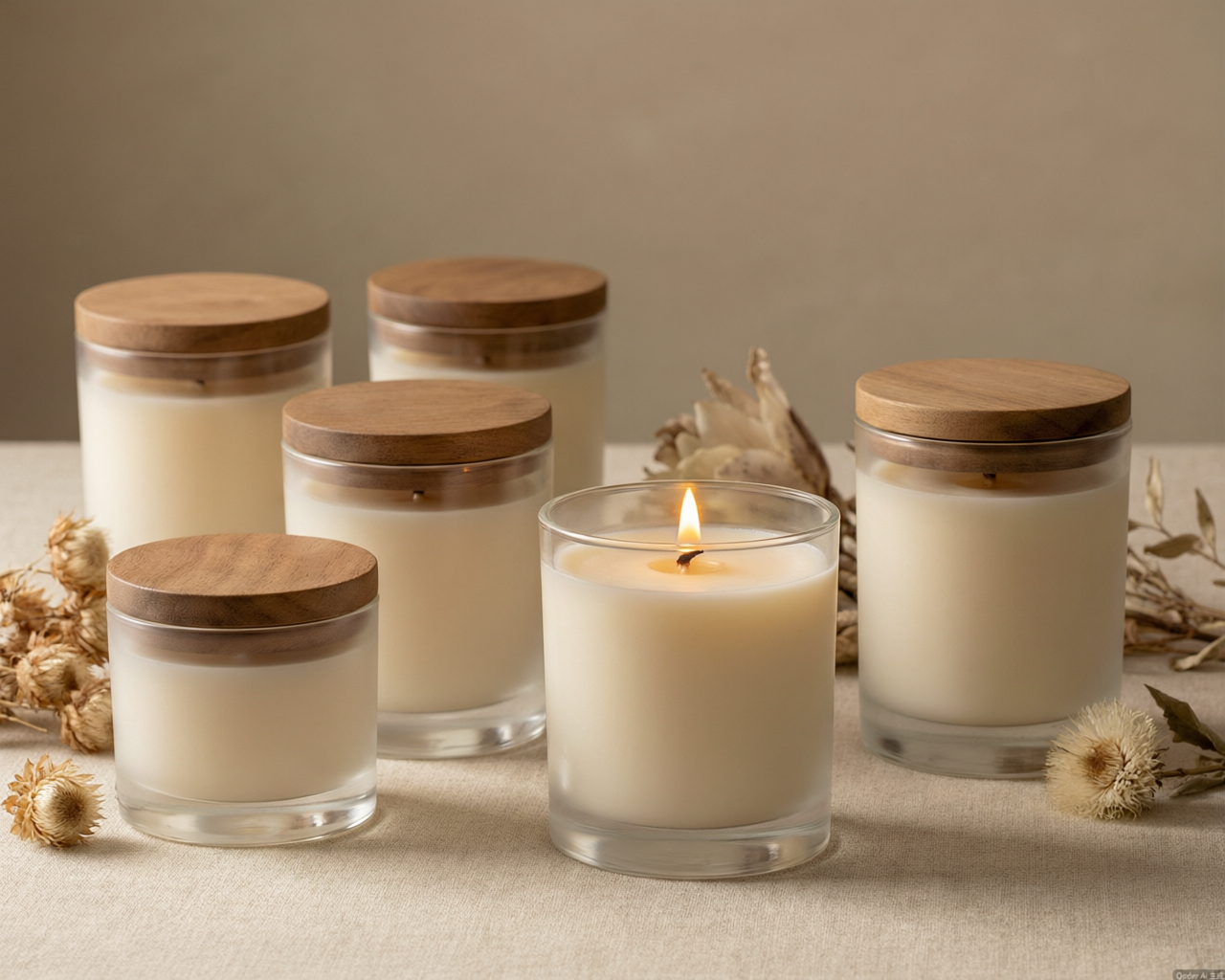
Almost every candle brand starts the same way: a kitchen table, a melting pot, and a strong belief in a signature scent. DIY production is a legitimate and valuable stage. It teaches you your formula, your customer, and your margins. But there comes a point where hand-pouring every unit becomes the bottleneck rather than the foundation. This article compares the two paths so B2B buyers can decide when to keep production in-house and when to outsource to a private label manufacturer.
The DIY Model: Strengths and Limits
Making candles yourself offers complete control. You can test a new fragrance on Monday and sell it on Saturday. Margins per unit can look attractive at tiny scale because you are not paying for anyone else’s labor or overhead.
The limits appear quickly. Hand production caps your output at roughly 20 to 50 candles per person per day once you account for melting, pouring, curing, labeling, and cleanup. Quality consistency is hard to maintain. Scent throw, wax adhesion to the glass, and burn performance can drift batch to batch when temperature control and fragrance load are managed by hand. As order volume grows, the founder becomes the constraint, and every hour spent pouring is an hour not spent on marketing, wholesale relationships, or product development.
The Private Label Model: What You Actually Buy
Private label manufacturing means partnering with a factory that produces candles to your specification under your brand. You provide or co-develop the fragrance, choose the vessel and packaging, and the manufacturer handles sourcing, production, quality control, and often fulfillment support.
What you are really buying is consistency, capacity, and compliance. A professional facility runs controlled melt temperatures, calibrated fragrance dosing, standardized cure times, and documented quality checks. It can scale from a 500-unit test run to tens of thousands of units without you hiring or renting space. It also carries the regulatory and safety documentation that retailers increasingly demand.
Cost Comparison at Different Volumes
The cost picture flips as volume rises. Below is an illustrative comparison for a standard 200-gram soy candle in a glass vessel.
| Volume | DIY Unit Cost | Private Label Unit Cost |
|---|---|---|
| 100 units | $3.50 to $4.50 | $5.00 to $6.50 |
| 1,000 units | $3.00 to $4.00 | $3.20 to $4.20 |
| 10,000 units | $2.80 plus heavy labor | $2.10 to $2.90 |
At low volume, DIY appears cheaper because your own labor is unpaid. But that labor has an opportunity cost. At 1,000 units and above, factory purchasing power on wax, fragrance, and glass typically beats retail sourcing, and the per-unit labor cost collapses. At 10,000 units, the manufacturer is almost always cheaper per unit and dramatically faster.
Quality and Compliance
Retail buyers ask questions that DIY operations struggle to answer. They want safety data sheets, IFRA-compliant fragrance documentation, burn testing, and consistent batch records. A private label partner provides these as standard. They also reduce the risk of costly recalls or retailer rejections caused by inconsistent fragrance load or undocumented materials.
For brands targeting wholesale, this compliance layer is often the deciding factor. A single rejected container or a safety complaint can erase months of margin.
Time to Market and Scalability
DIY is faster for a single prototype. Private label is faster for a market-ready launch at scale. A manufacturer can typically turn a confirmed private label order in 30 to 45 days, including sampling. Replicating that volume by hand would take months and likely require hiring, training, and workspace you do not yet have.
Scalability is the core advantage. Seasonal spikes, a viral product, or a new wholesale account should be opportunities, not crises. Outsourced production absorbs that variability.
When to Stay DIY
Keep production in-house if you are still validating demand, your volumes are under a few hundred units per month, your brand story depends on visible handcraft, or you need to iterate fragrances weekly. There is no shame in this stage. It builds the product knowledge that makes a later manufacturing partnership more productive.
When to Outsource
Consider private label when monthly demand consistently exceeds what you can pour in your available hours, when a retailer asks for compliance documentation, when unit economics matter more than craft theater, or when you want to free yourself to focus on growth. A common and healthy path is to keep a small in-house line for limited editions while outsourcing core bestsellers.
How Aromiso Helps Brands Transition
Aromiso works with brands at every stage, from founders placing a first 500-unit private label order to established labels scaling to container loads. We offer fragrance development, vessel and packaging sourcing, low minimum order quantities for testing, and full compliance documentation. Our goal is to make the transition from DIY to manufactured feel like an upgrade in quality rather than a loss of control.
Outsourcing production is not abandoning your brand. It is removing the ceiling on it. The brands that grow are the ones that recognize the moment their time is worth more than their labor, and let a factory do what factories do best.