Product Knowledge
How to Maximize Scent Throw in Private-Label Candles
Dieser Artikel ist noch nicht auf Deutsch verfügbar. Sie lesen die englische Version.

“Scent throw” covers two distinct performances: cold throw (how the candle smells unlit, which drives retail and unboxing) and hot throw (fragrance release during burning, which drives repurchase). They respond to different variables, and optimizing one can hurt the other. Here is what actually moves the needle in production.
Fragrance load: more is not always better
For container candles, 6–10% fragrance load is the productive range. Below 6%, hot throw is usually too weak for a room larger than about 20 m². Above 10–12%, most wax systems hit their binding limit: unbound oil sweats to the surface (a fire and finish defect), and excess oil can actually suppress throw by cooling the melt pool. If a competitor’s candle seems stronger, the difference is more often fragrance quality and wick engineering than load.
Pour temperature and stir discipline
Fragrance binds to wax as it cools through a specific temperature window. For soy systems, adding fragrance at 65–70°C and stirring slowly for a full 2 minutes is the standard practice; pouring too hot (above 75°C) flashes off top notes and weakens cold throw, while pouring too cool causes poor binding and surface defects. Ask your manufacturer for their documented pour-temperature SOP per wax system — a factory that answers “it depends on the day” is a factory with inconsistent throw.
Cure time is non-negotiable
Soy wax needs 10–14 days to fully bind fragrance before burn performance stabilizes; paraffin needs 2–3 days. Candles tested and shipped immediately after pouring routinely underperform the approved sample. Build cure time into your lead-time plan explicitly, and require that pre-shipment burn tests are run on cured units, not fresh pours.
Wick-to-vessel matching
The melt pool is the engine of hot throw. The wick must produce a full melt pool reaching the vessel walls within 2–3 hours of first burn:
- Too small a wick: tunneling, a narrow pool, weak throw, and wasted wax.
- Too large: sooting, overheated fragrance (burnt odor), and safety failures on container temperature.
Wick selection must be re-tested whenever wax blend, fragrance load, or vessel diameter changes — even a 5 mm diameter change alters the required wick size. Request the wick series and size in your tech pack so it is locked across production lots.
Vessel geometry and headspace
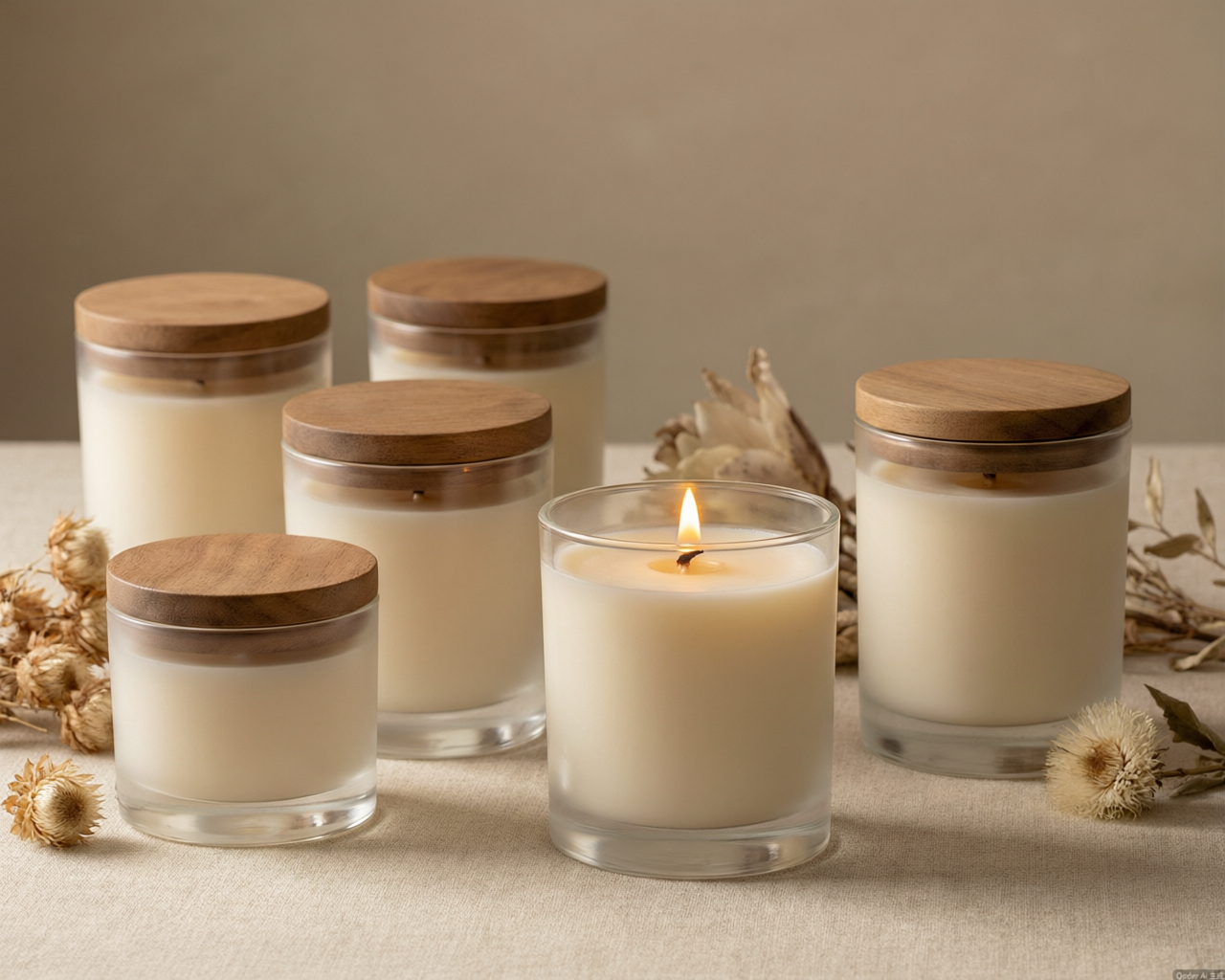
Wider diameter means a larger melt pool and stronger throw; a 75 mm container will out-throw a 60 mm one at identical load. Headspace matters for cold throw: too much air gap in the jar lets top notes dissipate after opening, while a tight lid seal preserves them. For cold-throw-sensitive retail lines, specify fill level within 3–5 mm of the rim and a sealing lid (metal or wood with liner) rather than an open-top format.
Fragrance oil quality is the ceiling
No process variable can rescue a weak oil. Two oils labeled “vanilla” can differ 3–5x in aromatic material concentration. Specify oils with documented flash point above 65°C (for safe incorporation), request IFRA certificates, and compare candidates with standardized blotter tests at equal dilution before committing to a production fragrance.
Verifying throw at scale
The only reliable check is a comparative burn panel: approved sample versus production units, same room, same conditions, evaluated at 1 hour and 3 hours of burn. Include it in your pre-shipment inspection protocol. Scent throw is engineered through a dozen small, documented decisions — the brands that win treat it as a specification, not a hope.