Shipping & Logistics
Shipping Fragrance Internationally: Rules & Costs
Este artículo aún no está disponible en español. Lo estás viendo en inglés.
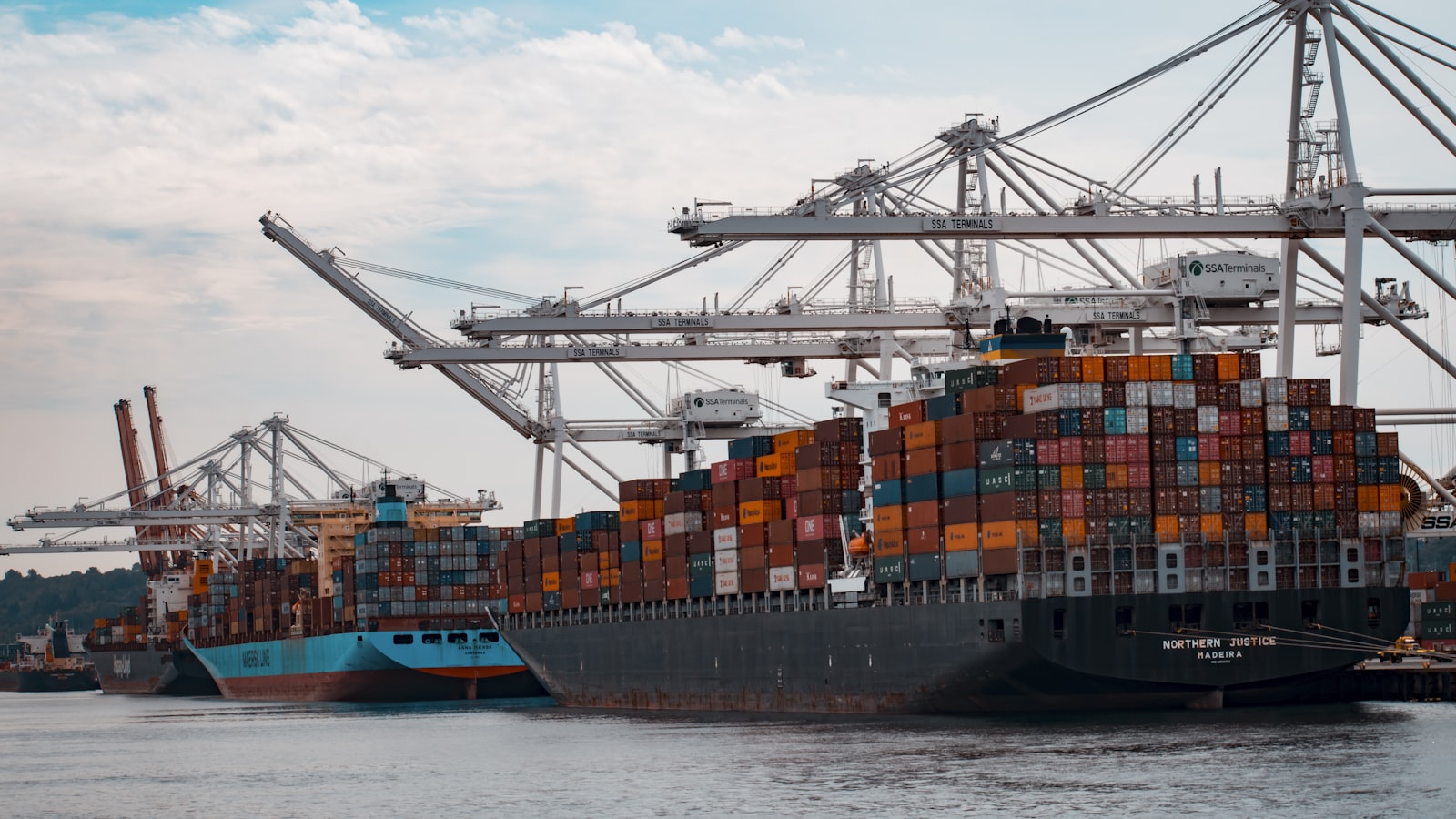
A standard reed diffuser liquid has a flash point of 35-50°C. A room spray containing ethanol flashes below 25°C. Under international transport regulations, both are dangerous goods. This classification adds cost, documentation, and lead time to every shipment, and buyers who do not plan for it face delayed containers, rejected bookings, and unexpected surcharges of $500-3,000 per shipment. This guide covers the regulatory framework, practical documentation, and cost-reduction strategies for moving fragrance products across borders.
Why Fragrance Is Usually DG Cargo
The classification trigger is flash point: the lowest temperature at which a liquid gives off enough vapor to ignite. Under both IMDG (sea freight) and IATA (air freight) regulations:
- Flash point below 23°C: Class 3 Flammable Liquid, Packing Group II (e.g., ethanol-based room sprays, perfume concentrates)
- Flash point 23°C to 60°C: Class 3 Flammable Liquid, Packing Group III (e.g., many reed diffuser liquids, fragrance oils in DPG or MMB base)
- Flash point above 60°C: Not classified as flammable under transport regulations (e.g., some water-based formulations, certain gel matrices)
Most conventional fragrance products fall into Packing Group III. This is the least restrictive DG category, but it still requires full DG documentation, approved packaging, and carrier acceptance. Candles (solid wax) are generally not DG unless they contain liquid fragrance pools or are shipped with separate fragrance oil refills.
IMDG Classification for Sea Freight
Under the International Maritime Dangerous Goods Code:
- UN Number: UN 1266 (perfumery products) or UN 1993 (flammable liquid, n.o.s.) depending on composition
- Class: 3
- Packing Group: II or III based on flash point
- Marine Pollutant: Some fragrance ingredients (e.g., certain musks like HHCB) are classified as marine pollutants, adding an additional marking requirement
- Limited Quantities exemption: Products in inner packagings of 5L or less (Packing Group III) may qualify for Limited Quantities (LQ) provisions, which reduce documentation and packaging requirements significantly
The LQ exemption is the single most important cost lever for sea freight. A reed diffuser in a 150ml glass bottle, packed in an inner carton of 6 units, qualifies as Limited Quantities. The outer carton must carry the LQ mark (black diamond on white background, minimum 100mm x 100mm), but the shipment does not require a full DG declaration, does not need DG-certified packaging, and can be loaded in general container space rather than segregated DG stowage.
IATA Rules for Air Freight
Air freight is more restrictive:
- Packing Group II (flash point below 23°C): Generally prohibited on passenger aircraft. Cargo aircraft only, with quantity limits (typically 60L per package for UN 1266).
- Packing Group III (flash point 23-60°C): Permitted on passenger aircraft in limited quantities (5L per inner packaging, 30L per outer package) or cargo aircraft in larger quantities.
- Section II (very small quantities): Packages containing 30ml or less per inner receptacle, with total net quantity not exceeding 1L per package, may ship as excepted quantities with minimal documentation.
For most B2B fragrance shipments, air freight is only economical for samples, urgent replenishment under 500kg, or high-value gift sets where the per-unit margin absorbs the freight premium. A 500kg air shipment from Shenzhen to Frankfurt costs approximately $3,500-5,500 (DG rate) versus $800-1,400 for the same weight by sea (amortized over a shared container).
Packaging Requirements for DG Shipping
Whether shipping as full DG or Limited Quantities:
-
Inner packaging: Must be UN-tested and approved for the relevant packing group. Glass bottles must be packed with sufficient cushioning (foam, molded pulp, or corrugated dividers) to prevent breakage. Closure must be secured (shrink band, tamper ring, or threaded cap with liner).
-
Outer packaging: Fiberboard carton meeting UN 4G specification for the packing group, or UN 4GV for variable packaging. Maximum gross weight typically 30kg for fiberboard.
-
Absorbent material: For liquid products in glass inner packaging, sufficient absorbent material must be present to contain the full liquid volume in case of breakage.
-
Orientation marks: “This Way Up” arrows (two, on opposite sides) required for liquid packages.
-
Marking and labeling: UN number, proper shipping name, Class 3 diamond label (red), Packing Group marking, and shipper/consignee details. For LQ shipments, the LQ diamond replaces the full DG label set.
Required Documentation
Your shipping file must contain:
-
Material Safety Data Sheet (MSDS/SDS): 16-section GHS format, specific to the shipped product. Must state flash point, UN number, and transport classification in Section 14. Carriers will request this before accepting the booking.
-
Dangerous Goods Declaration (DGD): Required for full DG shipments (not for LQ). Must be completed and signed by a person holding a valid DG training certificate (IATA for air, IMDG for sea). Your freight forwarder or a licensed DG packing facility can prepare this; cost is typically $50-150 per declaration.
-
Packing Certificate: Confirms that packaging was inspected and meets UN specifications. Often combined with the DGD.
-
Commercial Invoice and Packing List: Must accurately describe contents including UN numbers. Misdescription (e.g., declaring “home decoration” instead of “flammable liquid”) is a criminal offense in most jurisdictions and voids cargo insurance.
Cost Comparison: Air vs. Sea vs. Rail
For a typical 2,000-unit reed diffuser shipment (approximately 1,200kg, 4 CBM) from Guangdong to Hamburg:
| Mode | Transit Time | Estimated Cost | DG Surcharge | Total |
|---|---|---|---|---|
| Sea (FCL 20ft) | 28-35 days | $1,800-2,500 | $200-500 | $2,000-3,000 |
| Sea (LCL) | 32-40 days | $1,400-2,200 | $300-600 | $1,700-2,800 |
| Air (cargo) | 5-8 days | $6,000-9,000 | $1,000-2,000 | $7,000-11,000 |
| Rail (China-Europe) | 18-22 days | $3,000-4,500 | $400-800 | $3,400-5,300 |
Rail (via the China-Europe Railway Express through Kazakhstan and Poland) is an increasingly viable middle option: roughly 40% faster than sea at 50-60% of air cost. DG acceptance on rail varies by operator and route; confirm with your forwarder before booking.
Reducing DG Surcharges: Practical Strategies
-
Reformulate to raise flash point: Switching a diffuser base from DPG (flash point ~135°C, not DG) blended with low-flash solvents to a pure isoparaffinic base (flash point >60°C) can remove DG classification entirely. This requires fragrance compatibility testing but eliminates all DG costs.
-
Use Limited Quantities provisions: Design your inner packaging to stay within LQ thresholds (5L per inner for PG III). This avoids full DG declaration costs and expands carrier options.
-
Consolidate with other DG shippers: Some freight forwarders offer consolidated DG containers where multiple shippers share the DG booking cost. Savings of 30-50% versus a dedicated DG booking.
-
Ship components separately: If your product includes a non-DG component (glass vessel, packaging) and a DG component (fragrance liquid), shipping them separately and assembling at destination can reduce the DG volume subject to surcharges.
-
Choose carriers with DG-friendly policies: Some shipping lines (e.g., certain Mediterranean and Southeast Asian carriers) have lower DG surcharges and faster acceptance processes than the major global lines. Your forwarder should benchmark this.
Common Customs Issues by Destination
European Union
- CLP labeling must be applied before goods enter EU territory. Labels applied at an EU warehouse after arrival are acceptable, but unlabeled goods may be held at customs until compliant.
- REACH registration: if you import more than 1 tonne per year of a specific fragrance substance, registration (or an Only Representative arrangement) is required. Customs can request proof of registration.
- UFI (Unique Formula Identifier) notification to ECHA Poison Centre is required for hazardous mixtures. Non-notification can result in market surveillance action.
United States
- TSCA (Toxic Substances Control Act): fragrance ingredients must be on the TSCA inventory or covered by an exemption. Customs and Border Protection (CBP) can hold shipments pending TSCA certification.
- FDA registration: if products are marketed with therapeutic claims (aromatherapy, sleep aid), they may be classified as drugs, triggering FDA facility registration and product listing requirements.
- California Prop 65: separate from federal requirements; applies once goods enter California commerce.
Middle East (GCC)
- SASO/SABER (Saudi Arabia) or ESMA (UAE) conformity certificates required before customs clearance. These must be obtained pre-shipment through an approved conformity assessment body.
- Arabic-language labeling is mandatory and must be applied before arrival. Customs will reject goods with English-only labels.
- Alcohol-based products may face additional restrictions in certain GCC states; confirm with your local agent.
Planning Your Shipping Timeline
Work backward from your required delivery date:
- Production completion: T-minus 0
- DG packing and documentation: 3-5 days
- Customs export clearance (China): 2-3 days
- Ocean transit to EU: 28-35 days
- Import clearance and delivery: 3-7 days
- Total: 36-50 days from factory gate to EU warehouse
Add 7-10 days buffer for DG-specific delays (carrier acceptance, documentation queries, port congestion). For Q4 retail delivery, goods should leave the factory no later than mid-September.
Aromiso manages DG-compliant shipping documentation and carrier coordination for all fragrance orders, including MSDS preparation, Limited Quantities packaging specification, and destination-market labeling verification.