Sourcing & Procurement
The Sample Order Process: What to Expect from a Fragrance Factory
Este artículo aún no está disponible en español. Lo estás viendo en inglés.
Sampling is the critical bridge between selecting a supplier and committing to mass production. A poorly managed sampling phase wastes weeks and budget. A well-managed one gives you confidence in fragrance quality, packaging execution, and the factory’s communication reliability. Here is exactly what the process looks like at a professional Chinese fragrance factory.
Types of Samples
Not all samples serve the same purpose. Understanding the distinction saves time and money:
1. Stock samples (free or $5-$15 each) Existing products from the factory’s catalog. Used to assess baseline quality, packaging standards, and shipping capability. Ships in 2-3 days.
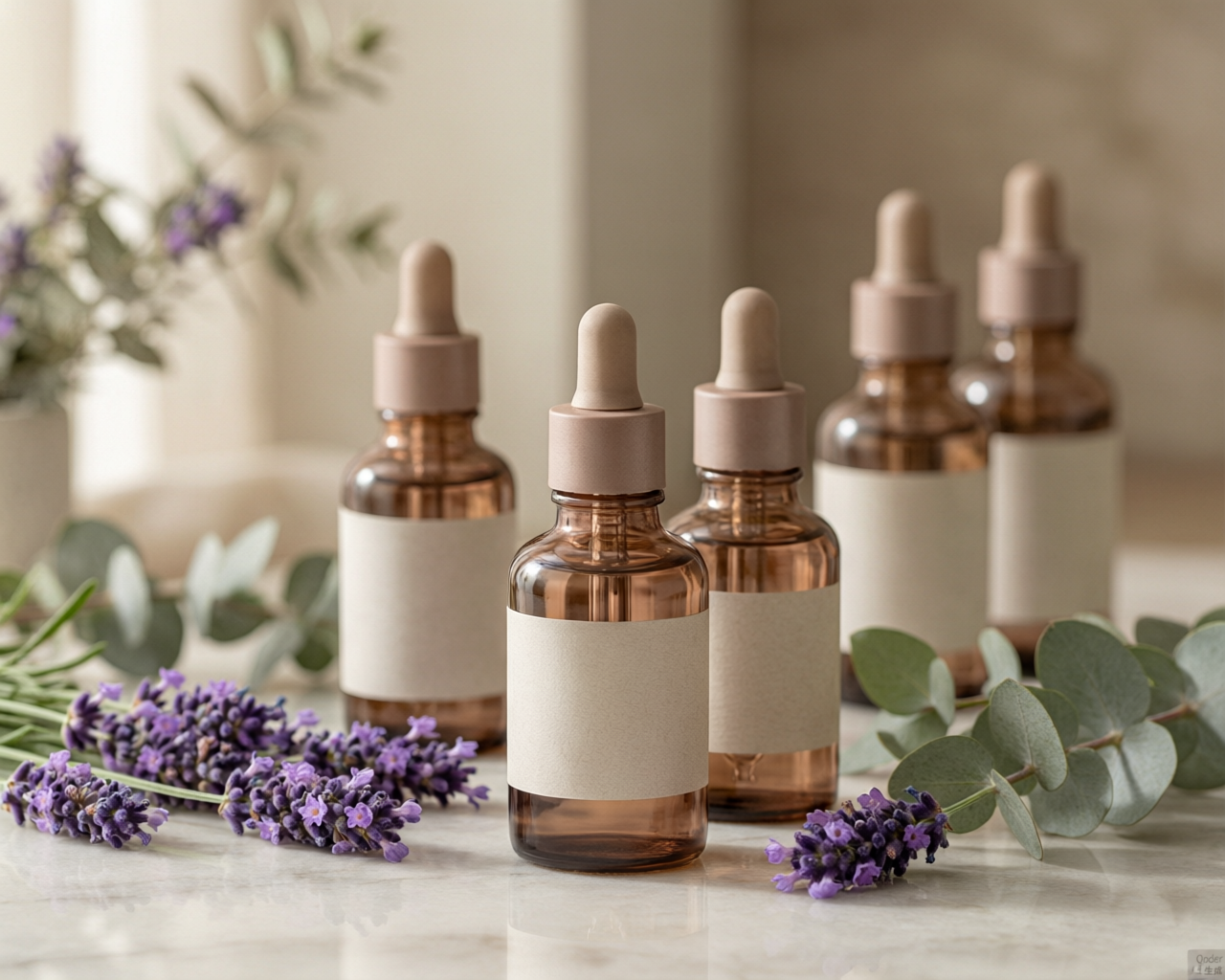
2. Fragrance samples ($20-$80 per set) Custom scent trials based on your brief. Typically delivered as 5-10ml vials or test strips. The perfumer creates 3-5 initial options. Development time: 7-14 days.
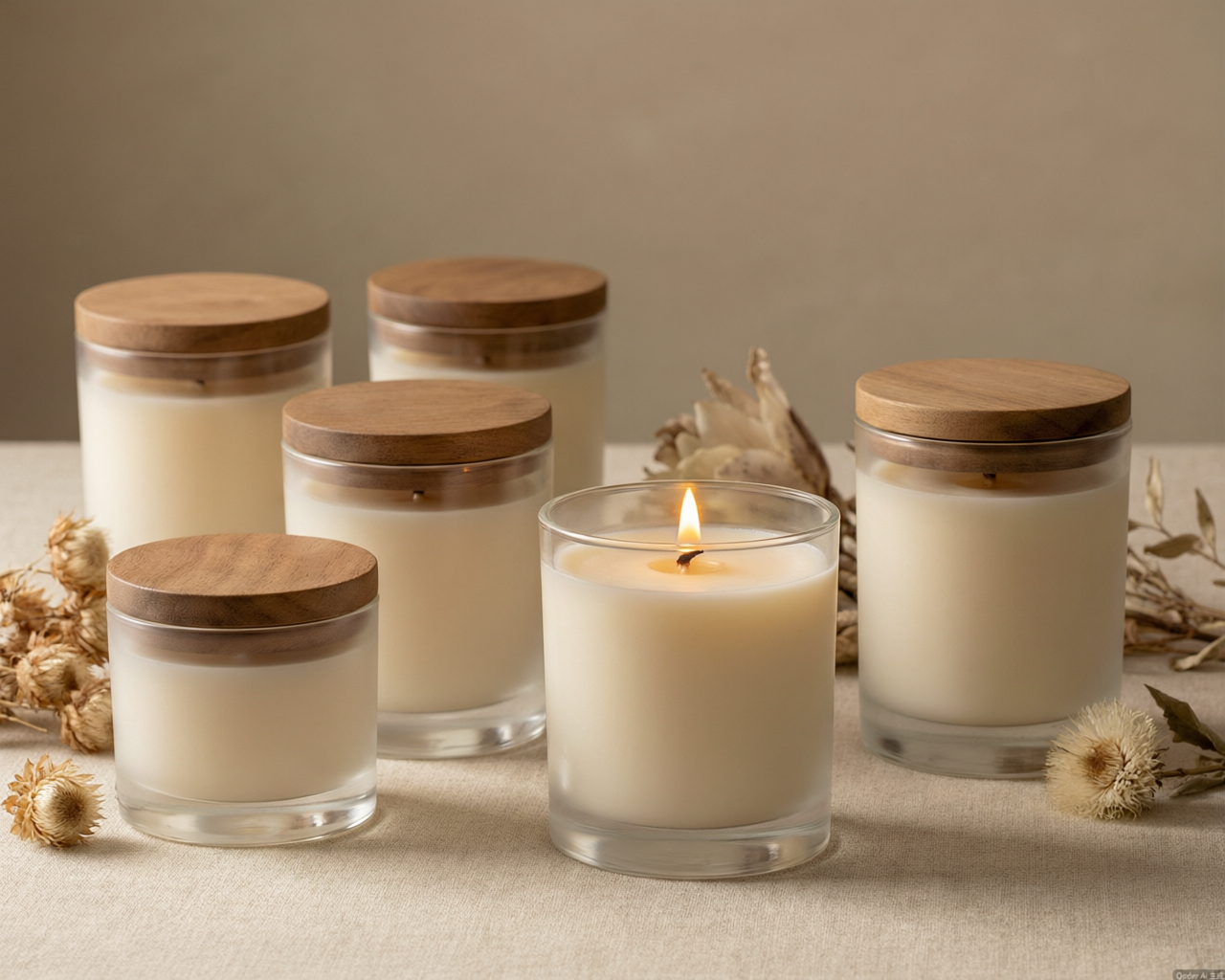
3. Pre-production samples ($50-$200 per unit) A finished product matching your exact specifications: custom fragrance, vessel, label, and packaging. This is what you approve before mass production. Lead time: 15-25 days.
4. Pilot run samples ($300-$800 for 50-100 units) A small production batch using mass-production equipment (not hand-made in the lab). Verifies that the factory can replicate your approved sample at scale. Lead time: 10-15 days.
The Standard Sampling Timeline
Here is a realistic timeline for a custom reed diffuser or candle project:
| Phase | Duration | What Happens |
|---|---|---|
| Brief submission | Day 1 | You provide scent direction, reference products, target price, and specs |
| Fragrance development | Days 2-14 | Perfumer creates 3-5 initial options |
| Scent selection | Days 15-18 | You evaluate and select 1-2 finalists |
| Scent refinement | Days 19-28 | Adjustments to selected option (1-2 rounds) |
| Packaging sampling | Days 15-35 | Vessel sourcing, label proofs, box mockups (parallel with scent work) |
| Pre-production sample assembly | Days 30-45 | Complete unit assembled with final scent and packaging |
| Sample shipping | Days 45-52 | Express courier to your location (DHL/FedEx, 4-7 days) |
| Your evaluation and approval | Days 52-59 | You test, get team feedback, approve or request changes |
| Total (if approved first round) | ~8 weeks | |
| Total (with one revision round) | ~10-11 weeks |
Costs: What You Should Expect to Pay
Sample Fees
- Stock product samples: Free to $15/unit (you pay shipping)
- Custom fragrance development: $100-$300 (often credited toward first order)
- Pre-production sample (complete unit): $50-$200 depending on complexity
- Custom mold sample (if new vessel): $500-$2,000 for mold + 2-3 sample units
- Shipping via DHL/FedEx: $30-$60 for a 2-5kg package to North America or Europe
What Reputable Factories Credit Back
Many factories, including Aromiso, credit sample fees against your first production order if it exceeds a threshold (typically 1,000-3,000 units). This means your effective sampling cost is just the courier fee. Always ask about credit terms upfront.
What You Should Not Accept
- Factories charging $500+ for a “sample” that is really a 500-unit minimum order disguised as sampling
- Refusal to provide fragrance samples before requesting a deposit
- Charging separately for each minor revision beyond 3 rounds (reasonable factories include 2-3 revisions in the development fee)
How to Write an Effective Sample Brief
The quality of your sample output depends heavily on your input. A strong brief includes:
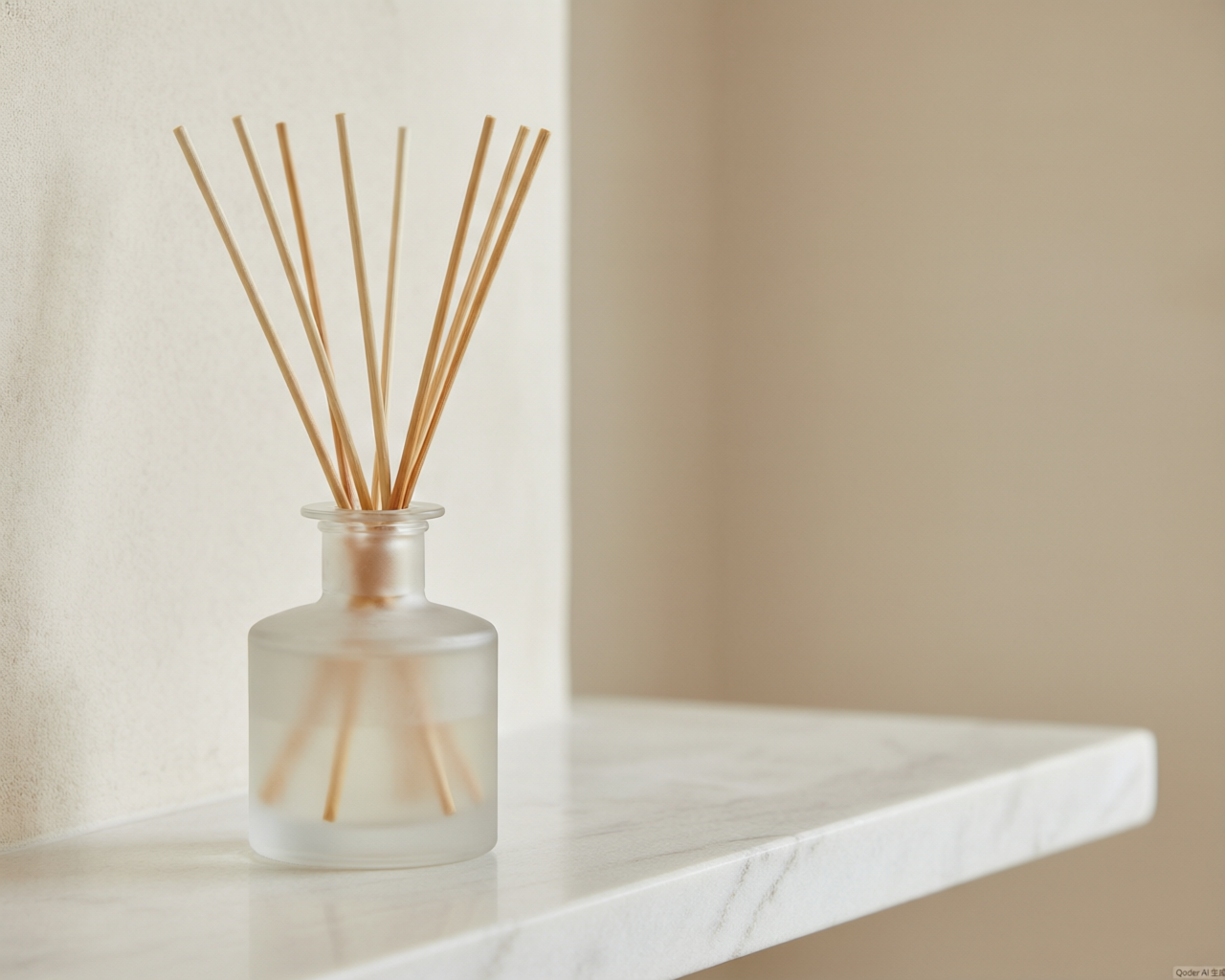
- Product type and format: “200ml reed diffuser in amber glass bottle with black cap”
- Scent direction: “Warm amber and sandalwood base with bergamot top note. Similar profile to [Brand X product] but less sweet.”
- Reference samples: Ship 1-2 competitor products to the factory for olfactory reference. This is more effective than written descriptions.
- Target price point: “Landed cost under $3.00/unit at 3,000 units”
- Compliance requirements: “Must comply with IFRA, EU CLP, and California Prop 65”
- Packaging specifications: Dimensions, material, print method, finishes
- Quantity and timeline: “Initial order of 3,000 units, need samples approved within 6 weeks”
Vague briefs (“make it smell luxury”) generate vague samples and multiple wasted revision rounds.
Evaluating Samples: A Checklist
When samples arrive, evaluate systematically:
Fragrance quality:
- Cold throw (scent at room temperature, unlit/unopened)
- Hot throw (for candles: scent when burning at 2 hours)
- Longevity (does the diffuser scent last 60+ days?)
- Consistency across multiple sample units (smell 3+ units)
Physical quality:
- Glass/vessel: check for bubbles, chips, uneven thickness
- Wax (candles): smooth surface, no frosting, centered wick
- Label: print quality, alignment, adhesion
- Packaging: structural integrity, print registration, finish quality
Performance testing:
- Burn test candles for minimum 4 hours (check flame height, soot, tunneling)
- Run diffusers for 7 days (check evaporation rate, reed saturation)
- Drop-test packaged units from 80cm (simulate shipping)
Compliance check:
- Label text matches regulatory requirements for your market
- Allergen declarations are complete
- Warning statements are present and correctly formatted
Managing Revision Rounds
Expect 1-2 revision rounds for fragrance and 1 round for packaging. To keep revisions efficient:
- Consolidate all feedback into one document per round (not 5 separate emails)
- Be specific: “Reduce vanilla note by approximately 20%, increase cedar in the dry-down” rather than “make it less sweet”
- Request side-by-side comparison samples (original vs. revised) for objective evaluation
- Set a maximum of 3 fragrance revision rounds. If the factory cannot match your brief in 3 attempts, consider whether the perfumer has the capability for your project.
Common Delays and How to Avoid Them
| Delay Cause | Typical Impact | Prevention |
|---|---|---|
| Vague brief | +2-3 weeks (extra revisions) | Provide references and specifics |
| Chinese holidays (CNY, National Day) | +2-4 weeks | Avoid sampling in Jan-Feb and early Oct |
| Custom vessel sourcing | +2-3 weeks | Approve vessel from stock options or provide exact specs |
| Slow feedback from buyer | +1-2 weeks per round | Commit to 48-72 hour feedback turnaround |
| Courier delays | +3-5 days | Use DHL/FedEx with tracking, not EMS |
From Sample Approval to Production
Once you approve the pre-production sample:
- Sign a sample approval form (photo-documented, dated, signed by both parties)
- Confirm the approved sample is retained by the factory as the production reference
- Agree on AQL inspection standards (typically AQL 2.5 major / 4.0 minor)
- Place your production order with a 30% deposit
- Schedule pre-shipment inspection for when production is 80-100% complete
The approved sample becomes your contractual quality benchmark. If mass production deviates from it, you have grounds for rejection or discount negotiation.
Budget Summary for Sampling
For a typical project (1 custom candle + 1 custom diffuser):
| Item | Cost |
|---|---|
| Fragrance development (2 products x 5 options) | $200-$500 |
| Pre-production samples (4-6 units) | $150-$400 |
| Custom packaging mockups | $50-$150 |
| Express shipping (2 shipments) | $60-$120 |
| Total sampling investment | $460-$1,170 |
This investment protects a production order worth $5,000-$50,000+. Never skip sampling to save two weeks. The cost of a wrong production run is 20-50x the sampling cost.