Cost & Pricing
Fragrance Raw Material Price Trends: What's Driving Costs in 2025-2026
Este artículo aún no está disponible en español. Lo estás viendo en inglés.

Raw materials represent 45 to 70 percent of a fragrance product’s factory cost. For B2B buyers placing orders with Chinese manufacturers, understanding which inputs are rising, which are stabilizing, and what drives those movements is essential for budgeting, contract negotiation, and product formulation decisions. This article examines the major cost categories and their trajectories heading into 2026.
Essential Oils and Aroma Chemicals
Essential oils are the most volatile cost component in fragrance manufacturing. Prices swing with harvest yields, weather events, and geopolitical factors in growing regions.
Lavender oil: After a 2023 price spike driven by drought in Provence (prices reached $180 to $220 per kilogram for fine lavender), 2024 harvests recovered modestly. Current 2025 pricing sits at $140 to $175 per kilogram. Bulgarian and Chinese lavender alternatives remain at $60 to $90 per kilogram. Expect 5 to 10 percent annual increases for French origin due to ongoing climate pressure.
Citrus oils (bergamot, lemon, sweet orange): Italian bergamot oil, irreplaceable in many fine fragrance formulations, has climbed steadily. 2025 prices range from $280 to $380 per kilogram, up 15 to 20 percent from 2023. Brazilian orange oil remains more stable at $25 to $45 per kilogram. Citrus oils face structural pressure from reduced growing acreage in Calabria.
Sandalwood: Australian sandalwood oil (Santalum spicatum) trades at $1,800 to $2,500 per kilogram. Indian sandalwood (Santalum album) from managed plantations runs $2,500 to $4,000 per kilogram. Both are trending upward 8 to 12 percent annually as demand from Asian markets grows faster than plantation supply.
Synthetic aroma chemicals: Vanillin, linalool, limonene, and other synthetics are petroleum-derived or produced via fermentation. Prices tracked 5 to 8 percent increases in 2024 due to energy costs. For 2025-2026, expect relative stability with 2 to 5 percent annual drift unless crude oil moves sharply. Key synthetics like ISO E Super ($35 to $55 per kilogram) and Hedione ($40 to $65 per kilogram) have stable supply chains.
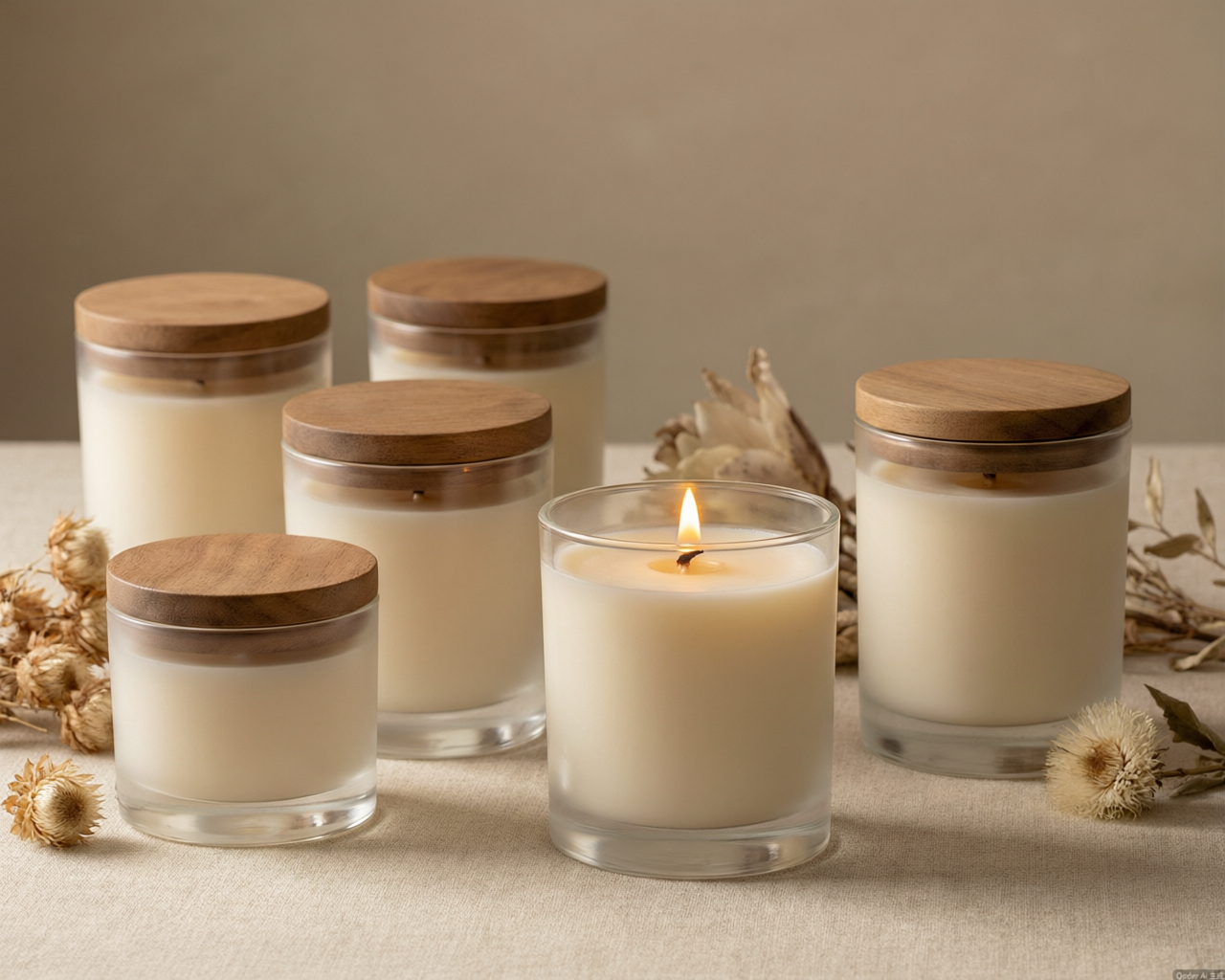
Impact on product cost: A candle using 10 percent fragrance load sees approximately $0.15 to $0.40 per unit cost movement for every 10 percent change in fragrance oil pricing. For essential oil products (100 percent oil), the exposure is direct and significant.
Wax and Base Materials
Soy wax: The dominant natural wax for container candles. US-grown soy wax prices in 2025 range from $2.80 to $4.20 per kilogram depending on grade and hydrogenation level. Prices have stabilized after 2022-2023 volatility. Soybean futures suggest 3 to 6 percent stability through mid-2026, though biodiesel demand creates upside risk.
Paraffin wax: Petroleum-derived, priced at $1.20 to $2.00 per kilogram. Tied to crude oil and refinery output. Current stability in oil markets keeps paraffin predictable, but environmental regulations in the EU may add compliance costs of $0.10 to $0.25 per kilogram.
Coconut wax and blends: Growing in popularity for premium candles. Priced at $4.50 to $7.00 per kilogram. Coconut oil markets are influenced by Philippine and Indonesian harvest cycles. Expect 5 to 8 percent annual increases as demand outpaces supply growth.
Beeswax: A niche premium material at $12.00 to $22.00 per kilogram. Supply is constrained by global pollinator decline. Prices have risen 10 to 15 percent annually for three years with no reversal expected.
Glass and Vessels
Glass containers represent 15 to 30 percent of a candle’s unit cost. Key drivers:
Energy costs: Glass furnaces run on natural gas. European glass production saw 30 to 50 percent energy surcharges in 2022-2023. Chinese glass manufacturers faced smaller increases (10 to 15 percent) and have largely stabilized. Current Chinese glass pricing for standard candle jars (200 to 350ml) runs $0.35 to $0.90 per unit at 5,000+ quantities.
Custom molds: Custom vessel designs require mold tooling of $800 to $3,000. Per-unit pricing for custom glass is $0.60 to $1.80 depending on complexity, weight, and finishing (frosted, colored, screen-printed).
Trend for 2025-2026: Glass pricing in China is expected to remain flat to up 5 percent. Energy costs have normalized, but environmental compliance investments at factories add modest upward pressure.
Packaging Materials
Paper and cardboard: Global pulp prices corrected downward in 2024 after 2022 peaks. Coated art paper for rigid boxes runs $900 to $1,200 per metric ton. Greyboard for setup boxes is $500 to $700 per metric ton. Expect 2 to 4 percent stability through 2026.
Specialty finishing materials: Foil stamping films, soft-touch lamination films, and specialty inks have seen 5 to 10 percent increases due to limited supplier competition. These remain a small per-unit cost ($0.10 to $0.40) but add up across complex packaging designs.
Labor and Manufacturing Overhead
Chinese manufacturing wages continue rising 5 to 7 percent annually. For fragrance products, labor represents 10 to 20 percent of factory cost. This translates to approximately 1 to 2 percent annual increase in finished product pricing, all else equal.
Automation is offsetting some pressure. Automated candle pouring lines reduce labor content by 30 to 40 percent versus manual production. Factories investing in automation (including Aromiso’s production lines) can hold pricing more stable than labor-intensive operations.
Regulatory and Compliance Costs
EU CLP and IFRA regulations: Reformulation requirements for restricted allergens (2024-2025 updates) add $2,000 to $8,000 per SKU in testing and reformulation. Amortized over production runs, this adds $0.05 to $0.20 per unit.
US CPSC and state regulations: California Prop 65 labeling and testing adds $500 to $1,500 per product. New York and other states are considering additional fragrance disclosure requirements.
Sustainability compliance: EU Packaging and Packaging Waste Regulation (PPWR) requirements for recyclability and recycled content may add $0.10 to $0.35 per unit in packaging modifications starting 2026-2027.
Procurement Strategies for 2025-2026
Lock pricing on volatile inputs: Negotiate 6 to 12 month fixed pricing on fragrance oils with your manufacturer. Factories buying in bulk can hedge essential oil purchases and pass stability to buyers.
Formulate for resilience: Build fragrances with 70 to 80 percent synthetic components and 20 to 30 percent naturals to reduce exposure to harvest volatility. Reserve high-cost naturals for hero claims.
Diversify origins: For essential oil products, qualify alternative origins (Chinese lavender alongside French, Brazilian citrus alongside Italian) to maintain supply if one region’s crop fails.
Monitor indices: Track soybean futures, crude oil, and key essential oil auction prices quarterly. A 10 percent move in soy wax or a 20 percent move in a key essential oil should trigger a pricing review with your manufacturer.
Build contingency into budgets: Allocate 5 to 8 percent above current quotes for annual cost escalation in your 2026 product budgets. This covers the combined effect of labor growth, modest material inflation, and regulatory additions.
Raw material costs will not return to 2019 levels. The structural trend is modestly upward. Buyers who plan proactively, lock terms early, and formulate intelligently can manage within 3 to 6 percent annual cost growth while competitors face 10 to 15 percent surprises.