Buying Guides
Fragrance Oils for Ultrasonic Diffusers: Compatibility Guide
Este artículo aún no está disponible en español. Lo estás viendo en inglés.

Ultrasonic diffusers account for approximately 35% of the home fragrance device market, and demand for compatible fragrance oils continues to grow. For B2B buyers sourcing diffuser oils, compatibility with ultrasonic technology is not guaranteed by default. Many standard fragrance oils formulated for candles or sprays will underperform or fail entirely in ultrasonic devices. This guide covers the technical specifications that determine compatibility.
How Ultrasonic Diffusers Work
Ultrasonic diffusers use a piezoelectric transducer vibrating at 1.7-2.4 MHz to create microscopic water droplets that carry fragrance into the air. This mechanism imposes specific requirements on the oils used:
- The oil must disperse in water (not dissolve, since fragrance oils are hydrophobic)
- Viscosity must be low enough for the transducer to nebulize effectively
- The oil must not coat or degrade the transducer membrane
- No heavy residues that clog the vibration plate over repeated use cycles
Understanding this mechanism explains why thick, resinous, or heavily carrier-diluted oils perform poorly in ultrasonic systems.
Key Compatibility Specifications
When evaluating fragrance oils for ultrasonic diffuser applications, request these specifications from your supplier:
Viscosity: Target 5-50 cSt (centistokes) at 25C. Oils above 100 cSt will not nebulize effectively and will pool on the water surface. For reference, standard fragrance oils range from 10-80 cSt, while thick resinous oils (benzoin, myrrh) can exceed 500 cSt.
Specific gravity: 0.85-1.05 is ideal. Oils significantly lighter than water (below 0.85) float and resist dispersion. Oils heavier than water (above 1.10) sink and may not reach the transducer zone.
Flash point: While less critical for diffusers than candles, a flash point above 60C indicates a more stable, less volatile oil that will not degrade during extended diffusion sessions.
Solubility carriers: Some diffuser oils are pre-diluted in DPG (dipropylene glycol) or polysorbate 20 to improve water dispersibility. A DPG dilution of 20-50% is common for diffuser-specific formulations.
Fragrance Families and Ultrasonic Performance
Not all scent profiles perform equally in ultrasonic diffusers:
Excellent performance:
- Citrus oils (lemon, bergamot, grapefruit): Low viscosity (8-15 cSt), high volatility, clean dispersion
- Light florals (lavender, jasmine): Moderate viscosity (15-30 cSt), consistent nebulization
- Fresh/aquatic blends: Typically formulated for water compatibility
Good performance:
- Herbal/mint (eucalyptus, peppermint, rosemary): Low-moderate viscosity, strong throw
- Light woods (cedar, sandalwood blends): May need DPG dilution for optimal dispersion
- Fruit blends (berry, peach, mango): Usually pre-formulated for diffuser use
Problematic performance:
- Heavy resins (frankincense, benzoin, labdanum): High viscosity, coat transducer
- Vanilla-heavy blends: Often contain vanillin crystals that clog mechanisms
- Spice-dominant (cinnamon, clove): Can degrade plastic components over time
- Musk-heavy bases: Very low volatility, minimal scent throw when nebulized
Formulation Approaches for Diffuser Oils
B2B buyers will encounter three main product formats:
1. Neat fragrance oil (100% concentration)
- Used at 3-5 drops per 100 ml water
- Requires low-viscosity formulation (under 30 cSt)
- Highest cost per unit but strongest performance
- Best for premium positioning
2. DPG-diluted diffuser oil (30-70% fragrance)
- Used at 5-10 drops per 100 ml water
- DPG improves water dispersibility and reduces viscosity
- Mid-range cost and performance
- Most common format for private label
3. Pre-mixed water-soluble formula (10-30% fragrance)
- Used at 1-2 ml per 100 ml water
- Contains polysorbate 20 or similar emulsifier
- Lowest cost per unit
- Easiest for consumer use but weakest throw
- Common in hospitality and commercial applications
Testing Protocol for Compatibility
Before approving a fragrance oil for diffuser products, run this test sequence:
-
Dispersion test: Add 5 drops to 100 ml room-temperature water. Observe for 60 seconds. Compatible oils create a visible milky dispersion. Incompatible oils form a distinct surface layer.
-
Nebulization test: Run in an ultrasonic diffuser for 30 minutes. Measure visible mist output. Compatible oils maintain consistent mist. Incompatible oils reduce mist volume by 30%+ within 15 minutes.
-
Scent throw evaluation: Assess at 1 meter and 3 meters during active diffusion. Record intensity on a 1-5 scale at 5-minute intervals.
-
Residue inspection: After 10 diffusion cycles (approximately 30 hours total runtime), inspect the transducer plate under magnification. Acceptable: light film removable with cotton swab. Unacceptable: hardened residue or pitting.
-
Stability test: Store the formulated product at 40C for 30 days (accelerated aging). Check for separation, cloudiness changes, or scent degradation.
Common Compatibility Failures and Solutions
| Problem | Cause | Solution |
|---|---|---|
| Oil floats, no mist scent | Viscosity too high | Dilute with 30-50% DPG |
| Mist stops after 10 min | Transducer coated | Switch to lower-resin formula |
| Weak scent throw | Low volatility components | Increase top-note percentage |
| Plastic tank cracking | Cinnamal/citrus limonene | Use glass or PP-rated tanks |
| Cloudy separation in bottle | Poor solubilizer ratio | Increase polysorbate to 4:1 |
Sourcing Recommendations
When requesting diffuser-compatible fragrance oils from manufacturers:
- Specify “ultrasonic diffuser application” in your brief
- Request viscosity data at 25C for every sample
- Ask for water-dispersibility test results
- Confirm the oil is free from particulates (vanillin crystals, wax fragments)
- Specify packaging in amber glass or HDPE (avoid PET for citrus-heavy formulas, as limonene attacks PET over time)
Minimum order quantities for custom diffuser oil blends typically start at 25 kg per scent. Standard catalog fragrances formulated for diffuser use are often available from 5 kg.
Market Considerations
The diffuser oil market segments into:
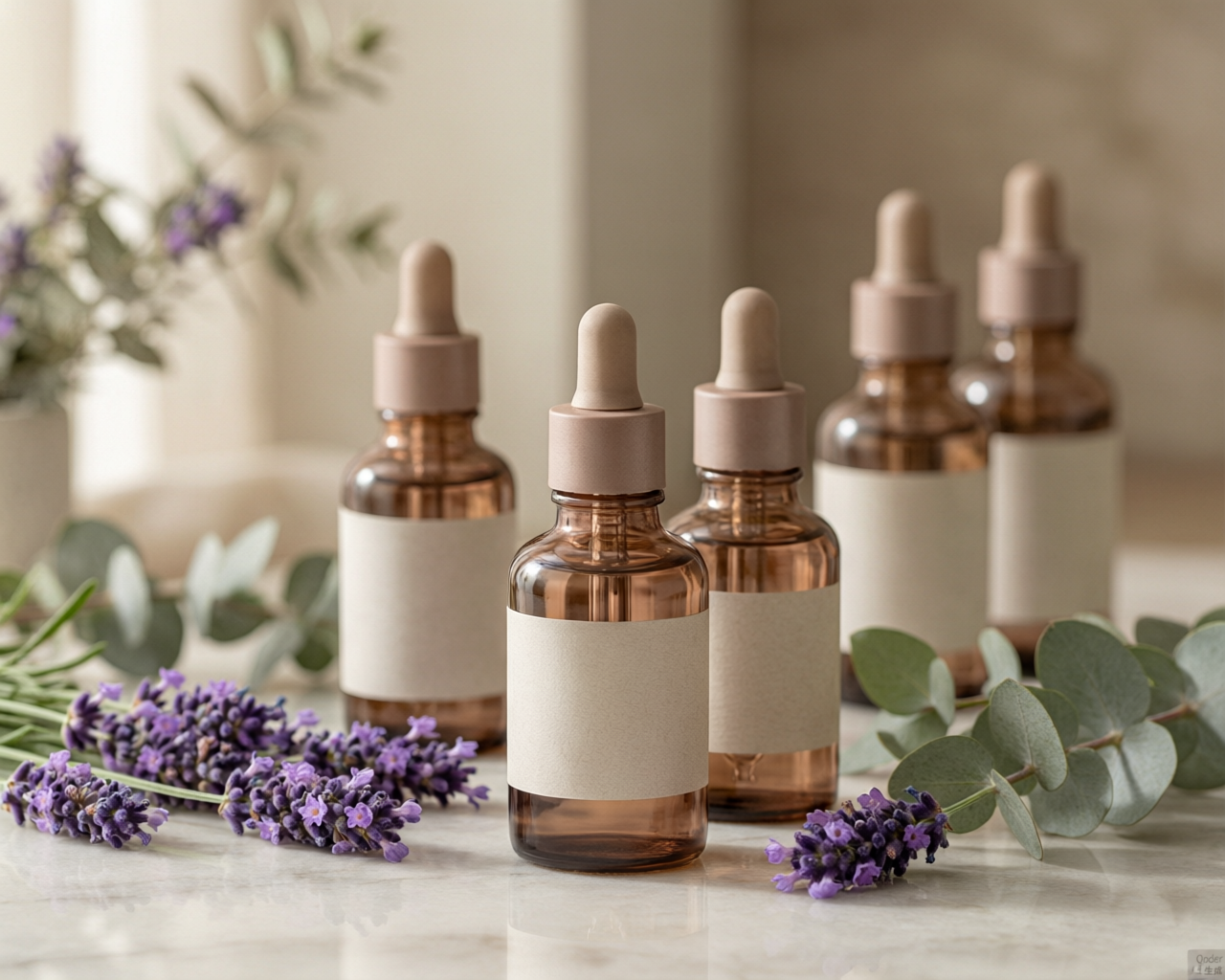
- Refill oils for home devices (10-30 ml bottles): Highest margin, strongest brand loyalty
- Commercial/hospitality oils (500 ml-1L): Volume-driven, requires consistent batch-to-batch performance
- Gift set bundles (3-6 x 10 ml): Seasonal demand peaks in Q4, requires attractive packaging options
For B2B buyers, the refill segment offers the best combination of margin (typically 60-75% gross) and repeat purchase frequency (every 4-6 weeks per active user). Focus on a curated range of 8-12 scents rather than an overwhelming catalog, and invest in compatibility testing to ensure zero-defect performance across popular diffuser models.