Product Comparisons
Bamboo vs Willow Reeds for Diffusers
Este artículo aún no está disponible en español. Lo estás viendo en inglés.
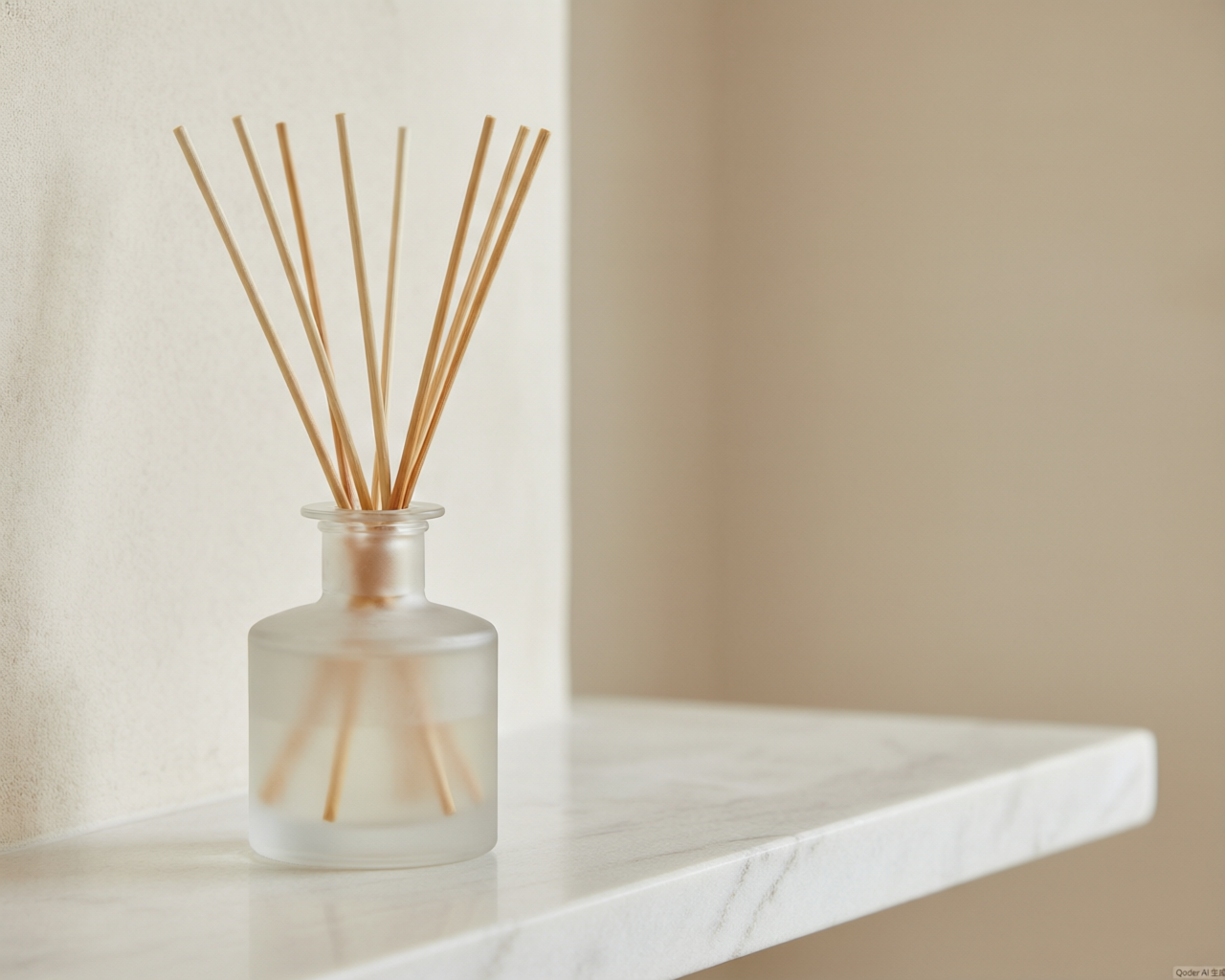
The reed is the engine of a reed diffuser, yet it is often the component buyers give the least attention. The choice between bamboo and willow, more accurately rattan, reeds has a direct effect on scent throw, longevity, and customer satisfaction. A diffuser with a beautiful bottle and a premium fragrance can still underperform if the reeds cannot move oil effectively. This comparison explains the technical differences so B2B buyers can specify the right reed for each product.
Clarifying the Terminology
In the trade, “willow reeds” usually refers to rattan reeds made from the rattan palm, sometimes marketed alongside or as a substitute for natural willow. True willow is less common in commercial diffusers. The two dominant options on the market are bamboo reeds and rattan reeds. Both are natural materials, but their internal structures differ in ways that matter for performance.
Capillary Structure: The Core Difference
Reed diffusers work by capillary action. Oil travels up the reed and evaporates from the exposed top, releasing fragrance. The internal structure of the reed determines how well this happens.
Rattan reeds have a porous, channel-filled core. These natural capillary channels draw oil upward consistently, which is why rattan became the industry standard for premium diffusers. Bamboo reeds are denser and more fibrous, with fewer continuous channels. They also contain nodes, the solid segments along a bamboo stalk, that can interrupt oil flow.
This structural difference is the single most important factor in performance.
Performance Comparison
| Factor | Rattan (Willow-Type) Reeds | Bamboo Reeds |
|---|---|---|
| Capillary channels | Numerous, continuous | Fewer, interrupted by nodes |
| Scent throw | Strong and consistent | Moderate, can be uneven |
| Clogging tendency | Lower | Higher, especially in thick oils |
| Oil compatibility | Works with most diffuser bases | Better with thinner bases |
| Aesthetic | Natural, classic | Straight, uniform, modern |
| Cost | Moderate | Often lower |
Rattan reeds generally deliver stronger and more reliable throw. Bamboo reeds can perform well, particularly with lower-viscosity diffuser bases, but they are more prone to clogging and to inconsistent scent release over time.
Clogging and Longevity
Clogging is the main failure mode of reed diffusers. As oil evaporates, heavier fragrance components and dust can block the capillary channels, reducing throw and making the diffuser seem spent even when oil remains. Rattan’s open channel structure resists clogging longer than bamboo’s denser fibers. This is why premium diffusers that promise three to six months of consistent scent almost always specify rattan.
Bamboo reeds may need more frequent flipping to maintain throw, and in thicker oil formulations they can stop wicking well before the oil is used. For a brand that wants to minimize customer complaints about a diffuser going weak, rattan is the safer specification.
Aesthetic and Brand Considerations
Bamboo reeds have a visual advantage in some contexts. They are straight, uniform, and available in clean light or dark finishes that suit minimalist and modern packaging. Rattan reeds have a more organic, traditional look with a slightly textured surface. Both can be dyed black, white, or natural tones.
For a brand built around a contemporary, architectural aesthetic, bamboo’s uniformity can be appealing. For a natural, artisanal, or heritage positioning, rattan reads as more authentic. The visual choice should reinforce the brand, but it should not override performance requirements.
Cost and Sourcing
Bamboo reeds are frequently cheaper per unit, which is attractive at high volume or for entry-level products. Rattan reeds cost somewhat more but are widely available and consistent in quality when sourced from established suppliers. The cost difference per diffuser is small, often only a few cents to a fraction of a dollar, which is minor relative to the cost of the bottle, fragrance, and packaging.
Given how central the reed is to actual performance, this is one component where saving a few cents can create disproportionate risk to brand reputation.
Matching Reed to Formulation
The right reed also depends on the diffuser base. Thinner, lower-viscosity bases wick more easily and can work with either reed type. Thicker bases with high fragrance loads favor rattan’s stronger capillary action. As a practical guideline:
- Premium, high-fragrance diffusers. Specify rattan for maximum, consistent throw.
- Entry-level or decorative diffusers. Bamboo can be acceptable, especially with thinner bases.
- Long-life promises, 3+ months. Rattan is strongly preferred to reduce clogging.
- Modern visual branding. Bamboo may be chosen for aesthetics if the base is compatible.
Quality Control Considerations
Whichever reed you choose, consistency matters. Reed diameter, length, and the number of reeds per bottle all affect throw. A standard diffuser uses 6 to 10 reeds, with more reeds increasing evaporation rate. Buyers should request samples and test throw over several weeks before committing, and should specify reed dimensions clearly in the purchase order to avoid batch variation.
How Aromiso Specifies Reeds
Aromiso manufactures reed diffusers with both rattan and bamboo reeds, matching the reed choice to the diffuser base and the performance target of each product. We test wicking and throw during development, specify reed dimensions precisely, and can supply dyed or natural finishes to match your packaging. Whether you want the maximum-throw performance of rattan or the clean modern look of bamboo, we can engineer the diffuser to deliver consistently.
The reed is a small component with an outsized impact on whether a customer remembers your diffuser as long-lasting and strong, or as something that faded too fast. Specifying it deliberately is one of the highest-leverage decisions in reed diffuser production.