Product Guides
Linen & Fabric Spray Formulation: Development, Safety & OEM
Dieser Leitfaden ist noch nicht auf Deutsch verfügbar. Sie lesen die englische Version.
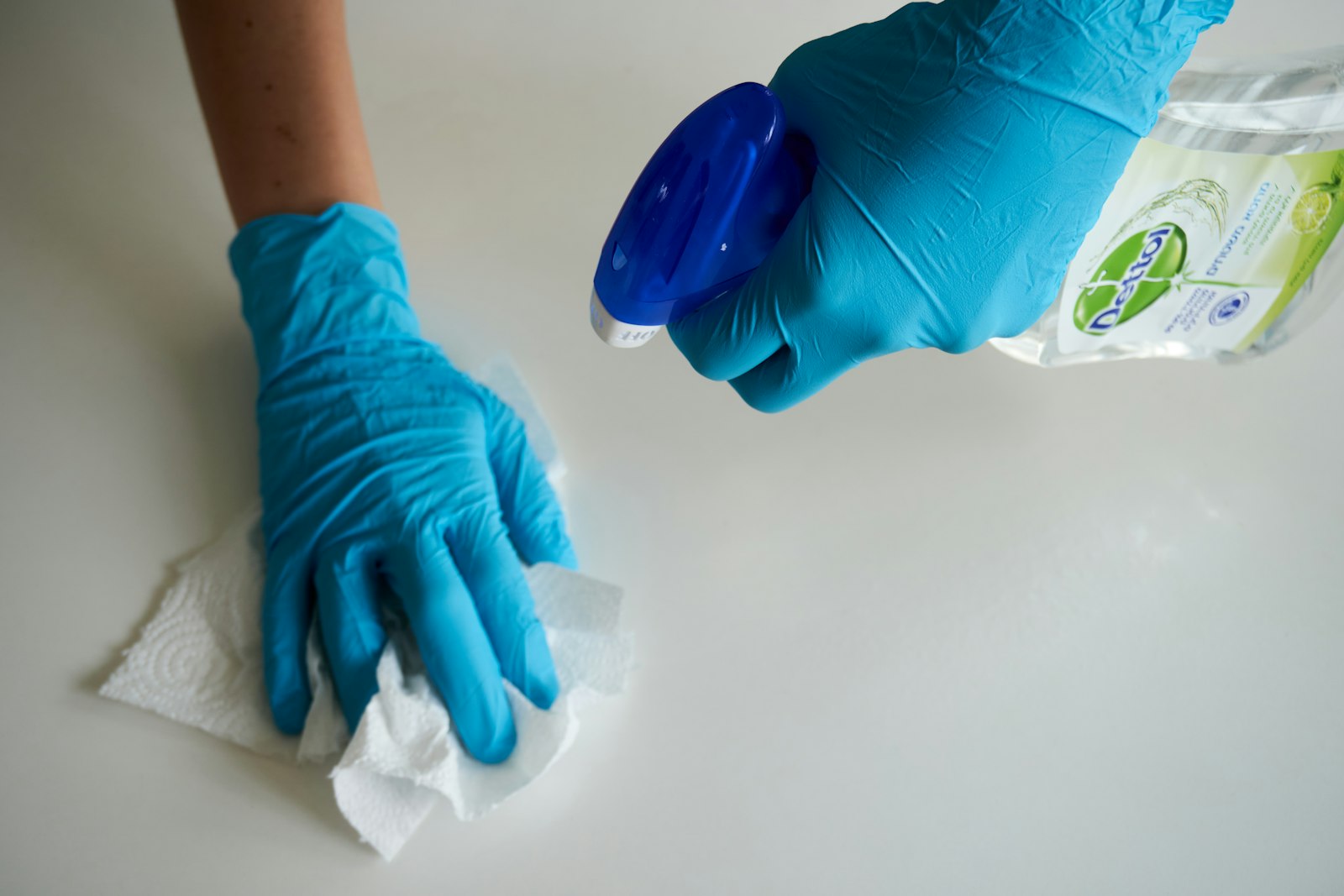
Linen and fabric sprays look deceptively simple on a retail shelf — a bottle, a mist, a scent. But for the brand owner or procurement manager sourcing the product, the simplicity hides a stack of technical decisions that determine whether the SKU launches on time, passes EU and US compliance, and survives a 12-month shelf-life test. The wrong solubilizer leaves an oily halo on a customer’s pillowcase. The wrong preservative lets Pseudomonas bloom inside the bottle within eight weeks. The wrong fragrance load triggers a CLP hazard pictogram that quietly kills your Amazon listing in Germany.
This guide is written for buyers who need to brief a linen spray manufacturer with confidence: what goes into a defensible formulation, what each component costs, which safety tests are non-negotiable, and how to structure an OEM project so first samples land in 3 to 4 weeks rather than 3 months. Use it as a working document alongside your supplier conversations, not as marketing copy.
What a Linen Spray Actually Is (and What It Is Not)
A linen spray is a water-dominant, leave-on textile refresher delivered as a fine mist. It is not a room spray, even though the two categories often share a production line. The distinction matters because the formulation constraints differ.
- Carrier base: Typically 70–90% deionized water, with the remainder split between solubilizer, fragrance, humectant, and preservative.
- Fragrance load: Usually 1–5% for fabric-safe products. Room sprays can run 5–15% because they are not designed to dry on skin-contact textiles.
- Delivery: Fine mist (60–100 micron droplet target) so the fabric dries in under 5 minutes without wet-through.
- Residue target: Near-zero. Anything above roughly 0.3% non-volatile residue risks visible marking on dark or delicate fabrics.
If your supplier hands you a “room spray formula” and labels it as a linen spray, push back. The two products have different IFRA category limits, different residue tolerances, and different labeling obligations.
Core Formulation Building Blocks
A working linen mist formulation has five functional blocks. Below is a representative starting formula at 100 g batch scale that a competent OEM lab will iterate from.
| Component | Typical % w/w | Function | Common choices |
|---|---|---|---|
| Deionized water | 80.0–92.0 | Carrier, evaporative base | DI water, <10 ppm hardness |
| Fragrance oil / essential oil blend | 1.0–5.0 | Scent, IFRA Cat. 9 limited | IFRA-compliant compound |
| Solubilizer | 3.0–10.0 | Disperses oil in water | PEG-40 HCO, Polysorbate 20, Caprylyl/Capryl Glucoside |
| Humectant / fixative | 1.0–3.0 | Slows evaporation, softens hand-feel | Glycerin, DPG, dipropylene glycol |
| Preservative system | 0.2–1.0 | Microbial stability | Phenoxyethanol + ethylhexylglycerin, sodium benzoate |
| Optional: chelator, pH buffer | 0.1–0.5 | Stability, clarity | Disodium EDTA, citric acid to pH 5.5–6.5 |
Two practical notes from production floors:
- Solubilizer-to-fragrance ratio usually lands between 2:1 and 4:1. Below 2:1 the batch turns milky and may separate at 40 °C storage. Above 4:1 you are paying for surfactant that adds stickiness without adding clarity.
- pH window of 5.0–6.5 keeps the formula gentle on cotton, linen, and bamboo fibers, and keeps sodium-benzoate-based preservative systems effective.
Safety, Compliance & Labeling Requirements
Compliance is where most cross-border linen spray projects stall. Build the regulatory checklist into your brief from day one.
- IFRA Category 9 covers leave-on products with skin contact via treated textiles. Many raw materials (e.g., citral, linalool, limonene, hexyl cinnamal) have strict concentration ceilings. Ask your supplier for the IFRA certificate per fragrance, not just a generic “IFRA compliant” statement.
- EU CLP (EC 1272/2008): Most linen sprays at 3%+ fragrance trigger H317 (skin sensitizer) and an exclamation-mark pictogram. The label must list allergens above 0.01% in the finished product.
- EU REACH / UK REACH: Confirm the fragrance house has registered substances above 1 tonne/year. Aromiso works with fragrance partners that supply full REACH statements on request.
- US market: Linen sprays are generally consumer products under CPSC jurisdiction, not cosmetics, unless marketed with skin claims. California Prop 65 may require warnings if specific listed chemicals are present.
- Microbial challenge test (ISO 11930 or USP <51>): Mandatory for any water-based product. Budget USD 300–600 per SKU and 14–28 days for results.
- Stability protocol: 3-month accelerated test at 40 °C / 75% RH plus freeze-thaw cycling (-5 °C to 45 °C, 6 cycles) is the industry minimum.
For a deeper dive on labeling specifically, our CLP labelling guide walks through pictograms, signal words, and allergen listing line by line.
Choosing the Right Fragrance Profile for Fabric
Not every fragrance behaves on textile. Procurement teams should evaluate scents on three fabric-specific criteria, not just on a smelling strip.
- Substantivity: Does the scent still read at 24 hours on cotton? Citrus-top-heavy compositions fade within 4–6 hours on fabric. Anchor with musks, iso E super, or low-volatility woods at 15–25% of the concentrate.
- Staining risk: Vanilla-heavy and high-vanillin formulas yellow white cotton within weeks. Specify vanillin below 0.1% in the finished product, or use a vanillin stabilizer / UV absorber.
- Odor compatibility with detergent residues: Test the spray over a standard IEC-A wash load. Some florals clash with cationic softener residues and produce a “sour” drydown.
Best-selling fabric-spray families in 2025–2026 export data: fresh cotton / clean linen (35%+ of category), lavender and chamomile sleep mists, eucalyptus-mint refreshers, and oud-amber premium mists for the Middle East and Southeast Asia.
OEM Development Process: Timeline & Milestones
A disciplined fabric spray OEM project from brief to mass production typically runs 10–14 weeks. Use this milestone map when negotiating your supplier agreement.
| Phase | Duration | Deliverable | Buyer action |
|---|---|---|---|
| 1. Brief & quotation | 3–5 days | Spec sheet, FOB quote, MOQ | Confirm target markets, fragrance direction, packaging |
| 2. Lab sampling | 10–15 days | 2–3 fragrance prototypes, 100 ml | Approve scent + base, request MSDS draft |
| 3. Stability + challenge test | 30–90 days | Pass/fail reports | Run in parallel with packaging tooling |
| 4. Packaging & artwork | 20–30 days | Bottle, trigger, label proofs | Sign off dielines, CLP artwork |
| 5. Pilot batch (500–1,000 units) | 7–10 days | Pre-production samples | Final QC sign-off |
| 6. Mass production | 15–25 days | Finished goods, COA, MSDS | Pre-shipment inspection (AQL 2.5) |
Two accelerators that consistently shave 2–3 weeks off this timeline:
- Lock packaging before formula sign-off. Bottle and trigger lead times (especially custom molds at 30–45 days) are usually the critical path, not the chemistry.
- Run stability and challenge tests in parallel with pilot packaging. Re-test only if the formula changes materially.
Cost Structure & Pricing Benchmarks
Pricing a custom linen mist is transparent once you separate the cost layers. Indicative FOB China ranges for a 100 ml PET bottle with fine-mist sprayer, 3% fragrance load, MOQ 3,000 units:
- Liquid cost: USD 0.18–0.45 per unit. Driven almost entirely by fragrance price (USD 12–80/kg for IFRA-compliant compounds; essential-oil blends can exceed USD 120/kg).
- Bottle + closure + sprayer: USD 0.12–0.35. Custom molds add USD 1,500–4,000 one-time.
- Label + carton: USD 0.05–0.15. CLP-compliant multi-language labels add roughly USD 0.02–0.04 per unit.
- Filling, QC, overhead, margin: USD 0.15–0.35.
- Total FOB unit cost: Roughly USD 0.55–1.30 for a 100 ml SKU at 3,000-unit MOQ; USD 0.42–0.95 at 10,000 units.
Watch for these cost traps in quotations:
- Fragrance quoted at “standard grade” then swapped to a cheaper compound at production. Insist on a fragrance reference number and GC-MS fingerprint in the spec sheet.
- Trigger sprayer quality. A USD 0.04 sprayer that leaks or spits will generate more returns than the entire liquid cost. Specify 300+ actuation lifecycle and a 60–100 micron mist.
- MOQ split fees. Some factories quote low unit prices but add 10–20% surcharges for splitting one MOQ across multiple scents. Clarify before signing.
Quality Control Checklist Before Shipment
A 30-minute pre-shipment inspection protocol prevents most field failures. Ask your supplier to perform — and document — the following on every batch:
- Visual: Clarity (no haze, no separation), color within approved standard, fill level within ±2 ml.
- Spray performance: 5 actuations to prime, then 10 consecutive sprays with consistent cone, no dripping, no clogging.
- pH check: 5.0–6.5 by calibrated meter, recorded per batch.
- Specific gravity: Within ±0.005 of approved standard.
- Microbial limit test: Total plate count below 100 CFU/g, no Pseudomonas, Staphylococcus, or Candida in 1 g (ISO 21149).
- Fabric spot test: Spray on white cotton, black cotton, and silk; air dry; inspect at 24 hours for staining, ring marks, or stiffness.
- Documentation pack: COA, MSDS (16-section GHS), IFRA certificate, allergen declaration, REACH statement, stability summary.
A reputable room spray formulation partner will provide this pack as standard. If a supplier hesitates on microbial data or IFRA documentation, treat it as a hard stop.
Common Formulation Failures (and How to Prevent Them)
These five failure modes account for the majority of returns and customer complaints in the category:
- Cloudy or separating liquid. Cause: insufficient solubilizer, hard water, or cold-chain shock. Fix: raise solubilizer ratio, switch to DI water below 10 ppm, add 0.1% chelator.
- Yellowing on white fabric. Cause: vanillin oxidation, UV exposure. Fix: cap vanillin, add benzophenone-4 UV absorber at 0.05–0.1%, use amber or UV-coated PET.
- Sour or “off” odor at 6 months. Cause: microbial contamination or fragrance hydrolysis. Fix: pass ISO 11930 challenge test, verify preservative compatibility with pH.
- Trigger clogging after 2–3 weeks. Cause: polymer or resin buildup from high-resin fragrance components. Fix: limit benzoin, labdanum, and high-resinoid content; specify a 100-mesh internal filter.
- Customer skin reactions. Cause: allergen load above CLP threshold without disclosure, or use of restricted materials. Fix: full IFRA Cat. 9 audit and allergen declaration on every label revision.
Next Steps
A defensible linen spray program comes down to three decisions: a formulation partner that documents every batch, a fragrance house that supplies IFRA and REACH paperwork without prompting, and a project timeline that runs chemistry and packaging in parallel.
If you are evaluating suppliers, here is a practical 7-day sequence:
- Day 1–2: Send a one-page brief — target market, fragrance direction, bottle format, MOQ, compliance markets (EU / US / UK / GCC).
- Day 3–5: Request 2–3 fragrance prototypes plus a draft MSDS and IFRA certificate.
- Day 6–7: Run an in-house spot test on white cotton, black cotton, and one delicate fabric; shortlist the supplier that ships documentation, not just samples.
Aromiso runs OEM and ODM programs for linen and fabric sprays alongside our reed diffuser, candle, and essential oil lines, with in-house stability testing, CLP artwork support, and MOQs starting at 3,000 units per scent. Browse the product catalog for current standard formats, or request a quote with your target brief and we will return a detailed FOB proposal — including fragrance options, packaging specs, and a milestone timeline — within 3 business days.