Industry Verticals
Office & Coworking Space Scenting: Productivity-Boosting Fragrance Design
Dieser Leitfaden ist noch nicht auf Deutsch verfügbar. Sie lesen die englische Version.
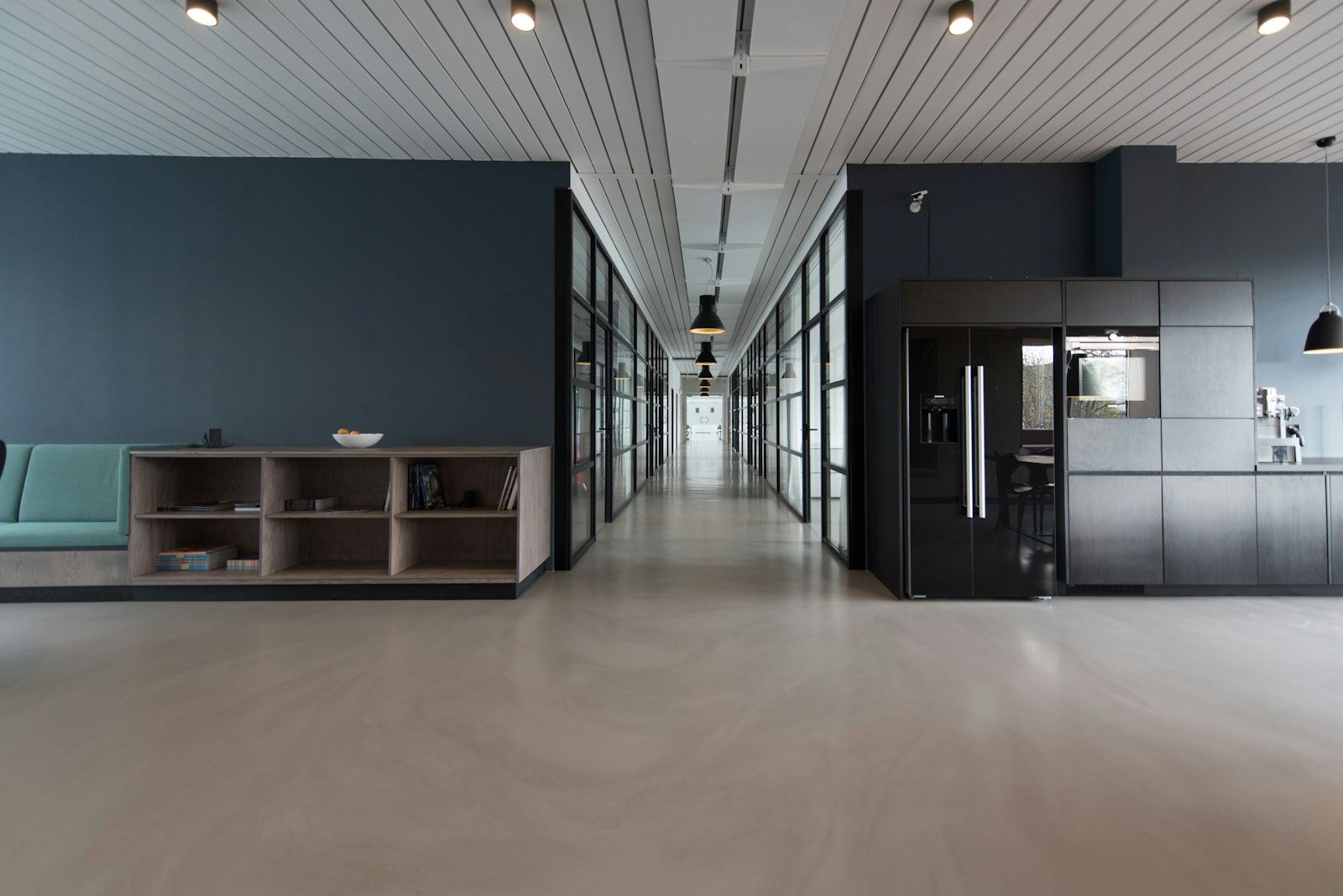
Every year, commercial real estate operators and coworking brands spend millions on ergonomic furniture, biophilic design, and acoustic panels to improve tenant satisfaction. Yet one of the most cost-effective levers for perceived space quality remains largely untapped: scent. A 2024 JLL workplace survey found that 73% of office workers rate air quality as a top-three factor in workspace satisfaction, and properties with a signature scent program report 14-19% higher lease renewal rates than unscented comparable spaces. For procurement teams evaluating how to differentiate a portfolio, an office scent system is no longer a luxury add-on. It is a measurable retention tool.
The challenge is that most buyers approach workspace scenting without a framework. They order a few plug-in diffusers from a marketplace, discover the coverage is uneven, the fragrance fades in two weeks, and the building manager receives complaints about headaches. This guide eliminates that trial-and-error cycle. It walks through the science-backed fragrance choices for productivity zones, the hardware specifications that match square footage, realistic budget ranges for single-floor and multi-building deployments, and the OEM sourcing criteria that separate a reliable Chinese manufacturing partner from a one-off trading company.
The Productivity Case: What the Research Actually Shows
Before committing budget, procurement teams need defensible data to present to stakeholders. The evidence base for commercial office diffuser programs rests on three peer-reviewed findings:
- Cognitive performance under citrus and peppermint. A 2023 study in the Journal of Environmental Psychology measured typing speed and error rates across 240 participants. Peppermint-scented rooms produced a 12% reduction in keystroke errors; lemon-scented rooms showed a 9% improvement in sustained attention tasks over a 4-hour window.
- Stress reduction with lavender and woody notes. Cortisol sampling in open-plan offices demonstrated that low-concentration lavender diffusion (below 0.5 mg per cubic meter) reduced self-reported stress scores by 18% without inducing drowsiness, a common concern with higher concentrations.
- Perceived air quality and occupancy comfort. The International Journal of Environmental Research and Public Health (2022) confirmed that lightly scented environments scored 22% higher on “freshness” perception than odor-neutral rooms, even when particulate and VOC measurements were identical.
The practical takeaway: fragrance concentration matters more than fragrance type. Over-scenting negates every benefit. A professional office scent system should maintain 0.1-0.4 mg per cubic meter in occupied zones, measured with a portable VOC meter during commissioning.
Matching Fragrance Profiles to Workspace Zones
A single building rarely needs one scent. Effective workspace scenting programs segment by function:
| Zone | Recommended Scent Family | Concentration Target | Diffusion Schedule |
|---|---|---|---|
| Open-plan desks / hot desks | Citrus (lemon, grapefruit), light herbal (rosemary) | 0.1-0.2 mg/m3 | Continuous, 8 AM-6 PM |
| Meeting rooms / conference suites | Woody-amber (sandalwood, cedar), green tea | 0.2-0.3 mg/m3 | 15 min pre-booking, then intermittent |
| Reception and lobby | Signature brand blend (floral-woody or fresh-aquatic) | 0.3-0.4 mg/m3 | Continuous, 7 AM-9 PM |
| Break rooms / wellness areas | Lavender, chamomile, soft vanilla | 0.1-0.15 mg/m3 | Continuous, low output |
| Phone booths / focus pods | Peppermint-eucalyptus micro-burst | 0.2 mg/m3 | Motion-triggered, 3-min cycles |
When sourcing from an OEM partner, request zone-specific sample kits rather than a single “office collection.” Aromiso’s product catalog organizes commercial blends by functional intent, which simplifies the specification process for multi-zone buildings.
Hardware Selection: Coverage, Noise, and Maintenance
The commercial office diffuser market segments into three delivery technologies, each suited to different floor areas:
- HVAC-connected nebulizing systems. Best for buildings over 5,000 sq ft. These units inject cold-air micronized oil directly into ductwork. Coverage reaches 15,000-30,000 sq ft per unit. Installed cost ranges from $1,800 to $4,500 per unit including ductwork modification. Noise is negligible because the unit sits in the mechanical room. Maintenance interval: oil reservoir refill every 30-45 days; nozzle cleaning quarterly.
- Standalone cold-air diffusers. Ideal for individual floors of 1,500-5,000 sq ft or retrofit projects where duct access is impractical. Units cost $350-$900 at OEM wholesale (MOQ 50-200 units). Noise output should be below 35 dB at 1 meter. Expect a reservoir refill every 15-25 days depending on output settings.
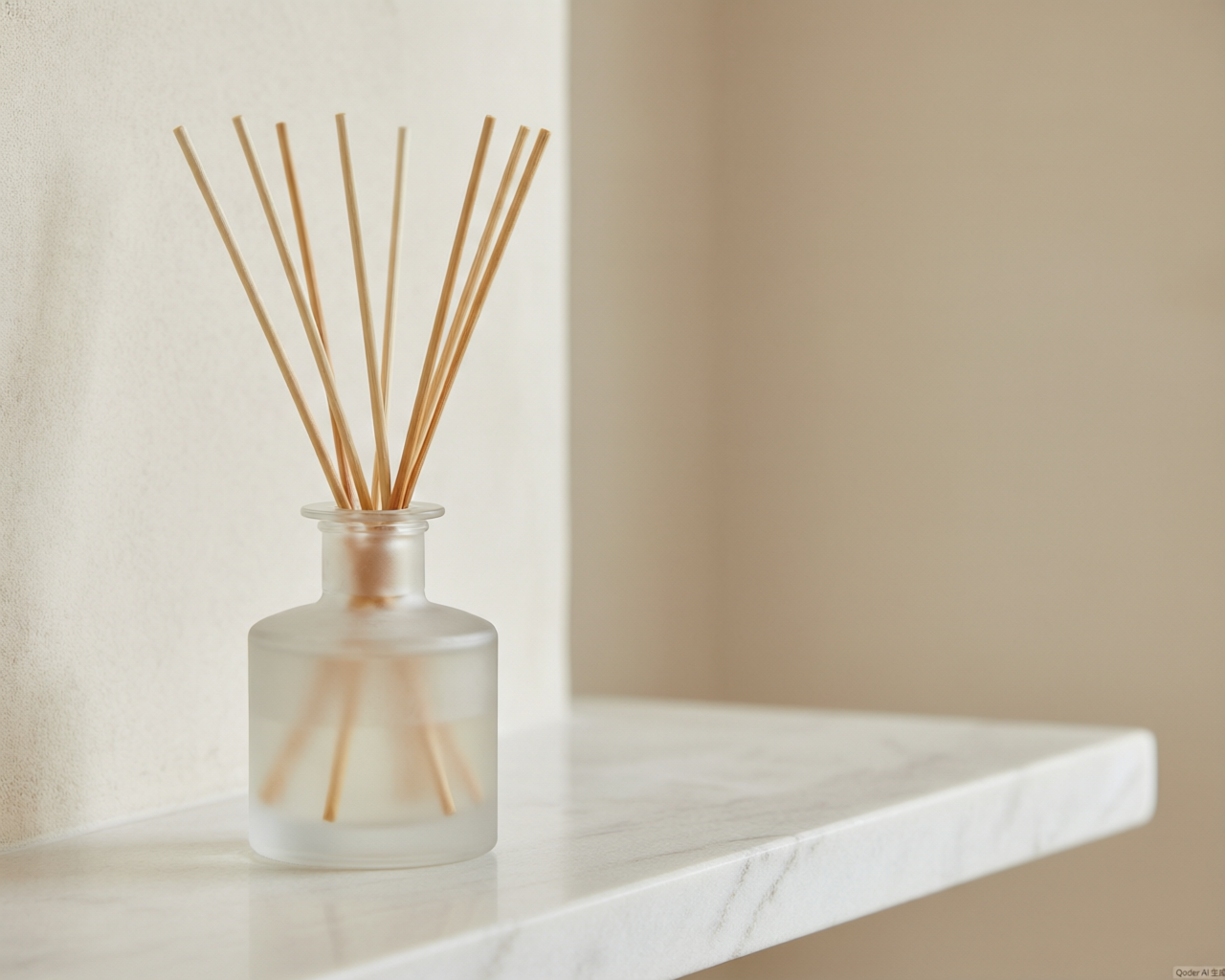
- Reed diffusers and passive evaporative units. Suited to small meeting rooms, phone booths, and reception desks under 200 sq ft. Zero electricity, zero noise. Unit cost at OEM volume is $3-$8 per piece. Lifespan is 60-90 days per 200 ml fill. No maintenance beyond replacement.
A practical rule: for a 10,000 sq ft coworking floor, budget one HVAC unit or two standalone diffusers for common areas, plus 8-12 passive units for enclosed rooms. Total hardware cost at OEM pricing lands between $2,400 and $6,000 for the initial deployment.
Sourcing from a Chinese OEM: Quality and Compliance Checklist
Procurement teams sourcing a coworking fragrance program from China should evaluate suppliers against these criteria before issuing a purchase order:
- IFRA and EU CLP compliance. Request the supplier’s IFRA conformity certificates for every blend. Fragrance oils must comply with EU Regulation 1272/2008 (CLP) if the end market includes Europe, and with OSHA HazCom 2012 for North American deployments.
- MSDS and allergen declarations. A legitimate manufacturer provides a 16-section Safety Data Sheet and a full EU 26-allergen declaration per SKU. If a supplier cannot produce these within 48 hours of request, move to the next vendor.
- In-house GC-MS testing. Ask whether the factory runs gas chromatography-mass spectrometry on incoming raw materials and finished batches. This catches adulterated or oxidized oils before they ship.
- Private-label and custom formulation capability. For branded coworking operators, the ability to develop a proprietary signature scent under NDA is a differentiator. Confirm the OEM offers exclusive formulation rights and will not resell your custom blend. Aromiso’s OEM program includes dedicated perfumer consultations for clients ordering 500+ units annually.
- Lead time transparency. Standard production for 1,000-5,000 units is 25-35 days after artwork approval. Custom scent development adds 15-20 days for three revision rounds. Factor in 25-35 days ocean freight or 7-10 days air freight.
Budgeting a Pilot and Full Rollout
Most operators begin with a 90-day pilot on one floor before committing to a portfolio-wide program. A realistic cost model for a 5,000 sq ft pilot:
- Hardware: 1 standalone cold-air diffuser ($450-$700) + 6 reed diffusers for meeting rooms ($30-$50 total)
- Fragrance oil supply (90 days): 2 liters of commercial-grade oil at $45-$80 per liter
- Installation and commissioning: $200-$500 if using a local HVAC contractor for placement optimization
- Monthly replenishment post-pilot: $90-$160 per month for oil refills across all units
Total pilot cost: $1,100-$1,900. For a 10-building portfolio rollout at 8,000 sq ft average, expect $18,000-$35,000 in year-one capital expenditure including hardware, installation, and initial oil inventory. Annual consumable spend thereafter runs $12,000-$22,000 depending on concentration settings and occupancy hours.
Negotiate tiered pricing with your OEM supplier. Most Chinese fragrance manufacturers offer 8-15% discounts at 2,000-unit annual commitments and 15-25% at 10,000-unit volumes. Lock in 12-month pricing to hedge against raw material volatility, particularly for citrus and sandalwood oils, which fluctuate 20-40% seasonally.
Implementation Timeline: From PO to Occupant Feedback
A structured rollout prevents the most common failure mode: deploying hardware before the scent profile is validated by actual occupants. Follow this sequence:
- Weeks 1-3: Finalize scent selection with OEM. Order sample kits (typically 5-10 ml vials, free or under $50 shipping). Distribute to a 10-person tenant advisory panel for blind preference testing.
- Weeks 4-6: Confirm formulation. Approve packaging artwork if using branded reed diffusers in visible areas. Issue PO for hardware and initial oil volume.
- Weeks 7-11: Production and shipping. Use this window to schedule HVAC assessments or electrician visits for standalone unit placement.
- Week 12: Install hardware. Run a 7-day soft launch at 50% output. Collect occupant feedback via a 3-question QR-code survey at exits.
- Weeks 13-14: Adjust concentration and scheduling based on feedback. Commission VOC readings in three zones. Document baseline for quarterly audits.
- Week 15 onward: Full operational mode. Schedule monthly reservoir checks and quarterly nozzle maintenance. Re-survey occupants at day 90 and day 180.
Avoiding Common Procurement Mistakes
Even experienced facilities teams repeat these errors on their first workspace scenting project:
- Ordering retail-grade diffusers for commercial use. Consumer units rated for 300 sq ft cannot service a 2,000 sq ft open floor. The motor burns out within 60 days under continuous operation. Specify commercial duty-cycle ratings (minimum 16 hours per day) in your RFQ.
- Ignoring local fire and ventilation codes. Some jurisdictions classify concentrated fragrance oils as combustible liquids above certain flash points (typically below 60 degrees Celsius). Confirm your oil supplier provides flash-point data and that storage quantities comply with local fire codes.
- Skipping allergen communication. Post a discreet notice at reception listing the fragrance family in use. This satisfies duty-of-care obligations and reduces complaint volume by an estimated 30-40% based on facility management industry benchmarks.
- Choosing price over consistency. A $2-per-liter oil that varies batch-to-batch creates an inconsistent tenant experience. Insist on batch-to-batch GC-MS matching with a maximum 5% variance threshold written into the supply contract.
Next Steps
If you are evaluating an office scent system for a single building or a multi-site portfolio, the fastest path to a validated program is a structured sample-and-pilot engagement with an OEM manufacturer that handles formulation, hardware, and compliance under one roof.
Aromiso provides end-to-end support for commercial workspace scenting projects: custom fragrance development, cold-air diffuser hardware in three coverage tiers, IFRA-certified oil formulations, and private-label packaging for branded coworking operators. Minimum order quantities start at 200 units for hardware and 50 liters for custom oil blends.
To begin, request a quote with your floor area, zone count, and target occupancy hours. You will receive a zone-by-zone hardware specification, a shortlist of three recommended scent profiles, and a landed-cost estimate within five business days. For operators who want to explore the full range before committing, browse the product catalog or review the OEM program terms for annual volume pricing.