Product Knowledge
From Sample to Bulk Order: Managing the Transition Smoothly
Dieser Artikel ist noch nicht auf Deutsch verfügbar. Sie lesen die englische Version.
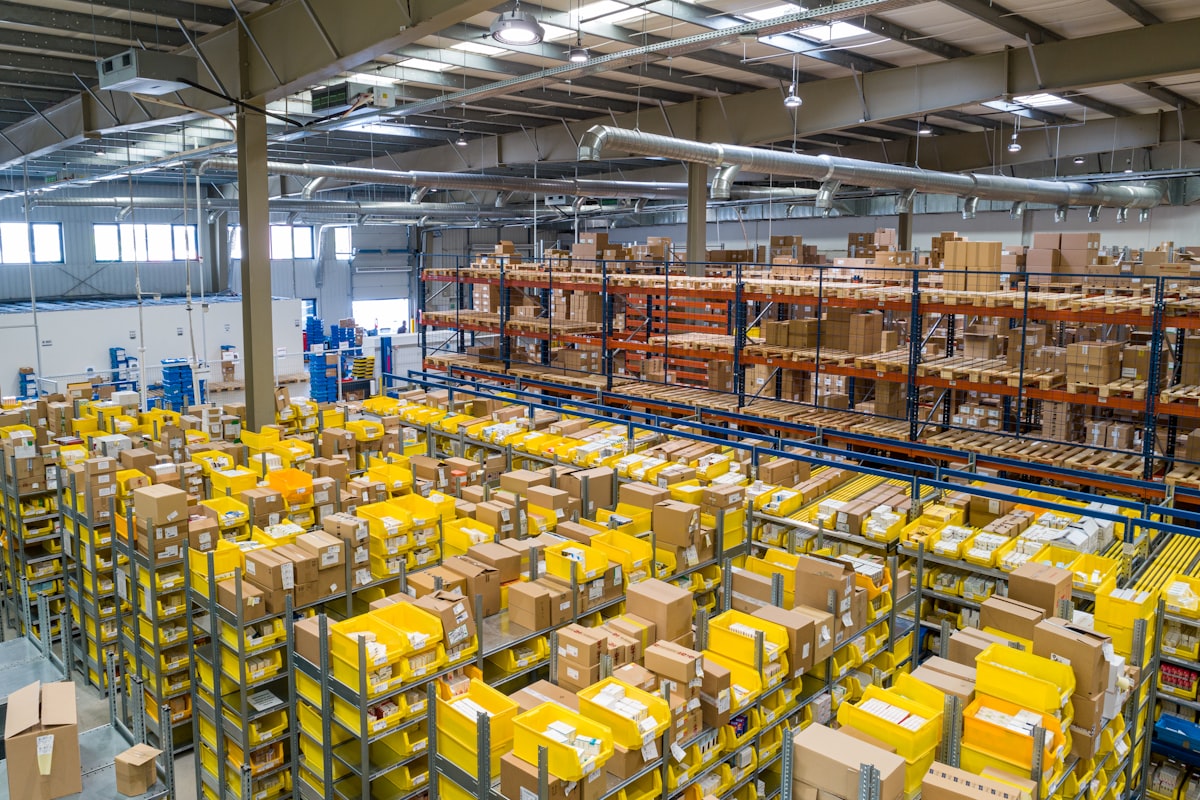
The gap between a perfect 100 mL sample and a 10,000-unit bulk order is where most quality problems originate. A fragrance that smells identical in the lab can shift in a 500-liter compounding vessel. A label that aligns perfectly on a hand-applied prototype can drift on a high-speed labeling machine. Managing this transition deliberately, with documentation and staged verification, is the difference between a smooth launch and a costly rejection at destination.
Sample Approval Documentation
Before any bulk production begins, the approved sample must be formally documented. A signed sample approval form should include:
- Sample identification: unique code (e.g., “RD-2025-0412-V3”), product name, fragrance description, and version number.
- Approval details: date of approval, name and title of the approver, and signature (physical or digital with audit trail).
- Reference aliquots: at least three sealed 50 mL samples in amber glass, stored at the factory QC lab, the production floor, and the buyer’s office. Label each with the sample code and date.
- Approved parameters: fragrance intensity (at a stated dilution and medium), color (reference standard or Pantone), viscosity if applicable, and any performance criteria (e.g., reed diffuser throw at 48 hours in a 20-square-meter room).
- Approved packaging components: bottle reference, cap reference, label artwork version, box dieline version. Attach photos or physical samples of each.
This documentation becomes the contractual reference. Without it, “the sample smelled different” is an opinion; with it, a deviation is a measurable non-conformance.
Pilot Run: The Intermediate Step
For orders above 5,000 units or any custom formulation, request a pilot run at 10-20% of full volume (e.g., 500-1,000 units for a 5,000-unit order). It validates three things: that the formula behaves identically at production scale (shear forces and mixing dynamics differ between a 5 L beaker and a 500 L vessel), that the product fills, caps, and labels correctly at line speed, and that packaging components integrate properly (label adhesion on the actual bottle, box folding on the assembly line, barcode scan after application).
Inspect the pilot run using the same AQL protocol as the full order. Cost is typically standard unit cost plus a 15-25% small-batch surcharge, a small premium against the risk of a full-order failure.
First Article Inspection (FAI)
The first article inspection examines the first 5-10 units off the production line before the run continues. FAI checks:
- Dimensional conformity: bottle height, diameter, and neck finish match the approved drawing within +/-0.5 mm.
- Fill volume: gravimetric check on the first 5 units. If any unit falls outside the +/-2% tolerance, the line stops for recalibration.
- Cap torque: measured on the first 10 units with a torque meter. Specification typically 12-18 lbf-in for standard 18/415 closures.
- Label position: height, rotation, and adhesion checked against the approved mockup.
- Fragrance verification: the first filled unit is compared against the golden sample by the QC evaluator.
- Packaging assembly: the first boxed unit is checked for correct insert placement, closure function, and carton fit.
The production line does not resume until the FAI report is signed by the QC supervisor. Request that the factory photographs the FAI units and sends the report before continuing. For orders above 20,000 units, consider hiring a third-party inspection company (SGS, Bureau Veritas, Intertek) to witness the FAI on your behalf. Cost is USD 250-400 per man-day.
Scale-Up Risks and Mitigation
| Risk | Cause | Mitigation |
|---|---|---|
| Fragrance profile shift | Different mixing dynamics at scale; raw material lot variation | Require GC-MS comparison of pilot batch vs. golden sample; lock raw material lots for the full order |
| Color variation | Oxidation during larger batch mixing; different vessel material | Specify stainless steel 316L vessels; limit batch exposure time; add antioxidant if formula permits |
| Fill weight inconsistency | Pump calibration drift at high speed | In-process checks every 15 minutes; automatic reject systems on lines above 3,000 units/hour |
| Label adhesion failure | Surface contamination at speed; adhesive not rated for product chemistry | Specify solvent-resistant adhesive; require surface energy testing (minimum 38 dynes/cm for BOPP labels on glass) |
| Packaging damage | Carton compression during stacking; vibration in transit | ISTA 3A pre-shipment testing; 5-ply corrugated cartons; internal dividers for glass |
| Component mismatch | Wrong label roll loaded; cap color substitution | Line clearance procedure before each SKU changeover; barcode verification on label rolls |
Communication Protocol During Production
Establish a reporting cadence before production starts: factory confirms raw material lots on day 1 of compounding, shares in-process QC data (fill weight, torque) at the end of the first filling day, provides a photo report at 50% completion, and notifies you at 100% so AQL inspection can be scheduled within 2 business days. For orders above USD 50,000, a mid-production video call showing the line and a random unit check provides assurance without a site visit.
Final Pre-Shipment Verification
Before the container is sealed, confirm the AQL inspection passed, verify carton count against the packing list, check shipping marks on every carton (SKU, quantity, weight, destination, handling symbols), and confirm the full documentation set is complete (invoice, packing list, BL, CoA, SDS, certificate of origin). Photograph the loaded container at empty, half-full, full, and sealed stages with the bolt seal number visible.
The Cost of Skipping Steps
A rejected 10,000-unit shipment at destination costs USD 15,000-40,000 in return freight, disposal, or rework, plus 6-8 weeks of lost selling time. The preventive measures above, sample documentation, a pilot run, and a first article inspection, add approximately USD 1,000-3,000 and 5-7 days to the schedule. The return on that investment is measured in avoided losses, not just quality gains.