Buying Guides
Product Photography Brief for Fragrance: What Your Photographer Needs
Dieser Artikel ist noch nicht auf Deutsch verfügbar. Sie lesen die englische Version.
Fragrance is the hardest product category to photograph well. The customer cannot smell the image, so the photograph has to convey scent, texture, and brand mood through light, color, and styling alone. For B2B buyers commissioning photography for a private-label candle, diffuser, or essential oil line, the difference between a usable asset library and an expensive reshoot is the quality of the brief.
This guide covers what to put in the brief, what to expect from the photographer, and how to budget the work.
Why the Brief Matters
A typical fragrance launch needs 30-80 final images: packshots for each SKU, lifestyle scenes for the website hero, detail shots for product pages, and social crops for paid media. Without a written brief, the photographer guesses at the brand’s intent, and the buyer ends up paying for a second shoot or, worse, accepting images that do not match the packaging color.
A good brief takes 2-3 hours to write and saves 2-3 days of revision.
The Shot List
Structure the brief around a numbered shot list. For each shot, specify:
- Shot ID (e.g., SKU01-PACK-01).
- Subject (the exact SKU, including variant).
- Format (packshot, lifestyle, detail, flat-lay, in-use).
- Aspect ratio (1:1 for Amazon, 4:5 for Instagram, 16:9 for web hero, 9:16 for stories).
- Background (white seamless, colored seamless, textured surface, lifestyle set).
- Angle (front, three-quarter, top-down, side profile).
- Use case (PDP, hero banner, paid ad, retail signage).
A minimal launch shot list for a 6-SKU candle line:
- Packshot on white, front, 1:1, all 6 SKUs (6 images).
- Packshot three-quarter, 4:5, all 6 SKUs (6 images).
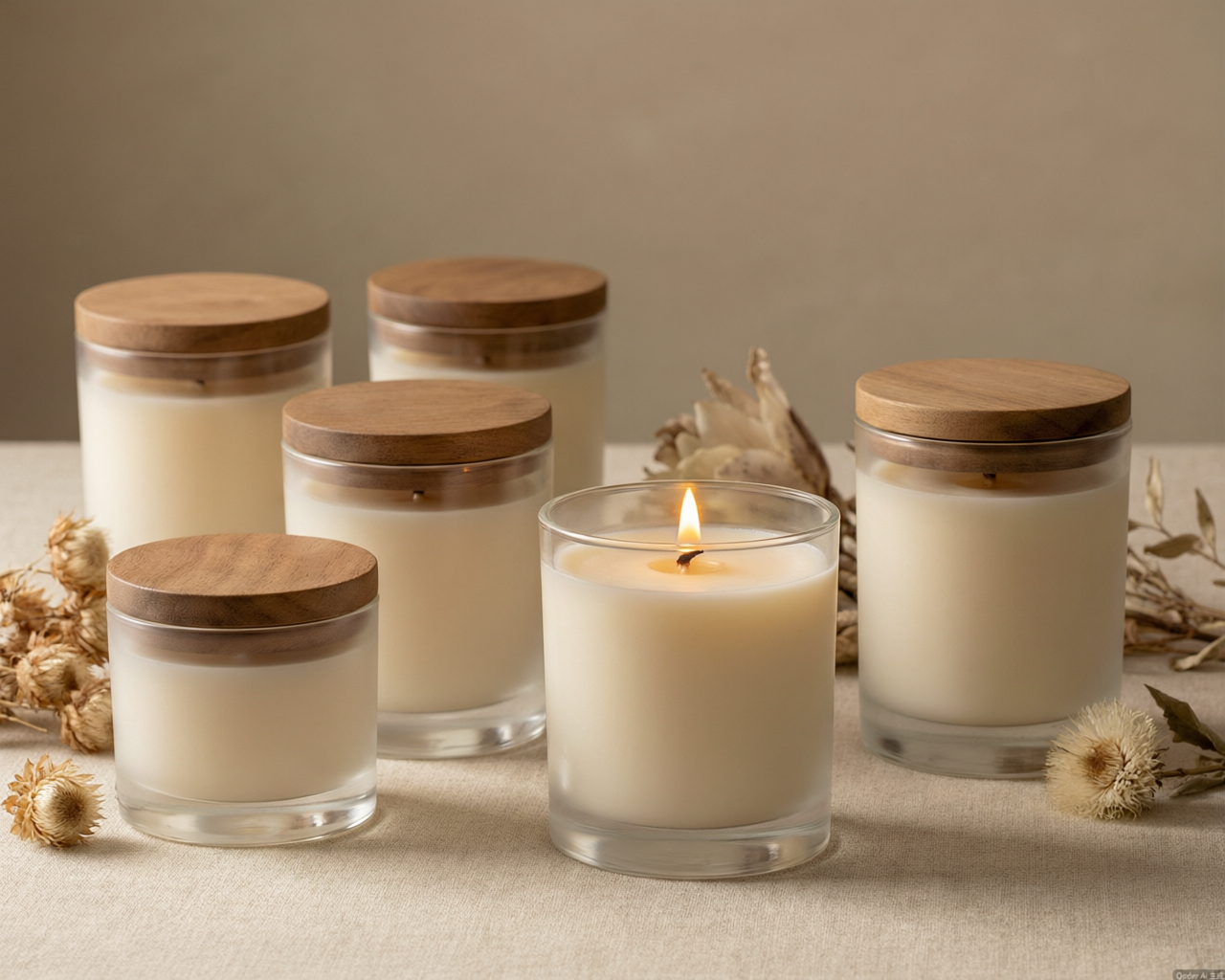
- Group shot of full line, 16:9 (1 image).
- Lifestyle scene, hero candle in styled room, 16:9 and 4:5 (2 images).
- Detail of label and wax texture, 1:1 (2 images).
- In-use shot, candle lit, 4:5 (1 image).
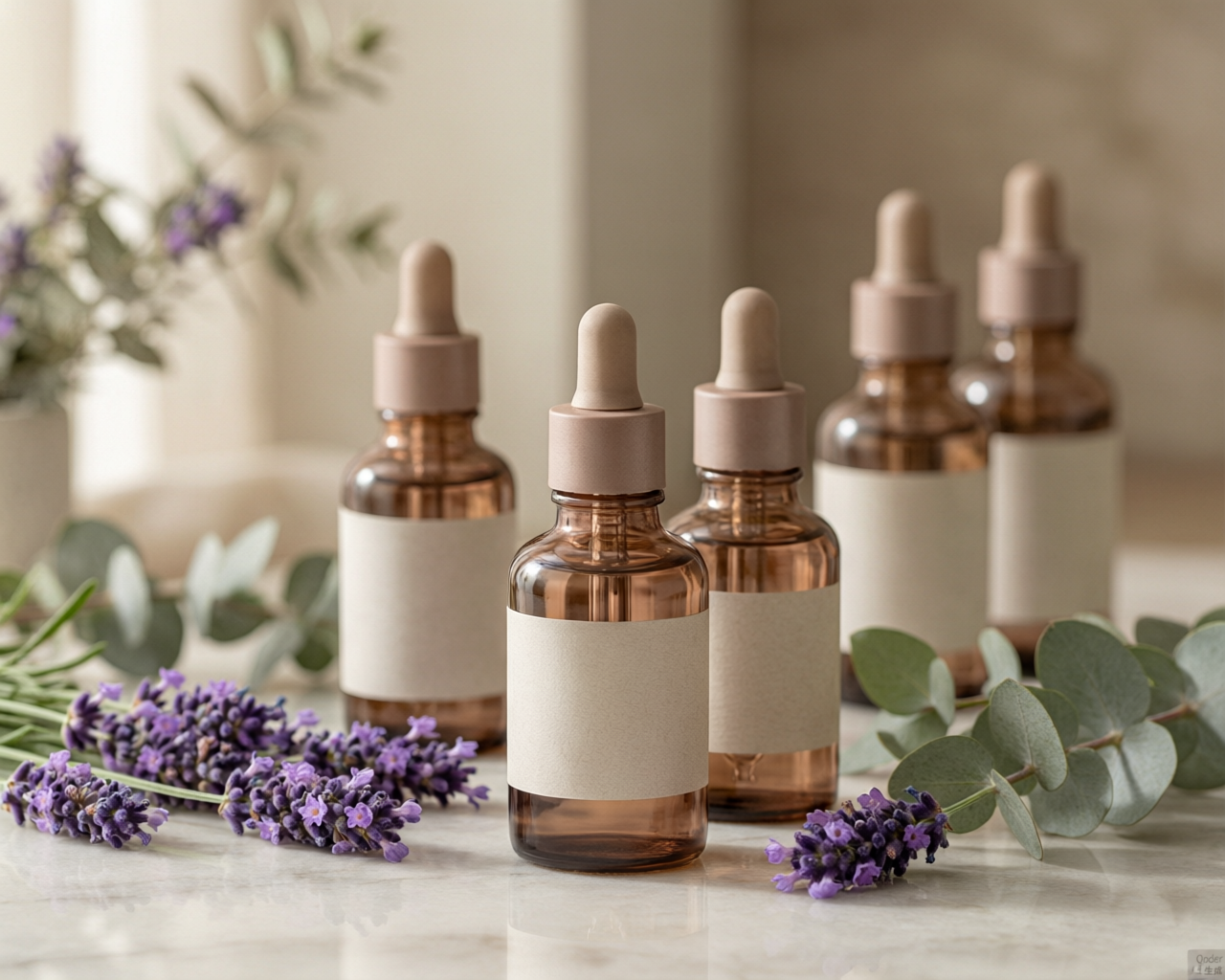
- Flat-lay with ingredients (dried lavender, citrus peel), 1:1 (1 image).
Total: 19 hero images, plus crops for each channel. Expect 30-50 final files from a one-day shoot.
Lighting and Color Management
Fragrance photography lives or dies on color accuracy. A candle labeled “Lavender Fields” must look lavender, not blue or purple, across every channel.
Specify in the brief:
- Color standard. Provide a physical Pantone reference or a signed-off production sample. The photographer should color-match the hero SKU against this reference under D50 (5000K) lighting.
- White balance. Custom white balance per lighting setup, not auto.
- Color profile. Adobe RGB (1998) for capture, delivered as both sRGB (web) and Adobe RGB (print) exports.
- Monitor calibration. The photographer’s editing monitor should be calibrated to Delta-E below 2 against an X-Rite i1 or Datacolor Spyder reference, within the last 30 days.
- Lighting setup. Soft, diffused key light for glass; a separate edge light or scrim to control reflections on glossy surfaces. Candles and bottles are essentially mirrors; the lighting setup is 80 percent of the work.
For glass bottles, request a “dark field” or “bright field” lighting test in the proof stage. Dark field gives a moody, premium look; bright field gives a clean, e-commerce look. The choice should match the brand.
Styling and Props
Specify the styling direction with reference images (10-20 in a mood board). Cover:
- Surface materials. Marble, oak, linen, concrete, terrazzo. Provide physical samples if the brand has a defined material palette.
- Props. Dried botanicals, raw ingredients (coffee beans, citrus, vanilla pods), fabric swatches. Avoid plastic props; they read as cheap on camera.
- Negative space. Indicate where copy or pricing will overlay the image. A 30 percent clear zone on one side is the standard request.
- Human elements. Hands, silhouettes, or full models. Specify usage rights if models are involved; model releases add $200-$800 per shoot day.
For lifestyle scenes, request a lighting diagram and a test Polaroid (or digital preview) before the full shoot. Adjustments at this stage cost nothing; adjustments after the shoot cost a reshoot.
File Delivery Specifications
Specify the deliverables in writing:
- RAW files retained by the photographer for 12 months (industry standard) or transferred to the brand for an additional fee.
- Master TIFF files at full resolution, 16-bit, Adobe RGB.
- Web JPEGs at 2,000-3,000 pixels on the long edge, sRGB, quality 10-12.
- Channel-specific crops at the aspect ratios in the shot list.
- Retouched and unretouched versions of hero images.
- Usage license. Specify the channels (web, social, print, retail, paid media) and the duration. Perpetual, all-channel buyout typically adds 30-50 percent to the day rate.
Budget Expectations
For a professional fragrance shoot in a tier-1 market:
- Photographer day rate: $800-$2,500 per day.
- Studio rental: $300-$1,000 per day if not included.
- Stylist and props: $400-$1,200 per day.
- Retouching: $25-$80 per image; packshots at the low end, complex composites at the high end.
- Model and talent: $500-$2,000 per day plus usage.
A one-day shoot for a 6-SKU line, producing 30-50 final images, lands in the $3,000-$8,000 range. A two-day shoot with lifestyle and models runs $8,000-$20,000.
For B2B buyers working with a Chinese OEM factory, an increasingly common option is to commission the shoot at the factory’s in-house studio or a partner studio in Guangzhou or Shanghai. Day rates run 40-60 percent lower than US or EU equivalents, and the photographer has the production samples on hand. The trade-off is that brand-direction nuance may require more iteration; supply a detailed mood board and a reference image library.
Common Mistakes to Avoid
- No physical sample at the shoot. Photographing a pre-production prototype with the wrong label color wastes the day.
- Auto white balance. Causes color drift across the SKU set.
- Single aspect ratio. Forces cropping later and loses composition.
- No usage license in writing. Causes disputes when an image moves from web to a billboard.
- Skipping the proof stage. Always approve a test image of the hero SKU before the full shoot proceeds.
Working With Your Factory
A capable OEM partner such as Aromiso will provide production-accurate samples for the shoot, share dieline files for any packaging mockups, and coordinate sample delivery to the studio. Brief the factory and the photographer together when possible; a 30-minute call aligning on color standards, sample timing, and shot list saves a week of back-and-forth.
Photography is the asset library a fragrance brand lives on for two to three years. The brief is the cheapest leverage in the program.