Buying Guides
How Many Reeds? Matching Reed Count to Bottle Size and Room
Dieser Artikel ist noch nicht auf Deutsch verfügbar. Sie lesen die englische Version.

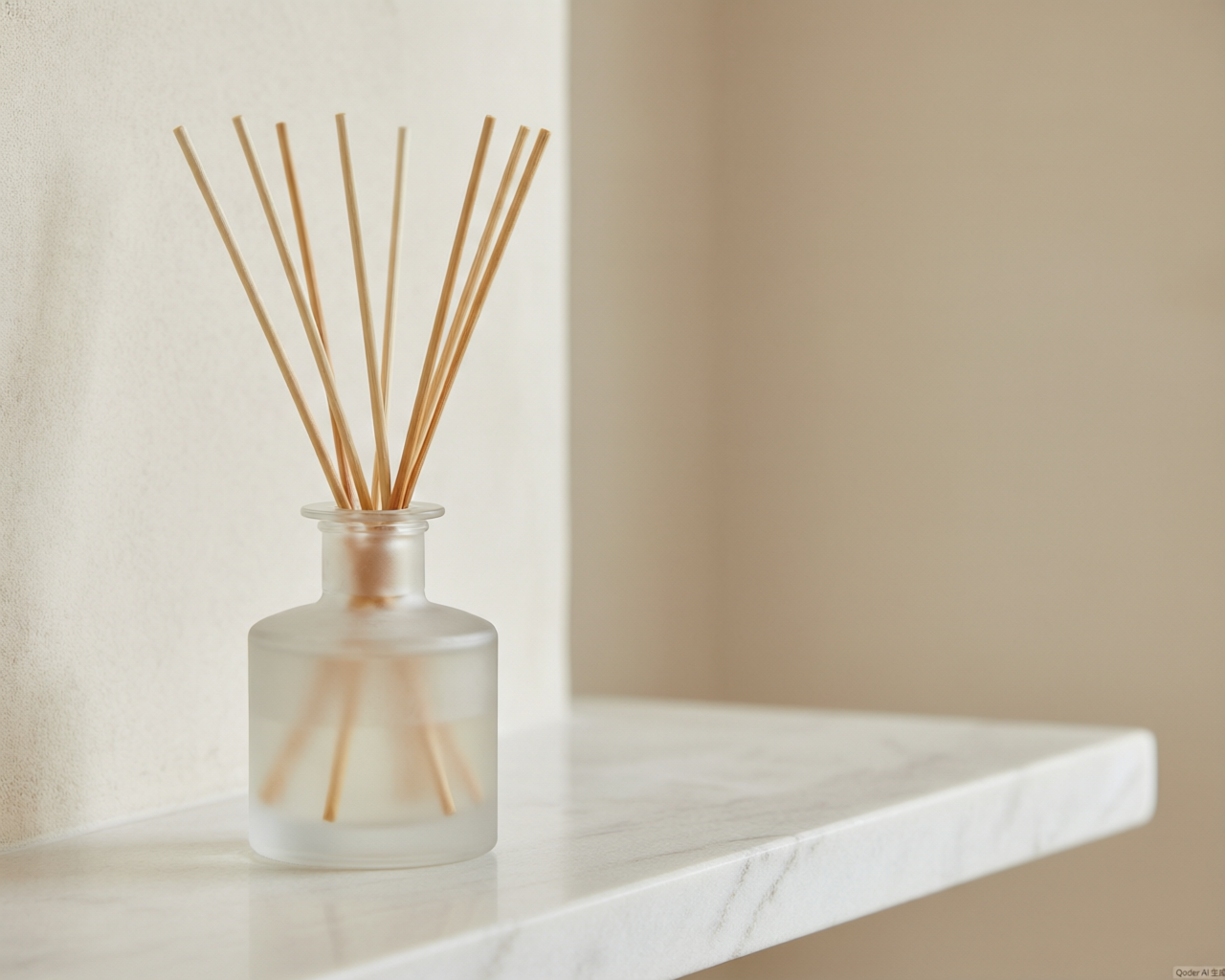
One of the most common specification questions from reed diffuser buyers is: how many reeds should we include? The answer depends on bottle capacity, reed diameter, room volume, and the scent intensity your customer expects. Getting this wrong leads to either a product that overwhelms a small space or one that produces no perceptible fragrance. This guide provides a data-driven framework for specifying reed count.
How Reeds Create Scent Throw
Reeds function as wicks. Liquid travels up internal channels (in fiber reeds) or vascular pores (in rattan) via capillary action, then evaporates from the exposed surface above the bottle. The total evaporation surface area determines throw strength:
- More reeds = more surface area = stronger throw = faster liquid consumption.
- Fewer reeds = weaker throw = slower consumption = longer product life.
Each 3mm fiber reed of 25cm exposed length provides approximately 2.36 square centimeters of evaporation surface. Ten reeds provide roughly 23.6 square centimeters total.
Reed Diameter: 2mm vs. 3mm
| Parameter | 2mm Reed | 3mm Reed |
|---|---|---|
| Evaporation surface (25cm length) | 1.57 sq cm | 2.36 sq cm |
| Capillary speed | Faster (narrower channel) | Moderate |
| Visual presence | Delicate, high-count look | Substantial, standard look |
| Structural rigidity | Flexible, may droop at 30cm+ | Rigid up to 40cm |
| Cost per reed | $0.03-$0.06 | $0.04-$0.08 |
For bottles 100ml and above, 3mm reeds are the standard. For 30-50ml mini diffusers, 2mm reeds maintain proportional aesthetics.
Reed Count by Bottle Capacity
These recommendations assume 3mm fiber reeds and a standard 20-25% fragrance load:
| Bottle Capacity | Recommended Reed Count | Exposed Reed Length | Expected Throw Radius |
|---|---|---|---|
| 30ml | 4-5 | 12-15cm | 0.5-1 meter |
| 50ml | 5-6 | 15-18cm | 1-2 meters |
| 80ml | 6-7 | 18-22cm | 2-3 meters |
| 100ml | 7-8 | 20-25cm | 2-4 meters |
| 120ml | 8-9 | 22-27cm | 3-4 meters |
| 150ml | 9-10 | 25-30cm | 3-5 meters |
| 200ml | 10-12 | 28-35cm | 4-6 meters |
| 250ml | 12-15 | 30-40cm | 5-7 meters |
These figures assume a room with standard 2.5m ceilings and moderate ventilation (1-2 air changes per hour).
Adjusting for Room Size and Ventilation
Room characteristics significantly affect perceived throw:
- Small enclosed rooms (bathrooms, closets, 5-10 sq m): Use the lower end of the reed range. A 50ml diffuser with 5 reeds is sufficient. Over-speccing here causes scent fatigue and complaints.
- Standard bedrooms and offices (10-20 sq m): Follow the table above directly. A 100ml unit with 8 reeds covers this well.
- Open-plan living areas (20-40 sq m): Use the upper end or add 1-2 extra reeds. A 150ml unit with 12 reeds, or two 100ml units placed at opposite ends.
- High-ventilation spaces (lobbies, retail floors, 40+ sq m): Reed diffusers alone may be insufficient. Consider 200ml+ units with 12-15 reeds as accent pieces alongside HVAC scenting or electric diffusers.
Fiber vs. Rattan: Performance Differences
Fiber reeds (polyester-based):
- Uniform internal channel structure provides consistent wicking.
- 30-50% stronger throw than rattan of the same diameter.
- Available in black, white, natural, and custom colors.
- Do not require flipping as often (every 2-3 weeks vs. weekly for rattan).
- Industry standard for 85%+ of commercial diffusers produced in China.
Rattan reeds (natural):
- Irregular pore structure leads to inconsistent wicking. Some reeds may clog after 3-4 weeks.
- Lower throw per reed, requiring 2-3 additional reeds to match fiber performance.
- Natural, eco-friendly positioning. Appeals to sustainability-focused brands.
- Can develop mold in humid environments (above 70% RH) over extended periods.
- Limited color options (natural tan, or dyed with less uniform results).
For consistent B2B product performance, fiber reeds are the safer specification. Reserve rattan for brands where the natural material story is a primary selling point.
Reed Length Specification
Reed length should be proportional to bottle height:
- Formula: Reed length = bottle height + 50-100% of bottle height.
- Example: For a 15cm tall bottle, specify 22-30cm reeds (15cm + 7-15cm exposed above the neck).
- Aesthetic rule: Exposed reed length above the cap should be 1.2-1.8x the bottle height for balanced visual proportions.
- Practical limit: Reeds longer than 40cm tend to splay and lose structural alignment. For tall arrangements, use 3mm or 4mm diameter reeds, or include a collar with pre-drilled holes to maintain arrangement.
Specify reed length with a tolerance of plus or minus 5mm. Request cut ends to be clean (no fraying) and, optionally, angled at 45 degrees for a premium presentation.
Packaging Reeds with the Product
- Bundle reeds with a paper band, tissue wrap, or elastic tie to prevent scattering in the box.
- Include a care card instructing consumers to insert reeds one at a time, flip weekly for the first month, and replace reeds after 2-3 months for optimal performance.
- Spare reeds: Consider including 1-2 extra reeds per unit (cost: $0.04-$0.08) as a goodwill gesture. This reduces complaints about broken reeds.
- Separate compartment: In gift boxes, place reeds in a dedicated slot or sleeve to prevent them from scratching the glass or puncturing tissue paper.
Cost Impact
Reed cost is a small but non-trivial component:
- 8x 3mm fiber reeds at 25cm: approximately $0.32-$0.64 per set.
- Upgrading from 6 to 10 reeds on a 100ml unit adds $0.16-$0.32 per unit.
- Custom-dyed reeds (Pantone match) add $0.02-$0.05 per reed and require a 5,000-unit minimum per color.
Quality Checks
When receiving reed samples or production goods:
- Wicking test: Place 5 reeds in colored water. All 5 should show color at the top within 30 minutes.
- Straightness: Lay reeds on a flat surface. Bow or warp should not exceed 2mm over 25cm length.
- Diameter consistency: Measure 10 random reeds with calipers. Tolerance: plus or minus 0.2mm.
- Color uniformity: Compare against a Pantone reference under D65 lighting. Delta E less than 2.0.
- Odor: Reeds should be odorless. Any chemical or plastic smell indicates poor-quality binder and will taint the fragrance.
Summary
Match reed count to bottle size using the table above, adjust for room volume, and specify fiber reeds for consistent performance. Include clear consumer instructions for reed management. This small component has an outsized effect on whether the end user perceives the product as effective or disappointing.