Industry Verticals
Wedding Favor Candles: Customization, MOQ & Production Timeline
Esta guía aún no está disponible en español. La estás viendo en inglés.
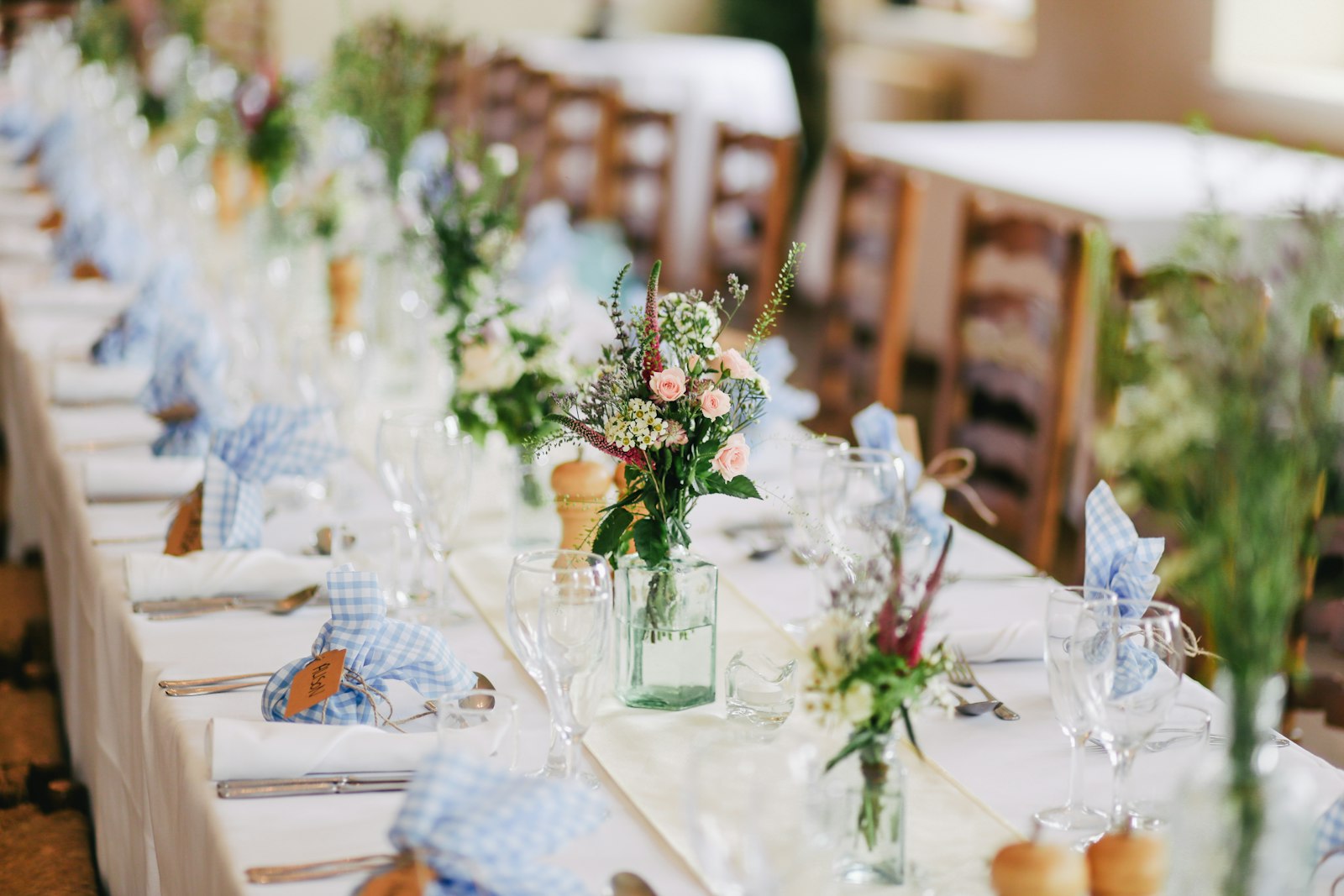
Wedding favor candles sit at the intersection of two demanding markets: the emotional, design-driven wedding industry and the precision-driven world of contract fragrance manufacturing. For procurement managers and brand owners sourcing bulk wedding candles from China, the challenge is rarely finding a supplier. It is finding one that can hit a 40 mm label tolerance on 5,000 units, match a custom scent brief, and deliver before a hard wedding date that cannot move. Miss one of those three pillars and a $12,000 order becomes a refund conversation.
This guide breaks down how professional buyers structure a custom wedding candle program: which customization levers move unit cost, what realistic MOQs look like across vessel types, how to read a production timeline so you never miss a season, and which quality checkpoints separate a credible OEM partner from a trading company reselling stock. Whether you are a planner building a private-label favor line, a fragrance brand launching a bridal capsule, or a hospitality team sourcing welcome gifts, the numbers below will save you weeks of back-and-forth.
Why Wedding Favor Candles Are a Strategic B2B Category
The wedding favor segment is no longer dominated by sugared almonds and monogrammed keychains. Data from The Knot and WeddingWire consistently places candles in the top three favor categories, with average per-guest budgets climbing from roughly $3.50 in 2019 to $5–$8 in 2025 for mid-tier weddings. That shift creates durable B2B demand because candles deliver perceived luxury at a controllable unit cost, a canvas for personalization, and a shelf life that absorbs shipping delays.
- Repeatable demand cycles. Wedding season in North America and Europe runs May through October, with a secondary December spike. Smart buyers order 5–7 months ahead, creating predictable annual volume.
- Higher margins than retail candles. A 100 g custom wedding candle costing $1.80–$3.20 landed often bundles at $7–$12 equivalent value, giving brands 60–70 percent gross margin headroom.
- Cross-sell leverage. Once a buyer qualifies a candle supplier, expanding into reed diffusers, car fragrances, or room sprays for the same line is operationally trivial.
Customization Options That Actually Move the Needle
Not every customization carries the same cost or lead-time weight. Buyers who understand the hierarchy below avoid over-engineering SKUs that blow the per-unit budget without improving guest perception.
| Customization Layer | Typical Cost Impact (per unit) | Lead-Time Impact | Best For |
|---|---|---|---|
| Stock vessel + custom label | +$0.10–$0.35 | +3–5 days | Budget favors under $2.50/unit |
| Custom scent (in-house blend) | +$0.20–$0.60 | +10–15 days | Signature wedding fragrance |
| Colored or frosted glass | +$0.25–$0.80 | +7–12 days | Brand-color matching |
| Custom vessel mold | +$1.50–$4.00 + $800–$2,500 mold fee | +35–50 days | Private-label bridal collections |
| Embossed lid or wax seal | +$0.40–$1.10 | +10–15 days | Luxury and heritage themes |
| Printed dust cover / wrap | +$0.15–$0.45 | +5–7 days | Storytelling and photo favors |
- Scent is the highest-leverage choice. A custom wedding candle with a brief like “peony, white tea, and a hint of cedar” can be matched from a supplier’s existing library of 200+ fragrances in 5–7 days, or built from scratch in 10–15 days. Most buyers save money by tweaking an existing base rather than commissioning a fully new accord.
- Vessel decisions lock in cost early. Glass, tin, ceramic, and concrete each have different MOQs and tooling requirements. A 200 ml amber glass jar might run $0.55–$0.85 empty, while a custom-shaped ceramic vessel can hit $2.20+ before wax is poured.
- Personalization scale matters. Laser-engraved names on 80 units cost very differently from a single shared monogram across 5,000 units. Always confirm whether per-unit personalization is digital print, hot stamp, or laser, because each has different setup fees.
MOQ, Tiered Pricing, and How to Negotiate
Minimum order quantities for wedding favor candles vary dramatically by supplier type. Trading companies often quote 500 units but resell stock items with limited true customization. A direct OEM factory like Aromiso structures MOQs by component, not by finished SKU, which gives buyers more flexibility than they expect.
- Standard MOQ bands. Stock-vessel programs with custom labels start at 500–1,000 units per scent. Custom-scent programs on stock vessels usually require 1,000–2,000 units. Fully custom vessel programs typically start at 3,000–5,000 units because glass factories enforce container-level minimums.
- Tiered pricing example. A 150 g soy-blend candle in a clear glass jar with custom label might price at $2.95 at 1,000 units, $2.45 at 3,000, $2.05 at 5,000, and $1.78 at 10,000. The biggest drop almost always happens between 1,000 and 3,000 units.
- Mix-and-match leverage. Many factories let you split a 3,000-unit MOQ across two scents or two label designs at no surcharge — ideal for “his” and “hers” scents, or brands testing two SKUs before a wider rollout.
- Sample economics. Expect to pay $40–$120 per custom sample, often credited against a bulk order. A serious supplier ships samples within 7–10 days; anything longer signals a trading company outsourcing the work.
For buyers ready to scope a real program, the OEM program page outlines how Aromiso structures mold fees, scent development, and tiered pricing across the full home fragrance range.
Production Timeline: From Brief to Doorstep
The single most common failure in wedding candle sourcing is timeline compression. A wedding date is immovable, and ocean freight adds 25–40 days that cannot be negotiated. Below is a realistic critical path for a 5,000-unit custom wedding candle order shipped FOB Shenzhen to a US East Coast warehouse.
| Phase | Duration | Buyer Action Required |
|---|---|---|
| Brief and quotation | 3–5 days | Finalize vessel, scent direction, qty, target price |
| Sample development | 10–15 days | Approve scent, label proof, vessel finish |
| Sample approval and deposit | 3–7 days | Sign PI, pay 30 percent deposit |
| Bulk production | 25–35 days | Mid-production QC photos at day 15 |
| Final QC and packing | 5–7 days | Approve pre-shipment inspection report |
| Ocean freight (Shenzhen to NYC) | 28–35 days | Provide PO and customs broker details |
| Customs clearance and delivery | 5–10 days | Pay duties, schedule drayage |
- Total realistic timeline: 80–115 days. Buyers targeting a June wedding should place deposits no later than late February. For September and October weddings, the cutoff is roughly late May.
- Air freight is a last resort. Air-shipping 5,000 candles can cost $3.50–$5.00 per unit versus $0.40–$0.80 by sea, erasing the margin advantage of sourcing from China. Reserve air for sub-500-unit rush orders or replenishment.
- Buffer for Chinese New Year. Factories close for 3–4 weeks between late January and mid-February. Any order touching that window needs an extra 30 days of slack.
Quality, Compliance, and Documentation Checklist
Wedding favors often travel internationally and end up in guests’ homes, which means compliance is non-negotiable. A credible OEM will provide documentation without being chased.
- Wax and wick compliance. Confirm the supplier can produce IFRA-compliant fragrance loads, lead-free wicks, and ASTM F2417 (US) or EN 15493 (EU) burn-test reports. Soy, coconut, and paraffin blends each have different flash points; ask which the factory has tested.
- Labeling requirements. US orders need CLP-style hazard labeling where applicable, net weight in ounces and grams, and a manufacturer or importer of record. EU orders require CLP pictograms and UFI codes for certain fragrance concentrations.
- Vessel safety. Glass jars should pass thermal shock testing, especially for candles above 180 g where burn time exceeds 35 hours. Ask for the factory’s drop-test and heat-cycle data.
- Documentation packet. Before deposit, request: MSDS/SDS for the fragrance, IFRA certificate, burn-test report, packaging spec sheet, and a sample of the commercial invoice format. Missing any of these is a red flag.
Packaging, Presentation, and the Unboxing Moment
For wedding favors, packaging is not protection — it is the product. Planners photograph the favor table, and guests judge the wedding by what they carry home. Buyers should treat packaging as a first-class line item, not an afterthought.
- Primary packaging tiers. A clear cellophane bag with ribbon runs $0.08–$0.20 per unit. A printed kraft box with window runs $0.35–$0.70. A rigid magnetic gift box with foam insert runs $1.10–$2.50. Match the tier to the wedding’s price point, not the candle’s.
- Inserts and storytelling. A 90 x 50 mm printed card explaining the scent story and the couple’s names adds roughly $0.06–$0.12 per unit but consistently lifts perceived value in post-event surveys.
- Master carton discipline. Insist on 5-ply export cartons, 24 or 36 units per carton, with corner protectors and a 200-pound burst strength rating. Damaged favors are the most common post-shipment complaint in this category.
- Palletization for large orders. Orders above 3,000 units should ship palletized with stretch wrap and edge boards. Loose-loaded containers save roughly $80–$150 per container but routinely produce 2–4 percent breakage.
Common Mistakes and How to Avoid Them
- Ordering against the wedding date, not the buffer date. Always subtract 21 days from the event date as your true delivery deadline. Rehearsal dinners, venue deliveries, and staging all consume time.
- Skipping a pre-production sample. A lab sample is not a production sample. Insist on a unit pulled from the first 100 of the bulk run, shipped before the rest of production continues. This catches label drift and scent batch variance.
- Underestimating label artwork. Print-ready files must be CMYK, 300 DPI, with 3 mm bleed and outlined fonts. Roughly one in three program delays traces back to artwork revisions, not manufacturing.
- Choosing the cheapest freight forwarder. Use a forwarder experienced with consumer packaged goods and ISF filing for US imports. A $200 saving on freight can cost $2,000 in customs holds.
- Not locking the scent in writing. Reference the approved sample by a sealed, dated, signed unit held by both parties. “Matches sealed sample #WC-2026-014 dated March 12” is enforceable; “smells like the sample” is not.
Next Steps
If you are scoping a custom wedding candle program, the fastest path to a firm number is a structured brief: vessel preference, target unit cost, quantity, scent direction, and event date. A credible OEM should return a quotation within 3–5 business days and a sample within two weeks.
Aromiso supports wedding favor programs across candles, reed diffusers, and complementary home fragrance formats, with in-house scent development, custom vessel sourcing, and export documentation handled end to end. Browse the product catalog to shortlist vessels, review the OEM program for tooling and tiered pricing, and request a quote with your brief attached. The earlier you lock the timeline, the more customization headroom you keep.