Compliance
Child-Resistant Packaging for Fragrance: CPSC & EU Requirements
Esta guía aún no está disponible en español. La estás viendo en inglés.

Every year, U.S. poison control centers field over 15,000 calls involving children under six who ingested household fragrance products — essential oils, reed diffuser liquids, and concentrated perfume oils top the list. For brand owners and procurement managers sourcing from China, the regulatory exposure is direct: the CPSC can seize non-compliant shipments at port, issue recalls costing $50,000 to $500,000 per incident, and pursue civil penalties up to $120,000 per violation. In the EU, CLP Regulation (EC) No 1272/2008 mandates child-resistant fastenings and tactile warnings for any mixture classified as aspiration toxic (H304), which covers most fragrance oils containing hydrocarbon solvents.
The challenge for B2B buyers is that child-resistant packaging sits at the intersection of regulatory compliance, structural packaging engineering, and supply chain logistics — and most fragrance OEM factories in China specialize in only one. A reed diffuser bottle that passes your shelf-presence audit may fail a CPSC panel test because the closure torque falls below 15 in-lbs, or because the tactile warning triangle is 0.8 mm instead of the required 1.0 mm. This guide gives you the specific standards, test protocols, cost benchmarks, and supplier vetting criteria to close that gap before your goods ship.
Which Products Trigger Child-Resistant Requirements
Not every fragrance SKU requires child-resistant (CR) packaging. The trigger depends on chemical classification, not product marketing.
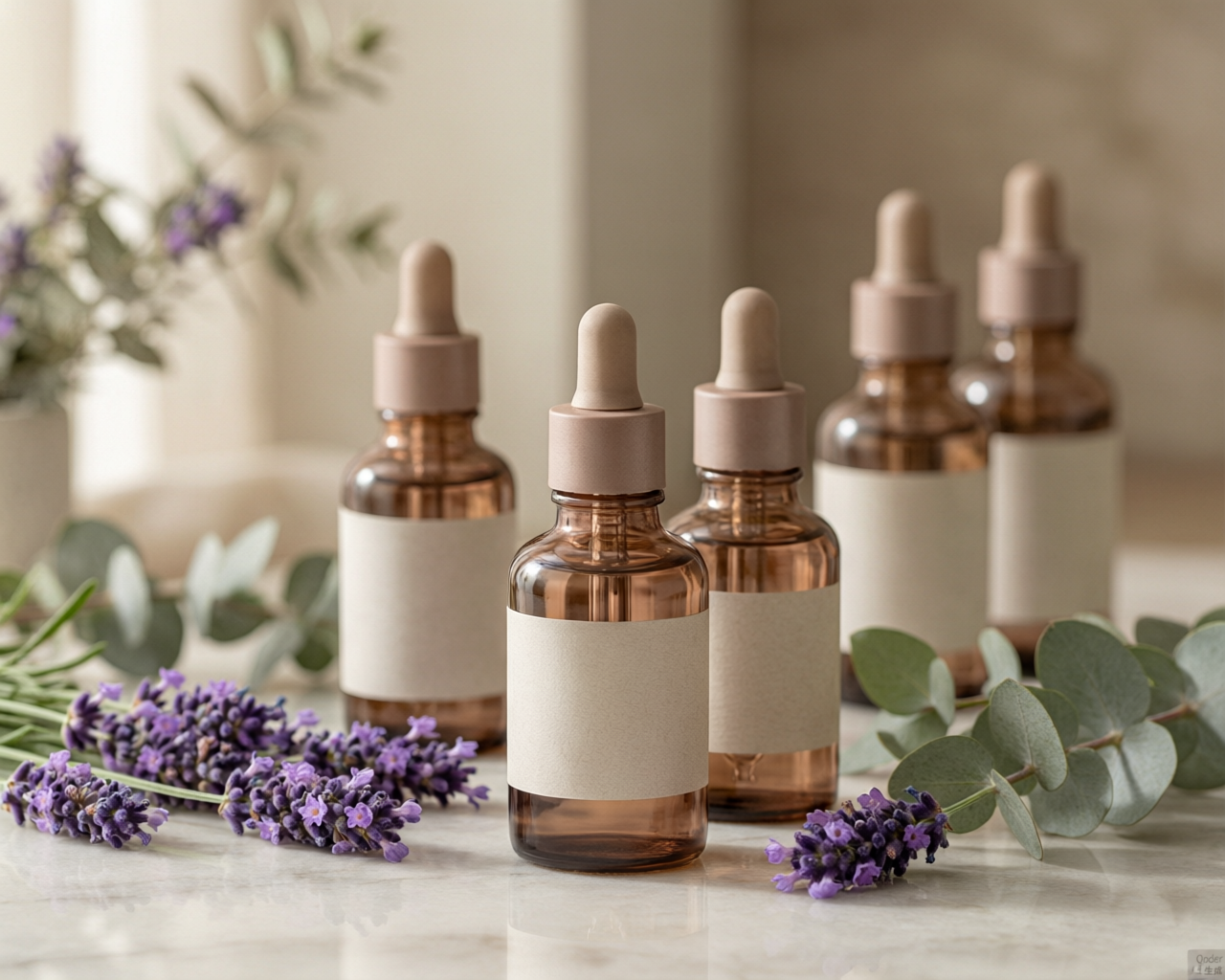
- Essential oils and fragrance concentrates — Nearly always classified as aspiration toxic (H304) or harmful (H302/H312) under GHS. CR closures required in both US and EU markets.
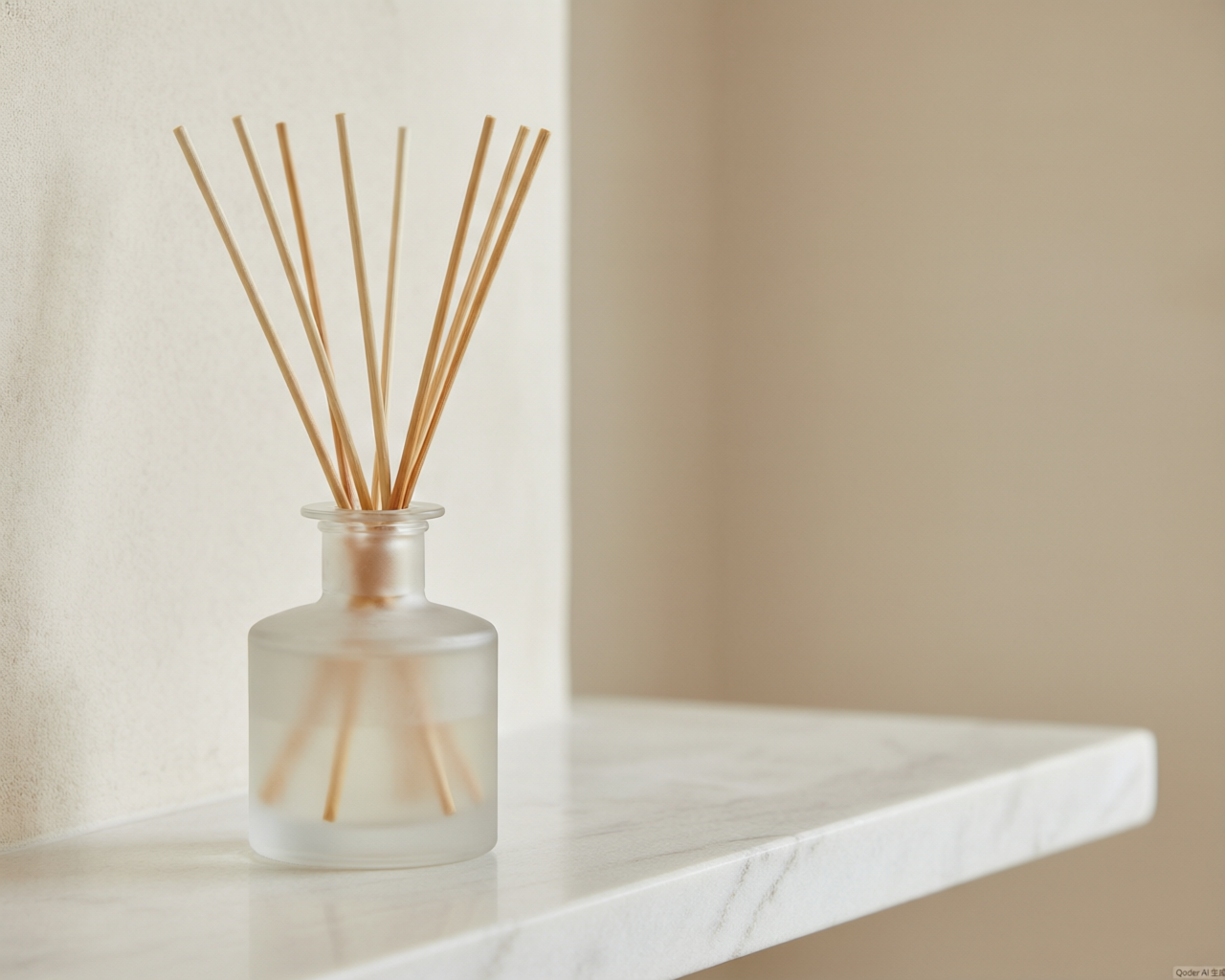
- Reed diffuser refill liquids — Typically contain dipropylene glycol or isopropylidene glycol carriers. If the mixture flash point is below 60 degrees C or contains more than 10 percent hydrocarbon solvent, CR packaging applies.
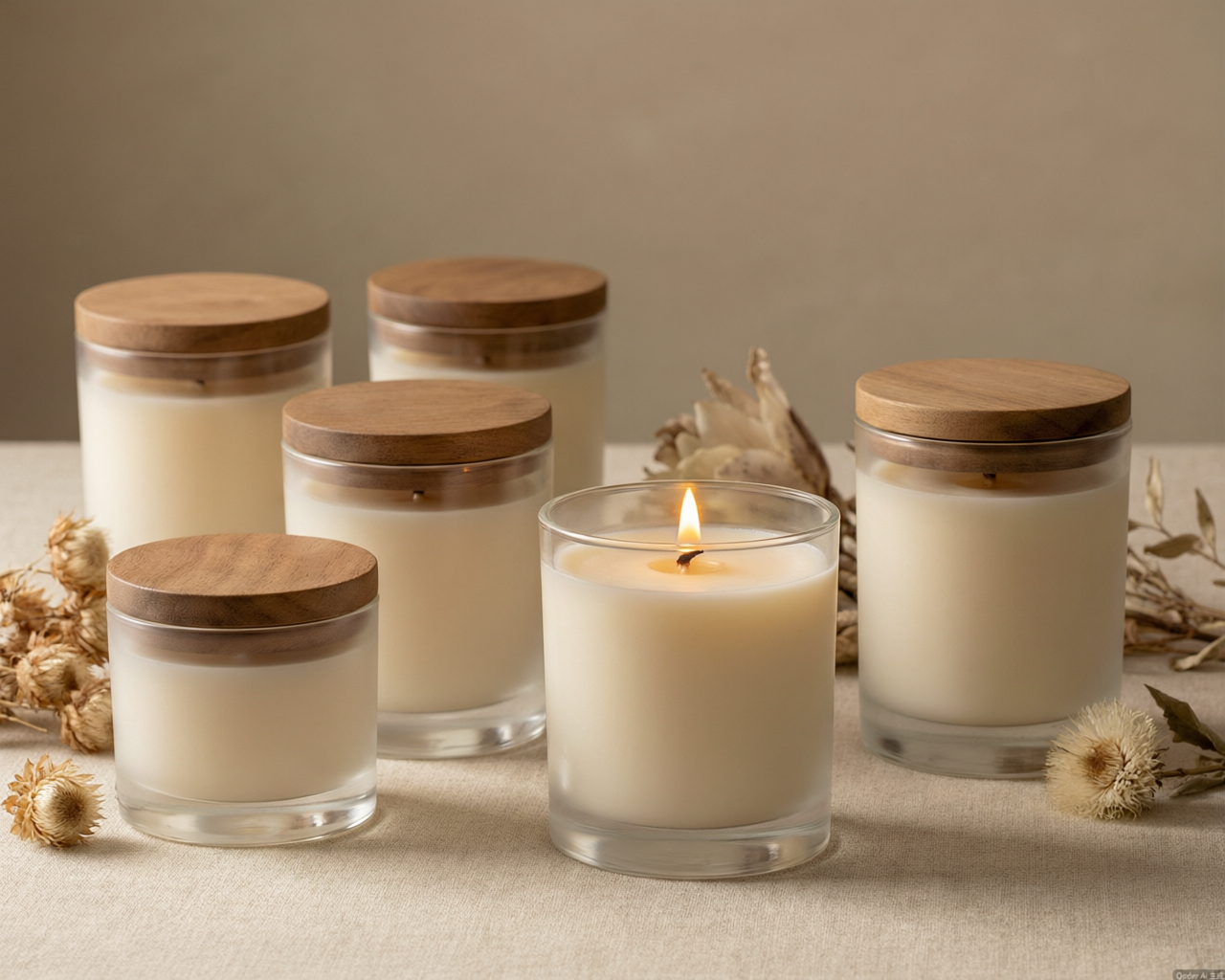
- Scented candles — The wax itself rarely triggers CR requirements, but candle warning label requirements under ASTM F2058 and EU EN 15494 mandate specific safety pictograms and text. CR considerations apply to any included fragrance oil vial or gel fuel insert.
- Car fragrances with liquid reservoirs — Clip-on vent fresheners containing 5 mL or more of concentrated oil fall under CPSC jurisdiction if toxicity thresholds are met.
- Commercial diffuser concentrates — Sold in 100 mL to 1 L bottles; CR closures required when classified as Category 1 aspiration hazard.
Rule of thumb: If your Safety Data Sheet (SDS) Section 2 lists H304 (“May be fatal if swallowed and enters airways”), you need CR packaging. Period.
CPSC Requirements: 16 CFR 1700 Protocol
The U.S. Consumer Product Safety Commission enforces child-resistant packaging under the Poison Prevention Packaging Act (PPPA), codified at 16 CFR 1700.
Testing protocol (the “panel test”):
- 200 children aged 42 to 51 months attempt to open the package within 5 minutes.
- No more than 15 percent (30 children) may open the package in the first 5 minutes, and no more than 20 percent (40 children) after a second 5-minute demonstration period.
- Simultaneously, 100 adults aged 50 to 70 must open and properly re-close the package within 5 minutes — at least 90 percent must succeed.
Closure specifications that pass:
- Push-and-turn caps with minimum 15 in-lbs (1.7 N-m) downward force
- Squeeze-and-turn mechanisms requiring simultaneous lateral compression
- Two-step open systems (e.g., align arrows, then twist)
Candle warning label requirements under ASTM F2058:
- Fire hazard pictogram minimum 12 mm height
- Signal word “WARNING” in bold uppercase, minimum 3.2 mm type height
- Specific statements: “Never leave burning candle unattended,” “Keep away from children and pets,” “Burn within sight”
- Label must survive 15 seconds of water immersion without legibility loss
EU and UK Requirements: CLP and EN Standards
The European framework layers CLP Regulation obligations on top of general product safety directives.
| Requirement | EU (CLP 1272/2008) | UK (GB CLP) | US (CPSC 16 CFR 1700) |
|---|---|---|---|
| CR closure standard | EN ISO 8317 | EN ISO 8317 | 16 CFR 1700.20 panel test |
| Tactile warning | Raised triangle, min 1.0 mm, on outer packaging | Same as EU | Not required (label-based) |
| Trigger classification | H304, H301+H311, H330 | Same as EU | Toxic/very toxic per PPPA schedule |
| Adult usability test | EN ISO 8317 Annex B (100 adults) | Same | 100-adult panel, 90% pass |
| Enforcement authority | National market surveillance (e.g., DGCCRF, BAuA) | OPSS | CPSC |
| Typical penalty range | EUR 10,000 to EUR 500,000 | GBP 5,000 to unlimited | Up to $120,000 per violation |
Key EU-specific details:
- The tactile warning triangle must be applied to the immediate packaging, not just the outer carton. For a 10 mL essential oil bottle, the triangle is molded into or embossed on the bottle itself or its direct sleeve.
- EN ISO 8317 requires the CR mechanism to remain functional for the product’s stated shelf life — validated via accelerated aging at 40 degrees C / 75 percent RH for 6 months.
- UKCA-marked products sold in Great Britain must carry the same CR features; there is no simplified UK-only pathway.
Cost Impact: What CR Packaging Adds to Your Unit Economics
Procurement teams need realistic landed-cost modeling. Below are typical per-unit cost additions when upgrading from standard packaging to CR-compliant packaging, based on 2025-2026 OEM pricing from Guangdong and Zhejiang suppliers.
| Packaging Component | Standard Cost (USD) | CR-Compliant Cost (USD) | Delta |
|---|---|---|---|
| 10 mL essential oil bottle + cap | $0.18 - $0.25 | $0.32 - $0.48 | +$0.14 - $0.23 |
| 100 mL reed diffuser bottle + CR cap | $0.45 - $0.65 | $0.72 - $1.05 | +$0.27 - $0.40 |
| 250 mL refill bottle + CR closure | $0.80 - $1.10 | $1.25 - $1.70 | +$0.45 - $0.60 |
| Tactile warning (embossed, per unit) | N/A | $0.02 - $0.05 | +$0.02 - $0.05 |
| ASTM F2058 compliant label (candle) | $0.03 - $0.06 | $0.05 - $0.10 | +$0.02 - $0.04 |
| Third-party CR panel test (one-time) | N/A | $3,500 - $6,000 per SKU | Amortized over run |
Volume note: At 10,000 units per SKU, the per-unit CR premium ranges from $0.16 to $0.63. At 50,000 units, negotiate that down by 20 to 30 percent. The one-time panel test cost drops below $0.10 per unit at 50K volume.
Supplier Vetting: Questions to Ask Your OEM Factory
Most fragrance OEM factories in China produce standard closures. CR-certified closures require specialized tooling and documented testing. Use this checklist during supplier qualification:
- Do you hold EN ISO 8317 certification for your CR caps? Request the certificate number and verify it against the issuing body (SGS, TUV, Bureau Veritas, or Intertek). Valid certificates list specific closure SKUs, not generic “company certified” language.
- Can you provide a 16 CFR 1700.20 panel test report from an accredited US lab? Acceptable labs include Intertek, UL, QIMA, and SGS Consumer. The report must name your exact closure-and-bottle combination.
- What is your CR closure MOQ and lead time? Standard CR caps (push-and-turn, 18/410 or 20/410 neck finish) carry 4 to 6 week lead times from tooling-ready factories. Custom CR mechanisms add 8 to 12 weeks for mold development ($2,000 to $5,000 per mold).
- Do you apply tactile warnings in-house or subcontract? Embossed triangles require a dedicated mold insert. Factories that outsource this step add 7 to 14 days to production timelines.
Labeling and Marking: Beyond the Closure
CR packaging is not just the cap. Your label artwork must carry specific elements depending on the market:
United States (CPSC + ASTM F2058 for candles):
- “KEEP OUT OF REACH OF CHILDREN” — minimum 3.2 mm type, uppercase, contrasting background
- Signal word (DANGER, WARNING, or CAUTION) tied to GHS hazard class
- First-aid statement: “If swallowed, call Poison Control at 1-800-222-1222”
- Net contents in both metric and US customary units
European Union (CLP Article 25 + Annex I):
- Tactile warning of danger on immediate packaging
- H-statements and P-statements in the language(s) of the destination member state
- Nominal capacity in mL
- UFI code (Unique Formula Identifier) printed on label, linked to your ECHA PCN notification
Timeline: Allow 3 to 5 weeks for label artwork revision, legal review by a regulatory consultant (budget $800 to $1,500 per market), and print-ready file approval.
Testing Timeline and Sequence for a New SKU
Plan your CR compliance validation in this order to avoid costly re-tests:
- Week 1-2: Finalize formulation and obtain SDS with GHS classification. Confirm whether H304 or equivalent triggers CR.
- Week 3-4: Select CR closure from supplier’s certified catalog. Request 20 sample units.
- Week 5-6: Internal usability screening with 10 senior adults. Iterate closure selection if pass rate falls below 90 percent.
- Week 7-10: Submit to accredited lab for full EN ISO 8317 or 16 CFR 1700.20 panel test. Typical turnaround: 3 to 4 weeks.
- Week 11-12: Receive test report. File ECHA PCN notification (EU) or retain report for CPSC due-diligence file (US).
- Week 13+: Release bulk production. Include CR verification in your pre-shipment inspection checklist (torque test on 5 random units per 1,000).
Total timeline from formulation lock to production release: approximately 13 weeks. Compress to 10 weeks by running the EU and US panel tests in parallel at a lab with dual accreditation.
Common Failure Modes and How to Avoid Them
- Torque drift during shipping — Vibration loosens threaded CR caps. Specify a minimum application torque of 18 in-lbs (vs. the 15 in-lbs test threshold) and add a tamper-evident band.
- Tactile triangle too shallow — Embossing depth below 1.0 mm fails EU inspection. Require 1.2 mm minimum in your spec sheet to build in tolerance.
- Label adhesion failure — Fragrance oils migrate through paper labels. Use polypropylene or PET film labels with chemical-resistant adhesive (rated for limonene and linalool contact).
- Adult usability failure in 50-70 age group — Arthritis-affected testers struggle with squeeze-and-turn designs. Push-down-and-turn with a 28 mm diameter cap consistently scores above 92 percent in adult panels.
- Mismatched bottle-neck finish — A 20/410 CR cap on a 18/410 bottle neck creates cross-threading. Confirm neck finish match in writing on your purchase order.
Next Steps
Child-resistant packaging is not a checkbox you delegate entirely to your factory. The brand owner holds legal liability in both US and EU markets, and a single recall event can erase margins on an entire container shipment. Build CR compliance into your product development timeline from day one, budget $0.20 to $0.60 per unit for the packaging upgrade, and validate with accredited third-party testing before goods leave the port.
If you are developing a new fragrance line and need a manufacturing partner that integrates CR-certified closures, tactile warning embossing, and full regulatory documentation into a single production run, review our product catalog for compatible bottle and closure options. Our OEM program includes in-house EN ISO 8317 tooling and pre-shipment torque verification at no additional charge for orders above 10,000 units.
Ready to spec your next SKU? Request a quote with your target market, product format, and order volume, and our compliance team will return a CR packaging recommendation with landed-cost breakdown within 3 business days.