E-commerce
Building a B2B Fragrance Ordering Portal: Features & Tech Stack
Esta guía aún no está disponible en español. La estás viendo en inglés.
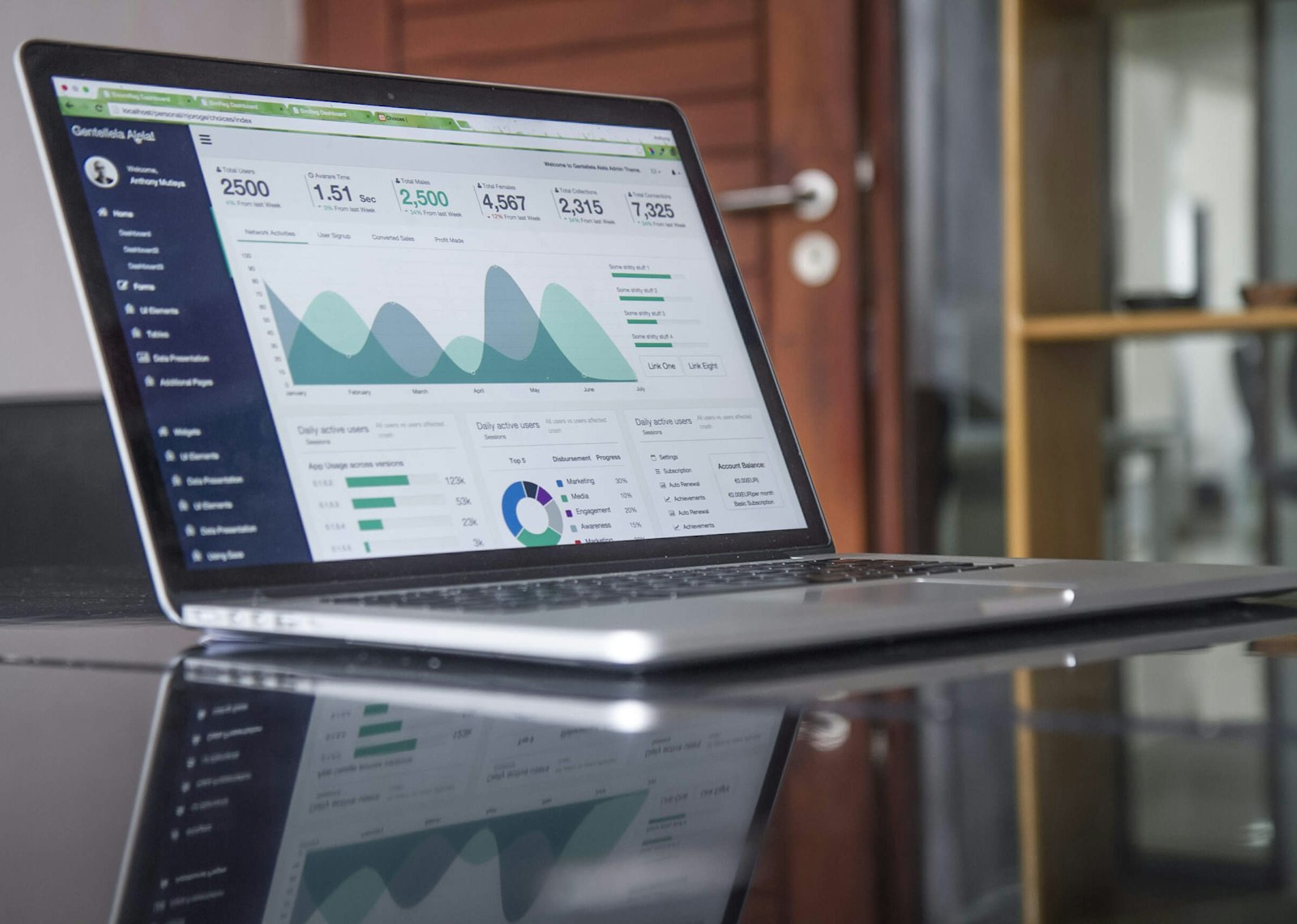
If your wholesale fragrance business still runs on email threads, PDF price lists, and spreadsheet order forms, you already know the cost. A single misread SKU on a 5,000-unit reed diffuser order can mean $4,000-$8,000 in rework, delayed container bookings, and frustrated retail partners waiting on stock. Procurement managers at mid-size fragrance brands report spending 6-10 hours per week on manual order reconciliation alone — time that should go toward product development and channel growth.
A dedicated b2b fragrance portal eliminates that friction. It gives your wholesale buyers a self-service platform to browse your full product catalog, view tiered pricing, check real-time inventory, submit purchase orders, and track production status — all without a single back-and-forth email. This guide walks through the exact features, technology choices, integration requirements, and budget ranges you need to plan a wholesale ordering system that scales from 50 to 5,000 active trade accounts.
Why Fragrance Wholesale Needs a Purpose-Built Portal
Generic B2B e-commerce templates fall short for fragrance manufacturers in three specific ways:
- Scent sampling workflows. Buyers need to request 5ml-15ml samples before committing to MOQ orders of 500-3,000 units. Your portal must handle sample requests, track sample shipments, and link approved samples to production orders.
- Regulatory documentation per destination. A candle order shipping to Germany requires CLP labels and REACH declarations; the same SKU going to California needs Prop 65 warnings. A fragrance wholesale portal must auto-attach the correct compliance documents based on the buyer’s ship-to country.
- Variable lead times by product type. Scented candles require 25-35 days production; reed diffusers need 20-30 days; car fragrances with custom molds can take 45-60 days. Buyers need to see accurate delivery windows at the point of order, not after confirmation.
These requirements mean your b2b candle ordering platform needs custom logic that off-the-shelf Shopify B2B or WooCommerce wholesale plugins cannot deliver without significant extension work.
Core Feature Set: The Non-Negotiables
Every wholesale ordering system for fragrance products should include these eight modules at launch:
| Feature Module | Purpose | Typical Build Time |
|---|---|---|
| Tiered pricing engine | Display per-unit pricing by volume bracket (e.g., 500/1,000/3,000/5,000 units) | 2-3 weeks |
| Real-time inventory sync | Show available stock and production queue status from ERP/MRP | 3-4 weeks |
| Sample request workflow | Let buyers request up to 10 samples per quarter; auto-deduct from sample inventory | 2 weeks |
| PO submission and approval | Accept structured purchase orders with net-30/net-60 payment terms | 2-3 weeks |
| Compliance document vault | Auto-attach SDS, IFRA certificates, CLP labels per SKU and destination | 3-4 weeks |
| Production tracking dashboard | Show order status: confirmed, in production, QC passed, shipped, delivered | 2-3 weeks |
| Reorder and quick-list | One-click reorder of past purchases; saved SKU lists for seasonal buyers | 1-2 weeks |
| Multi-currency and Incoterms | Support USD/EUR/GBP with FOB, CIF, DDP pricing display | 1-2 weeks |
Budget 14-20 weeks of development for a full MVP if building custom, or 6-10 weeks if configuring a platform like OroCommerce, BigCommerce B2B Edition, or Saleor with fragrance-specific extensions.
Tech Stack Comparison: Build vs. Configure
Choosing the right foundation for your fragrance wholesale portal depends on your order volume, integration complexity, and in-house technical capacity.
| Platform | Best For | Annual Cost Range | Customization Depth |
|---|---|---|---|
| OroCommerce (self-hosted) | Manufacturers with 200+ trade accounts, complex approval chains | $25,000-$60,000 (hosting + dev) | Full source access; unlimited |
| BigCommerce B2B Edition | Brands doing under $5M wholesale revenue, lean teams | $3,000-$12,000 (SaaS + apps) | Moderate; API extensible |
| Saleor + custom frontend | Teams with React/Next.js developers wanting headless flexibility | $15,000-$45,000 (dev + infra) | High; open-source core |
| Shopify Plus + B2B app | Rapid launch (4-6 weeks), existing Shopify ecosystem | $25,000-$40,000/year | Limited; app-dependent |
| Custom build (Node/Python + PostgreSQL) | Highly specific workflows, 1,000+ SKUs with per-region compliance | $60,000-$150,000 initial | Unlimited |
For most fragrance OEM/ODM manufacturers sourcing from China, the sweet spot is a headless commerce backend (Saleor or Medusa.js) paired with a Next.js storefront. This gives you the flexibility to model scent families, wax types, and vessel options as structured product attributes while keeping hosting costs under $500/month at scale.
Integration Requirements: ERP, Production, and Logistics
A b2b fragrance portal that is not connected to your operational systems becomes a manual data-entry layer within three months. Plan these integrations before launch:
- ERP/MRP sync. Connect to your production planning system (SAP Business One, Odoo, Kingdee, or Yonyou for China-based factories) via REST API or middleware like n8n. Sync frequency: every 15 minutes for inventory, nightly for production schedules.
- Freight and container tracking. Integrate with Flexport, Freightos, or your freight forwarder’s API to push vessel ETD/ETA data into buyer dashboards. Fragrance products ship as DG (dangerous goods) when alcohol content exceeds 24% — your system must flag this at order confirmation.
- Payment and credit management. For net-terms buyers, connect to a credit insurance provider (Euler Hermes, Coface) or use Stripe Invoicing with automated dunning sequences. Set credit limits per account: $10,000 for new buyers, scaling to $100,000+ after 6 months of on-time payment history.
- Quality inspection records. Link third-party QC reports (SGS, Bureau Veritas, Intertek) to each production batch so buyers can download inspection certificates before shipment release.
Budget an additional $8,000-$20,000 for integration development beyond the core portal build.
UX Design Principles for Wholesale Fragrance Buyers
Your buyers are procurement professionals, not consumers. Design the b2b candle ordering platform for speed and information density:
- Bulk order entry. Provide a spreadsheet-style grid where buyers paste 20-50 SKUs with quantities in one screen. Support CSV upload for orders exceeding 100 line items.
- Scent family filtering. Organize your product catalog by olfactory family (floral, woody, citrus, gourmand, fresh) alongside functional filters (wax type, vessel material, burn time, diffuser volume). Buyers building a seasonal collection need to filter by scent profile first, format second.
- Saved order templates. Seasonal buyers reorder 70-80% of last year’s lineup. Let them clone a past order, adjust quantities, and submit in under 3 minutes.
- Mobile-responsive but desktop-first. 78% of B2B fragrance orders are placed on desktop during business hours. Optimize for 1440px+ screens with dense data tables, but ensure order tracking and sample requests work cleanly on mobile.
- Transparent lead-time display. Show production lead time per SKU at the point of selection. If a custom-mold car fragrance requires 45 days and the buyer’s target delivery is 30 days out, surface that conflict immediately.
Content and Compliance Layer
A fragrance wholesale portal is also a documentation hub. For each SKU, your system should store and serve:
- Safety Data Sheets (SDS) in the buyer’s language, updated per GHS revision
- IFRA compliance certificates showing maximum usage concentration per product category
- Allergen declarations listing all 26 EU-regulated fragrance allergens above 0.001% threshold
- Country-specific labels — CLP for EU/UK, Prop 65 for California, WHMIS for Canada
- Certificate of Origin and fumigation records for customs clearance
Build this as a document management subsystem with version control. When a formulation changes (for example, replacing a restricted musk compound), the portal must automatically invalidate old certificates and notify affected buyers with open orders.
Launch Timeline and Budget Summary
For a mid-size fragrance manufacturer launching a b2b fragrance portal serving 100-500 trade accounts:
| Phase | Duration | Budget Range | Deliverables |
|---|---|---|---|
| Discovery and requirements | 3-4 weeks | $5,000-$10,000 | Feature spec, integration map, buyer persona interviews |
| Design and prototyping | 3-4 weeks | $8,000-$15,000 | Wireframes, clickable prototype, design system |
| Core development | 10-14 weeks | $40,000-$90,000 | Portal MVP with pricing, ordering, tracking |
| Integration and testing | 4-6 weeks | $10,000-$25,000 | ERP sync, payment, freight, QA |
| Pilot with 10-20 buyers | 3-4 weeks | $3,000-$5,000 | Feedback collection, bug fixes, workflow tuning |
| Full rollout | 2-3 weeks | $2,000-$5,000 | Buyer onboarding, training docs, support setup |
Total: 25-35 weeks from kickoff to full launch. Total investment: $68,000-$150,000 for a custom solution, or $35,000-$75,000 using a configurable platform with targeted extensions.
Measuring ROI: KPIs That Matter
Track these metrics monthly after launch to validate the investment:
- Order processing time. Target: reduce from 45 minutes (manual email-to-ERP entry) to under 5 minutes (automated PO ingestion).
- Order error rate. Target: below 1.5% of line items, down from the 6-9% typical of manual entry.
- Buyer self-service rate. Target: 70%+ of orders placed without sales rep intervention within 6 months.
- Sample-to-order conversion. Track what percentage of sample requests convert to production orders within 60 days. Industry benchmark for fragrance: 25-35%.
- Average order value growth. Buyers with portal access typically increase AOV by 18-30% in year one due to easier cross-category browsing.
Next Steps
Building a wholesale ordering system is a 6-9 month project, but the competitive advantage compounds every quarter. Buyers who can place a 3,000-unit candle order at 11 PM their local time — with real-time pricing, compliance docs attached, and a confirmed vessel booking date — will consolidate their sourcing with the supplier who makes it easiest.
If you are evaluating whether your current product range is portal-ready, start by auditing your product catalog for data completeness: every SKU needs structured attributes, tiered pricing, lead times, and compliance documents digitized and versioned.
For manufacturers exploring private-label or custom formulation partnerships, review the OEM program details to understand how custom SKUs integrate into a buyer-facing portal — including sample workflows, mold approval gates, and production milestone tracking.
Ready to discuss portal-compatible product data, API-ready pricing structures, or volume commitments that unlock dedicated production lines? Request a quote and specify your target portal launch date — we will align sample timelines and minimum order structures to your rollout schedule.