Market Guides
Selling Candles at US Farmers Markets and Craft Fairs: Requirements
Este artículo aún no está disponible en español. Lo estás viendo en inglés.
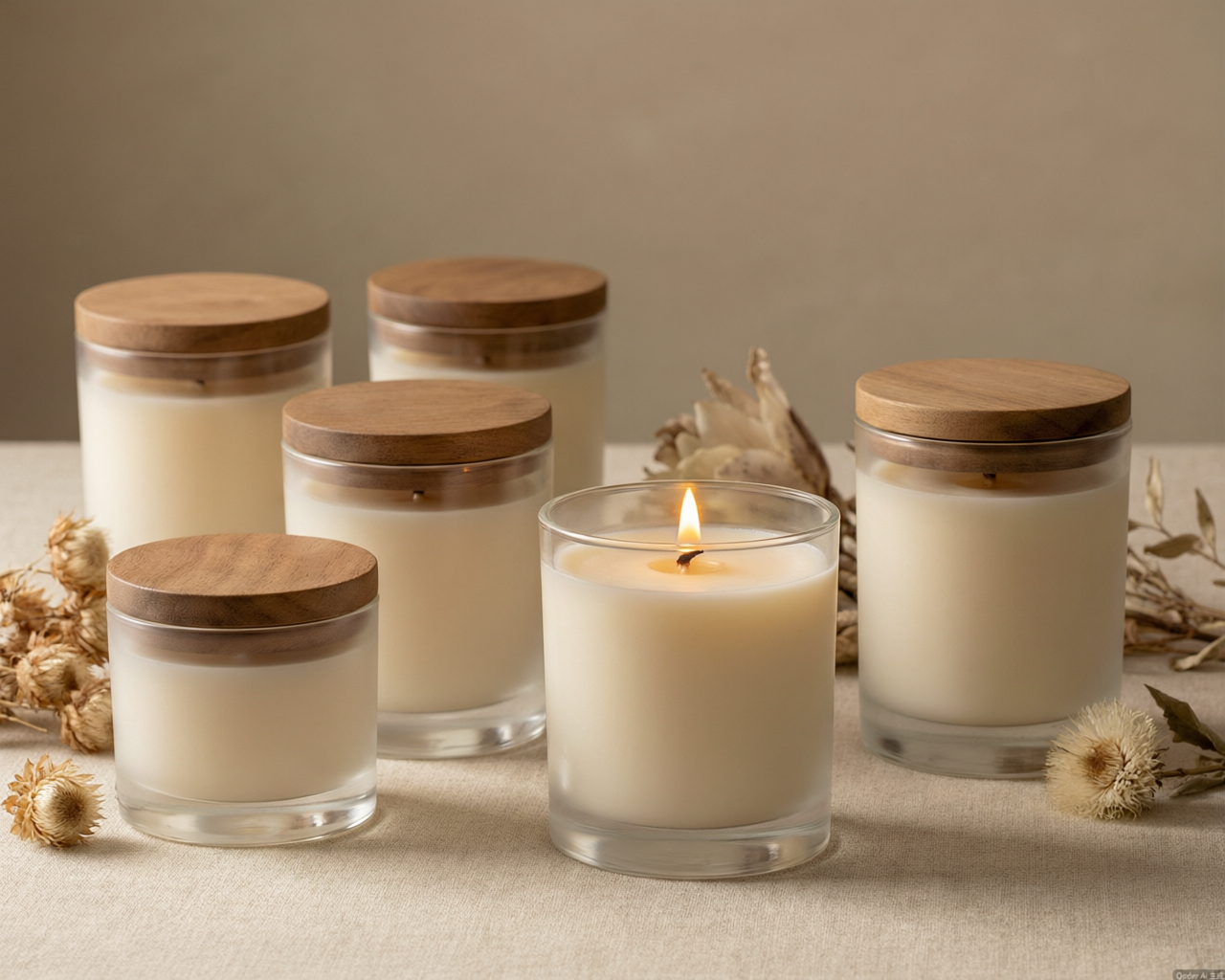
Farmers markets and craft fairs remain one of the most effective launch channels for US candle brands. With over 8,000 active farmers markets nationwide according to the USDA, and thousands of additional craft fairs and holiday markets, the channel offers direct customer feedback, cash flow without retailer terms, and a path to wholesale relationships. But selling in person triggers a stack of permits, insurance, and labeling obligations that vary by state and municipality. This guide covers the practical requirements.
Business Structure and Tax Registration
Before applying to any market, a candle seller should have:
- A registered business entity — sole proprietorship, LLC, or S-corp. LLC formation costs USD 50 to USD 500 depending on state, plus USD 100 to USD 800 in publication fees in states like New York and Arizona.
- An EIN from the IRS (free, online, immediate).
- A state sales tax permit (also called a seller’s permit or resale certificate). Required in every state with a sales tax; costs range from free to USD 100.
- A local business license in the city or county where the business operates. Fees typically USD 25 to USD 200 annually.
- A DBA filing if operating under a trade name different from the legal entity.
Sales tax collection is required at the point of sale in most states. Candle taxability varies: most states tax candles as tangible personal property, but a few (for example, Pennsylvania and New Jersey) exempt certain categories. Market platforms such as Square and Shopify POS handle tax calculation, but the seller remains responsible for remittance.
Market-Specific Permits and Applications
Each market sets its own vendor requirements. Common documentation includes:
- Vendor application with product photos and booth layout
- Jury fee for craft fairs, typically USD 25 to USD 75
- Booth fee ranging from USD 25 per day at small farmers markets to USD 500 to USD 2,000 at major craft fairs such as Renegade Craft or American Craft Council shows
- Certificate of Insurance (COI) naming the market as additional insured
- Health or fire department permit in some jurisdictions, particularly for open-flame demonstrations
- Temporary retail permit in states that require it for out-of-county sales
Application windows for holiday markets often close in August or September for November and December shows, so planning should start mid-summer.
Insurance Requirements
Most established markets require vendors to carry:
- General liability insurance with at least USD 1 million per occurrence and USD 2 million aggregate limits
- Product liability coverage included within the general liability policy
- The market named as additional insured on the COI
Annual premiums for a small candle business with USD 1 million general liability and product liability coverage range from USD 500 to USD 1,500, depending on revenue and state. Providers including FLIP (Handmade Insurance), Hiscox, and Next Insurance offer policies tailored to craft vendors.
Selling without insurance is a personal-asset risk. A single burn-injury claim from a defective candle can exceed USD 100,000 in defense costs alone.
Labeling at the Booth
Even at a farmers market, every candle must carry the same labeling required for retail sale:
- Manufacturer or business name and address
- Net weight in ounces and grams (per the Fair Packaging and Labeling Act)
- Product identity (e.g., “Scented Soy Candle”)
- ASTM F2417 fire safety warning with the prescribed signal word, hazard statement, and precautionary text
- Country of origin if imported (e.g., “Made in China” for private-label imports)
- Burn instructions as best practice
Some states add requirements. California requires Prop 65 warnings where applicable. Massachusetts has additional flammable-product packaging rules. Sellers shipping inventory across state lines for shows should ensure labels meet the strictest state’s standard.
Fire Safety and Demonstration Rules
Many markets prohibit open-flame burning demonstrations at booths due to fire code restrictions under the International Fire Code (IFC) and local amendments. Where burning is permitted:
- A fire extinguisher (ABC rated, minimum 5 lb) must be present at the booth
- A non-combustible surface must underlie any lit candle
- A 3-foot clearance from combustibles is typically required
- A fire department inspection may be required before the market opens
Sellers should request the market’s fire code requirements in writing and photograph the booth setup for insurance documentation.
Booth Economics
A realistic budget for a first-season craft fair schedule:
| Item | Estimated cost |
|---|---|
| LLC and EIN | USD 100 to USD 500 |
| Sales tax permit and local license | USD 50 to USD 300 |
| General liability insurance (annual) | USD 500 to USD 1,500 |
| Booth setup (tent, table, display, signage) | USD 800 to USD 2,500 |
| Booth fees (5 markets, average) | USD 500 to USD 3,000 |
| Travel and lodging | USD 500 to USD 2,000 |
| Initial inventory (300 to 500 candles) | USD 1,000 to USD 2,500 |
| POS system and card processing | USD 300 to USD 800 |
| First-season total | USD 3,750 to USD 12,600 |
Top-performing vendors at well-trafficked holiday markets can generate USD 2,000 to USD 8,000 in a single weekend, but median results are more modest. Sellers should target a 3:1 revenue-to-booth-cost ratio as a minimum threshold for returning to a market.
Sourcing Inventory for Market Sales
Many market sellers start by pouring at home, but scaling past 500 units per month typically justifies private-label sourcing from a Chinese OEM. The economics:
- Home-poured 8 oz soy candle: USD 2.50 to USD 4.00 in materials plus 15 to 25 minutes labor
- Private-label 8 oz soy candle from China: USD 3.00 to USD 5.00 landed, no labor
For sellers focused on brand-building and customer relationships rather than production, private label frees up booth time and reduces physical fatigue during multi-day shows.
At Aromiso, market vendors can order mixed-SKU LCL shipments with as few as 300 units per scent, ASTM-compliant labeling applied at the factory, and packaging designed for direct-to-display unpacking.
Building the Channel Strategically
Successful market sellers treat the booth as a customer-acquisition channel rather than a revenue endpoint:
- Capture email addresses at every sale (target 30 to 50 percent capture rate)
- Offer a market-only bundle to lift average order value above USD 35
- Collect wholesale inquiries from boutique owners who shop markets
- Use post-market email campaigns to convert one-time buyers into repeat customers
- Track per-market ROI including labor hours, not just booth fees
Markets that perform well in year one become annual fixtures; markets that underperform should be cut without sentiment.
Final Thoughts
Selling candles at US farmers markets and craft fairs is a USD 4,000 to USD 12,000 first-season commitment with meaningful upside for brands that treat the channel professionally. The non-negotiables are an LLC, a sales tax permit, USD 1 million liability insurance, and ASTM-compliant labeling on every unit. Beyond compliance, the sellers who win are the ones who build email lists, refine booth design, and use market data to decide where to return.